Many people think that classic cocktails are something for professional bartenders with years of experience and a pantry full of strange bottles. But what are classic cocktails actually? The answer is surprisingly simple: they are recipes with three to four ingredients, a proven ratio, and a flavor balance that has worked for decades. No tricks, no exotic foams, no 12 steps. In this article, you will learn which cocktails deserve classic status, what their characteristics are, how to make them accurately at home, and why their simplicity is precisely their strength.
Table of Contents
- What are classic cocktails and why are they timeless?
- The iconic classic cocktails: Negroni, Daiquiri, and Rob Roy
- The essence of balance and ingredients in classic cocktails
- Variations, non-alcoholic options, and practical tips for home bartenders
- Why classic cocktails are more relevant than ever today
- How you can masterfully serve classic cocktails at home with Cocktails by Nina
- Frequently Asked Questions about Classic Cocktails
Key Insights
| Point | Details |
|---|---|
| Definition of classic cocktails | Classic cocktails are timeless recipes with good balance and recognizable ingredients. |
| Importance of balance | Correct proportions and quality of ingredients make the difference for the perfect taste. |
| Examples of classics | Negroni, Daiquiri, and Rob Roy illustrate different styles and tastes within classic cocktails. |
| Varying and mocktails | With non-alcoholic options and variations, you can adapt classic recipes without losing character. |
| Professional home experience | With good products and tools, you can easily create a stylish cocktail experience at home. |
What are classic cocktails and why are they timeless?
Classic cocktails are recipes that have stood the test of time. They didn't become popular through a trend or a marketing campaign, but because they simply taste good, time after time, regardless of who makes them or where. That's a rare quality in the world of beverages.
What distinguishes them is structure. A classic cocktail always has a clear ratio between a base spirit, a flavor component, and a balancing element. These three layers—bitter, sweet, and sour—together form something greater than the sum of their parts. Cocktail culture emphasizes simplicity, balance, and recognizable flavors that remain popular for generations.
Most classics originated between the early twentieth century and the 1970s. Think of the Prohibition era in America, the rise of European café culture, and the glory days of the grand hotel bar. That period laid the foundation for a cocktail vocabulary that we still speak today.
The four characteristics of a classic cocktail:
- Few ingredients, never more than four to five
- A clear, proven ratio that is repeatable
- Flavor balance between bitter, sweet, sour, and strength
- Cultural recognition within the bar world across multiple decades
The difference between classic and modern cocktails is not in quality, but in approach. Modern cocktails are often experimental, with fermented juices, smoke elements, or homemade infusions. Classics are the opposite: reliable, elegant, and direct. If you want to know more about the classic and modern cocktail styles, it will quickly help you determine which direction suits you as a home bartender.
For beginners, classic cocktails are the ideal starting point. Cocktails for beginners are always best learned through classic recipes, precisely because the ratios are so clear. You immediately learn what works and why.
The iconic classic cocktails: Negroni, Daiquiri, and Rob Roy
Three cocktails illustrate the principle of the classic better than any others: the Negroni, the Daiquiri, and the Rob Roy. They come from different cultures, contain very different spirits, but share the same philosophy.
Negroni
The Negroni is perhaps the most copied cocktail in the world. The reason? An almost mathematical perfection. Equal parts gin, Campari, and sweet vermouth deliver a bitter-sweet balance that feels both complex and direct. You stir it briefly with ice in a mixing glass, pour it over a large ice cube, and garnish with an orange slice or twist. That orange is not just decoration: the peel releases essential citrus oils that open up the drink.
What exactly are gin cocktails? The Negroni is the perfect answer to that question. Gin provides the herbaceous, floral base, Campari adds bitter notes, and vermouth gives depth and sweetness. Together they form a cocktail that never bores you. You can make it yourself or order it ready-made for a hassle-free evening.
Daiquiri
The Daiquiri is proof that three ingredients are enough for a masterpiece. Rum, lime juice, and simple syrup combine to form a fresh, summery cocktail that is both sharp and soft. The key lies in the ratio: 6 cl rum, 2.5 cl lime juice, 1.5 cl simple syrup. Too much lime juice makes it too sharp. Too much simple syrup and you lose the freshness.
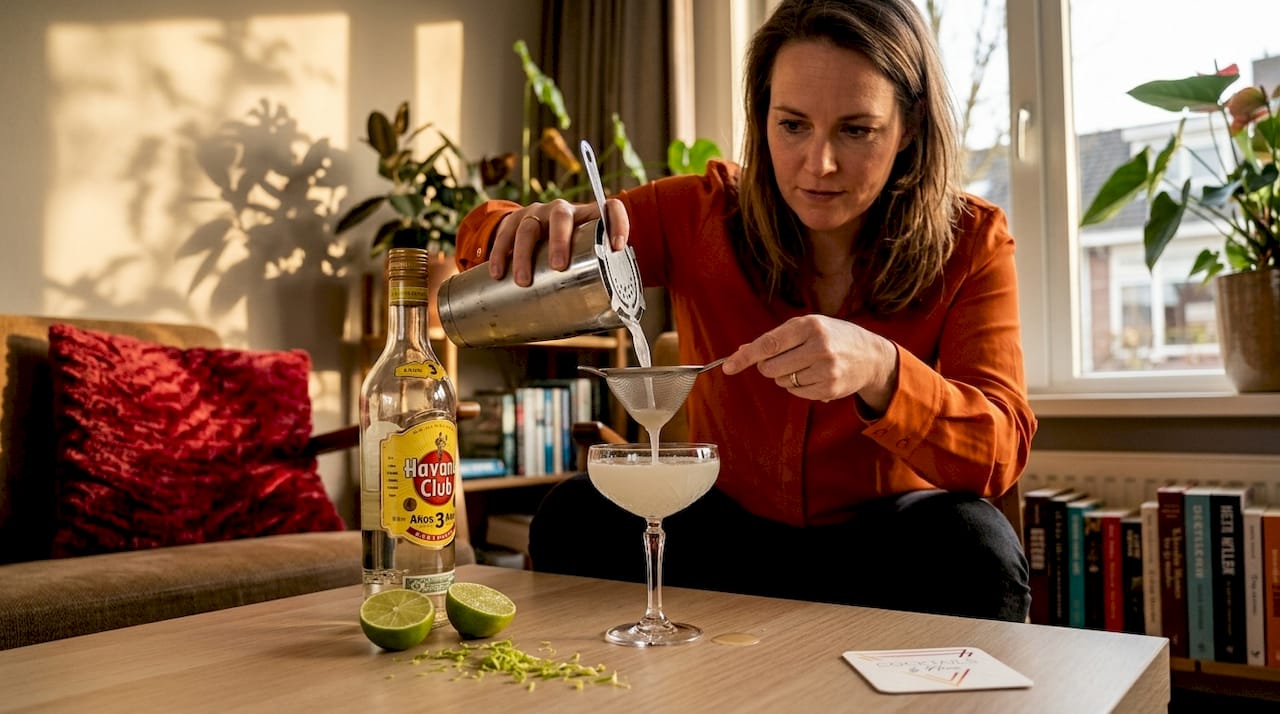
Shaking is the technique here. The impact of the shaker melts a fraction of the ice, which softens the texture and slightly tempers the intensity of the rum. Serve it chilled in a cocktail glass, without ice.
Rob Roy
The Rob Roy is less known among home bartenders but deserves more attention. It is essentially a Manhattan made with Scotch whisky instead of bourbon, complemented by sweet vermouth and Angostura bitters. Associated with the luxury of early 20th-century hotels, it still exudes that elegance. Smoky, malty notes of the Scotch are softened by the vermouth, with bitters as a binder.
Comparison table of three classic cocktails:
| Cocktail | Base Spirit | Flavor Profile | Technique | Serve |
|---|---|---|---|---|
| Negroni | Gin | Bitter, herbaceous, sweet | Stirring | Rocks glass, ice cube |
| Daiquiri | White rum | Fresh, sour, slightly sweet | Shaking | Cocktail glass, no ice |
| Rob Roy | Scotch whisky | Smoky, sweet, deep | Stirring | Cocktail glass, no ice |
Popular classic cocktails at a glance:
- Negroni: gin, Campari, sweet vermouth
- Daiquiri: white rum, lime juice, simple syrup
- Rob Roy: Scotch whisky, sweet vermouth, Angostura bitters
- Old Fashioned: bourbon, sugar, bitters, orange peel
- Manhattan: rye whiskey, sweet vermouth, bitters
- Margarita: tequila, triple sec, lime juice
Pro-tip: Make your first Negroni with a neutral, mid-range gin like Tanqueray. A gin that's too floral will overpower the Campari. Find your balance first, then experiment with character.
The essence of balance and ingredients in classic cocktails
You can have the best recipe in the world and still make a disappointing cocktail. This is almost always due to one of three things: incorrect proportions, low-quality spirits, or sloppiness in technique.
How to make a classic cocktail well, step by step:
- Always measure. Use a jigger (measuring cup). A small deviation in proportion noticeably changes the flavor profile. The 1:1:1 ratio of the Negroni is so precise that even an extra 0.5 cl of Campari breaks the balance.
- Choose quality spirits. You'll taste cheap rum in a Daiquiri immediately. You don't have to buy a top-shelf product, but don't go for the absolute cheapest option. Learn the basics for classic cocktails before you go to the store.
- Know when to stir and when to shake. Cocktails without citrus or juice are stirred: this gives a clear texture and less dilution. Cocktails with juice are shaken for emulsification and cooling.
- Use good ice. Old, dried-out ice or ice that has absorbed strange odors will spoil your cocktail. Fresh, clear ice provides better cooling with less meltwater. Read more about ice in cocktails for specific tips.
- Garnish is functional, not decorative. An orange twist over a Negroni releases essential citrus oils. A slice of lime with a Daiquiri adds an acidic note with every sip. Never omit it.
Why bitters are more than a detail:
Bitters are the most underestimated component in classic cocktails. They are concentrated, complex, and bring everything together. An Old Fashioned without Angostura bitters is just whiskey with sugar. The role of bitters in flavor development is similar to salt in cooking: you don't taste them separately, but you immediately miss them if they are absent.
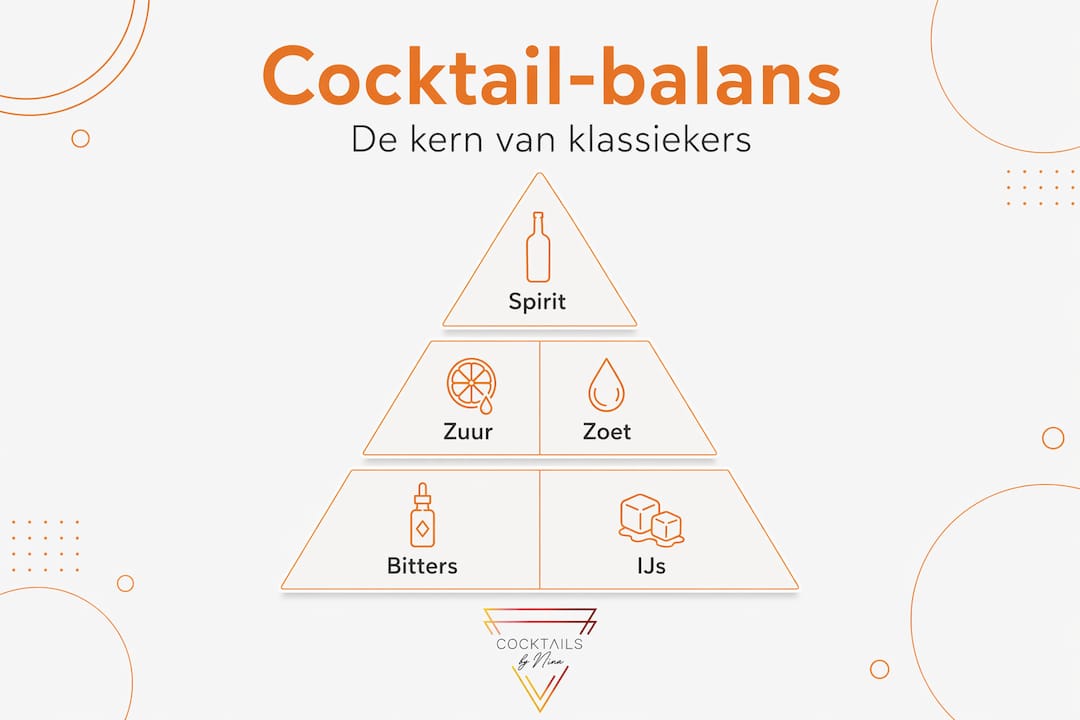
Learn the essential cocktail terms if you're just starting. Terms like "on the rocks," "neat," "dilution," and "double strain" sound technical but are easy to understand and make your communication about cocktails much more precise.
Pro-tip: Chill your glass in the freezer before use. A cold Daiquiri poured into a warm glass immediately loses temperature and texture. Two minutes in the freezer makes a noticeable difference.
Variations, non-alcoholic options, and practical tips for home bartenders
The beauty of classic recipes is that they form a solid foundation for variation. You don't have to improvise completely to create something new. You replace one element and discover a new flavor profile.
Popular variations on classic cocktails:
- Negroni Sbagliato: replace gin with prosecco for a lighter, sparkling version
- White Negroni: replace Campari with Suze and sweet vermouth with Lillet Blanc for a floral variant
- Frozen Daiquiri: blend the Daiquiri with crushed ice for a slushie-like summer drink
- Perfect Rob Roy: use a combination of sweet and dry vermouth for more complexity
- Smoky Negroni: replace gin (partially) with mezcal for a smoky character
For non-alcoholic variants, the market has grown enormously. Mocktail Negroni options exist by using non-alcoholic gin, Campari, and vermouth, maintaining the bitter-sweet profile. Brands like Seedlip, Monday Gin, and Lyre's have elevated the quality of non-alcoholic spirits to a level where they are serious alternatives.
Cocktails by Nina's range of non-alcoholic cocktails offers ready-to-drink options so you can give guests who don't drink the same experience without having to make two separate recipes.
Practical tips for home bartenders:
- Use a bar spoon for stirring: it's long enough to mix well without introducing air
- Buy a good shaker with a built-in strainer for cocktails that are shaken
- Store homemade simple syrup in the refrigerator for a maximum of two weeks
- Cut garnishes fresh: oxidized citrus peels give less aroma
- Start with one basic recipe and mastered variations before experimenting further
Pro-tip: Organize your bar cart so you always have the three basic spirits for classics on hand: gin, white rum, and bourbon or Scotch. With these three spirits, you can make eight to ten classic recipes. Check the cocktail at home page if you want to serve a group without having to arrange everything yourself.
Why classic cocktails are more relevant than ever today
Something remarkable is happening in the world of cocktails. While new techniques, seasonal micro-trends, and Instagram-worthy creations continue to emerge, bartenders and home bartenders are increasingly returning to recipes from a hundred years ago. That's not nostalgia. It's something else.
The renaissance of heritage cocktails like the Rob Roy shows a broader trend towards valuing luxury with authenticity. People are tired of paying for an extravagant drink with eight ingredients that they can never replicate at home. Anyone can make a Negroni or a Daiquiri. That democratic character is a strength, not a weakness.
But there's also something deeper at play. We live in a time of information overload, of never-ending choices, of products replaced every month. Classic cocktails offer the opposite: peace, clarity, and the feeling that you're making something that has already proven itself. That is psychologically appealing, even outside the cocktail world.
As a home bartender, classics provide a foundation. You first learn why something works before you start to vary it. This applies to cooking, to music, to sports. The best improvisers know the rules best. You can gain more insight into the differences through the page on classic and modern cocktail styles, where the spectrum from traditional to experimental is clearly explained.
There's also a cultural argument. Every classic cocktail carries a story. The Daiquiri comes from Cuba, linked to the sugar industry and the American presence on the island around 1900. The Negroni is named after Count Camillo Negroni, who in 1919 in Florence asked for his Americano to be made stronger. The Rob Roy refers to a Scottish folk hero and was served at the opening of a Broadway opera in 1894. These layers of history make every sip richer, if you know them.
We believe that making cocktails at home doesn't have to be more complicated than cooking well. You don't have to do everything yourself. But if you understand what a classic cocktail is and why it works, you make more conscious choices, whether you mix it yourself or use ready-made products.
How you can masterfully serve classic cocktails at home with Cocktails by Nina
You now know what classic cocktails are, how they work, and what makes them so special. The next step is to actually put them on the table, without stress, without mistakes.
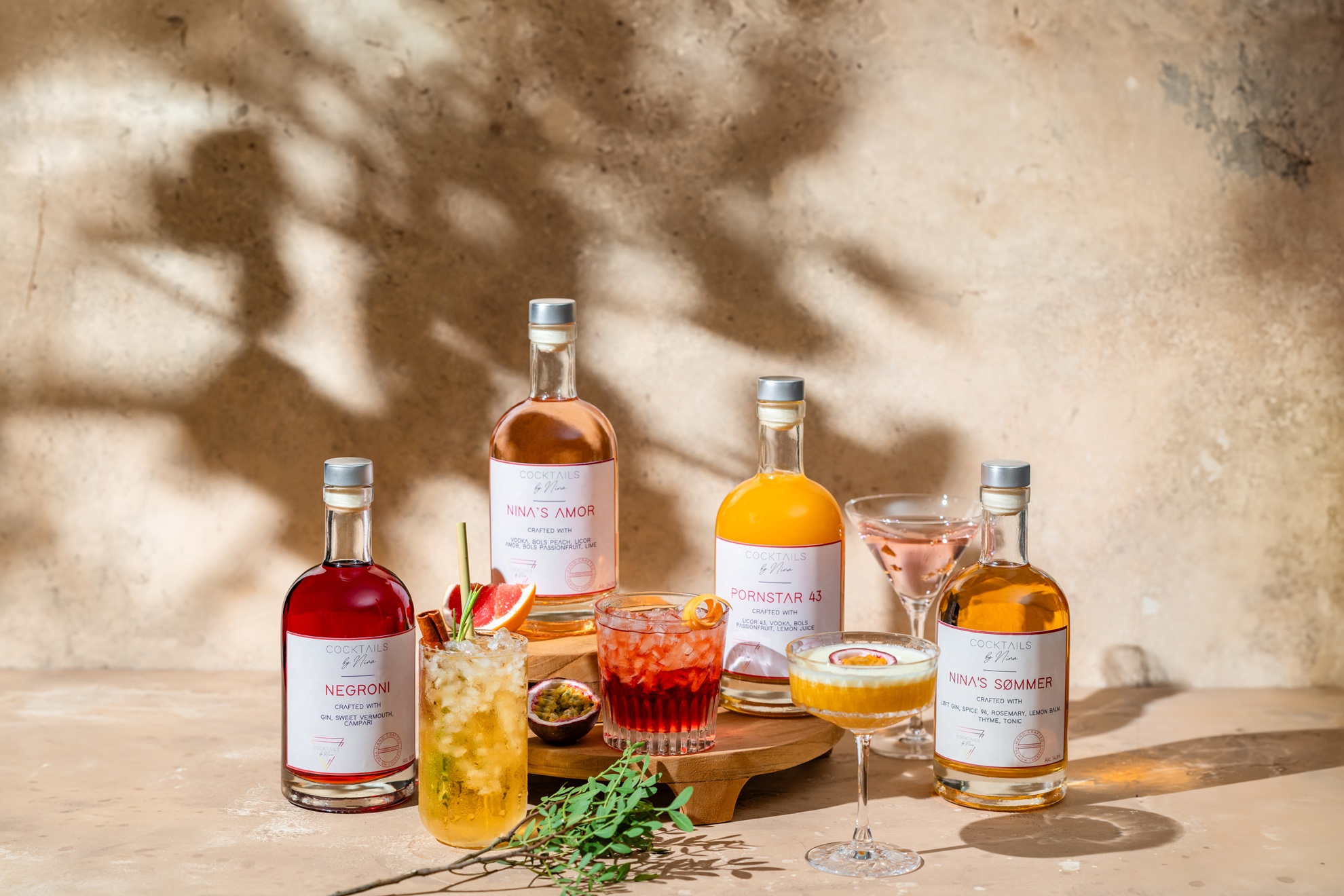
At Cocktails by Nina, you'll find ready-to-serve classics like the Negroni, made with premium spirits and ready to enjoy. No weighing, no mistakes, just the flavor balance you expect from a classic. Are you organizing for a group? The cocktail at home service ensures that professional cocktails are delivered and served at your event. And for guests who don't drink, there's a full range of non-alcoholic options that offer the same taste experience. This way, everyone at the table enjoys a true bar experience.
Frequently Asked Questions about Classic Cocktails
What makes a cocktail a classic cocktail?
A classic cocktail has a proven, timeless recipe with a good balance of ingredients and is generally recognized within cocktail history over several decades.
How can I make a classic Negroni at home?
Mix equal parts gin, Campari, and sweet vermouth with ice in a mixing glass, stir briefly, pour over a large ice cube, and garnish with an orange slice.
Are there non-alcoholic versions of classic cocktails?
Yes, mocktail Negroni variations exist by combining non-alcoholic gin, bitters, and vermouth, so you maintain the same bitter-sweet flavor profile without alcohol.
Which ingredients are most important in classic cocktails?
Choose high-quality spirits and use correct proportions for the right flavor balance. Fresh mixers and good bitters make the difference between an average and an excellent cocktail.
How do I serve classic cocktails at home without much experience?
Use pre-mixed cocktails or order ready-to-drink products, and add a simple garnish like an orange twist or a lime slice for a professional look without requiring technical skills.
Recommendation
- Essential Cocktail Terms: Your Guide to Clear Choices – Cocktails by Nina
- Spirits and Mixers: The Foundation for Premium Cocktails at Home – Cocktails by Nina
- Shots and Drinks: The Complete Guide to Convenience and Quality – Cocktails by Nina
- Cocktail experience at home: a simple step-by-step plan for your party – Cocktails by Nina