The word 'shot' sounds simple, but in practice, it turns out to be surprisingly broad. If you ask someone at a birthday party what a shot is, you'll get a different answer than in a pharmacy or a health food store. At parties in the Netherlands and Belgium, almost everyone immediately thinks of a small alcoholic drink that you down in one go. But a ginger shot on an empty stomach, a vitamin boost in a 60 ml bottle, or even an injection at the GP also falls under the same term. In this guide, we'll clarify everything.
Table of Contents
- What is a shot in nightlife?
- Wellness and food shots: small portions for health
- The medical meaning of a shot: injections and syringes
- Differences between alcoholic and wellness shots in use and presentation
- Practical tips for choosing and serving ready-made shots
- A fresh look at the versatility of shots
- Discover ready-made shots and more at Cocktails by Nina
- Frequently asked questions about shots
Key Insights
| Point | Details |
|---|---|
| Double meaning of 'shot' | A shot can mean both a small alcoholic glass and a wellness portion; it's important to distinguish between these. |
| Alcohol shot technique | Preparation and serving techniques such as inverting and layering determine the success of party shots. |
| Wellness shot planning | Buy wellness shots based on the number of participants and shelf life for optimal freshness. |
| Medical meaning | 'Shot' is also used for injections, but in a party context, it almost always refers to a drink. |
| Ease of use and quality | Ready-made shots make it easy to quickly serve high-quality drinks at any event. |
What is a shot in nightlife?
In the party and hospitality world, 'shot' has a clear meaning. A shot is a small portion of a drink served in a shot glass and almost always consumed in one go. The glasses are small, the recipes are simple, and the ritual surrounding the drinking is just as much a part of it as the drink itself.
What exactly is an alcoholic shot in terms of size? In the Netherlands and Belgium, most cafes and parties use a portion of 20 to 35 ml for a standard alcoholic shot. That's smaller than a digestif (where you'd typically think of 35 to 50 ml), but the main difference isn't just in milliliters. A shot vs. a digestif also refers to the way it's drunk and the atmosphere: a digestif is sipped, a shot is downed in one swift motion.
Popular shot recipes in the Netherlands and Belgium rely on classic combinations with few steps. Look at the Duikbootje (Submarine): shots are prepared in 1 to 3 steps, and the actions are so simple that anyone can perform them after a brief demonstration. For the Duikbootje, you fill a shot glass with young jenever, place a beer glass over it, invert the whole thing, and fill the beer glass. The shot glass 'submarines' upwards as the beer rises. That spectacular moment makes this shot so popular.
Another classic example is the Mini Biertje (Mini Beer), where you pour a layer of Licor 43 into a shot glass and then carefully spray or pour whipped cream on top. The result looks like a miniature beer, with a golden-yellow layer at the bottom and white 'foam' on top. Both recipes illustrate why party shots are so beloved: they are spectacular, quick to prepare, and spark conversation.
What then are shots specifically used for at parties?
- Small glasses of 20 to 35 ml, specifically made for shots
- Almost always drunk in one go, sometimes with a small build-up or countdown
- Recipes with 2 to 4 ingredients, rarely more
- Festive and visually appealing due to layers, color, or a special serving technique
- Can be drunk solo or as part of a game or ritual
For those who want to know more about the terminology, our explanation of cocktail terms explains the difference between shots, cocktails, and long drinks.
Pro-tip: Want to make shots at home for a group of more than ten people? Set everything up in a fixed order before you start. Ingredients at the right temperature, glasses in a row, and someone dedicated to pouring. This avoids waiting times and spills.
Now that it's clear that 'shot' at parties and in hospitality almost always means small alcohol, let's explore its alternative meaning outside of nightlife.
Wellness and food shots: small portions for health
Not every shot contains alcohol. The wellness world has eagerly adopted the concept. Ginger shots, turmeric shots, and lemon shots have become a staple of morning rituals and health routines in recent years. What are shots in this context? Small, concentrated portions with a high concentration of active ingredients, ready to drink immediately.
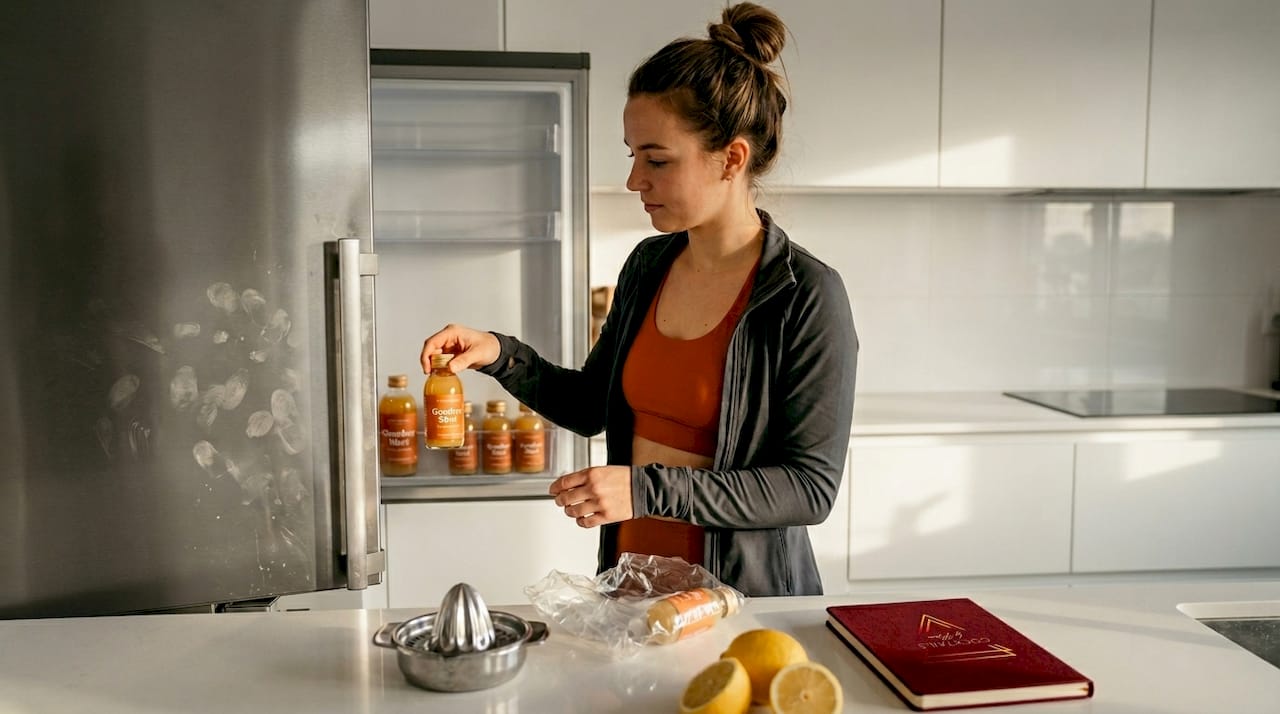
Ginger shots are sold as ready-made portions around 60 ml and have a limited shelf life in the refrigerator. That 60 ml format is deliberately chosen: it's enough to absorb all active ingredients, but small enough to keep the sharp taste of raw ginger or turmeric tolerable. You drink it just like an alcoholic shot: quickly and in one go.
Wellness shots require planning in terms of quantity and freshness, whether you buy them or make them yourself. If you buy a week's supply, you run the risk of the last bottles being past their expiry date. If you make them yourself, fresh grated ginger plus lemon juice is a strong base, but ideally, you should use them within two to three days.
Characteristics of wellness shots at a glance:
- Portion size of approximately 60 ml per bottle or serving
- Non-alcoholic, but with an intense flavor
- Ingredients such as fresh ginger, lemon, turmeric, cayenne pepper, or spirulina
- Store chilled, preferably in a sealed bottle
- Ready to drink immediately, without preparation
The difference in use is significant. With alcoholic shots, it's all about the social moment. With wellness shots, it's about daily consistency. You don't take them at a party to celebrate something, but on a Tuesday morning to boost your immune system. Yet the same term is used, which can cause confusion if someone asks: "Do you want a shot?"
For a complete guide to shots and convenience, we have listed everything for those who want to choose between ready-made or homemade variants.
Pro-tip: Don't buy wellness shots individually, but in batches. A pack of six or ten bottles gives you a better price and ensures you don't have to decide daily whether to have one. Make it a routine by placing them next to your coffee machine.
Besides celebratory shots and wellness variants, 'shot' also has a medical meaning worth mentioning.
The medical meaning of a shot: injections and syringes
Anyone working in a hospital or at the GP uses the word 'shot' differently. In a medical context, a shot is a synonym for injection, where liquid or medication is administered into the body via a needle and syringe. Vaccines, vitamin administration via the blood, or certain medications fall under this category.
This use of the word is widespread in common parlance. "I'm going to the doctor for a shot" therefore means something completely different from "Do you want a shot?" at a birthday party. The confusion is even material for jokes, but in practice, the context is always clear enough to make the distinction.
Key points about the medical meaning:
- Administration via needle and syringe, under the skin or into a vein
- Examples: vaccines, vitamin B12 injections, insulin
- No connection to glass size, taste, or festivity
- Exclusively used by or with medical personnel
In the context of this article, and certainly in the context of parties and events, 'shot' almost exclusively refers to the drink. We mention the medical meaning here purely for completeness, so that no one is misled.
Now that we know the three meanings, let's compare the two most common applications concretely.
Differences between alcoholic and wellness shots in use and presentation
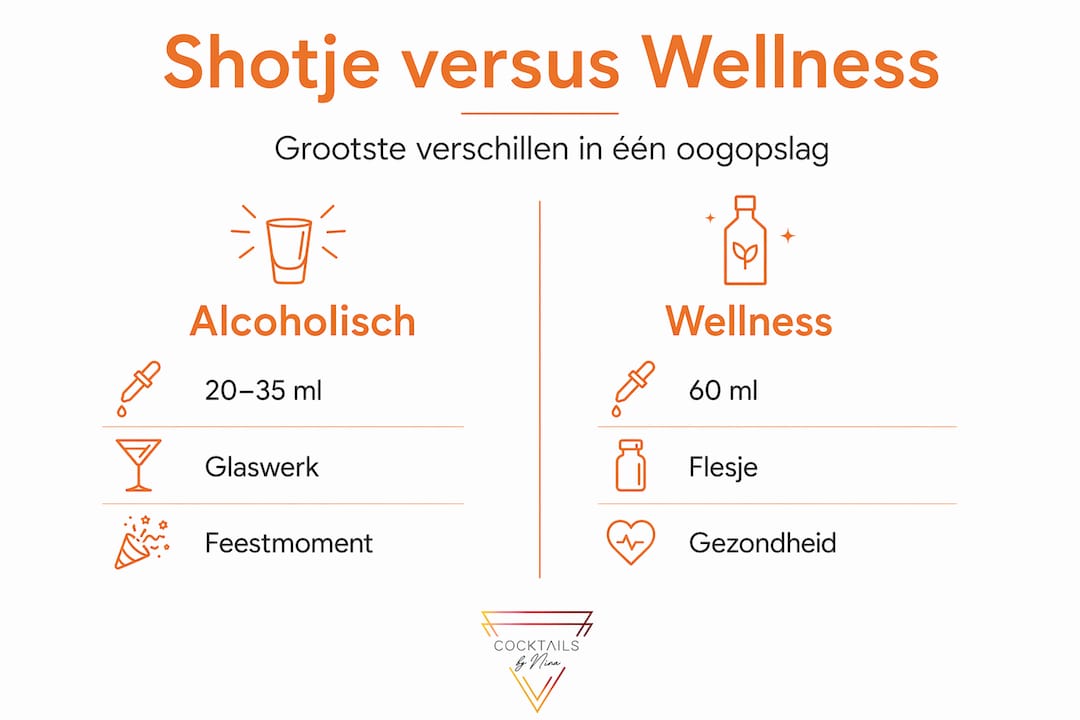
Alcoholic shots require glassware and precise pouring techniques, especially for layers or constructions like the Duikbootje. Wellness shots are ready-made 60 ml bottles that you drink directly without any preparation. This difference in threshold largely determines how you use each type.
| Feature | Alcoholic shot | Wellness shot |
|---|---|---|
| Portion size | 20 to 35 ml | Approx. 60 ml |
| Alcohol content | Yes, strong | No alcohol |
| Preparation | Glasses, pouring, timing | Direct from bottle |
| Storage conditions | Room temperature or chilled | Always chilled |
| Usage moment | Parties, hospitality, social occasions | Morning, daily use |
| Shelf life | Long (if unopened) | Short after opening |
| Visual presentation | Layers, color, shot glass | Bottle, functional |
For festive shot recipes, it's all about technique and timing. The pouring order determines whether a layer stays separate or immediately mixes. If you've never made a layered shot, you should definitely practice it at home before the big party.
Regarding shots and drinks for convenience: wellness shots win on ease of use, but alcoholic shots win on experience. It entirely depends on the purpose.
A few practical comparison points:
- Alcoholic shots are not transferable in time: once poured, serve immediately
- Wellness shots can be bought and stored in the fridge for later use
- If you want to understand how spirits relate to each other, knowledge of distillates helps in choosing the right base for your alcoholic shots
- Wellness shots are also suitable for non-drinking guests, as an alternative at a party
Pro-tip: Combine both worlds at your next party. Place a basket of wellness shots next to the alcoholic shots for designated drivers, pregnant guests, or people who simply want a break. Everyone participates, no one feels left out.
With a clear understanding of the differences, let's move on to practical tips for choosing and serving.
Practical tips for choosing and serving ready-made shots
Shots for parties sound simple, but a party for twenty people where the shots go wrong halfway through is not what you want. Good preparation is the difference between chaos and compliments.
-
Test your technique beforehand. For the Duikbootje, the inversion timing is crucial. Practice at home with water before doing it with real drinks at the party. One failed flip means a wet table.
-
Whip cream just before use. Whipped cream for layered shots must be freshly whipped and piped immediately. Whipped cream that has been sitting for ten minutes loses its structure and seeps through the bottom layer.
-
Calculate your quantities accurately. For wellness shots, buying based on the number of people is sensible to avoid waste. For alcoholic shots, the same calculation applies: count the number of guests, estimate how many rounds you want to make, and include a small buffer.
-
Designate a shot responsible person. At a party with more than fifteen people, it works best if one or two people exclusively prepare the shots. This keeps the quality consistent and prevents confusion about what has already been poured.
-
Pre-chill your ingredients thoroughly. Cold ingredients make the best convenient and quality shots. Warm jenever in a Duikbootje tastes very different from a well-chilled version. Chill everything at least two hours beforehand.
-
Use ready-made shots for maximum convenience. If you don't want to practice the technique or don't have the time, ready-made shots are the smartest choice. They are already perfectly prepared and only need to be served.
Pro-tip: Make a small label card for each type of shot you serve, with its name and alcohol content. Guests appreciate transparency, and it prevents someone from accidentally taking a strong shot when they think it's mild.
With these tips, you're ready to use shots smartly. Time for a fresher look at how we think about shots.
A fresh look at the versatility of shots
After years of observing how people choose and serve shots, one pattern consistently emerges: most people think too narrowly about the word. 'Shot' is ingrained in their minds as the alcoholic glass on a night out, and that limited association costs them opportunities.
The wellness market for small portions is growing rapidly, and those who ignore this miss an easy way to offer non-drinkers an equivalent experience. A complete shots guide shows how broad the concept actually is.
But there's another pitfall: people who DO want to serve alcoholic shots consistently underestimate how much technique is involved. A layer that doesn't stay separate, a Duikbootje that fails, whipped cream that collapses. These are not the mistakes of someone who doesn't try. These are the mistakes of someone who hasn't practiced beforehand.
The best shot experience at a party doesn't happen by itself. It's the result of three things: the right choice for your guests, good preparation, and a clear understanding of what you're serving. Those who combine this not only serve a drink but a moment.
Communication also plays an underestimated role here. If you invite guests and say "there will be shots," be specific. Alcoholic or not? What flavor? How strong? That brief information beforehand avoids disappointment for the teetotaler who thinks there are ginger shots, or the partygoer who was counting on strong liquor.
Shots are small in size but big in impact. Both at a party and in a health routine. And as with many things: those who choose consciously and prepare well get the most out of it.
Discover ready-made shots and more at Cocktails by Nina
You don't have to make it all yourself. At Cocktails by Nina, you'll find a wide range of ready-made shots, from classic alcoholic variants to party packages for larger groups. No fuss with pouring techniques or timing. You serve, we ensure the quality.
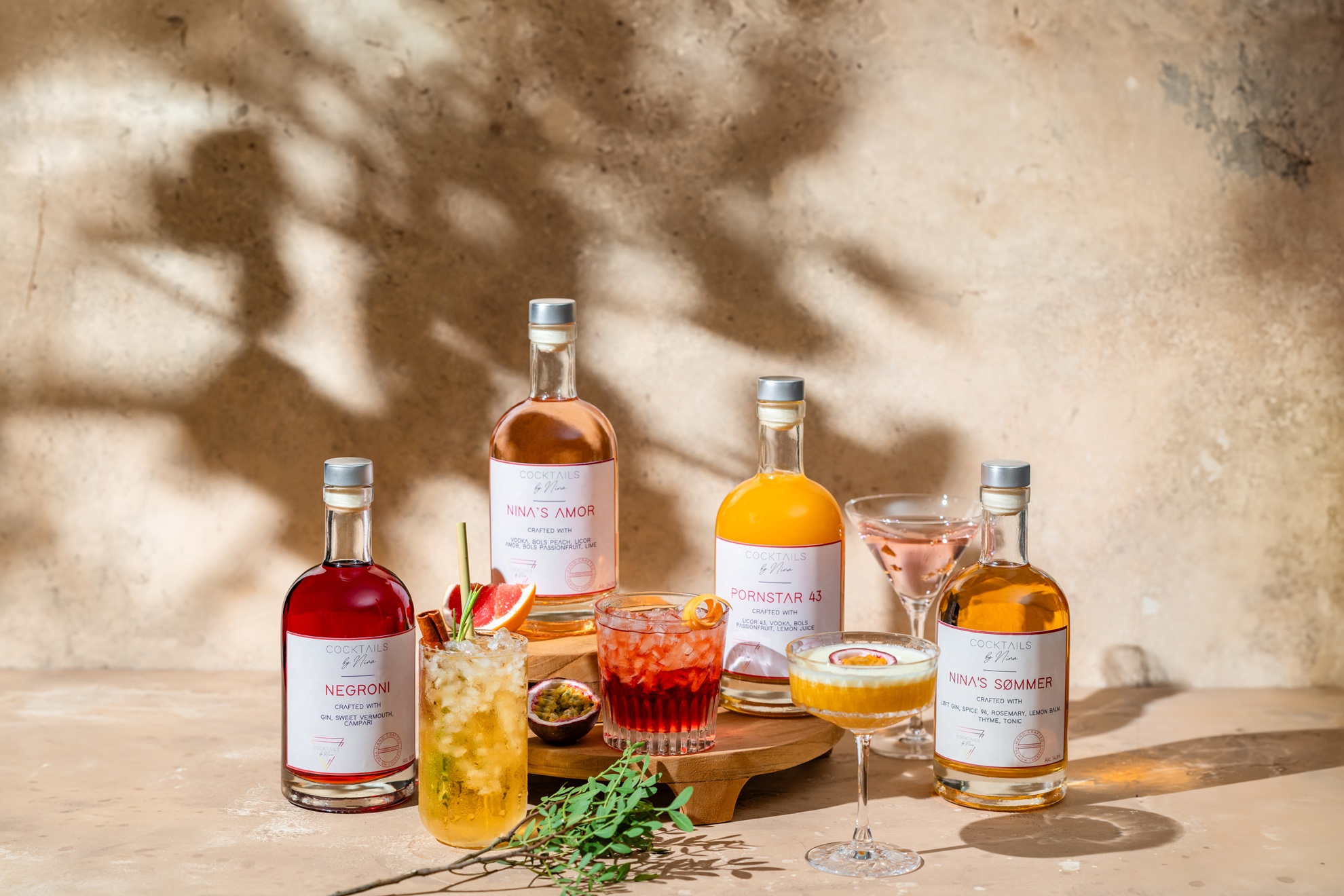
Want something special for your next event? The shot box with five splitjes is a ready-made solution that will immediately impress. No mixer needed, no tricky layers, just immediate impact. And for those who also want to surprise non-drinking guests: the ready-made mocktails ensure a fully inclusive party program. Want to go even bigger? Then discover our cocktail at home service for a complete drink experience without any preparation.
Frequently asked questions about shots
What is the difference between a shot and a ginger shot?
A 'shotje' (shot) usually refers to a small alcoholic drink of 20 to 35 ml, while a ginger shot is a non-alcoholic, concentrated portion of approximately 60 ml with ginger and lemon as a health boost.
What is the size of a standard shot in the Netherlands and Belgium?
An alcoholic shot usually contains 20 to 35 ml, while wellness shots such as Holyshot Ginger Lemon contain 60 ml per serving; the 'shot' concept in both cases refers to a small, quick consumption unit.
How do I prepare a "Duikbootje" (Submarine) shot?
Pour young genever into a shot glass, place a beer glass over it, carefully turn the whole thing over, and then fill the beer glass with beer so that the shot glass floats up like a submarine.
What does 'shot' mean in a medical context?
In the medical world, 'shot' refers to an injection via needle and syringe, where medication or liquid is administered directly into the body, such as with a vaccination or vitamin injection.
Recommendation
- Shots and drinks: the complete guide to convenience and quality – Cocktails by Nina
- Essential cocktail terms: your guide to clear choices – Cocktails by Nina
- Festive shots for every event: the best recipes – Cocktails by Nina
- Spirits and mixers: the basis for premium cocktails at home – Cocktails by Nina