Cocktail recipes are combinations of spirits, acid, and sweetness that you can perfectly balance at home with simple tools. The basic 2:1:1 ratio gives you an immediate working starting point: 60 ml spirit, 30 ml fresh lemon juice, and 30 ml simple syrup. With this ratio and five basic tools, you can make cocktails at home that are just as good as those from a bar. Cocktailsbynina helps you with ready-made options and inspiration for those who want to mix themselves.
What basic tools and ingredients do you need for cocktail recipes?
At least five tools are needed for an effective home bar: a shaker, jigger, bar spoon, Hawthorne strainer, and muddler. Without these tools, you cannot accurately measure or mix, and you will immediately notice this in the taste. A jigger costs a few euros and prevents your recipes from turning out differently every time.
The five indispensable tools at a glance:
- Shaker for mixing and chilling ingredients
- Jigger for accurate measuring of quantities
- Bar spoon for stirring cocktails without incorporating air
- Hawthorne strainer to keep ice and pulp out of the glass
- Muddler for crushing fruit, herbs, or sugar
For ingredients, the rule is: start small and good. A compact home bar with 2–3 spirits and fresh citrus yields better results than a large collection of half-used bottles. Choose a base spirit such as gin, vodka, or rum, add fresh lemon and lime, and make a simple syrup from equal parts sugar and water.
| Category | Examples |
|---|---|
| Spirits | Gin, vodka, rum, tequila |
| Sour | Fresh lemon juice, lime juice |
| Sweet | Simple syrup, agave syrup |
| Flavorings | Fresh mint, ginger, bitters |
| Garnish | Lemon slice, rosemary sprig |
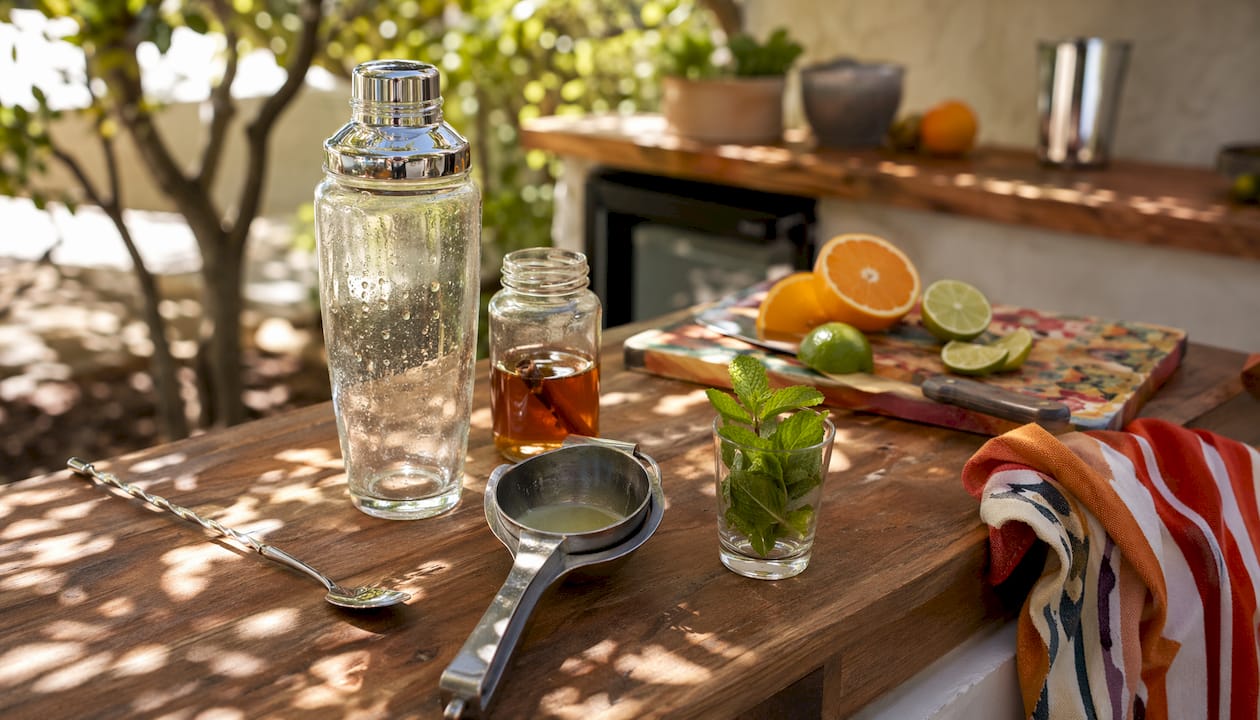
Ice quality is a factor that many beginners underestimate. Quality ice without off-odors or flavors is crucial for a good cocktail. Freshly made ice in large blocks cools better and dilutes less quickly than small ice cubes from a bag. Always store ice in a sealed container, away from strong odors in the freezer.
Pro-tip: Make your own simple syrup by mixing equal parts sugar and hot water and letting it cool. Add a sprig of rosemary or a lemon peel while cooling for an instant flavor boost without extra effort.
For cocktail tools like stir sticks and stirrers: choose sustainable options that also look good in the glass. Presentation matters, even at home.
How do you adjust the basic ratio for the perfect balance?
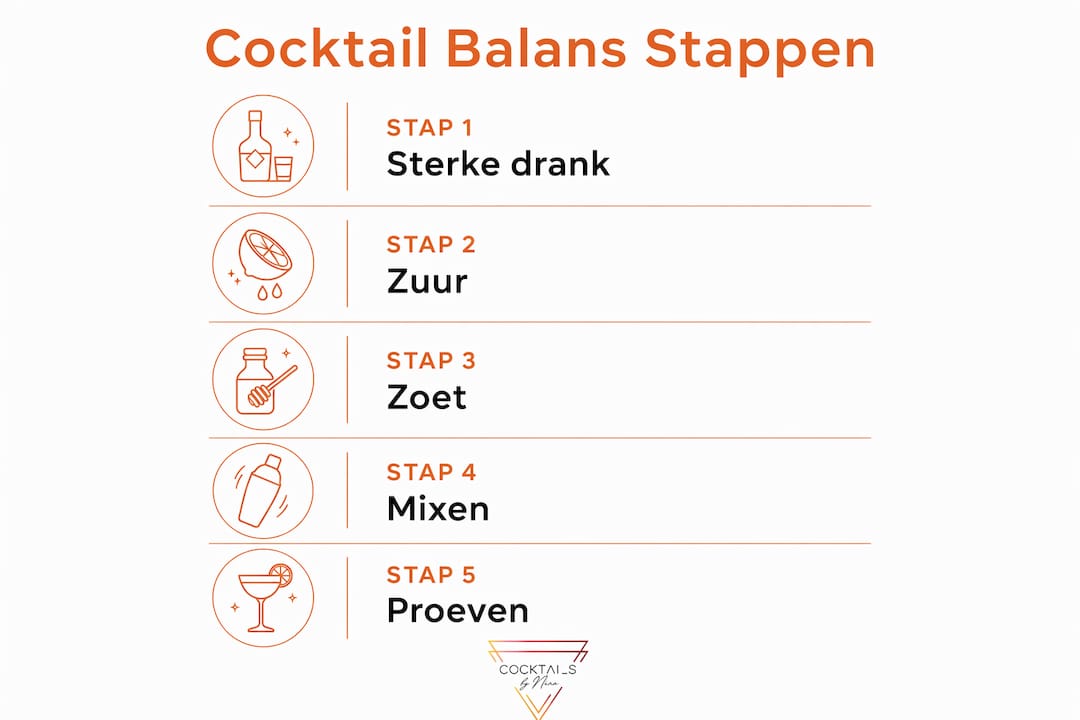
The 2:1:1 ratio is the foundation of almost every cocktail recipe. Specifically, this means: 60 ml spirit, 30 ml fresh lemon juice, and 30 ml simple syrup. That sounds simple, but the power lies in understanding why this ratio works and how to adjust it.
Acid and sweet act as counterweights. If you add more acid, you taste the spirit less. If you add more sweet, the cocktail becomes flat and one-dimensional. The 2:1:1 ratio keeps this balance in equilibrium and allows the spirit to speak for itself.
Here's how to adjust the ratio step-by-step:
- Start with the standard ratio and make the cocktail exactly as the recipe indicates.
- Taste consciously and ask yourself: is it too sharp, too sweet, or too flat?
- Adjust one element at a time, never two simultaneously, so you know what the effect is.
- Add sweetness gradually, not all at once. Half a teaspoon of extra syrup makes a big difference.
- Use salt as a corrective. A pinch of salt suppresses bitter flavors and enhances the acid-sweet balance without added sugar.
Gin cocktail recipes often require a bit more acid than vodka-based drinks, as gin already brings botanical bitterness. Rum works well with a little more sweetness due to its own sugary character. You learn these nuances by tasting and comparing, not by blindly following recipes.
Pro-tip: Make two versions of the same cocktail side-by-side: one with the standard ratio and one with a small adjustment. Taste them alternately. This trains your palate faster than with each recipe individually.
For more background on bar-quality drinks at home, you can read how professionals apply the same principles on a larger scale.
How to make a cocktail step-by-step according to a recipe?
Preparation determines the result. Get all your tools ready before you start: shaker, jigger, strainer, and the right glass. Measure ingredients with the jigger, never by feel. The biggest misconception is that cocktails are "quick mixes." Measuring is not an exaggeration; it's why a cocktail tastes the same every time.
Making a cocktail step-by-step:
- Pre-chill your glass by pouring ice water into it while you prepare the cocktail. Discard the water just before serving.
- Measure all ingredients with the jigger and add them to the shaker.
- Add ice until the shaker is two-thirds full. Use large, fresh ice.
- Shake vigorously for 10–15 seconds. Good shaking technique requires a powerful arm movement for proper chilling and dilution. Shaking too short results in insufficient chilling. Shaking too long over-dilutes the cocktail.
- Strain the cocktail through the Hawthorne strainer into the chilled glass.
- Garnish with fresh fruit or an herb that complements the flavors in the glass.
Three mixing techniques you should know:
- Shaking for cocktails with citrus, eggs, or cream. This mixes and chills simultaneously.
- Stirring for clear spirit-based cocktails like a Martini or Negroni. Stirring gives a clear, smooth texture.
- Muddling for crushing fresh ingredients like mint or cucumber to release their flavors.
Garnish is not just decoration; it's flavor. Squeezing an orange peel over a glass releases a spray of essential oils that immediately hit the nose. Slapping fresh mint above a Mojito before serving activates its aroma. This is how you present cocktails like a professional, even at home.
Pro-tip: Learn the "dry shake" technique for cocktails with egg white, such as a Whiskey Sour. First, shake without ice to create foam, then add ice and shake again. The result is a creamy, frothy texture that you never achieve with a regular shake.
For more inspiration on classic cocktails as a base, read which recipes are the best starting point for beginners.
What mistakes do beginners make with cocktail recipes?
The most common mistake is adding too much sweetness at once. Too much sweetness makes a cocktail one-dimensional and masks all other flavors. The solution is simple: always add sweetness incrementally and taste after each addition.
Common mistakes at a glance:
- Shaking too short or too long. Less than 10 seconds results in a lukewarm cocktail. More than 20 seconds over-dilutes the drink.
- Using bad ice. Ice that smells like the freezer transfers that odor to the cocktail. Always use fresh, neutral ice.
- Measuring by feel. Without a jigger, you vary the ratio every time, making the recipe inconsistent.
- Not tasting during preparation. Tasting is not optional; it's mandatory. Every adjustment requires a new taste test.
- Choosing the wrong glass. A Martini in a tumbler loses its elegance and chills faster. Glass influences experience and temperature.
Pro-tip: Use the "pinch of salt" technique if a cocktail tastes bitter or sharp. A pinch of salt suppresses bitterness and enhances sweet and sour flavors without needing extra syrup.
Inaccurate measuring is the most underestimated mistake. A difference of 10 ml in the acid component changes the entire balance of the drink. Invest in a good jigger with clear markings. That is the cheapest improvement you will immediately taste in every cocktail.
For more tips on premium cocktails at home, read which spirits and mixers make the biggest difference.
Key insights
The best cocktails at home are created by mastering the 2:1:1 ratio, using fresh ice and citrus, and consciously tasting every adjustment for a stable and delicious result.
| Point | Details |
|---|---|
| Basic 2:1:1 ratio | Use 60 ml spirit, 30 ml acid, and 30 ml sweet as a starting point for every recipe. |
| Five basic tools | Shaker, jigger, bar spoon, Hawthorne strainer, and muddler are indispensable for accurate mixing. |
| Ice quality matters | Fresh, neutral ice in large blocks cools better and dilutes less quickly than bagged ice. |
| Tasting is mandatory | Add sweet and sour incrementally and taste after each adjustment for the right balance. |
| Shake time is precise | Shake vigorously for 10–15 seconds for optimal cooling without excessive dilution. |
Mixing at home: what I've truly learned after years of tasting
Ruud speaking. I've spent years making cocktails with the conviction that more ingredients lead to better results. That's not true. The best cocktails I've ever made consisted of three ingredients and one good technique.
The moment I started attending cocktail workshops was a turning point. Not because I learned new recipes, but because I learned to taste. To taste with attention, not just to check if it's "tasty." To taste to understand what's missing or what's too dominant.
My honest advice: start with classic recipes. A Daiquiri, a Whiskey Sour, a Gimlet. These recipes are classic because they perfectly illustrate the basic principles. If you master those three, you understand how every other cocktail is put together.
Experimentation is good, but only experiment once you know the basics. I too often see beginners wanting to improvise immediately with exotic ingredients, while they haven't yet mastered the 2:1:1 ratio. First learn the rules, then you can consciously break them.
Fun comes first. A limited bar with good basic ingredients and fresh fruit yields better cocktails than an extensive stock you never fully use. Buy less, buy better, and use everything fresh.
— Ruud
Cocktailsbynina: bar-quality at home without the fuss
Mixing yourself is a skill that takes time. Sometimes you just want to enjoy a perfect cocktail without having to set up a shaker and jigger.
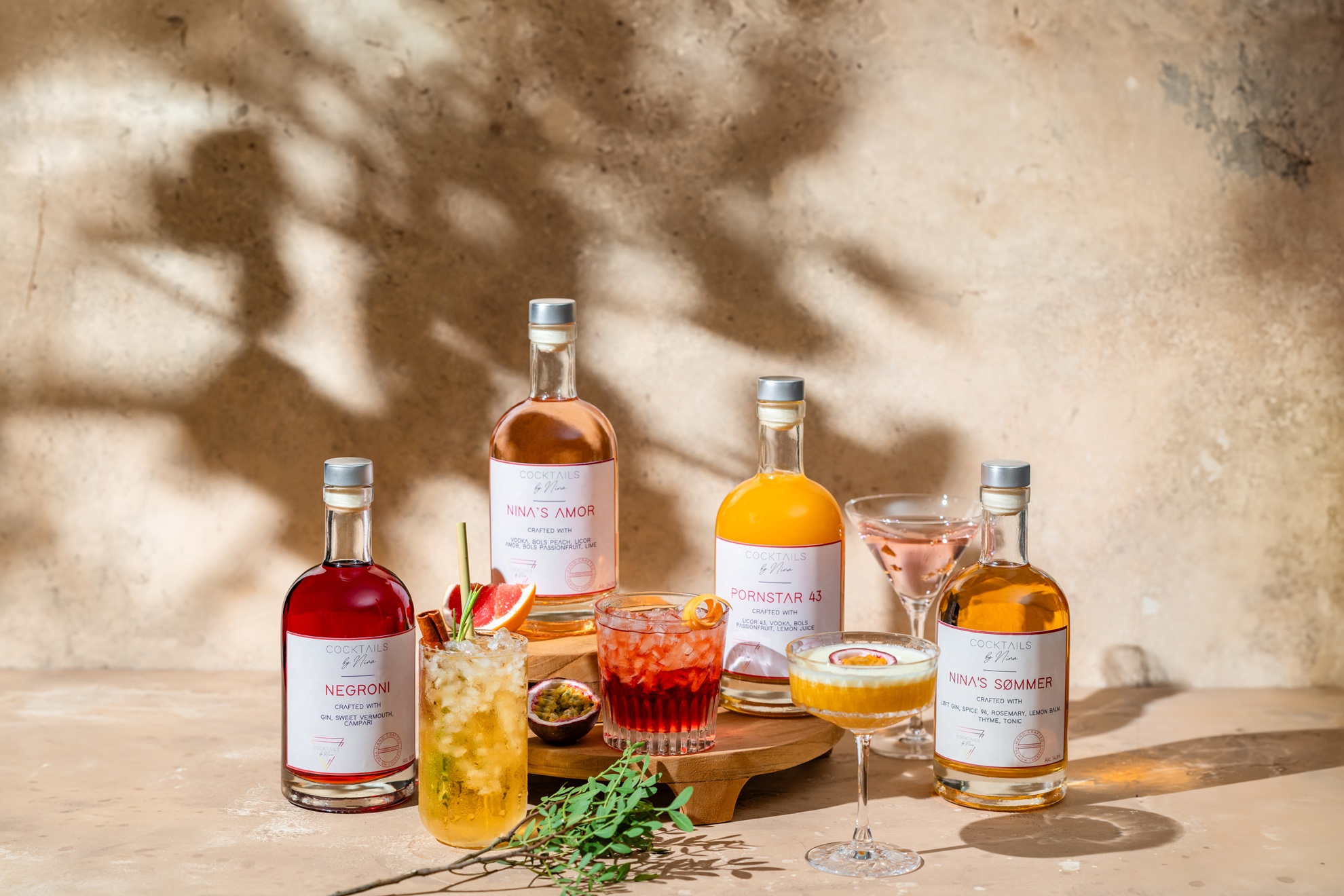
Cocktailsbynina offers ready-to-drink cocktails and mocktails at bar-level, prepared with premium ingredients. Whether you're hosting a party or just want to end an evening with something special: the cocktail box with 4 pieces immediately gives you four different flavors without any preparation. For those who prefer non-alcoholic enjoyment, the assortment of non-alcoholic cocktails offers the same experience without alcohol. Cocktailsbynina delivers directly to your home in the Netherlands and Belgium, ready to serve.
Frequently Asked Questions
What is the basic ratio for a cocktail recipe?
The standard ratio is 2:1:1, which stands for 60 ml spirit, 30 ml fresh lemon juice, and 30 ml simple syrup. This provides a balanced cocktail as a starting point for any recipe.
How long should you shake a cocktail?
Shake vigorously for 10–15 seconds for proper chilling and dilution. Shaking for a shorter time results in insufficient chilling, while shaking for too long over-dilutes the cocktail.
What are bar-quality cocktails at home?
Bar-quality cocktails are drinks that are equivalent in taste, balance, and presentation to what a professional bartender serves. You achieve this at home with fresh ingredients, accurate measuring, and the right technique.
How do you correct a cocktail that tastes too bitter?
Add a small pinch of salt. Salt suppresses bitterness and enhances the sweet-sour balance without needing extra syrup.
Which cocktails are the best starting point for beginners?
Start with classic recipes such as a Daiquiri, Whiskey Sour, or Gimlet. These cocktails illustrate the basic principles of balance and technique and are easy to adapt to your own taste.