The difference lies in the bowl. A coupe glass has a round, shallow bowl with a wide opening. A martini glass has a straight, V-shaped bowl on a thin, tall stem. Both glasses are made for the same thing: cocktails that you shake or stir cold and then serve without ice, ‘straight up’ as bartenders say. Which glass you pick depends on the cocktail, the look you are going for and how busy it is at your party. Below you will read which glass works best for each situation, which size to choose and how to walk through a crowded room with it without spilling.
In short
- Shape: the coupe is round and bowl-shaped, the martini glass is triangular with a sharp V-shaped bowl. Both have a stem so your hand does not warm up the drink.
- Use: both are for cocktails without ice. Classic in the martini glass: Dry Martini and Cosmopolitan. Classic in the coupe: Daiquiri, sours and cocktails with a foam layer.
- Capacity: a coupe usually holds around 15 to 20 cl, a martini glass around 15 to 25 cl. Our martini glass is 26 cl.
- Serving: the coupe is a bit easier to carry through a busy room, you pour the martini glass just below the rim and carry it by the stem.
- Espresso Martini: fits in both, as long as the glass is well chilled.
Table of contents
- The difference at a glance
- Shape, stem and temperature
- Which cocktails belong in which glass
- Which glass for an Espresso Martini?
- Capacity and size: what to look out for
- Serving at a party without spilling
- Can you also use a coupe for champagne?
- Perspective: how we see it
- Cocktails and glasses in one order
- Frequently asked questions
- Sources
The difference at a glance
Anyone who puts the two glasses next to each other sees the difference immediately. Yet there are more differences than just the shape. This table lists the most important ones.
| Feature | Coupe glass | Martini glass |
|---|---|---|
| Bowl | Round, shallow, bowl-shaped | Straight, V-shaped, cone-shaped |
| Opening | Wide, but slightly more enclosed by the bulge | Wide and open |
| Stem | Usually shorter to medium | Thin and tall |
| Usual capacity | About 15 to 20 cl | About 15 to 25 cl |
| Ice in the glass | No | No |
| Typical cocktails | Daiquiri, Sidecar, Whiskey Sour, champagne cocktails | Dry Martini, Cosmopolitan, Manhattan, Espresso Martini |
| Look | Retro, twenties, soft | Sleek, iconic, elegant |
| Carrying at a party | Slightly more stable, spills less easily over the rim | Pour full to just below the rim and hold by the stem |
The core: they are two variants of the same idea. Culy describes coupe glasses even as the rounded variant of the martini glass. So you are not choosing between right and wrong, but between two styles that each suit certain drinks a bit better.
Shape, stem and temperature
Why do both glasses have a stem? Because the drink in the glass has no ice to stay cold. A cocktail ‘up’ is first shaken or stirred with ice, then strained and poured into the glass without ice. From that moment on, it slowly warms up. If you grab the glass by the bowl, your hand accelerates that process. With the stem you keep your fingers at a distance and the cocktail stays at temperature longer. According to Cocktailgids.be, that is exactly the reason both glasses have a stem.
The martini glass is also often blown quite thin. That looks refined and feels pleasant on the lips, but it is also the reason you do not put ice cubes in it. The same applies to the coupe: no ice in the glass.
The shape of the bowl determines how the cocktail behaves. In the wide V of a martini glass, the drink lies like a wide, shallow mirror. A clear, stirred cocktail like a Dry Martini comes into its own most beautifully there: you see the color, the garnish and the olive or lemon twist in one glance. The round bowl of the coupe keeps the liquid together a bit more. That makes it suitable for shaken cocktails with a foam layer, because the foam forms a beautiful, rounded rim.

A fun fact from history: according to Imbibe Magazine, the Martini cocktail existed about forty years before the modern martini glass was around, and the first Martinis were probably poured in champagne coupes. So the two glasses are family with each other.
Which cocktails belong in which glass
There is no law that prescribes which drink must go in which glass. There are customs that bartenders have followed for decades, and they work because the glass and cocktail fit together.
Classic in the martini glass
- Dry Martini: the namesake. Clear, stirred, with olive or lemon twist.
- Cosmopolitan: the pink classic from the nineties, with vodka, cranberry and lime. Cocktailgids.be calls it together with the Dry Martini as the type of drink that lets this glass shine.
- Manhattan: whiskey, sweet vermouth and bitters. Can also go in a coupe.
- Espresso Martini: the coffee cocktail that appears at every party. More about that below.
Classic in the coupe glass
- Daiquiri: rum, lime and sugar, shaken and served ice cold.
- Sours: Whiskey Sour, Amaretto Sour and other cocktails with egg white. EntreeMagazine calls the coupe suitable for cocktails with foam.
- Sidecar and Aviation: classics from the beginning of the twentieth century that fit the retro shape.
- Champagne cocktails: a French 75 or a glass of bubbles with a splash of liqueur.
EntreeMagazine also describes why many modern cocktail bars choose the coupe: bartenders took over the original champagne glass as a glass that spills less easily than the martini glass. That is reflected in the hospitality industry, but at home the choice is often simpler: which glass fits the atmosphere of your evening?
If you want to see even more glasses next to each other, also for long drinks and cocktails on ice? Then read this overview of types of cocktail glasses for home. For the complete approach to assembling your glassware, we have our own step-by-step plan for choosing glassware.
Which glass for an Espresso Martini?
The Espresso Martini carries ‘Martini’ in the name, so the martini glass is obvious. And that works perfectly: the wide V lets the dark cocktail with its light foam rim look beautiful, and the three coffee beans on top lie there as if on a presentation plate.
In many bars you also see it in a coupe, because the round bowl keeps the foam together a bit longer. Both choices are good. More important than the shape:
- Pre-chill the glass. Put it in the freezer for fifteen minutes, or fill it with ice and water while you prepare the cocktail and empty it just before pouring.
- Pour in one smooth motion. This keeps the foam layer even.
- Serve immediately. A cocktail without ice is at its best in the first minutes.
If you want to make it easy for yourself, then order our Espresso Martini with four matching glasses: the bottle is ready to pour, the glasses are included.
Capacity and size: what to look out for
Glasses differ greatly in capacity, and that matters more than you would think. A glass that is too small fills up to the rim. A glass that is too large makes a cocktail of normal size small and skinny.

As a guideline, Cocktailgids.be usually calls for 15 to 20 cl for a coupe and generally 15 to 25 cl for a martini glass. Libelle Lekker holds more generously for both glasses, with 25 to 30 cl. That difference shows how broad the range is: from small vintage coupes to generous modern martini glasses.
This is how you choose the right size:
- Calculate back from your cocktail. A classic cocktail ‘up’ has become slightly larger after shaking or stirring with ice due to the melted ice. Choose a glass with some space above the liquid.
- Space for foam. Cocktails with a foam layer, such as an Espresso Martini or a sour, need a few extra centimeters.
- Space to walk. If you are going around with the glasses at a party, choose a glass that does not need to be filled to the rim.
Our 26 cl martini glass is on the generous side. Because of that, you pour a full cocktail with space for foam or garnish, without the liquid standing against the rim.
Serving at a party without spilling
At home at the table, the shape matters little. At a birthday with thirty guests, where you walk between people with a tray, it does. Cocktailgids.be points out that a martini glass quickly becomes too full and that in the round coupe the liquid can splash more easily. With a few habits you will have no trouble with either.
For the martini glass:
- Pour to about a finger's width below the rim. Then the glass still looks full, but nothing spills over.
- Carry the glass by the stem, not by the bowl. That gives more control and keeps the cocktail cold.
- Place glasses on a tray with an anti-slip mat or a linen cloth.
For the coupe:
- Walk slowly and hold the glass straight. The rounded rim catches small wobbles.
- Also here: do not fill to the rim.
For both:
- Pre-chill the glasses. For a group, put them in the freezer or on a tray of ice half an hour before the party.
- Only pour when you are going to serve. A cocktail without ice that stands on the counter for ten minutes is no longer an ice-cold cocktail.
- Work in small rounds of four to six glasses. Then everything stays cold and you never walk with an overflowing tray.
More tips for serving a smaller group are in our guide about cocktails for small groups.
Can you also use a coupe for champagne?
Yes, that is what it was originally intended for. The wide, shallow coupe was the champagne glass for a long time, before the narrow flute became popular. A coupe full of bubbles immediately gives a festive, retro look, think of a champagne tower at a wedding or a New Year's Eve party in the twenties style.
It is good to know: due to the large surface area, the bubbles disappear in a coupe faster than in a narrow glass. Therefore, pour smaller portions and pour more often. Then everyone always has a glass with lively mousse.
You normally do not use a martini glass for champagne. The straight V-shape is made for still, ice-cold cocktails. A champagne cocktail with a base of liqueur or gin, complemented with bubbles, fits perfectly in a coupe.
Perspective: how we see it
At Cocktails by Nina we often get this question from people who are organizing a party. Our answer is always the same: start with the cocktail and with your guests, not with the glass.
If you are pouring a Cosmopolitan or an Espresso Martini, then the martini glass is the classic choice and the choice that guests immediately recognize. That iconic silhouette is for many people the image of a real cocktail. That is why we also deliver those cocktails with matching martini glasses: then the picture is right from the first glass.
What we see especially in practice: the glass only makes the difference when the cocktail itself is good. An ice-cold, well-balanced cocktail in a pre-chilled glass makes more of an impression than any glass with a lukewarm, sloppily mixed drink. We make our cocktails with premium ingredients and spirits, so that you serve bar-quality at home without mixing yourself. You chill the glasses, pour, and are back with your guests.
Our tip: choose one glass shape for the whole evening. That looks calmer on the table and makes serving easier.
Ruud
Cocktails and glasses in one order
Want to have the choice between glass and cocktail right away? With us you order ready-made cocktails with the glasses included. Our Cosmopolitan with four martini glasses and the Espresso Martini set are made for exactly this moment: put the bottle in the fridge, pre-chill the glasses, pour.
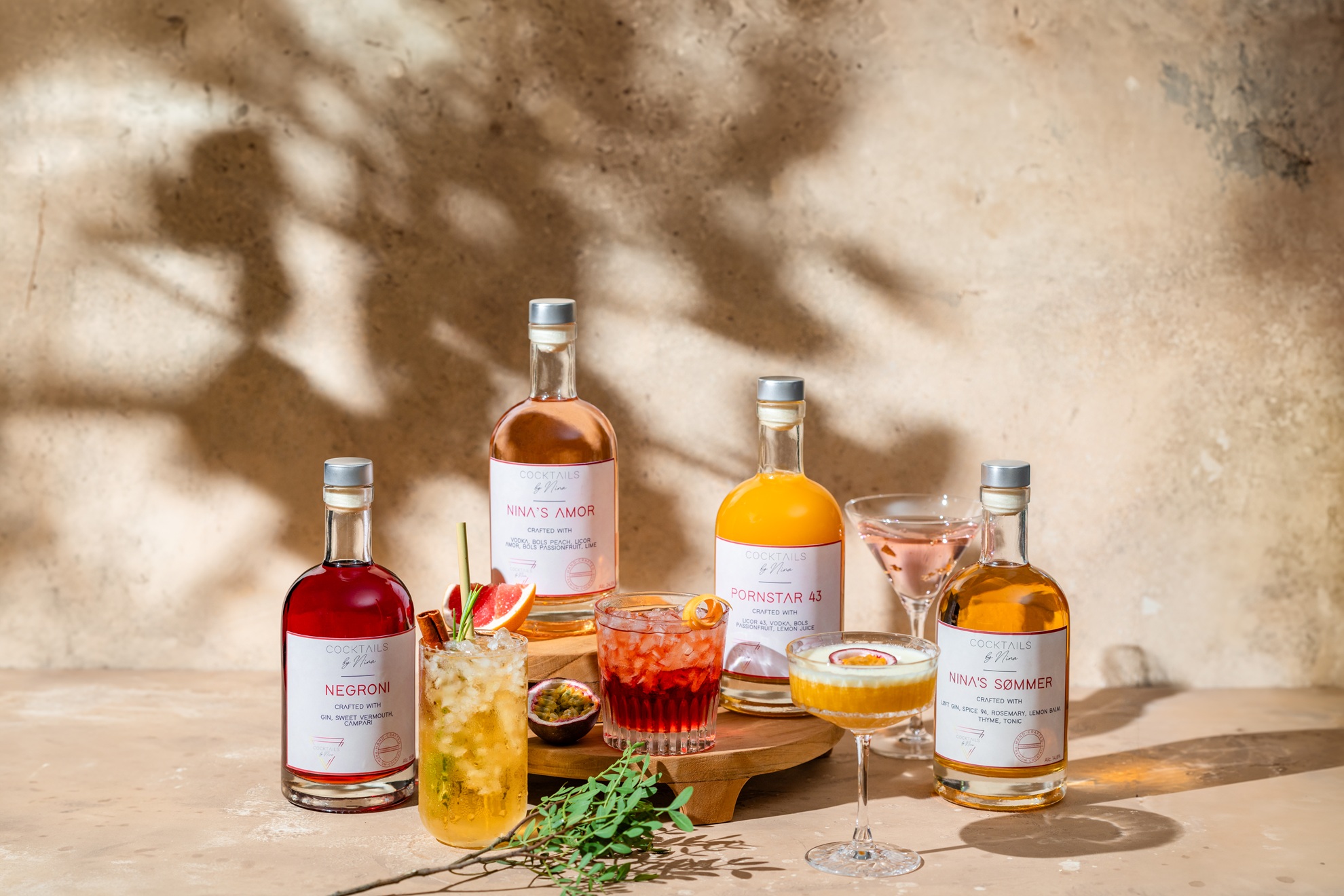
In our glassware you will find individual martini glasses, margarita glasses and hurricane glasses, and with a cocktail box you will immediately have a mix of flavours for your guests. We offer free shipping on orders over €75, and in Amsterdam you can also pick up your order directly. Are you organising a larger party or a corporate event? Then we will help you with bespoke cocktails and catering.
Frequently asked questions
Which glass do you use for an Espresso Martini?
A martini glass or a coupe, both properly chilled. The martini glass is the classic choice that suits the name, while the coupe keeps the foam layer nicely together. More important than the shape is that you serve it immediately after pouring.
Can you put ice in a coupe or martini glass?
No. Both glasses are intended for cocktails that you shake or stir with ice and then serve without ice. The martini glass is also often thin-blown. If you want a cocktail on ice, choose a tumbler or a long drink glass.
What kind of glass do you use for a gin and tonic?
You serve a gin and tonic with plenty of ice, so not in a coupe or martini glass. Most people choose a large balloon glass or a tall long drink glass, so there is room for ice, tonic and garnish.
Is a coupe the same as a champagne glass?
The coupe is one of the classic champagne glasses, alongside the flute and the tulip glass. Nowadays it is used at least as often for cocktails. For champagne it gives a festive retro look, although the bubbles disappear faster in it than in a narrow glass.
What capacity is convenient for a martini glass?
Most martini glasses are between 15 and 25 cl. A glass around 25 cl gives room for a full cocktail with foam or garnish, without having to pour up to the rim. Our martini glass is 26 cl.
Sources
- Culy: all types of cocktail glasses listed
- Cocktailgids.be: glass guide for cocktails
- EntreeMagazine: which cocktail in which glass?
- Libelle Lekker: which glass for which cocktail?
- Imbibe Magazine: the origin of the martini glass