The Martini cocktail is the most minimalist classic cocktail in the world: gin and dry vermouth, stirred with ice, served in a chilled glass with an olive or lemon twist. It is precisely this minimalism that makes it demanding. Every ingredient counts, every technique error is visible. But those who know the basics can make a martini at home that tastes better than most bar versions. This guide covers the correct proportions, the preparation technique, the most famous variations, and the serving tips that make all the difference.
What ingredients make an authentic Martini cocktail?
The classic martini consists of two ingredients: gin and dry vermouth. According to the IBA (International Bartenders Association), the standard ratio is 60 ml gin to 10 ml vermouth, which amounts to a 6:1 ratio. This ratio gives gin the starring role, while vermouth softens the edges and adds aroma.
Choosing the right gin
London Dry Gin is the classic choice for a martini. Brands like Tanqueray, Beefeater, and Hendrick’s each offer a different character: from spicy and dry to floral and soft. Quality gin determines the taste of the entire cocktail, as there is no sugar, juice, or other flavoring to mask a lesser spirit. So choose wisely.

Vermouth: underestimated but indispensable
Vermouth is often treated as an afterthought, but it is at the core of the balance. Without vermouth, it's just cold gin. Dry vermouth adds spicy, slightly bitter notes that complement the gin. Always store vermouth in the refrigerator after opening. Poorly stored vermouth gives off musty, flat flavors that spoil the entire cocktail.
| Ingredient | Quantity (IBA) | Function |
|---|---|---|
| Gin (London Dry) | 60 ml | Base and character |
| Dry vermouth | 10 ml | Balance and aroma |
| Ice | Plenty | Cooling and slight dilution |
| Garnish | 1 olive or lemon twist | Flavor accent |
- Always use fresh, chilled vermouth from the refrigerator.
- Choose a gin whose botanicals you know.
- Use large ice cubes: they melt slower and dilute less.
- Measure ingredients with a jigger for consistency.
Pro-tip: Never keep your bottle of vermouth in the refrigerator for longer than two months. Vermouth is wine and oxidizes after opening. A fresh bottle makes a noticeable difference in the taste of your martini.
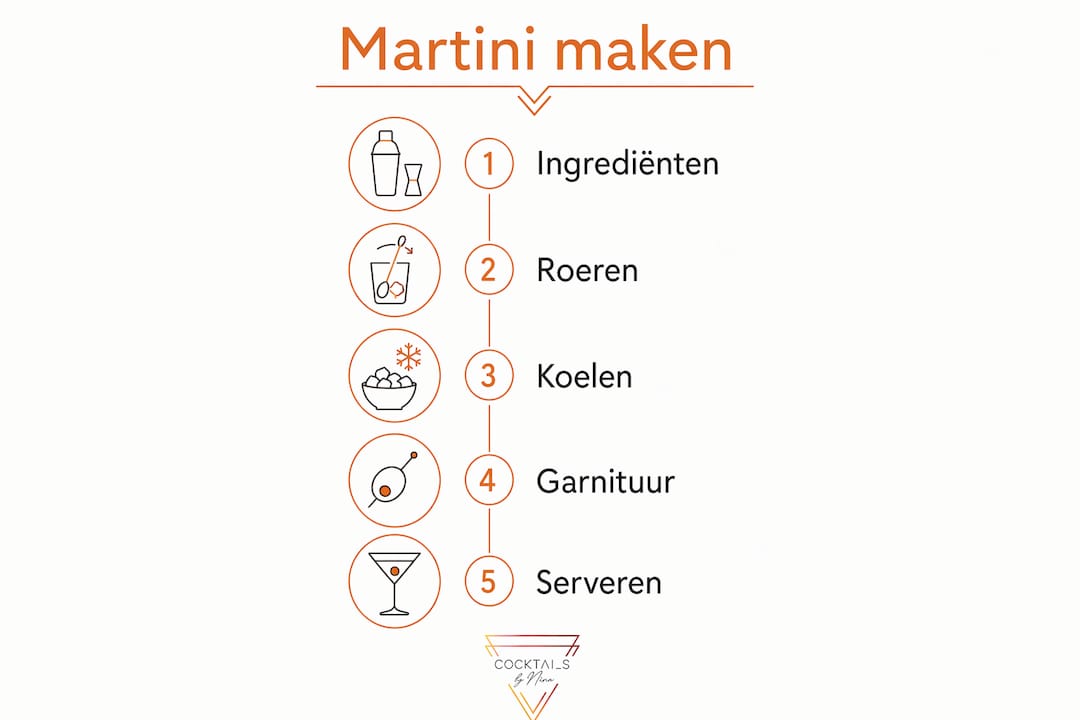
How to make a Martini cocktail step-by-step?
The preparation method of a martini is just as important as the ingredients. The technique determines the temperature, clarity, and texture of the final result. Stirring is the only correct method for a classic martini.
-
Put your martini glass in the freezer. Place the glass in the freezer for at least 15–20 minutes to create a frost layer. A frozen glass keeps the martini cold longer and gives a professional result.
-
Fill a mixing glass with ice. Use large, clear ice cubes. Fill the glass three-quarters full.
-
Add the vermouth. Pour 10 ml of dry vermouth over the ice. Stir briefly so that the ice absorbs a layer of vermouth.
-
Add the gin. Pour 60 ml of gin over the ice and vermouth.
-
Stir for 20–30 seconds. Use a long spoon and stir gently but constantly. Stirring for 20–30 seconds provides the right balance of cooling, slight dilution, and clarity.
-
Strain the cocktail into the chilled glass. Use a Hawthorne strainer or a fine-mesh strainer for maximum clarity.
-
Add the garnish. Choose an olive or a lemon twist, not both.
Why shaking doesn't work
Shaking is the most common mistake with a martini. Shaking makes the gin cloudy and creates small ice shards in the glass. The result is a watery, hazy drink that loses its elegance. Stirring provides a silky-smooth texture and a clear color. You can read more about the influence of shaking on taste in our detailed explanation of techniques.
Stirring for too long is also wrong
Stirring for longer than 30 seconds leads to too much dilution. The cocktail becomes watery and loses its strength. Keep a timer handy until you develop the feel for it.
Pro-tip: Also place your mixing glass in the freezer for 10 minutes before use. A cold glass slows down the melting of the ice and gives you more control over dilution.
What variations of the martini are there?
The martini is a basic recipe with endless possibilities for customization. Each variation changes the character of the cocktail in a specific way. Here are the most popular versions you can make at home.
-
Dirty Martini. Add a splash of olive brine to the classic recipe. The dirty martini has a salty, savory flavor that works well with a gin with pronounced botanicals. Use the brine sparingly: a teaspoon is enough.
-
Dry Martini. Drastically reduce the amount of vermouth, to a ratio of 10:1 or even less. Some versions only rinse the glass with vermouth and discard the rest. The result is a cocktail that is almost pure gin, with a dry, sharp taste.
-
Vodka Martini. Replace the gin with vodka. The cocktail becomes softer and more neutral in taste. Vodka has less pronounced botanicals, allowing the vermouth to come to the fore more. This is a good choice for those who find gin too strong.
-
Perfect Martini. Use equal parts dry and sweet vermouth. The sweet vermouth adds a slight roundness. This is a lesser-known but interesting variation for those who enjoy more complexity.
-
Gibson. Identical to the classic martini, but garnished with a cocktail onion instead of an olive. The onion adds a slightly spicy, sweet taste to the last sips.
The choice of garnish noticeably changes the taste experience. An olive adds savory notes, a lemon twist releases fresh, citrusy aromas when squeezed over the glass. Never combine both garnishes in one glass: the flavors clash, and the cocktail loses its harmony.
Which serving tips complete a martini at home?
Serving a good martini goes beyond the recipe. The presentation, garnish, and accompanying dishes determine the overall experience. Small details make the difference between an ordinary cocktail and a true experience.
Garnish: choose one, not two
The garnish is not just decoration but a flavor component. An olive adds savory, salty notes that complement the gin. A lemon twist releases fresh citrus oil when squeezed over the glass. Never combine both garnishes in one glass: the flavors clash and the cocktail loses its harmony.
For a dirty martini, always use an olive, preferably one stuffed with blue cheese or anchovies for extra depth. For a classic or dry martini, use a lemon twist if you prefer a fresher taste.
Food pairing with a martini
The martini is an aperitif by nature. It stimulates the appetite and calls for snacks that complement the taste without overpowering it. The best choices are snacks with umami and a salty character.
- Olives and pickles align with the savory notes of the cocktail.
- Parmesan or aged cheese enhances the dry, nutty aspects of the gin.
- Smoked salmon or blinis suit the elegance of the martini.
- Avoid sweet snacks: they clash with the dry, bitter notes of vermouth.
More ideas about snacks with aperitif cocktails can be found in our guide to aperitif drinks.
The right glass
A martini belongs in a 26 cl martini glass. The wide opening allows the aromas to release. The long stem keeps the heat from your hand away from the cocktail. Do not use a wine glass or tumbler as an alternative: the shape directly affects the taste experience.
Pro-tip: Always serve a martini immediately after stirring. A martini that stands too long loses its cold temperature and becomes watery. Prepare it only when your guest is ready to drink.
Key insights
The martini cocktail is the most demanding classic cocktail to make at home, but those who master the correct proportions, technique, and garnish consistently deliver a bar-worthy result.
| Point | Details |
|---|---|
| Gin and vermouth ratio | Use 60 ml gin to 10 ml dry vermouth for the IBA standard of 6:1. |
| Stir, don't shake | Stir for 20–30 seconds for a clear, cold martini without ice shards. |
| Storing vermouth | Always store vermouth in the refrigerator after opening to prevent musty flavors. |
| Freezing glass | Place the martini glass in the freezer for 15–20 minutes for the best serving temperature. |
| Choosing garnish | Choose an olive or lemon twist, never both simultaneously, as the flavors conflict. |
My honest take on making a martini at home
The martini has a reputation as a difficult cocktail, but that reputation is only half true. The technique is easy to learn. What trips people up is underestimating the quality of the ingredients.
For years, I made martinis with cheap gin and vermouth that had been open for weeks. The result was always disappointing, but I didn't understand why. Until I switched to a good London Dry Gin and fresh vermouth from the refrigerator. The difference was immediate and dramatic.
The other point people miss is freezing the glass. It seems like a detail, but a warm martini glass is the quickest way to ruin a good cocktail. The cocktail warms up in seconds and loses its texture. Fifteen minutes in the freezer costs nothing and yields a professional result.
My advice: start with the classic 6:1 ratio and then experiment. Try a dry version with less vermouth, or add a splash of olive brine for a dirty martini. The martini is a cocktail that you can shape to your own taste, but first learn the basics. Without that basis, experimenting is guesswork.
— Ruud
Cocktailsbynina: ready-to-drink cocktails for home
Making a martini yourself is a skill that requires time and practice. You don't always feel like it, and that's perfectly fine.

Cocktailsbynina offers a wide range of ready-to-drink cocktails and mocktails that are ready to serve immediately, without mixing or measuring. The cocktail box with 4 pieces is ideal for an evening with friends, and the cocktail box with 6 pieces covers a larger gathering. Everything is prepared with premium ingredients to bar quality. View the full range on the Cocktailsbynina website and order directly for home delivery.
Frequently asked questions
What is the correct ratio for a martini?
The IBA standard is 60 ml gin to 10 ml dry vermouth, a ratio of 6:1. Adjust the amount of vermouth to taste for a drier or fuller result.
Should a martini be stirred or shaken?
A classic martini is always stirred, never shaken. Shaking makes the cocktail cloudy and watery due to ice shards and too much dilution.
How long do you store vermouth after opening?
After opening, store vermouth in the refrigerator and use it within two months. Vermouth is wine and oxidizes after opening, which directly affects the taste of your martini.
What is the difference between a dirty and a dry martini?
A dirty martini contains a splash of olive brine for a salty taste. A dry martini uses less vermouth, sometimes just a rinse of the glass, for a drier and sharper cocktail.
Which glass do you use for a martini?
A martini belongs in a martini glass with a wide opening and a long stem. The stem keeps the heat from your hand away from the cocktail, and the wide opening allows the aromas to release.