A bar chef is the leading professional who manages the entire bar operation, ensures quality, and motivates the team. The role combines hands-on bartending with management tasks such as staff scheduling, inventory management, and concept development. To understand what a bar chef does, one must know that this role goes beyond shaking cocktails. A bar chef is ultimately responsible for the daily operation of a bar, focusing on team leadership, quality assurance, and business results. The position typically requires at least two years of proven experience in a leadership role within the hospitality industry.
What is a bar chef and what does this role entail?
A bar chef is the link between a hospitality business's vision and its execution on the floor. In the industry, the role is also referred to as "head bartender" or "bar manager," but the term bar chef specifically emphasizes the combination of craftsmanship and leadership. While a bartender primarily prepares drinks and serves guests, a bar chef is also responsible for the team, finances, and the quality of the overall offering.
The difference between a bar chef and a bartender lies in the scope of responsibility. A bartender executes. A bar chef manages, ensures quality, and contributes to the bar's direction. The bar chef bridges the owner's vision and the concrete implementation of brand values on the floor. This makes the role both operational and strategic.

The role is relevant for anyone who takes cocktail culture seriously. Whether you visit a professional bar, want to understand cocktails at home, or are considering taking on a leadership role yourself: the bar chef largely determines the quality and atmosphere of a bar. More about the difference between a home bar and a professional setting can be read in this article about the difference between a home bar and a professional bar.
What are the tasks and responsibilities of a bar chef?
The responsibilities of a bar chef are broad and varied. They include both daily operational tasks and long-term planning. Below are the core responsibilities:
- Operational supervision during shifts: The bar chef is present as a working supervisor. He or she monitors service levels, checks hygiene, and ensures compliance with alcohol legislation.
- Team leadership and coaching: The bar chef leads the bar team daily, guides new employees, and ensures everyone understands and applies service protocols.
- Inventory management and ordering: Bar chefs are responsible for orders, inventory, and margins, monitored through reports. This requires accuracy and insight into costs.
- Cocktail menu development: The bar chef develops and updates the beverage offering, tailored to season, trends, and the bar's identity.
- Collaboration with the kitchen: Coordination with the head chef on food pairings and culinary concepts enhances the overall hospitality experience.
- Financial reporting: Costs per drink, staff hours, and margins fall under the bar chef's responsibility.
The tasks of a bar chef are therefore not limited to the bar itself. They extend to personnel policy, procurement, and concept development.
Pro-tip: Want to understand how a bar chef ensures quality? Read also about bar quality at home and the principles professionals use for consistent drink preparation.
How does a bar chef contribute to the business and creative side?
A bar chef not only considers what goes into the glass but also what the business yields. The bar chef plays a strategic role in developing the cocktail offering and collaborates closely with head chefs for food pairings. Success is directly linked to achieving financial goals and creative menu development.
The business and creative contribution of a bar chef can be divided into four specific areas:
- Concept development: The bar chef devises and refines the bar's beverage concept. This includes signature cocktails, seasonal menus, and thematic drink lists that fit the identity of the restaurant or hotel.
- Margin management: Every cocktail has a cost price. The bar chef monitors the ratio between ingredient costs and sales price. A well-managed margin makes the difference between a profitable and an unprofitable bar.
- Guest experience as a sales tool: Creativity in cocktails attracts guests and ensures repeat visits. A unique drink list is a marketing tool. The bar chef understands this and translates it into concrete choices on the menu.
- Food pairing and collaboration: Collaboration between bar chef and head chef requires technical knowledge of culinary ingredients and techniques. This leads to unique cocktails and food pairing innovations that surprise guests. More about the principles of gin and food pairing provides a good insight into how flavors and drinks enhance each other.
The balance between creativity and business efficiency is the core of bar chef-ship. A bar chef who is only creative but ignores costs harms the business. A bar chef who only focuses on numbers misses the opportunity to surprise guests.
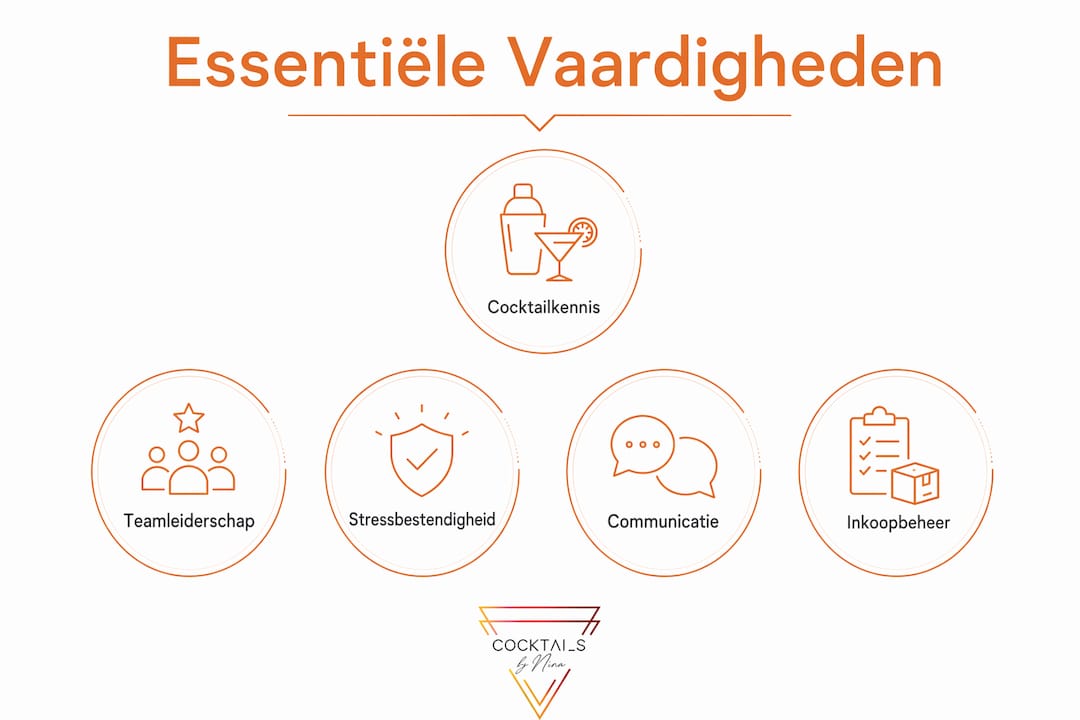
What are the essential skills for a bar chef?
Bar chef skills are a combination of professional knowledge, leadership qualities, and personal attributes. The role requires individuals who are both technically strong and capable of communicating effectively under pressure.
The most sought-after skills are:
- Professional cocktail knowledge: In-depth knowledge of classic and modern cocktails, distillates, bitters, and techniques such as muddling, stirring, and fat-washing is fundamental. Without mastering the technique, one cannot coach the team.
- Leadership experience: The bar chef training largely consists of practical experience. The position typically requires at least two years in a leadership role within the hospitality industry. Formal education in hospitality management or mixology strengthens the position.
- Stress resistance: Friday night, a full bar, two employees sick. The bar chef remains calm and resolves issues without guests noticing anything.
- Communication skills: Motivating, instructing, and giving feedback are daily tasks. A bar chef who does not communicate clearly loses the team.
- Knowledge of laws and regulations: The Alcohol and Catering Act in the Netherlands sets requirements for serving alcohol. The bar chef is responsible for compliance and instructs the team on this.
- Problem-solving ability: Unpretentious and solution-oriented bar chefs maintain the atmosphere even during problems. They step in during staffing issues without degrading the bar experience.
Pro-tip: Aspiring bar chefs who want to test their skills can start by learning the role of a mobile bartender. This provides insight into the operational foundation on which a bar chef builds.
What makes a bar chef successful according to the industry?
Technical knowledge is the threshold, not the distinguishing factor. What sets top bar chefs apart is their ability to create a culture where the team performs well and guests feel welcome.
“The magical quality of a bar chef is the ability to create a welcoming team culture, even in stressful situations.” Bar chef Boqueria
A bar chef typically spends 80% of their time on operational tasks on the floor and 20% on strategic and administrative planning. This ratio shows that the bar chef is primarily an executive leader, not an office manager. Success is directly linked to reducing costs per drink and efficiently deploying staff hours.
During peak hours, a good bar chef anticipates problems and delegates when necessary. Managing peak hours requires anticipation and delegation of tasks to maintain calm and a positive guest experience. This is not a coincidence. It is the result of preparation, clear task distribution, and a team that knows what is expected of them.
Successful bar chefs also interpret the business vision. They ensure that service protocols not only exist on paper but are actually applied. A bar chef who develops signature cocktails that are consistently prepared builds the bar's reputation. Consistency is the foundation of quality in the hospitality industry.
Key Insights
A bar chef is the operational and strategic leader of the bar, combining team leadership, quality assurance, and business results in one role.
| Point | Details |
|---|---|
| Bar chef definition | A bar chef manages the entire bar operation and combines craftsmanship with management. |
| Task distribution | Bar chefs work 80% operationally and 20% strategically and administratively. |
| Difference from bartender | A bartender executes; a bar chef manages, ensures quality, and thinks strategically. |
| Key skills | Cocktail knowledge, leadership, stress resistance, and knowledge of the Alcohol and Catering Act are indispensable. |
| Success factor | Creating a welcoming team culture under pressure distinguishes a good bar chef from an excellent one. |
The bar chef as the heart of cocktail culture
Over the years, I've seen many bars from the inside, and I'm always struck by how crucial the bar chef is to the atmosphere. Not the decor, not the drink menu, but the person behind the bar leading the team.
What I notice is that the best bar chefs I've met never want to be the smartest person in the room. They are usually the calmest. While it's busy, while orders pile up and an employee is out, they remain calm. That calmness is learned, not innate. It's the result of years of experience and a conscious choice to solve problems rather than escalate them.
What I also see is that the creative side of bar chef-ship is underestimated. Putting a new cocktail on the menu is not just a matter of taste. It's a decision that affects the margin, procurement, team training, and guest expectations. The bar chefs who understand this build bars that last for years.
Finally: cocktail culture in the Netherlands is growing. Guests are becoming more critical and demanding. This only makes the bar chef's role more important. As a cocktail enthusiast, if you want to understand why a bar is good, you don't just look at the menu. You look at the person who created that menu and the team that executes it.
— Ruud
Cocktail experience at home with Cocktailsbynina
Anyone who wants to experience the quality of a professional bar at home doesn't have to be a bar chef.

Cocktailsbynina brings bar-quality directly to your door. The assortment includes ready-to-drink cocktails, mocktails, and cocktail boxes, all prepared with premium ingredients. Whether you're hosting a party, looking for a gift, or simply want to enjoy a good cocktail without the hassle: the Cocktailsbynina cocktail boxes offer a complete experience. For those who prefer non-alcoholic enjoyment, the non-alcoholic cocktails are an excellent starting point. Professional quality, served at home.
Frequently Asked Questions
What is the difference between a bar chef and a bartender?
A bartender prepares drinks and serves guests. A bar chef leads the team, ensures quality, and is responsible for finances and concept development.
What education does a bar chef need?
There is no fixed standard for a formal bar chef education. The role typically requires at least two years of experience in a leadership hospitality role, complemented by professional knowledge of cocktails and hospitality management.
How much time does a bar chef spend on management versus working behind the bar?
A bar chef spends an average of 80% of their time operationally behind the bar and 20% on strategic and administrative tasks such as planning and reporting.
What are the most important skills of a bar chef?
Key skills include cocktail knowledge, team leadership, stress resistance, communication skills, and knowledge of the Alcohol and Catering Act.
Why is collaboration with the kitchen important for a bar chef?
Good collaboration with the head chef enables food pairings and unique cocktail concepts. This elevates the bar's level and distinguishes its offerings from the competition.