Many people think that a great cocktail begins and ends with a bottle of expensive gin or premium whiskey. Put that bottle down, pour some in, and you're done. But if you've ever hosted a party where the drinks tasted disappointing despite a significant investment in spirits, you know something is missing. The secret to a truly good cocktail lies not only in the spirit, but in the ratio and the choice of mixer. In this article, we'll thoroughly examine what spirits and mixers are, how they work together, and why the right combination makes the difference between a lukewarm drink and a bar-worthy cocktail.
Table of Contents
- What are spirits and how do you recognize them?
- Mixers: flavor enhancers and character creators
- The art of combining: ratio, technique, and texture
- Ready-to-serve trending: premium examples and market trends
- What experts often forget about the difference between spirits and mixers
- Enjoy yourself? Ready-made cocktails and premium mixers
- Frequently Asked Questions
Key Insights
| Point | Details |
|---|---|
| Spirits are the base | Spirits determine the character and body of every premium cocktail. |
| Mixers make the difference | Mixers provide freshness, balance, and accessibility in your drink. |
| Technique influences taste | Stirring or shaking your cocktail changes its taste and texture. |
| Ready-to-serve is growing | Ready-made cocktails and mixers are becoming increasingly popular due to quality and convenience. |
What are spirits and how do you recognize them?
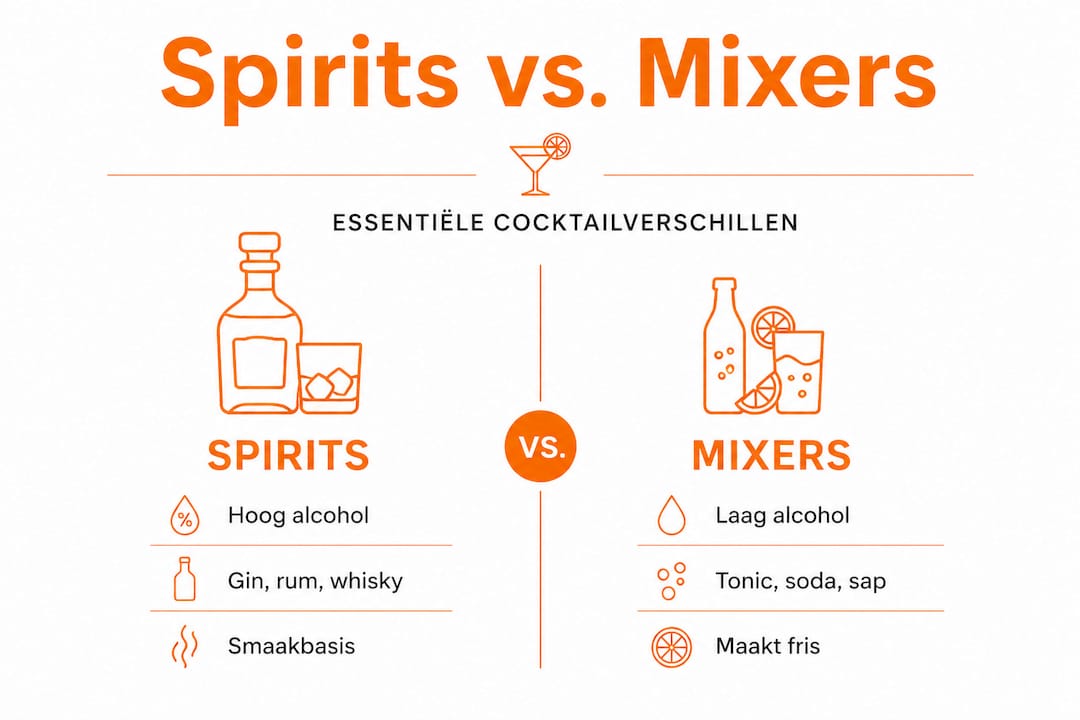
Let's start with the foundation. A spirit is a distilled alcoholic beverage, meaning the liquid has been purified through heating and condensation to a high alcohol content. In most countries, a minimum of 35% alcohol by volume (ABV) is required for a drink to be officially called a spirit. That's more than double that of wine and significantly more than beer.
Spirits are distilled alcoholic beverages with a high alcohol percentage, such as gin, rum, whiskey, vodka, and genever, which form the basis for cocktails and are often drunk neat or with minimal mixers. That sounds simple, but within each category, there are dozens, if not hundreds, of variants that differ greatly in taste, character, and production method.
Take gin as an example. A classic London Dry Gin has a dry, juniper-like taste, while a New Western Gin brings out floral and citrus notes. You cannot simply interchange these two in a cocktail without changing the end result. The same applies to rum: white rum is light and neutral, while dark rum brings deep caramel and spices.
The most commonly used spirits in cocktails are:
- Gin: Juniper aroma, ideal in a G&T or Martini
- Vodka: Neutral and versatile, works in almost any cocktail
- Rum: Light or dark, from Mojito to Dark & Stormy
- Whiskey or whisky: Smoky or sweet, for Old Fashioned or Sour
- Tequila or mezcal: Agave-based, indispensable in Margarita and Paloma
- Genever: Typically Dutch/Belgian, malt and grain in the foreground
“The quality of the spirit you use as a base largely determines the character of the final cocktail. A cheap spirit with many off-flavors masks your mixer and disrupts the balance. Invest in the base, but don't forget the rest.”
When do you drink a spirit neat? Whiskey and cognac are often drunk neat to allow their complexity to fully express itself. Genever at room temperature with a small shot glass is a cultural tradition in the Netherlands and Belgium. But most spirits are intended as a cocktail base, where the mixer rounds off the rough edges and makes the drink more palatable for a wider audience.
For parties, this is an important consideration. Not everyone likes the intense taste of pure distilled spirits. By combining spirits with the right mixers, you create a drink that appeals more broadly and still has character.
Mixers: flavor enhancers and character creators
Now that you know what a spirit is, it's time to discover what mixers do and why they are much more than just soft drinks.
Mixers are non-alcoholic or low-alcoholic beverages such as tonic, soda, ginger ale, juices, and syrups that dilute spirits, add flavor, and provide bubbles or freshness in cocktails. But that definition actually does them a disservice. A good mixer is not a diluent; it is a flavor partner.
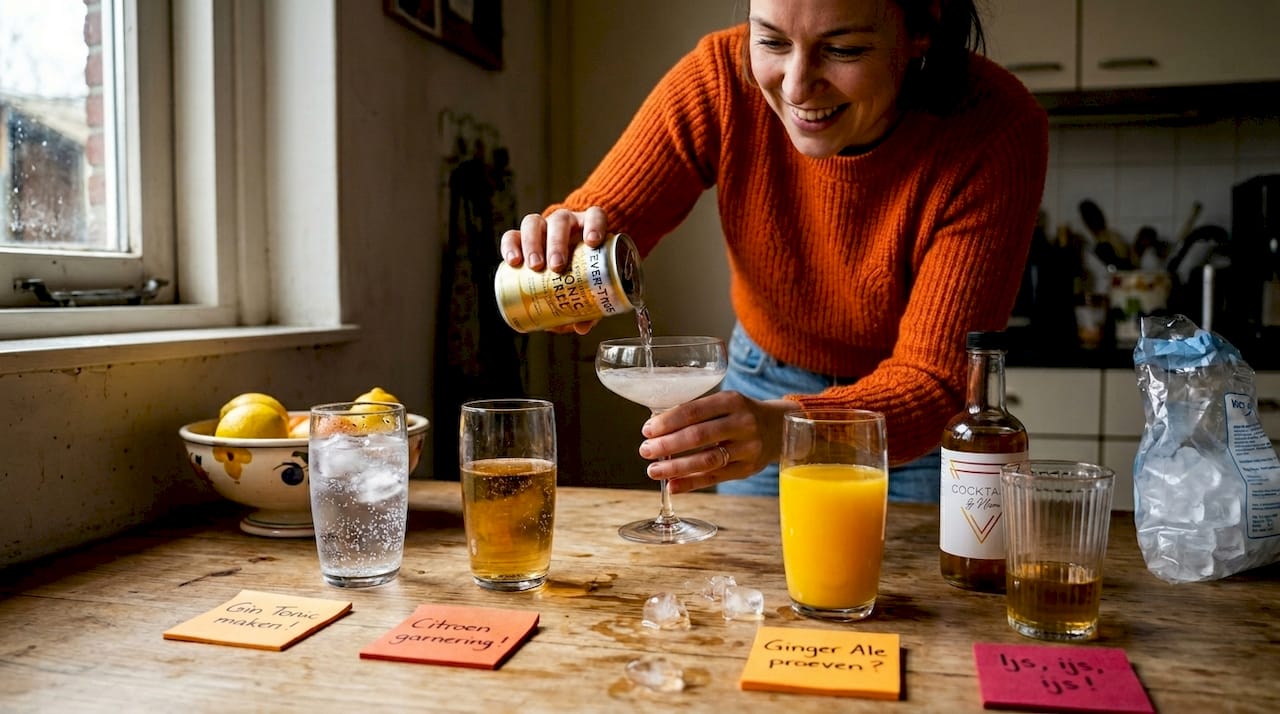
Think of tonic water. A quality tonic contains not only carbonation and water, but also quinine (extracted from cinchona bark), citrus notes, and botanicals that perfectly complement the flavors of gin. A cheap tonic tastes sweet and flat, while a premium tonic "enhances" the gin and amplifies its complexity. If you use a premium tonic in your G&T, you immediately taste the difference.
The most popular mixers and what they add:
- Tonic water: Quinine and carbonation, bitterness, ideal with gin or vodka
- Soda water: Neutral carbonation, light and fresh, for highballs and Spritz
- Ginger ale or ginger beer: Spicy and sweet or herbaceous and intense, for Moscow Mule and Dark & Stormy
- Fruit juice: Sour or sweet, from orange to passion fruit, for Margarita and Cosmopolitan
- Syrups: Grenadine, simple syrup, elderflower, for sweetness and color
- Lime juice or lemon juice: Sour and fresh, essential in Daiquiri and Sour
Pro-tip: Always use chilled carbonated mixers, and pour them slowly over the spirit into a pre-chilled glass. This way, the bubbles stay longer, and you taste the freshness much longer. A ginger beer as a mixer for a Moscow Mule works best when it comes directly from the refrigerator, ice cold.
Mixers also significantly lower the overall alcohol percentage of your drink. A standard G&T with 50 ml gin (40% ABV) topped with 150 ml tonic has a final percentage of approximately 10% ABV. This makes cocktails more social and palatable for people who don't like pure spirits but still want to enjoy something with character.
The role of mixers at parties is therefore enormous. You can put one bottle of gin next to four different premium mixers and essentially offer four totally different drinking experiences. This makes a simple setup suddenly flexible and surprising.
The art of combining: ratio, technique, and texture
With the difference between spirits and mixers clearly understood, it becomes truly exciting when you look at the perfect combination and technique.
The ratio between spirit and mixer is perhaps the most underestimated factor in making cocktails at home. A classic G&T uses a 1:3 ratio, one part gin to three parts tonic. But a Margarita has a very different structure: tequila, triple sec, and lime juice in a 2:1:1 ratio. If you adjust these ratios, you completely change the character of the cocktail.
The distinction in cocktails: spirits-only are stirred for clarity, such as a Martini or Negroni, while cocktails with mixers are shaken for more texture, such as a Margarita or Daiquiri. This is not just a habit; it has a scientific basis.
| Technique | When do you use it? | Result | Examples |
|---|---|---|---|
| Stirring | Spirits-only cocktails | Clear, smooth, no air bubbles | Martini, Negroni, Manhattan |
| Shaking | With mixers and juice | Creamy, textured, slightly cloudy | Margarita, Daiquiri, Cosmopolitan |
| Building in the glass | Simple highballs | Light mix, bubbles intact | G&T, Mojito, Spritz |
| Blending | With ice or fruit | Smooth, cold smoothie-like texture | Frozen Margarita, Piña Colada |
Shaking incorporates air into the cocktail, which makes the texture creamier and brings out certain flavors more intensely. But it also clouds the liquid and dilutes the drink a bit more due to the melted ice. For a Martini, this is undesirable: you want clarity and a smooth, composed taste without bubbles.
Then there's the famous "Bond myth." James Bond always orders his Martini "shaken, not stirred." That sounds cool, but bartenders know that this is actually a cocktail sin. If you shake a Martini, it becomes watery and cloudy, precisely what you don't want in a spirits-only drink. Nevertheless, this myth makes one thing clear: technique has consequences, and small choices in preparation determine the end result.
Pro-tip: If you're making cocktails at home for a party, opt for the "build in the glass" method for highballs. No shaker needed, no extra tools, and you keep the carbonation bubbles of your mixer much better intact. First pour the spirit, then add ice, and finish with the mixer. Stir gently once.
For larger parties, this is also why professional ready-made cocktails are so appealing. The ratio and technique have already been determined by experts, and all you have to do is pour and enjoy.
Ready-to-serve trending: premium examples and market trends
Why are more and more people choosing ready-to-serve variants instead of mixing themselves? Here are the current trends and best examples.
The market for ready-made cocktails (also known as RTD, Ready-To-Drink) is growing rapidly in the Netherlands and Belgium. RTD and easy-mix spirits are growing due to convenience, low-ABV trends, home cocktail culture, and more conscious choices in 2026. People want to enjoy a good cocktail without investing in a full bar setup, a shaker, and ten different bottles.
Premium RTD examples in NL and BE: Double Dutch mixers, supported by Heineken, Craftails from Belgium with Pornstar Martini variants, Cocktail Lab with a gin-based Blushing Rose, Cazadores Margarita at 5% ABV, and Lavish Extreme and Spritz in the Benelux. Each of these brands has its own approach and target audience, but they share one core value: quality without the fuss.
What makes this trend so relevant for parties?
- Consistency: Every serving tastes the same, no variation due to human error
- Speed: No looking up recipes, no weighing ingredients
- Presentation: Modern packaging looks festive on the table
- Lower ABV: Many RTDs are around 5 to 10% ABV, easier to manage during a longer evening
- Less waste: No half-empty bottles left over, you use exactly what you need
Look at the numbers: the RTD category in Europe has grown by double-digit percentages annually in recent years and is estimated to reach a market value of over 30 billion euros worldwide by 2026. This is not a hype; it is a structural shift in how people consume beverages.
| Brand | Type | ABV | Origin | Special feature |
|---|---|---|---|---|
| Double Dutch | Mixers (tonic, ginger) | 0% | UK, Heineken-backed | Premium carbonation, botanical flavors |
| Craftails | RTD cocktails | 5 to 10% | Belgium | Pornstar Martini, Mojito |
| Cocktail Lab | RTD gin cocktails | 8% | Netherlands | Blushing Rose, botanical |
| Cazadores Margarita | RTD tequila cocktail | 5% | Mexico / NL | Authentic tequila base |
| Lavish Extreme | RTD spirits | 6 to 8% | Benelux | Festival format, can |
The home cocktail service has also become more popular as a result. You no longer have to set up a bar yourself; a good selection of ready-made options and premium mixers does the work for you.
An interesting development is also the rise of cocktail kits. A cocktail fusion kit provides the means to experiment with botanicals and mixers yourself, without the chaos of ten separate bottles. Ideal for those who want something between fully ready-made and self-mixing, a kind of premium middle ground.
Conscious enjoyment also plays a big role. More and more people are opting for less alcohol but do not want to compromise on taste experience. Premium mixers and low-ABV RTDs offer exactly that option. You can choose which ready-made cocktails you want to serve based on taste, alcohol percentage, and occasion, without compromising on quality.
What experts often forget about the difference between spirits and mixers
After all these examples and theory, it's time for a sober look at where the real difference lies.
The cocktail world has a slightly unhealthy obsession with spirits. Which gin do you use? Is it single malt or blended? How long has the rum been aged? These questions are certainly relevant, but they overshadow an equally important factor: the mixer. We see it time and again. Someone invests in a thirty-euro bottle of gin, but then pours a supermarket brand tonic over it that tastes sweet and flat. The result is disappointing, and the gin is unfairly blamed.
Premium mixers like Double Dutch significantly improve carbonation and flavor origin cues. RTD cocktails often have a lower ABV but offer consistency for parties, while freshly made cocktails can be more complex but also offer more variation. That consistency is gold at parties. If you, as a host, have to pour fifteen glasses, you don't want to serve fifteen slightly different cocktails.
There is also a persistent prejudice that ready-made cocktails are "inferior." That is simply no longer true in 2026. Brands like Craftails and Cocktail Lab work with the same premium spirits and botanicals as a top bar, but deliver the final product already measured, mixed, and balanced. All you do is pour.
What we have learned after years of experience with cocktails for parties: perfection is for bars, consistency is for home. As a host, you want everyone to have the same great drink, not for one glass to be excellent and the next three to be slightly less so. A good ready-made cocktail mix solves that problem immediately.
And then there's the practical side. Premium mixers immediately upgrade a simple base drink to cocktail level. Pour good vodka with an excellent ginger beer and some lime, and you have a Moscow Mule that surpasses many bars. That takes less than two minutes. The secret lies in the quality of both components, not just the vodka.
The experts who endlessly discuss spirit choices forget that cocktails are a system. Every component matters. Spirits provide the base and character, mixers provide balance, freshness, and accessibility. Treat them as equals, and your cocktails will be better for it.
Enjoy yourself? Ready-made cocktails and premium mixers
Are you enthusiastic and want to experience the convenience of ready-to-serve immediately? Then Cocktails by Nina is the right place for you.
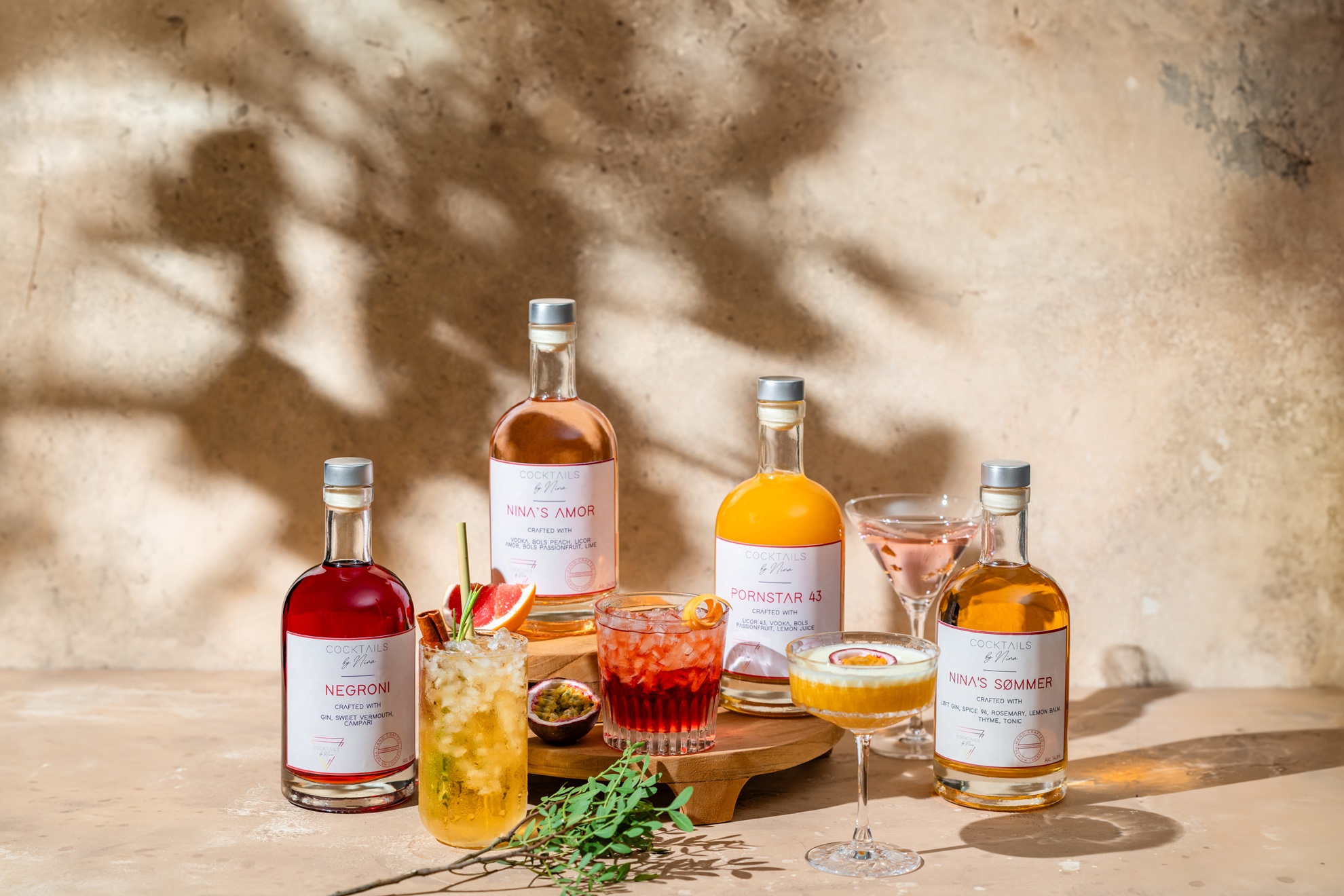
At Cocktails by Nina, you will find a carefully curated selection of ready-made cocktails available to order, made with premium spirits and carefully selected ingredients. Whether you are organizing a birthday, planning a corporate get-together, or just want to enjoy yourself on a Friday night without the hassle: the selection is wide, the quality is guaranteed, and delivery is fast. You can also explore premium mixers, allowing you to create the perfect combination with a spirit of your choice. Everything is also ideal as a gift, neatly packaged and ready to give. No shaker, no bar book, no stress. Just enjoy.
Frequently Asked Questions
What is the biggest difference between a spirit and a mixer?
A spirit is a distilled alcoholic beverage like gin or whiskey with a high alcohol percentage, while a mixer is a non-alcoholic beverage that adds flavor and dilutes the spirit into a drinkable cocktail.
Can you make a good cocktail with only a spirit?
Yes, spirits-only cocktails are stirred for clarity, like a Martini or Negroni, but most modern cocktails get their freshness and balance by adding quality mixers.
What are popular mixers in the Netherlands and Belgium?
Tonic, ginger ale, soda water, and syrups are popular choices, with Double Dutch tonic, a Heineken-backed premium brand, being particularly popular in the Benelux market.
Are ready-to-serve cocktails of the same quality as freshly made cocktails?
Premium RTD brands like Craftails, Cocktail Lab, and Cazadores Margarita now offer surprisingly high quality and are ideal for parties because each serving tastes consistent.
Why is the popularity of ready-to-drink cocktails growing?
Because RTD and easy-mix spirits are growing due to a combination of convenience, a growing home cocktail culture, lower alcohol content, and more conscious choices among consumers in the Netherlands and Belgium.