You don't need to be a bartender to enjoy bar-quality drinks at home. It surprises many people that the key to a premium cocktail experience lies not in perfect shaking, but in understanding dilution, temperature, and presentation. Mixology, the interplay of technique, taste, and experience, is just as relevant when you order cocktails as when you make them yourself. In this article, you will learn how mixology works, which principles truly enhance your home experience, and how you can enjoy drinks as if you were at a top bar, even without any experience.
Table of Contents
- What is Mixology? Basic Principles at Home
- The Secret of Chilling and Dilution: Ice, Temperature, and Taste
- Shaken or Stirred: Why it DOES Matter
- Foam Layers and Mocktail Experience: Creative with Aroma and Presentation
- Flavor Balance and Premium Experience: Mixology Without Mixing
- Mixology is Not Just for Bartenders
- Taste the Difference with Cocktails by Nina
- Frequently Asked Questions about Home Mixology
Key Insights
| Point | Details |
|---|---|
| Mixology is about technique | Small differences in mixing, stirring, or shaking determine taste and quality, even at home. |
| Ice and dilution are crucial | Proper dilution and chilling immediately create a premium drink experience. |
| Foam and aroma enhance the experience | A beautiful foam layer and fresh citrus scent elevate both cocktails and mocktails to a higher level. |
| Premium taste without mixing yourself | With mixology principles, you can achieve maximum quality from ready-made cocktails and mocktails. |
What is Mixology? Basic Principles at Home
Mixology sounds like a complicated field, but its core is simple: it is the art and science of combining ingredients into a balanced drink. The difference from regular bartending lies in the depth. A bartender serves quickly and hospitably. A mixologist thinks about every step: which technique, which glass, which temperature, and why.
The good news is that you don't need a shaker or bar spoon to benefit from this knowledge. Understanding how a drink is made helps you to appreciate it better, serve it better, and choose more smartly.
The Four Basic Techniques
Each mixing method has a different purpose and delivers a different result. That makes the choice of technique not arbitrary.
| Technique | How it works | When to use | Result |
|---|---|---|---|
| Building | Pour ingredients directly into glass | Simple mixes, long drinks | Lightly mixed, layers visible |
| Stirring | Spoon slowly stirs mix with ice | Strong, clear cocktails | Silky smooth, clear, elegant |
| Shaking | Shaker with ice, shake vigorously | Citrus, eggs, dairy | Aerated, cool, slightly cloudy |
| Blending | Blender with ice or frozen fruit | Frozen cocktails | Thick, creamy, soft drink style |
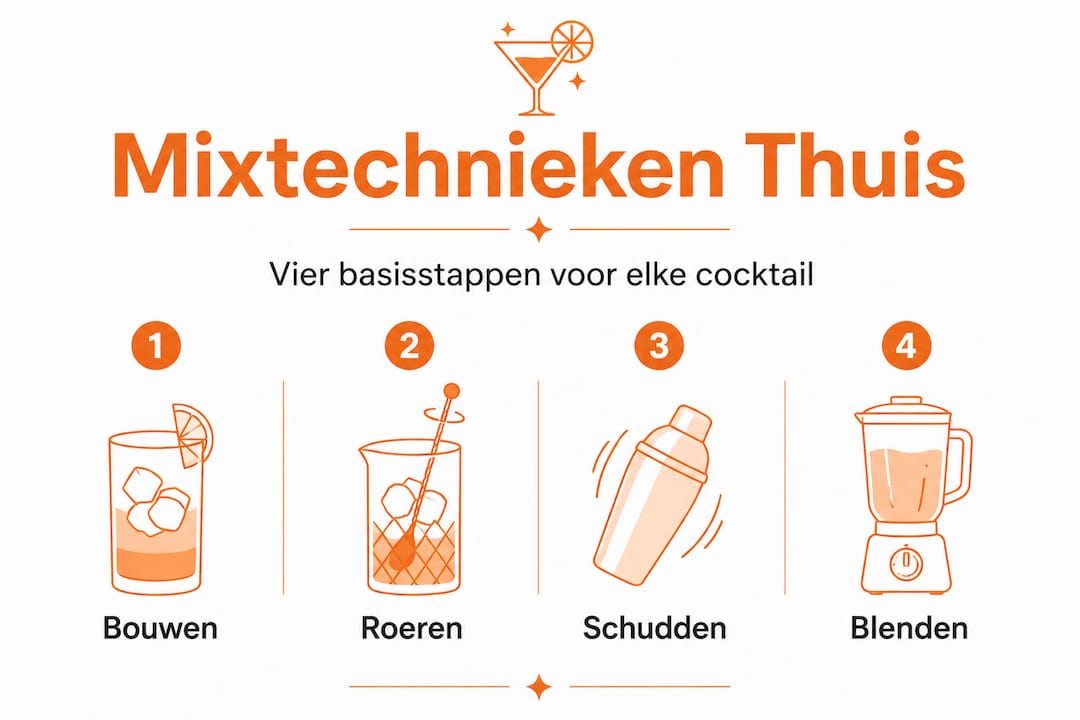
Each technique has a reason. Stirring is reserved for drinks where clarity matters, such as a martini or a Manhattan. Shaking is used for cocktails with citrus juice, liqueurs, or other liquids that mix well through air and movement.
Why is this useful if you don't mix yourself? Simple: you know how best to serve a drink. A shaken cocktail with a beautiful foam layer should be served immediately. A stirred cocktail benefits from a chilled glass. Even with non-alcoholic cocktails, this knowledge makes a difference in the experience.
What you take away from this:
- Building is the fastest method and suits light drinks
- Stirring gives an elegant result but requires patience (30 to 45 seconds)
- Shaking adds air and cools quickly
- Blending is for the festive, summery variant
Pro-tip: If you serve a ready-made cocktail from the fridge, briefly swirl the glass with an ice cube to chill it before pouring. That's the easiest way to recreate the restaurant feel at home.
The Secret of Chilling and Dilution: Ice, Temperature, and Taste
Now that you understand the basic techniques, it's time for every top bartender's biggest secret: dilution. Yes, melted ice water is NOT a mistake. It is a conscious quality factor.
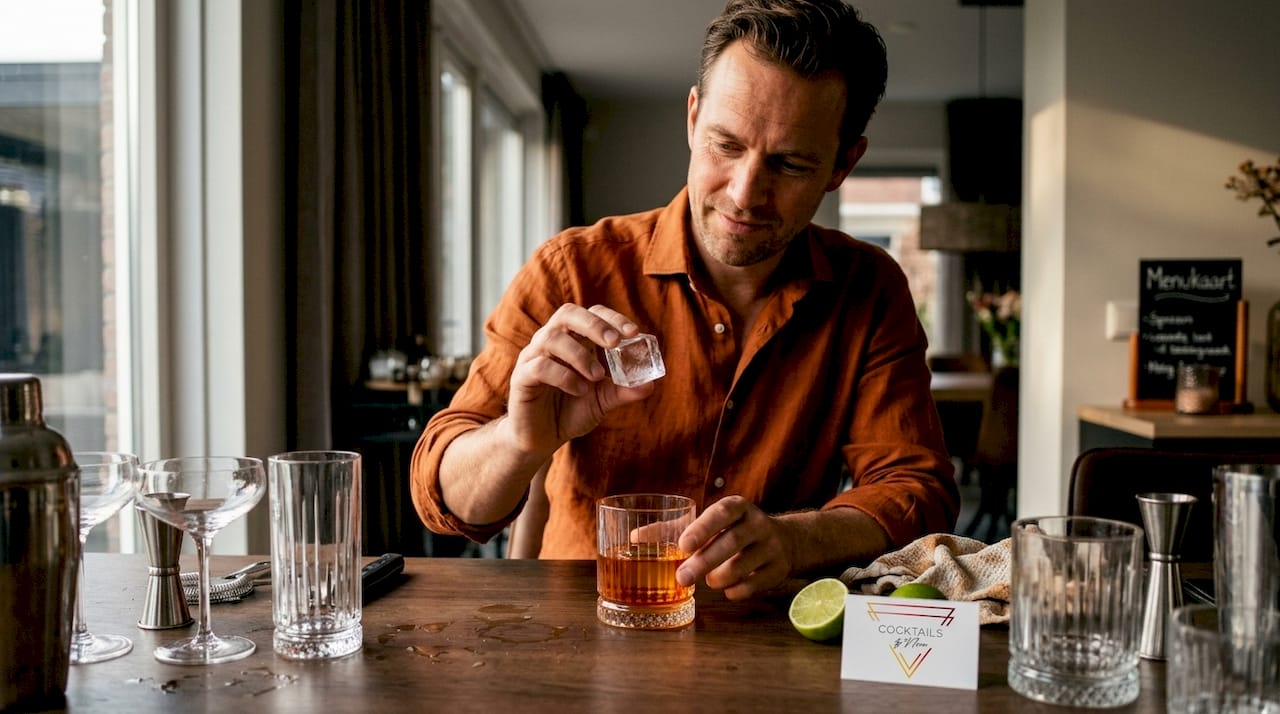
Dilution refers to the amount of water released as ice melts during mixing or shaking. This water softens harsh alcohol flavors, opens up aromas, and creates a rounder taste. Too little dilution and your cocktail feels raw. Too much and it becomes watery and flat.
Dilution is a crucial quality factor in the world of premium cocktails and mocktails. Professional bartenders consciously measure this.
Dilution Percentages per Technique
| Method | Average dilution | Effect on taste |
|---|---|---|
| Stirring (30 sec) | 20 to 25% | Soft, clear, elegant |
| Shaking (10 sec) | 25 to 30% | Fresh, airy, slightly cloudier |
| Direct over ice | Continuous | Increases as ice melts |
| Pre-chilled serving | Minimal | Fresh but intense |
This has direct implications for how you serve your drinks at home. A few practical insights:
- Large ice melts slower than small cubes. For a drink on the rocks, it is preferable to choose one large block, so that dilution is gradual.
- Chilled glassware slows down dilution and keeps the drink at temperature longer.
- Crushed ice provides rapid dilution and works well for strong and sweet cocktails, such as a Mojito or a Caipirinha.
- No ice in a good mocktail glass? Then you miss part of the experience. Even a ready-made cocktail mix tastes better if you use good quality ice.
Pro-tip: Use filtered or boiled and cooled water for ice cubes at home. Tap water with chlorine gives a subtle but noticeable off-flavor, especially with neutral or delicate mocktails.
The temperature of the drink also affects how you perceive flavors. Sweet notes are stronger at room temperature. Bitterness and acidity come through better when the drink is well chilled. This is no coincidence, but chemical reality. Higher temperatures activate more taste receptors for sweet. Cold drinks emphasize freshness and sharpness.
In short: ice is not just a coolant. It is a flavor tool.
Shaken or Stirred: Why it DOES Matter
Once you understand that ice and dilution are crucial, the choice between shaking and stirring is no longer an afterthought. It is a conscious decision about texture, clarity, and presentation.
Shaking creates air and texture and works excellent with cocktails containing citrus, egg white, or other dense ingredients. Stirring yields clarity and a silky smooth texture. The rule of thumb is simple: if it contains juice or other opaque ingredients, shake it. If it only contains spirits and liqueurs, stir it.
But what does this mean for you, at home, without a shaker?
Four Situations Where Technique Really Matters
- Mocktails with citrus or fruit juice. A shaken mix provides a lighter, airier texture. Serve this immediately, as the bubbles quickly disappear.
- Elegant evening cocktails with strong spirits. A stirred version is clear and full-bodied. Always use an ice-cold glass.
- Foamy cocktails with egg white or aquafaba. This requires vigorous shaking without ice first (dry shake), then once more with ice.
- Sparkling mixers like tonic or soda. Never shake, but pour carefully to preserve carbonation.
“The choice between shaking or stirring is not arbitrary: it determines the final texture, clarity, and aroma of your drink.”
Timing also plays a big role. A shaken cocktail loses its foam within one to two minutes. A stirred cocktail can wait a little longer, but it is also at its best immediately after preparation. If you buy a mocktail that is ready to serve, make sure your glasses are already prepared and chilled.
Pro-tip: Always serve cocktails and mocktails in a chilled glass. Place the glass in the freezer for a few minutes or fill it briefly with ice water before use. This simple gesture greatly enhances the experience, without any extra effort.
Visually, clarity is also a sign of presentation. Cloudy cocktails evoke a different expectation than crystal-clear ones. A clear drink in an elegant glass communicates quality, refinement, and attention. This is precisely why top bars pay so much attention to filtering, stirring, and glass temperature.
Foam Layers and Mocktail Experience: Creative with Aroma and Presentation
In addition to technique and clarity, appearance and mouthfeel also play a large role in the perfect mix, especially with non-alcoholic alternatives.
A foam layer is the visual highlight of many premium cocktails. It not only looks impressive but also adds mouthfeel. The soft, airy layer on top of a drink creates a different experience with the first sip.
For a nice foam layer, shake vigorously for 8 to 10 seconds and pour immediately. The faster you serve after shaking, the more stable the foam layer.
Ways to create foam without alcohol:
- Aquafaba (the liquid from a can of chickpeas) works excellently as a foam substitute. Completely plant-based, neutral in taste.
- Egg white gives a richer, creamier foam but has a slight eggy smell that disappears after shaking.
- Soy or oat milk creates light, small bubbles, ideal for neutral mocktails.
- Foam makers or hand blenders offer a professional alternative for home use.
Scent is at least as important as taste. Bartenders in top bars use zest, herbs, or a spray of essential aroma just before serving. That first scent stimulus determines how you expect and experience the taste. Rubbing a piece of orange peel over a glass or burning a sprig of rosemary are details that immediately give a premium feel.
Tips for presentation that really stands out:
- Use fresh garnish: a slice of lime, a sprig of mint, a cocktail cherry
- Cut orange zest into a spiral and hang it over the rim of the glass
- Choose garnish that matches the flavors in the drink, not just for aesthetics
- Glassware influences how you judge a drink before you take the first sip
For ready-made mocktails you serve at home, garnish is the easiest upgrade moment. A professionally prepared non-alcoholic cocktail with fresh mint and a beautiful glass immediately feels like a different category.
Pro-tip: Store citrus peels in the freezer. They are always available for a quick fragrant twist to your mocktail, even if you don't have fresh citrus at home.
Flavor Balance and Premium Experience: Mixology Without Mixing
With an understanding of presentation and technique, the final step is: how do you translate mixology into a premium home experience, even without mixing?
The answer lies in flavor balance. Premium mocktails are all about balancing sweet, sour, and bitter, combined with mouthfeel such as fizz, ice, and texture, and finished with fresh aroma elements. These are the three pillars of any professional drink menu.
Sweet, sour, and bitter in balance:
- Sweet softens and rounds out flavors. Think of syrup, fruit juice, or honey water.
- Sour makes it lively and fresh. Lemon juice, cranberry juice, or vinegar bitters add character.
- Bitter adds depth. Tonic, grapefruit juice, and specific herbal essences are good examples.
Mouthfeel and fizz:
- Sparkling water or tonic adds liveliness and makes a drink feel lighter.
- Coconut cream or fruit puree adds body and creaminess.
- Ice-cold water as the base of a mocktail provides freshness without flavor distraction.
Fresh and aromatic finishing:
- Citrus peels, fresh herbs, and edible flowers are simple additions.
- A dash of lavender water or rose water gives a luxurious floral note.
- Smoked sea salt on the rim of the glass surprisingly effectively enhances sweeter flavors.
If you have a cocktail delivered to your home or order one, all those choices have already been made for you. But knowing what's in it and why allows you to experience the taste more consciously and with more pleasure. It also makes it easier to communicate what you like and what you don't.
A premium home experience is not about perfect technique. It's about attention to detail: the right glass, the right temperature, fresh garnish, and a well-balanced drink. With this combination, you transcend the ordinary restaurant moment and create something unique.
Mixology is Not Just for Bartenders
There is a persistent idea that mixology knowledge is for professionals. That you first have to spend years behind a bar before you can understand the subtleties of dilution or flavor balance. We believe the opposite.
Precisely understanding technique without executing it yourself makes you a more discerning consumer, in the best sense of the word. You know what distinguishes a good cocktail from a mediocre one. You know why the glass matters, why garnish is not just decoration, and why ice is not just ice.
That is precisely the kind of knowledge that helps you create a real experience at home. Not by practicing for hours with a shaker, but by making smarter choices: about glassware, about garnish, about the order of serving, and about which drinks suit which moment.
Mixology democratizes the bar experience. And that's exactly how it should be.
Taste the Difference with Cocktails by Nina
Theory is nice, but taste convinces. At Cocktails by Nina, all mixology principles are already incorporated into every drink we make.
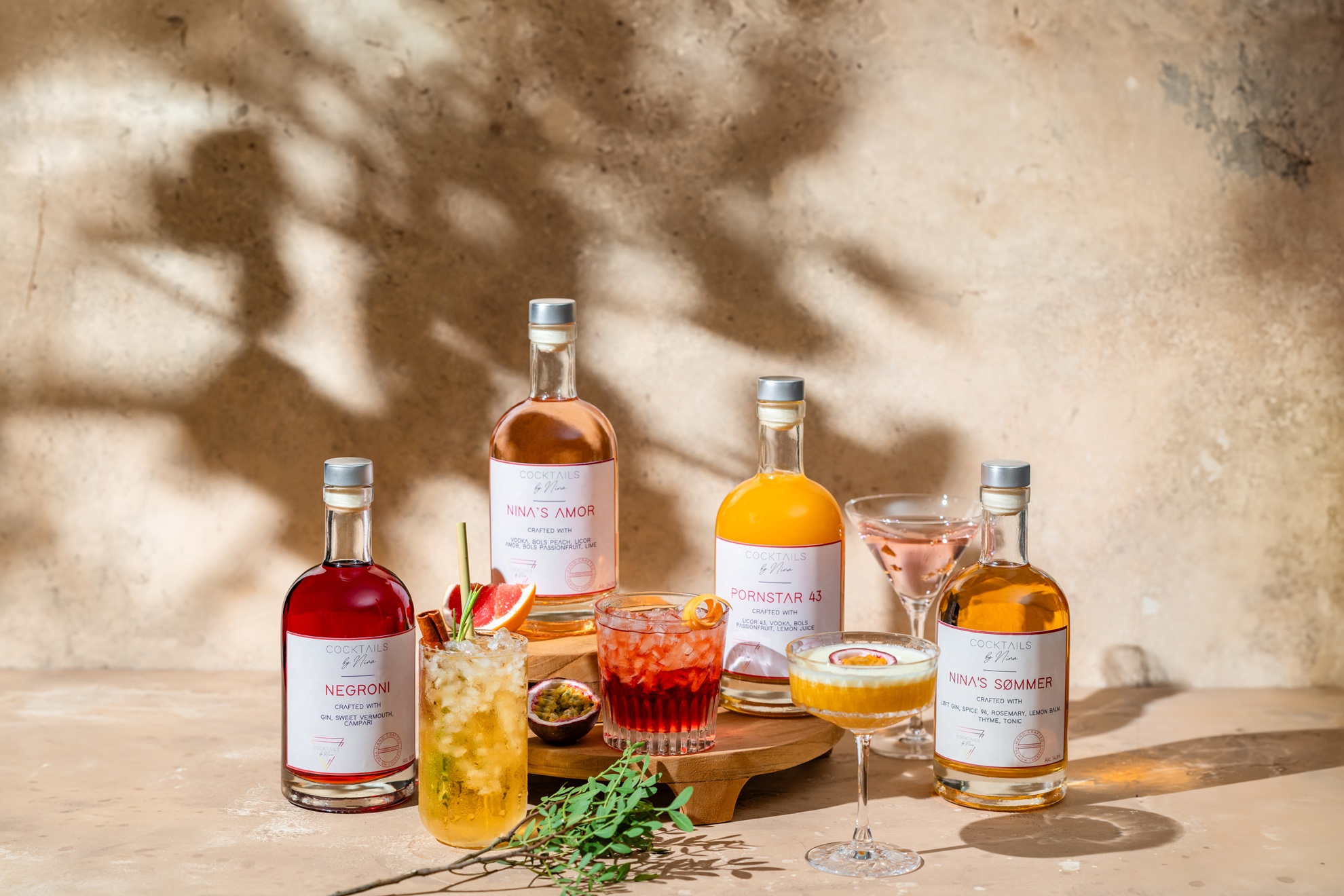
From the ready-made cocktail mix to our ready-made mocktails: everything is carefully balanced in terms of taste, texture, and presentation. All you have to do is pour, garnish, and enjoy. Want to know which drinks best suit your taste or occasion? View our full range and discover how much premium experience is in one bottle.
Frequently Asked Questions about Home Mixology
What is the difference between mixology and bartending?
Mixology focuses on drink combination, technique, and flavor balance; bartending is broader and involves hospitably welcoming guests and serving drinks quickly.
Which glasses should I choose for cocktails and mocktails?
Choose a glass that enhances the style of the drink: a coupe or martini glass for elegance, a highball glass for fresh or sparkling mixes.
Does ice really have such a big influence on my drink?
Yes, the quality of ice determines how quickly your drink cools, dilutes, and how the texture feels in the glass.
Can I apply mixology techniques without alcohol?
Absolutely, the principles of flavor balance and presentation apply just as much to premium mocktails as they do to classic cocktails.