Choosing the right glassware is the quickest way to elevate your at-home drinking experience, without expensive equipment or bartending training. A good glass directs aroma to your nose, maintains temperature, and makes every sip more mindful. Whether you're pouring wine, serving a cocktail, or hosting guests at a party, how you choose your glassware matters more than most people think. A universal tulip-shaped glass of medium size is the best starting point for most home users.
How to choose the right glassware for every drink?
The shape of the glass determines how aromas concentrate and how the drink reaches your taste buds. A tulip-shaped glass, narrower at the top than in the middle, captures scents and directs them to your nose as you drink. This makes it the best all-around choice for wine, cocktails, and even beer.
Different drinks require different glass shapes, but the basic principles are the same everywhere:
- Wine glasses have a broad bowl for red wine, allowing tannins to aerate, and a narrower bowl for white wine to preserve fresh aromas.
- Cocktail glasses like the martini coupe or highball glass are designed for specific preparations. A highball glass suits long drinks with plenty of ice, while a coupe is for short, chilled cocktails.
- Beer glasses vary from the slender flute for pilsner to the wide tulip glass for Belgian beer, with the shape influencing the head and aroma.
- Shot glasses are functional and small, intended for quick, undiluted drinks.
For home use and parties, specialized glasses are useful for distinct wine styles, but a universal tulip glass covers most situations. The real benefit isn't in an extensive collection, but in how you use the glass.
Pro-tip: Never fill your glass more than one-third full. This gives the drink room to breathe and concentrates the aromas in the upper half of the glass, precisely where your nose is.
The opening of the glass also plays a role. A wide opening disperses aromas quickly, which works for powerful red wines. A narrower opening retains delicate scents longer, which is better suited for white wine or a fine cocktail. When choosing glassware for a cocktail evening at home, a set of two or three glass shapes is already enough to make an impression.
What material should you choose for glassware?
The material of a glass determines how it feels, how long it lasts, and how much it costs. The three most common types are machine-blown glass, mouth-blown crystal, and borosilicate glass. Each has its own strengths.
| Material | Advantages | Disadvantages | Suitable for |
|---|---|---|---|
| Machine-made glass | Affordable, strong, dishwasher safe | Thicker rim, less elegant feel | Daily use, parties |
| Mouth-blown crystal | Thin rim, elegant, refined feel | More fragile, more expensive, sometimes hand wash | Special occasions, tasting |
| Borosilicate glass | Heat-resistant, strong, suitable for outdoors | Less classic appearance | Intensive use, outdoor parties |
Machine-blown glass is strong and affordable for everyday use. Mouth-blown crystal is more refined and expensive, with a thinner rim that noticeably improves the drinking experience. Borosilicate glass is suitable for intensive or outdoor use, as it resists temperature fluctuations.
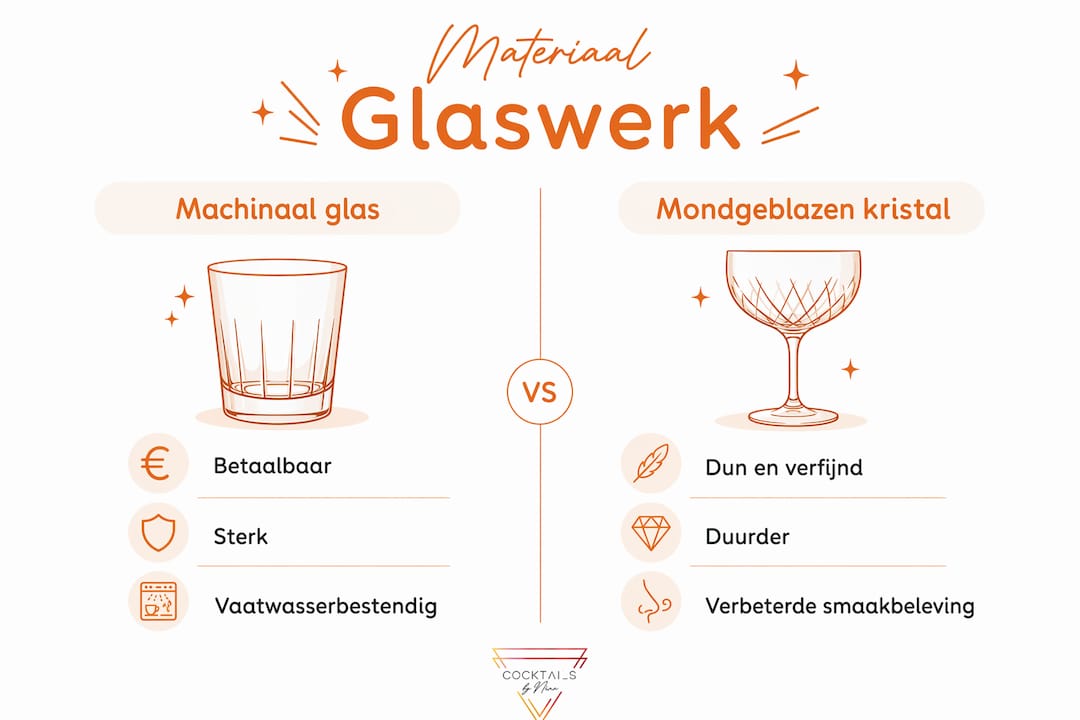
The thin rim of crystal is not a luxury detail. A small set of thin crystal glasses provides a better taste experience than a large collection of thick machine-made glass. The rim determines how the liquid touches your tongue and how consciously you experience each sip.
Pro-tip: Choose dishwasher-safe glass if you regularly host guests. Save mouth-blown crystal for those moments when you truly want to savor, not for the dishes after a busy party.
When choosing glassware, it's all about use. If you buy glasses for daily use, machine-made glass is the sensible choice. If you're organizing a tasting evening or want to impress guests, mouth-blown crystal justifies the investment. Quality over quantity is the guiding rule when purchasing glassware.
How does glassware influence the taste of your drinks?
The shape and material of a glass directly influence what you taste and smell. That sounds exaggerated, but the science behind taste perception confirms it. Scent is responsible for most of what we experience as taste. A glass that concentrates aromas makes a drink richer without changing its contents.
The following factors determine the sensory impact of your glassware:
- The stem prevents your hand from warming up the drink. Sommeliers emphasize the importance of a stem for wine and cocktails, as heat can disrupt the flavor balance within minutes.
- Transparency allows you to judge the color and clarity of the drink. Colored or engraved glasses distract and hide information about the drink.
- The bowl shape directs the liquid to a specific part of your tongue. A wide glass allows the drink to flow over the middle of your tongue, while a narrow glass sends it to the tip, giving a sweeter impression.
- The rim determines how smoothly the transition from glass to mouth is. A thin rim almost disappears, while a thick rim draws attention to itself.
Clear, neutral glass is preferred for an authentic experience. Colored glass looks beautiful in a photo but distorts your assessment of the drink. For a truly effective at-home cocktail experience, always choose transparent glass.
A good tasting routine enhances the effect of your glassware. First, swirl the drink in the glass, then smell deeply before drinking. This combination of swirling and smelling activates more taste buds than drinking directly. The glass is the tool, the routine is the skill. More about how aromas and ingredients work together can be found in the guide on the role of syrups in cocktails.
Practical tips for choosing, using, and maintaining glassware
The best glassware collection for home use is compact, high-quality, and easy to maintain. More glasses don't automatically mean a better experience. A focused selection works better than a cabinet full of specialized pieces you rarely use.
- Start with 6–8 universal glasses. With 6 to 8 tulip-shaped glasses, you cover 90% of daily drinking needs, without an extensive collection. Cabinet space and convenience are more important than variety.
- Wash glasses with minimal unscented dish soap. Too much dish soap or a fragrant dishwasher tablet leaves residue that dampens aromas. Rinse glasses immediately after use with warm water and use as little soap as possible.
- Store glasses upright in an odor-free place. Store glasses upright in a cool, odor-free location. A cabinet next to the oven or near fragrant cleaning products is the worst place, as glass absorbs odors.
- Choose stackable or compact glasses for parties. If you regularly host guests, glasses that take up little space are more practical than large, wide bowls that easily tip over.
- Invest in one good set instead of multiple cheap sets. Cheap glasses break faster, feel less pleasant, and provide a less good drinking experience. One set of quality glasses will last for years.
Pro-tip: Always dry crystal glasses with a clean, lint-free cloth immediately after washing. Water droplets leave limescale marks that make the glass cloudy and ruin the presentation.
Common mistakes with glassware include: buying too many types, storing glasses upside down in a cabinet with a woody smell, and washing them with strongly perfumed detergents. All these mistakes are easy to avoid with a few simple habits. For more bar-quality tips for home, Cocktailsbynina can help you further.
Key insights
Choosing the right glassware starts with a universal tulip glass, quality material, and a compact set of 6–8 pieces that you maintain well.
| Point | Details |
|---|---|
| Universal tulip glass as a base | With 6–8 tulip-shaped glasses, you cover 90% of your drinking needs for home and parties. |
| Material determines the experience | Thin crystal rims provide a better taste experience than thick machine-made glass. |
| Stem is not a luxury | A stem prevents warming by your hand and protects the flavor balance of chilled drinks. |
| Maintenance affects taste | Fragrant dish soap leaves residue that dampens aromas; use minimal unscented soap. |
| Quality over quantity | One good set of glassware performs better than multiple cheap sets with much variety. |
Choosing glassware: what I've learned after years of tasting
People buy too much too quickly. That's the most honest summary of what I see with home cocktail enthusiasts and wine fanatics. A cabinet full of Bordeaux glasses, champagne flutes, martini coupes, and beer glasses sounds impressive, but in practice, you always grab the same glass.
My advice is radically simple: buy one set of eight good tulip-shaped glasses and use them for everything. Wine, cocktails, mocktails, even beer. The shape works for almost any drink, and you'll notice the quality of the glass with every sip. I've toasted with a crystal Riedel glass and with an IKEA glass costing two euros. The difference is palpable, not imaginary.
What most articles about glassware forget to mention: the glass is supportive, the routine is paramount. Swirl, smell, drink mindfully. That makes more difference than any glass you buy. But a good glass makes that routine easier and more enjoyable. The thin rim of crystal literally disappears from your awareness, allowing you to fully concentrate on the drink.
One detail I never ignore anymore: the stem. I thought for too long that stemless glasses were just as good. They are not. Your hand warms a chilled cocktail or white wine within five minutes. This temperature change disrupts the flavor balance in a way you only notice when you compare. Always hold the stem. It's a small habit with a big effect.
— Ruud
Glassware and cocktails: what Cocktailsbynina has in store for you
The right glass is half the presentation. The other half is what's inside.
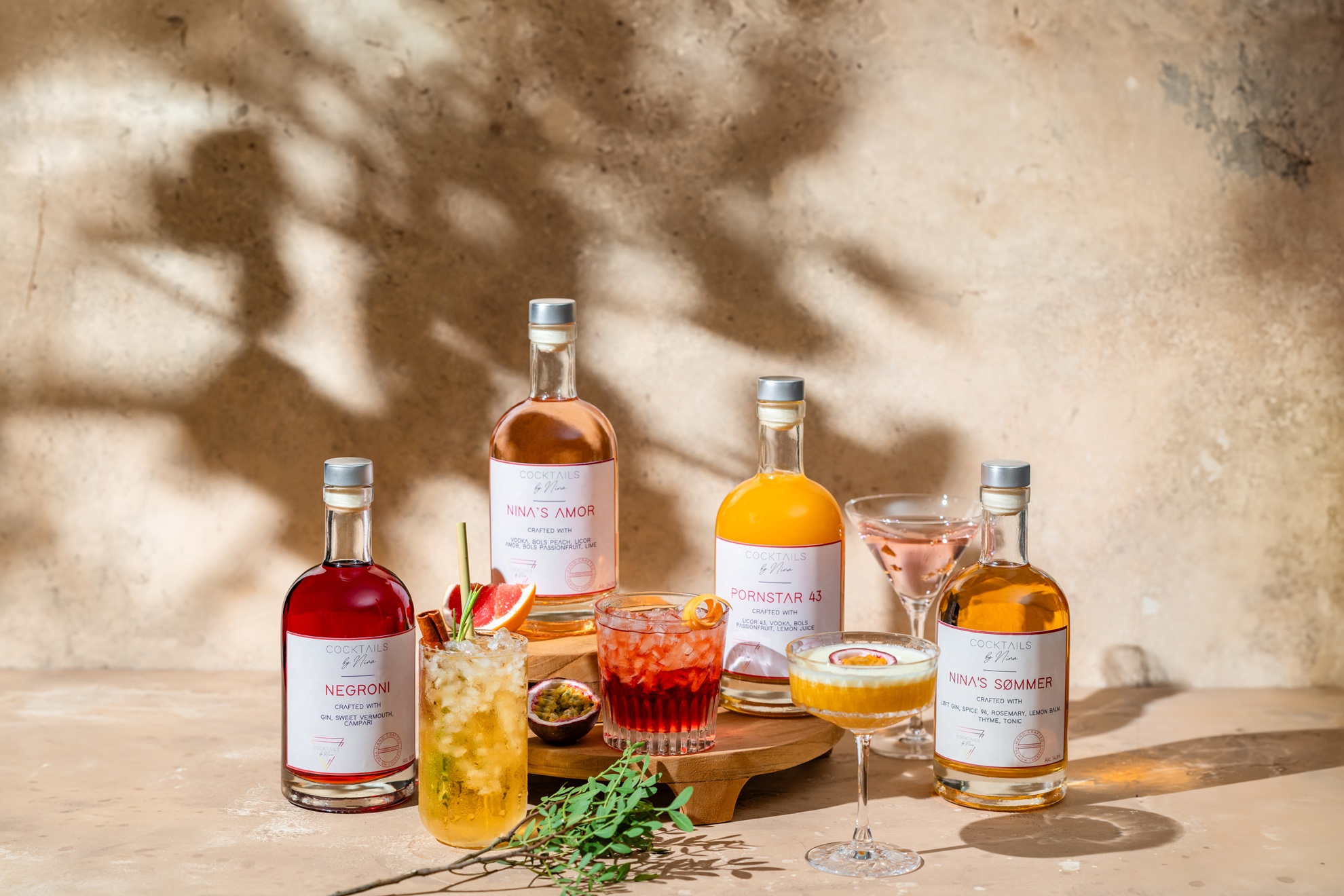
Cocktailsbynina offers ready-to-serve bar-quality cocktails and mocktails, ready to be poured into the glass of your choice. Whether you're hosting a party or simply want to enjoy a professional drink experience at home: the at-home cocktail boxes are curated for exactly those moments. For those who prefer non-alcoholic options, the mocktail collection offers a full-fledged alternative that looks just as beautiful in a good glass. No mixing, no measuring. Just enjoyment.
Frequently asked questions
Which glass is best for home use?
A universal tulip-shaped glass of medium size is the best choice for home use. With 6–8 of these glasses, you cover most drinks, from wine to cocktails.
What is the difference between crystal and regular glass?
Mouth-blown crystal has a thinner rim and provides a more refined drinking sensation than machine-blown glass. Crystal is more fragile and expensive but delivers a noticeably better taste experience.
Should I handwash glasses?
Crystal glasses are best hand-washed with minimal unscented dish soap. Machine-made glass is often dishwasher safe, but avoid strongly perfumed tablets as they leave residue that dampens aromas.
How many glasses do I need for a party?
For a home party, 6–8 universal glasses suffice for most situations. Choose compact, stackable models if space is limited.
Does the glass shape really make a difference to the taste?
Yes. The bowl shape directs aromas to your nose and determines how the liquid touches your tongue. A tulip-shaped glass concentrates scents better than a straight glass, which directly improves the taste experience.