A garnish is an edible element that enhances a cocktail's appearance and deepens its flavor. It goes beyond mere aesthetics: a well-chosen garnish adds aroma, color, and flavor complexity to your drink. Think of a sprig of rosemary on a gin and tonic, edible flowers on a champagne cocktail, or a slice of dried orange in a whiskey cocktail. What exactly is a garnish? It's the finishing touch that transforms an ordinary cocktail into a complete taste experience. In this article, you'll learn about the different types of garnishes, how to combine them, and the latest trends for 2026.
What is a garnish and what does it do for your cocktail?
A garnish is an edible addition that enhances both the visual presentation and the taste of a cocktail. This distinguishes a garnish from a mere decoration: garnishes improve both visual appeal and flavor, whereas a purely decorative element contributes nothing to the taste experience.
So, the meaning of garnish goes beyond aesthetics. Fresh herbs release aroma as soon as the glass approaches the nose, and spices provide warmth and depth to the flavor. You notice it immediately: a gin and tonic with a sprig of rosemary smells different from the same cocktail without a garnish.
Popular cocktail garnishes include rosemary, mint, citrus peels, edible flowers, and dried fruit slices. Each of these elements has its own function. Rosemary gives a spicy, resinous aroma. Edible flowers add a floral note. Citrus peels provide freshness and a slight bitterness.
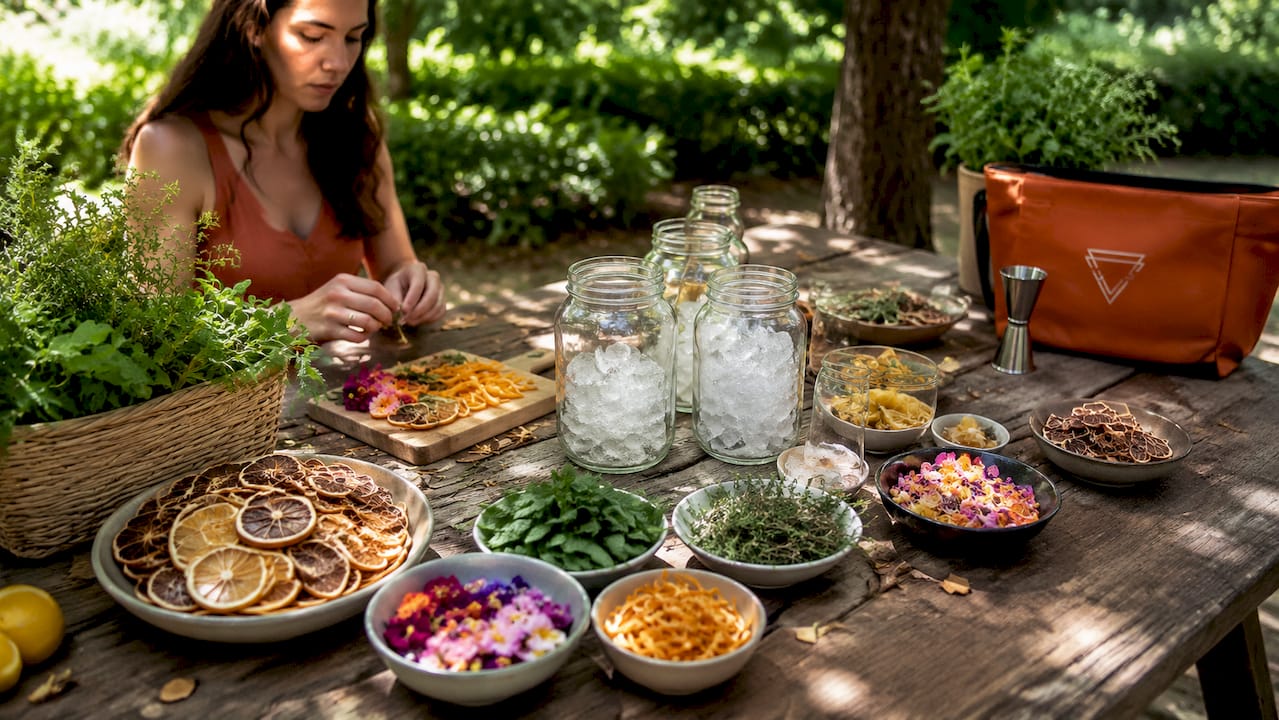
The art of garnishing combines aesthetics and sensory experience and is an integral part of mixology. A cocktail without a garnish is like a dish without a finishing touch: technically correct, but lacking character.
What types of garnishes are there?
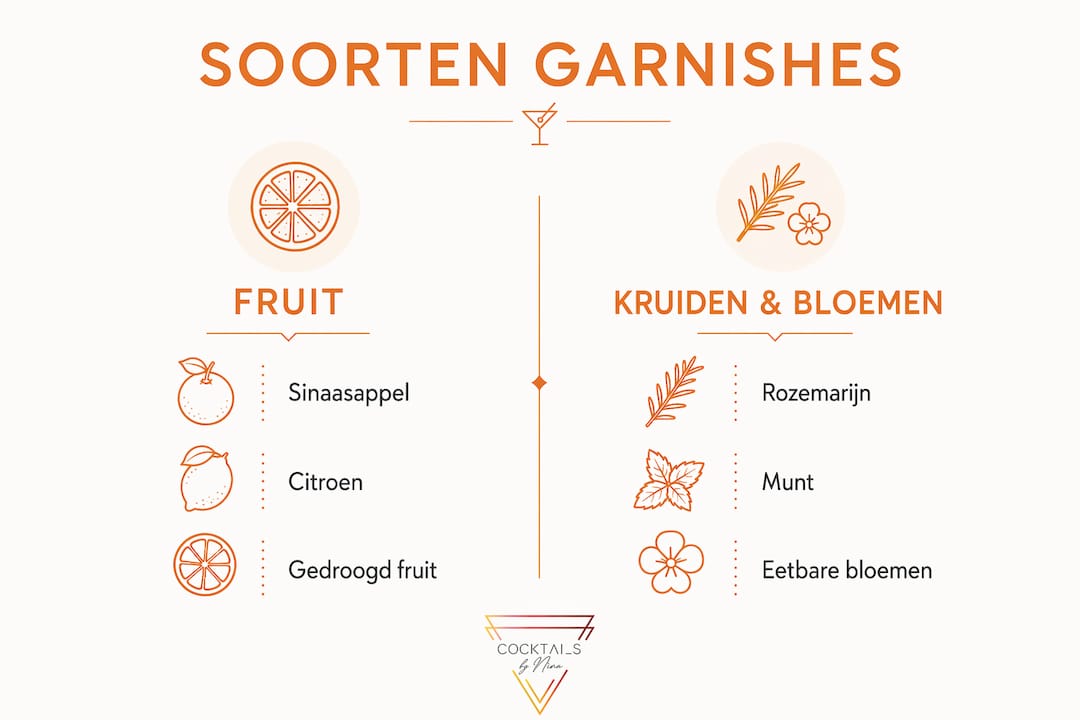
Garnishes fall into four main categories: fruit, herbs, spices, and edible flowers. Each category has a unique effect on the cocktail.
Fruit garnishes are the most accessible choice. Dried orange slices, mint leaves, and ice with fruit pieces are easy to make and often already found in the home cook's kitchen. A lemon slice on the rim of a glass instantly adds a fresh note and looks neat.
Herb garnishes are more potent in aroma. Rosemary, thyme, and mint give a cocktail depth and complexity. They work best with gin and tonics and whiskey cocktails, where the herbaceousness matches the spirit's flavor profile.
Spices like cardamom, star anise, and ginger add warmth. Herbs and spices increase flavor complexity without overpowering the cocktail. A star anise on a warm winter cocktail is a good example.
Edible flowers are the most visually spectacular choice. Violets, rose petals, and lavender add a floral note and a beautiful color contrast. They pair well with light, fresh cocktails and champagne cocktails.
| Garnish type | Examples | Effect on taste | Effect on appearance |
|---|---|---|---|
| Fruit | Orange slice, lemon zest, berries | Fresh, slightly sour | Colorful, bright |
| Herbs | Rosemary, mint, thyme | Herbal, aromatic | Green, vibrant |
| Spices | Star anise, cardamom, ginger | Warm, deep | Rustic, intriguing |
| Edible flowers | Violets, rose petals, lavender | Floral, subtle | Elegant, colorful |
Pro-tip: Consciously use color contrasts. A dark red berry on a bright champagne cocktail draws the eye and immediately makes the presentation more professional.
What is the difference between a garnish and a decoration?
The difference between a garnish and a decoration lies in edibility and function. A garnish is always edible and contributes to the taste or aroma of the cocktail. A decoration is purely visual and has no taste function.
A concrete example clarifies this. Plastic grass with sushi is decoration, not a garnish. It looks nice, but you don't eat it and it adds nothing to the taste. A slice of lemon on the same sushi platter, however, is a garnish: you squeeze it, and the taste changes.
In cocktails, this distinction plays a significant role. A paper umbrella is a decoration. A sprig of mint is a garnish. This difference also determines how you present and experience a cocktail.
Cocktail enthusiasts sometimes confuse garnishes with condiments. A condiment, such as a lemon wedge placed next to a drink for self-addition, is technically a garnish if it's edible and contributes to the flavor. The difference lies in placement: a garnish is on or in the glass, a condiment is placed beside it.
Why is this distinction important? Because it determines the choices you make when presenting a cocktail. A garnish that is not edible or has no taste function adds nothing to the experience. The best garnishes do both: they look good and enhance the taste.
Some characteristics of a true garnish:
- Always edible or drinkable
- Contributes to aroma, taste, or texture
- Is on or in the glass, not beside it
- Matches the flavor profile of the cocktail
- Adds color or texture without overpowering the cocktail
How to choose and combine garnishes for cocktails?
Choosing the right garnish starts with the cocktail's flavor profile. A floral gin requires a different garnish than a spicy whiskey. Floral gins benefit from edible flowers or rose petals, spicy gins from rosemary or ginger, citrus gins from lime zest or grapefruit. This is no coincidence: the garnish enhances the dominant flavor direction of the spirit.
Specific rules apply to champagne cocktails. Sweeter cocktails call for berries or flowers, drier styles pair better with light citrus or herbs. A dry Brut champagne with a sprig of rosemary and a lemon zest is a classic combination that works because the bitterness of the citrus complements the dryness of the champagne.
Follow these steps for a good garnish choice:
- Determine the cocktail's flavor profile. Is it floral, herbal, citrusy, or sweet? Choose a garnish that matches the dominant flavor.
- Choose based on aroma. A garnish you smell before you drink enhances anticipation and experience. Rosemary and mint are strong in this regard.
- Pay attention to color contrast. A red berry on a clear cocktail draws attention. A green mint sprig on a dark cocktail provides freshness.
- Add the garnish at the right moment. Fresh herbs should be added at the last minute to preserve their scent and freshness. Too long in the glass reduces quality.
- Keep it simple. Less is often more. One strong garnish works better than three elements competing with each other.
Pro-tip: Beginners often choose too many garnishes at once. One well-chosen element, like a dried orange slice or a sprig of rosemary, makes a greater impression than an overflowing garnish that makes the cocktail messy. Feel free to experiment, but start simple and build from there. Also, check out the combinations of drink and garnish for more inspiration.
The most effective garnishes for champagne cocktails are citrus peels, fresh berries, and aromatic herbs. These three categories offer enough variety to give every champagne cocktail a unique character.
What trends are visible in garnish usage in 2026?
By 2026, garnishes have evolved into an art form. The choice of garnish for gin and tonics and champagne has moved from a simple slice of lemon to a thoughtfully composed piece with star anise, rosemary, and edible flowers. This shift reflects a broader trend: cocktail lovers want a complete experience, not a standard drink.
The main trends in 2026:
- Dried citrus is more popular than ever. Dried orange and lemon slices look professional and are shelf-stable for weeks.
- Edible flowers are growing strongly. Violets, lavender, and rose petals are now standard in many cocktail bars.
- Local herbs are gaining ground. Thyme, sage, and basil from your own garden or local market add a personal touch.
- Sugar rims and salt rims are making a comeback, but with a twist: smoked salt, lavender sugar, or chili powder replace the classic variants.
- Minimalist garnishing as a reaction to excess. One perfect element outweighs an abundance of decoration.
“The modern cocktail experience revolves around a mix of visual spectacle and flavor deepening, with creativity and personal preference at its core.” Garnish is the new recipe
Color, scent, and presentation strongly influence the perception of cocktails. A well-chosen garnish enhances the experience and turns a cocktail into a work of art in a glass. This is no exaggeration: research into sensory experience confirms that scent and visual presentation directly influence taste perception.
Sustainability also plays a role. Cocktail bars and home cocktail makers increasingly choose local, seasonal garnishes. This aligns with the broader movement towards plastic-free drink presentation and conscious choices in the hospitality industry. A garnish made from local herbs is not only more sustainable but also fresher and more aromatic than an imported variant.
Key insights
A garnish is the most direct way to improve a cocktail: it combines visual appeal, aroma, and taste in one element.
| Point | Details |
|---|---|
| Garnish definition | A garnish is always edible and contributes to the taste, aroma, or appearance of the cocktail. |
| Types of garnishes | Fruit, herbs, spices, and edible flowers are the four main categories, each with its own effect. |
| Timing is everything | Add fresh herbs just before serving to preserve aroma and freshness. |
| Match with flavor profile | Floral cocktails call for flowers, herbal cocktails for rosemary or ginger, citrus cocktails for lime zest. |
| Less is more | One strong garnish works better than multiple elements competing with each other. |
Garnishes: my honest take after years of making cocktails
After years of making and serving cocktails, I've learned one thing: the garnish is the first thing someone sees and the last thing they remember. A well-chosen garnish sets the tone for the entire drinking experience, even before anyone has taken a sip.
What I often see with home cocktail makers is that they treat the garnish as an afterthought. They pay a lot of attention to the right spirit, the perfect proportions, and the ice, but then just throw on a random slice of lemon. That's a shame. The garnish is the moment you show that you've really gone the extra mile.
My personal preference leans towards herbs over fruit. A sprig of fresh rosemary on a gin and tonic gives an aroma that you already smell before you drink. That raises expectations and makes the first sip better. Edible flowers are beautiful, but I only use them if they truly add something to the taste, not just to the look.
The biggest misconception I encounter: more garnish is better. That's not true. Too much garnish overpowers the cocktail, while the right nuances enrich the drink. One element, perfectly chosen and freshly added, is always stronger than three competing elements. Feel free to experiment, but start simple and build from there. Also, read the guide to cocktail garnishing for more practical tips.
— Ruud
Ready-made cocktails with carefully curated garnishes from Cocktailsbynina
Cocktailsbynina offers ready-made cocktails and mocktails that are already finished with attention to presentation and taste. You don't need to mix or garnish yourself: each drink is prepared with premium ingredients and ready to serve.
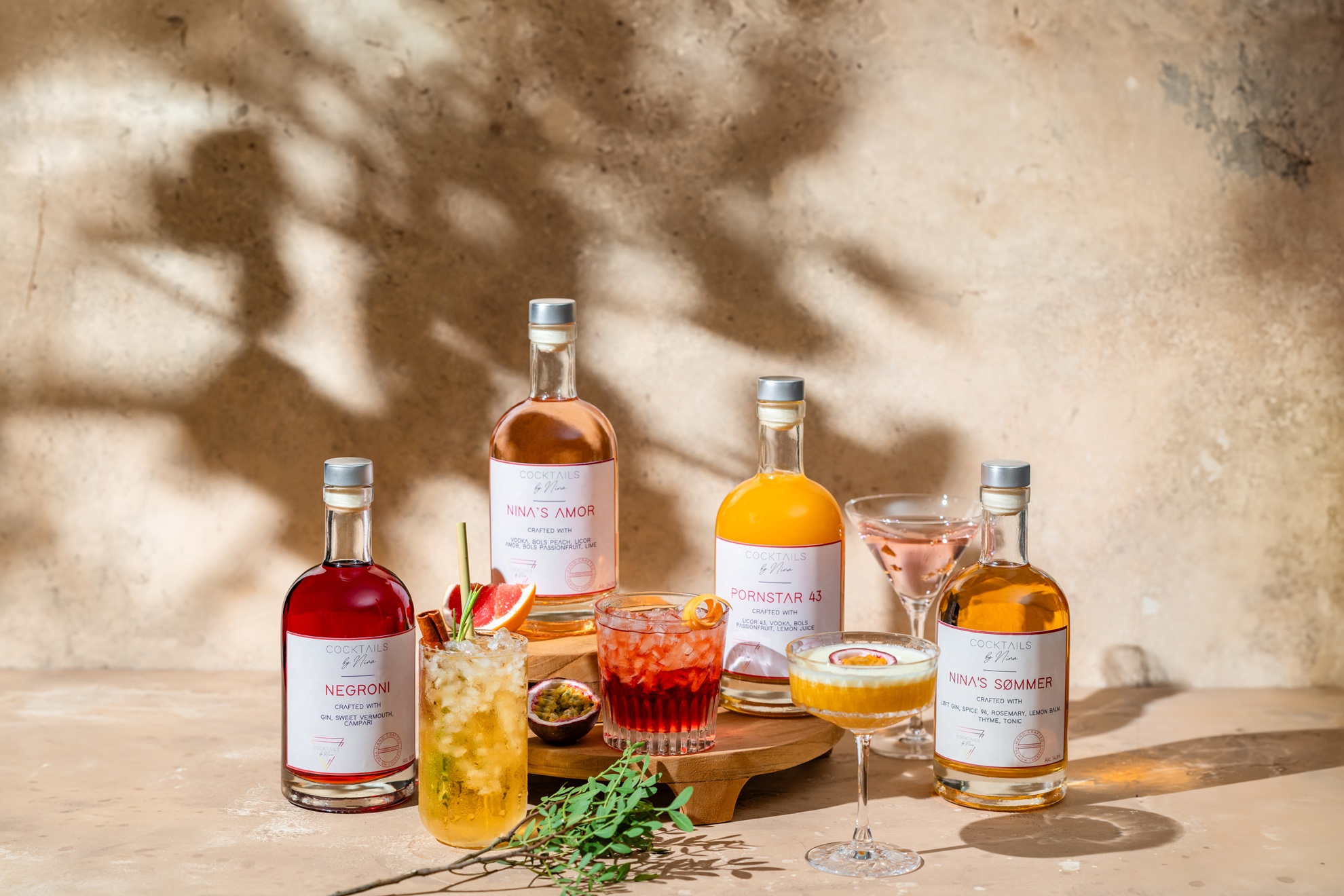
Whether you're hosting a party, looking for a gift, or simply want to enjoy a professional cocktail at home: Cocktailsbynina's assortment offers a suitable choice for every occasion. Check out the ready-made mocktails for alcohol-free options with a refined finish, or choose a cocktail box for four people for a complete drinking experience at home.
Frequently asked questions
What does garnish mean for a cocktail?
A garnish is an edible element added to a cocktail to enhance its taste, aroma, and presentation. Examples include rosemary, citrus peels, and edible flowers.
What is the difference between garnish and decoration?
A garnish is always edible and contributes to taste or aroma. A decoration is purely visual and has no taste function, like a paper umbrella.
How do you combine a garnish with a cocktail?
Choose a garnish that matches the cocktail's flavor profile. Floral cocktails pair well with edible flowers, herbal cocktails with rosemary or ginger, and citrus cocktails with lime zest or grapefruit.
When do you add a garnish to a cocktail?
Always add fresh herbs and edible flowers at the last moment, just before serving. This preserves the aroma and freshness of the garnish.
Which garnishes are suitable for beginners?
Dried orange slices, mint leaves, and a sprig of rosemary are easy to use and often already available at home. They provide an instant professional result without much preparation.