Why does a Mojito taste so fresh and light, while a Negroni is deep, bitter, and complex? Both are cocktails, yet they feel like two completely different worlds. Many people think that a cocktail style is simply a matter of taste, but there's much more structure behind it. From the choice of base spirit to how you fill the glass, every detail determines the style. In this article, you'll learn exactly what distinguishes cocktail styles, how classic and modern styles relate to each other, and how to directly apply this knowledge for your next party.
Table of Contents
- What Defines a Cocktail Style?
- Classic versus Modern Cocktail Styles
- Mixing Methods: Shaken, Stirred, Built, and More
- Expertise: The Details That Truly Make a Cocktail Style
- Our Vision: Cocktail Style is About Experience, Not Just Recipe
- Want to Experience Different Cocktail Styles Yourself?
- Frequently Asked Questions
Key Insights
| Point | Details |
|---|---|
| Cocktail style basis | Each cocktail style is defined by its base spirit, flavor profile, length, and preparation method. |
| Classic versus modern | Modern styles add creative twists to classic recipes, often using unique ingredients or techniques. |
| Preparation is key | Mixing methods like shaken or stirred influence the structure, taste, and experience of a cocktail. |
| Detail makes the difference | Precision in proportions, quality of ice, and garnish are decisive for the final result. |
| Something for everyone | With ready-made solutions and clear explanations, anyone can choose the right cocktail style for any party. |
What Defines a Cocktail Style?
Now that you know why these differences are so striking at a cocktail party, let's dive into what really defines a cocktail style. The answer isn't one thing, but an interplay of four major elements. Once you understand them, you'll never look at a drink menu the same way again.
The four pillars of cocktail style
Cocktail styles are categorized based on base spirit, flavor profile, length, and preparation method. Each of these four elements directly influences what you get in your glass and how it tastes.
The base spirit is the foundation. Gin, rum, whiskey, vodka, tequila, or cognac: each spirit brings its own character. A gin, rum, or whiskey-based cocktail tastes fundamentally different, even if the rest of the recipe is identical. Gin brings botanical, herbaceous notes. Rum has a sweet, sometimes tropical base. Whiskey adds warmth and depth.
The flavor profile is the second pillar. Think fruity, bitter, sour, sweet, creamy, or umami. A Daiquiri is fresh and sour. An Espresso Martini is creamy and coffee-like. An Aperol Spritz is slightly bitter and sparkling. By knowing the flavor profile, you can cleverly combine cocktails for a varied table.
Length refers to the amount of liquid in the glass. Short drinks (shots or cocktails without much mixer) are intense and concentrated. Long drinks contain more mixer, ice, or sparkling water and are suitable for an evening of drinking. A Whiskey Sour is short and potent. A Gin & Tonic is long and refreshing.
| Pillar | Example short | Example long |
|---|---|---|
| Base spirit | Whiskey (Old Fashioned) | Rum (Mojito) |
| Flavor profile | Bitter (Negroni) | Fruity (Aperol Spritz) |
| Length | Shot (Tequila Sunrise) | Long drink (Gin & Tonic) |
| Preparation | Stirred (Martini) | Built (Cuba Libre) |
The preparation method is the fourth pillar and often the most underestimated. Shaken, stirred, built, or muddled: each method gives a different texture, temperature, and dilution to the cocktail. More on this later.
Why is this classification so practical for parties? Simple: if you know which pillars you want to combine, you can create a varied selection that has something for every guest. Someone who likes bitter will choose a Negroni. Those who prefer something fresh and light will go for a Spritz. With this structure in mind, you make conscious choices instead of randomly ordering or mixing.
“A good cocktail table is like a good menu: variety in taste, length, and style ensures that every guest finds something that suits them.”
In summary: a cocktail style is not a vague concept but a concrete combination of four measurable elements. Those who understand this immediately have a better grasp of what they are serving.
Classic versus Modern Cocktail Styles
After the basic principles, it's time to compare classic and modern styles. What exactly makes a cocktail classic? And when does something become modern?
A classic cocktail is a recipe that has existed for decades and is prepared in its original form. Think of the Old Fashioned, the Martini, the Manhattan, or the Daiquiri. These cocktails didn't become popular because they are complicated, but precisely because they are simple and perfectly balanced. An Old Fashioned consists of whiskey, sugar, bitters, and an orange peel. Nothing more, nothing less. That simplicity is its strength.
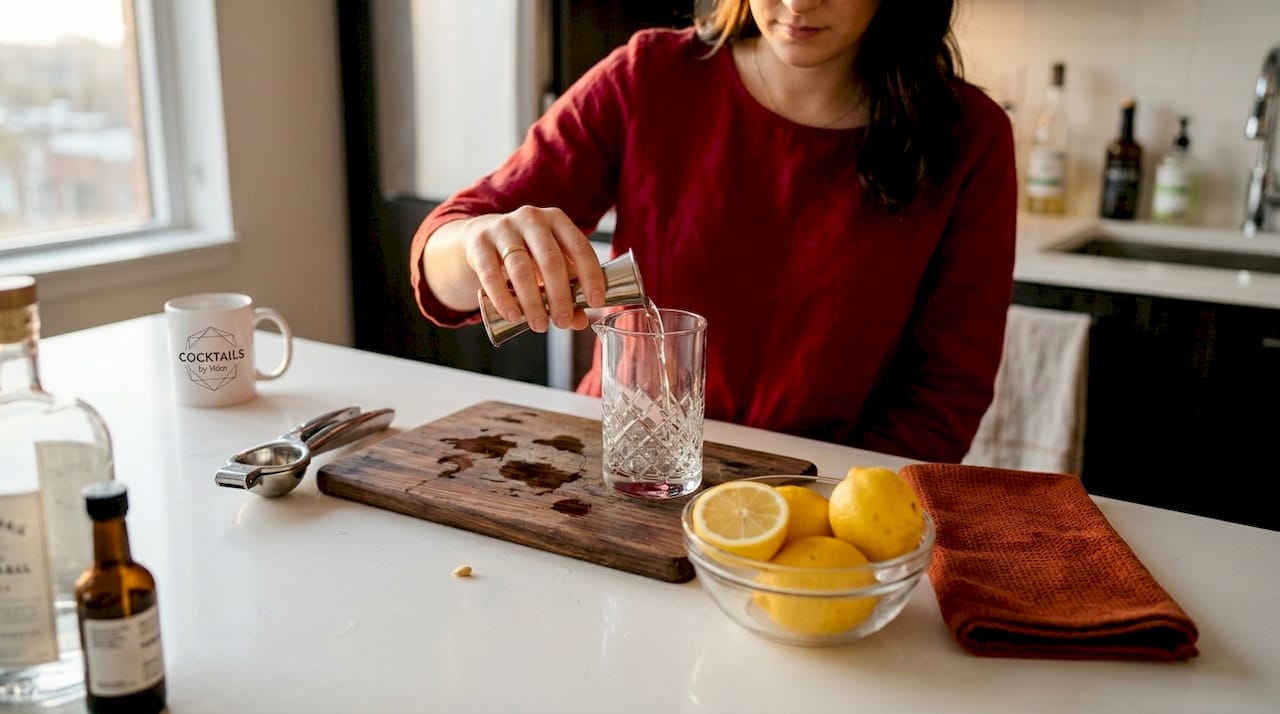
A modern cocktail builds on that classic base but adds a creative twist. Modern styles build on classics with twists such as barrel-aging, clarified punches, smoke, infusions with local or seasonal ingredients, or umami elements, while purists preserve the original recipes. Barrel-aging means aging a cocktail in a small wooden barrel, just like whiskey or wine. The result is a drink with more depth and smoothness. A Clarified Punch is a modern technique where you filter a punch until it is crystal clear, while the flavor remains completely intact.
Five characteristics of classic versus modern cocktails:
- Classic cocktails use a small number of ingredients with proven proportions.
- Modern cocktails experiment with local herbs, vegetables, or unusual spirits.
- Classics are timeless and appear on every serious drink menu.
- Modern styles are seasonal and change with trends.
- Both can be equally refined, depending on the craftsmanship behind the bar.
| Characteristic | Classic | Modern |
|---|---|---|
| Ingredients | Limited, proven | Experimental, local |
| Technique | Traditional | Innovative (barrel-aging, smoke) |
| Presentation | Sleek, minimal | Visually striking |
| Example | Old Fashioned | Smoked Negroni |
| Seasonal | No | Often yes |
Pro-tip: Want to impress at a party? Combine a classic cocktail as a base with one modern twist, such as a smoked glass or an infusion of local herbs. You then have the best of both worlds: familiarity and surprise.
Trends for 2026 show that guests are increasingly interested in stories behind a cocktail. Where do the ingredients come from? How was the drink prepared? A modern cocktail with a local story scores high with guests who want more than just a drink. At the same time, demand for classics remains stable, because not everyone wants to experiment. A smart host offers both.
Mixing Methods: Shaken, Stirred, Built, and More
But a cocktail is more than just the recipe. The preparation method makes all the difference. Two cocktails with the same ingredients can taste completely different depending on how you prepare them.
You shake with a cocktail shaker, ice, and all ingredients. You shake vigorously for ten to fifteen seconds. The result is a chilled, slightly diluted cocktail with small ice crystals that provide a light texture. Shaking is ideal for cocktails with citrus, fruit juice, or protein-rich ingredients like egg white. A Margarita or a Whiskey Sour are always shaken.
Stirred means stirring with a long spoon in a mixing glass with ice. This gives a clear, smooth cocktail with less dilution than shaking. A Martini or a Manhattan are always stirred, never shaken. Stirring preserves the clarity of the spirits and gives a silky smooth texture.
Built is the simplest method: you build the cocktail directly in the serving glass, layer by layer. A Gin & Tonic or a Cuba Libre are classic examples. No shaker needed, no mixing glass. Just ice, spirit, mixer, and you're done.
Muddled means gently crushing ingredients like mint, lime, or sugar in the glass before adding the rest. A Mojito is the best-known example. Be careful: muddling too hard causes bitterness, as it breaks down the cell walls of the herbs too much.
Layered is a technique where you carefully pour liquids of different densities on top of each other. A B52 shot is a classic example. This requires precision and patience.
Practical tips for home:
- Dry shake first for egg white cocktails like a Whiskey Sour for better foam, then add ice and shake again.
- Muddle herbs lightly to avoid bitterness.
- For layering, use an inverted spoon to slowly pour the liquid.
- Always stir clockwise for even cooling.
Pro-tip: Want to try out the different mixing methods without hassle? Start with a built cocktail like a Gin & Tonic before moving on to shaken or stirred techniques. This builds confidence without immediately making every mistake.
A common mistake is shaking for too long. After fifteen seconds, the cocktail is sufficiently chilled and diluted. Shaking longer makes the drink too watery. Another mistake is using poor quality ice cubes. Small, porous ice melts quickly and unnecessarily dilutes your cocktail. Use large, clear ice cubes for the best result.
If you prefer not to experiment yourself, a ready-made cocktail mix is an excellent solution. Then you always have the right proportions without having to measure or practice yourself.
Expertise: The Details That Truly Make a Cocktail Style
Now that you know the techniques, the question remains: what makes a cocktail truly stylish? This is where the details come in. And those details are smaller than you think, but their impact is enormous.
Proportions and precision
Precision in proportions with a jigger, quality ice that melts slowly, and fresh garnish are crucial. Shaking dilutes a cocktail by about 25 to 30 percent, while stirring gives a dilution of around 20 percent. That sounds technical, but the effect is immediately noticeable. An overly diluted Martini tastes bland. An overly concentrated Negroni is overwhelming. The jigger, a small measuring tool, is therefore not a luxury but a necessity. Always use it, even if you are experienced.
Types of ice and their influence
Not all ice is created equal. Large, clear ice cubes melt slower and dilute your cocktail less quickly. Crushed ice cools quickly but also melts quickly, ideal for a Mint Julep or a Caipirinha. Ice spheres are decorative and functional: they fit perfectly in a whiskey glass and melt extremely slowly. Using the right ice is one of the easiest ways to instantly improve your cocktail.
Garnish as a style element
A garnish is not just decorative. A squeezed orange peel above an Old Fashioned provides a spray of essential oils that influence the aroma and taste of the cocktail. A fresh sprig of mint with a Mojito activates the nose before you take the first sip. An olive in a Martini adds a subtle saltiness. Garnish is therefore a functional part of the cocktail style.
“A cocktail without garnish is like a dish without presentation: it tastes the same, but the experience is fundamentally different.”
Practical tips for beginners and connoisseurs:
- Always use a jigger for consistent proportions, even for simple cocktails.
- Choose large ice cubes for stirred cocktails and crushed ice for tropical styles.
- Cut garnishes fresh at the moment of serving for maximum aroma.
- Chill your glasses in the freezer beforehand for a professional result.
- Always taste your cocktail before serving and adjust where necessary.
Want to experiment with all the details at home? Then it's smart to use a self-assembled cocktail kit where everything is already prepared in the right proportions. This way you learn the styles without having to buy all the tools and ingredients yourself.
The difference between a good and a great cocktail is rarely found in one big element. It's the small things combined: the right ice, the exact proportions, the fresh garnish, and the chilled glass. Those who master these details serve cocktails that people remember.
Our Vision: Cocktail Style Is About Experience, Not Just Recipe
Technical knowledge about cocktail styles is valuable, but we believe that the real difference lies elsewhere. After years of experience providing cocktails for parties and events, we always see the same pattern: the guests who enjoy themselves the most are not those who receive the best cocktail on paper. They are the ones who get the best experience.
A perfectly mixed drink served in a boring glass without attention will always lose out to a simpler cocktail offered with care and presentation. Cocktail style is therefore about more than ingredients and techniques. It's about atmosphere, attention, and the feeling that as a guest, you are receiving something special.
We also see that personalization is becoming increasingly important. Guests want a cocktail that suits them, not a standard drink from a list. That could be a mocktail, a sugar-free variant, or a cocktail with a local ingredient that tells a story. This personal attention is what makes a party unforgettable. The recipe is the starting point, but the experience is the goal.
Want to Experience Different Cocktail Styles Yourself?
Excited to taste, but don't feel like shaking yourself? There are quick and flavorful alternatives.

At Cocktails by Nina, you'll find a wide range of ready-made cocktail mixes that you can use right away, without special tools or bartending knowledge. Or choose our ready-to-drink cocktails that are already fully prepared and only need to be served. For guests who prefer not to drink alcohol, our selection of alcohol-free mocktails is the perfect solution. This way, every guest has a stylish drink in hand, without you having to be behind the bar all evening. Quality and convenience, that's the combination we offer.
Frequently Asked Questions
What is the difference between a classic and modern cocktail style?
A classic cocktail style follows the original recipe without modifications, while a modern cocktail adds creative twists such as local ingredients or barrel-aging. Both can be equally refined, depending on the execution.
Why are some cocktails shaken and others stirred?
Shaking provides more dilution and a lighter texture, while stirring maintains clarity and adds less water. Specifically: shaking dilutes by 25 to 30 percent, stirring by approximately 20 percent.
Which cocktails can you easily make at home without special tools?
Drinks that you 'build,' such as a Gin & Tonic or a Cuba Libre, are ideal for home. Cocktails are also categorized by preparation method, and built is the simplest of them all.
What makes a mocktail different from a cocktail in terms of style?
A mocktail does not use an alcoholic base but otherwise follows the same rules regarding flavor profile, length, and presentation. The result can be as stylish and complex as an alcoholic cocktail.