Less ice in your cocktail sounds logical, as who wants a watery drink? Yet, this is one of the most persistent misconceptions in the cocktail world. The truth is precisely the opposite: the right amount and type of ice determines whether your cocktail remains flavorful and refreshing, or disappoints. Whether you're hosting an intimate party or planning a larger event, ice is the silent ingredient that makes the difference between an ordinary and an unforgettable drinking experience.
Table of Contents
- Why Ice is the Secret Ingredient in Cocktails
- The Influence of Different Types of Ice
- The Science of Dilution and Temperature
- Innovative Applications and Hygiene with Ice
- The Truth About Ice That Many Home Bartenders Miss
- Ready to Get Started? Discover Our Cocktail Solutions
- Frequently Asked Questions
Key Insights
| Point | Details |
|---|---|
| Ice determines taste and experience | The correct amount and type of ice are crucial for cooling, dilution, and presentation of your cocktail. |
| Type of ice influences result | Large clear ice melts slower, crushed ice cools faster — and each type suits different drinks. |
| More ice is better | Always use enough ice to protect your cocktail from unwanted dilution. |
| Hygiene is essential | Use a clean scoop and thoroughly clean ice containers to prevent contamination. |
| Experiment and personalize | Try innovative shapes, personalized ice, or clear ice for a unique presentation, especially at events. |
Why Ice is the Secret Ingredient in Cocktails
Many people think of ice as something you just throw in. A few cubes in the glass, done. But anyone serious about cocktails knows that ice plays an active role in every aspect of the drink. It doesn't just cool; it contributes to the flavor, texture, and balance of your drink.
Ice cools, dilutes, and controls the evolution of cocktails. More ice reduces the melting rate and preserves the flavor longer. This might sound counterintuitive, but it's entirely true. A glass with little ice heats up faster, causing the cubes to melt more quickly and your cocktail to become watery. A glass full of ice keeps the temperature stable and melts more slowly.
The ratio of ice to drink is therefore crucial for the final balance. Too little ice leads to excessive dilution at the wrong moment. Too much ice, especially of the wrong type, can suppress the flavors. These are the three core functions of ice in a cocktail:
- Cooling: Ice quickly brings the drink to the ideal serving temperature, making flavors brighter and fresher.
- Dilution: A controlled amount of water from melted ice softens sharp alcoholic notes and opens up the flavor.
- Flavor evolution: As ice slowly melts, the cocktail subtly changes character, providing a dynamic drinking experience.
“Ice is not an afterthought; it's an ingredient. To ignore ice is to ignore half of your cocktail.”
This applies to every cocktail, from a simple gin and tonic in wide gin tonic glasses to a classic mojito served in spacious mojito glasses. The glass and the ice work together to determine the ultimate experience. A large glass with plenty of clear ice not only looks professional but also functions better.
The role of ice is still vastly underestimated in the home bar setting. Professional bartenders have known this for years. It's time for home bartenders in the Netherlands and Belgium to embrace this insight and consciously use ice as a flavor enhancer.
The Influence of Different Types of Ice
Now that you understand that ice plays an active role, the next question is: which ice do you use when? Because not every ice cube is the same. Size, clarity, and texture all have a specific effect on your cocktail.
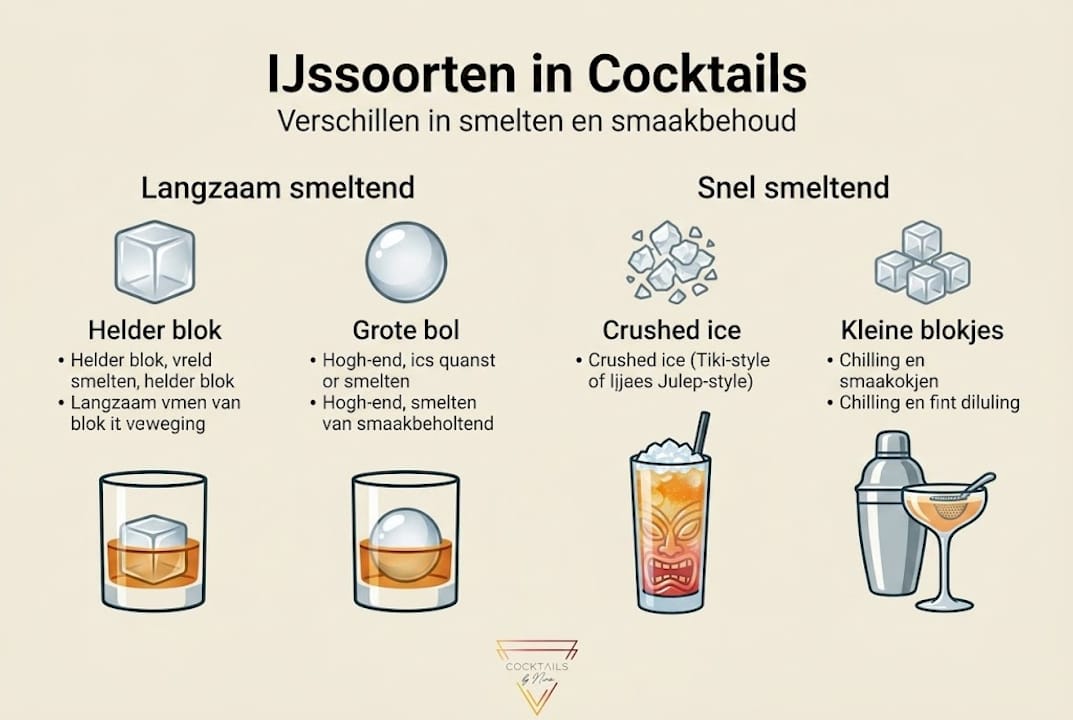
Large, clear ice cubes melt slower due to less surface area and reduced oxygen contact, making them ideal for spirit-forward drinks like a gin and tonic. Crushed ice or nugget ice, on the other hand, provides rapid cooling and dilution, which is perfect for cocktails like the mojito. This is not a detail; it is the core of good cocktail preparation.
| Type of Ice | Melting Speed | Ideal For | Effect on Flavor |
|---|---|---|---|
| Large clear block | Slow | Gin and tonic, whiskey sour | Minimal dilution, flavor preservation |
| Standard cubes | Medium | All-around use | Balanced dilution |
| Crushed ice | Fast | Mojito, tiki cocktails | Rapid cooling, more dilution |
| Nugget ice | Fast | Soft drinks, slushies | Soft texture, high cooling |
| Ice sphere | Very slow | Whiskey, rum on the rocks | Minimal dilution, elegant presentation |
The transparency of ice also indicates its quality. Cloudy ice contains air bubbles and minerals that melt faster and can sometimes impart a slight off-flavor. Clear ice, made by slowly freezing water or using filtered water, is denser and melts more evenly. For a ready-to-drink cocktail mix you serve at home, using clear ice makes a noticeable difference in the final experience.
Pro tip: make clear ice at home by placing an uncovered cooler in the freezer. The water freezes from top to bottom, pushing air bubbles to the bottom. Cut the clear top part into blocks and use them for your most impressive cocktails.
Another interesting option for enthusiasts who want to go further is investing in a good ice mold or a set like the expert cocktail fusion kit, which elevates the entire ingredient and presentation experience. The combination of the right ice, the right glass, and the right cocktail transforms a drink from good to extraordinary.
Choosing the right type of ice also heavily depends on the cocktail style. An Old Fashioned calls for a large ice sphere or a large square block. An Aperol Spritz does well with standard cubes. And a Caipirinha or Bramble benefits from crushed ice, as its rapid dilution better integrates the sweet and sour elements. Knowing this beforehand allows you to tailor your ice preparation to your cocktail menu.
The Science of Dilution and Temperature
To truly gain control over your cocktails, it helps to understand the science behind dilution and temperature. This sounds technical, but it's actually very practically applicable in your own kitchen or at an event.
Shaking with a full amount of ice for 10 to 15 seconds results in 20 to 25 percent dilution. Stirring results in a lighter dilution of 15 to 20 percent. Always use fresh, hard ice for the best control over this process. These are not arbitrary numbers; these are the measurable results of how ice and movement work together.
Dilution per preparation technique:
| Technique | Duration | Dilution | Recommended for |
|---|---|---|---|
| Shaking | 10 to 15 seconds | 20 to 25% | Cocktails with citrus, egg, or syrup |
| Stirring | 30 to 45 seconds | 15 to 20% | Strong, clear cocktails |
| Building in glass | Variable | 5 to 10% | Long drinks, gin and tonic |
Here's a step-by-step approach to experimenting with dilution and temperature at home:
- Start with chilled glassware. Before use, place your glasses in the freezer or fill them with ice and water while preparing the cocktail. This prevents the glass from transferring heat to your drink.
- Always use fresh ice. Old ice from the freezer absorbs odors and melts more unevenly. Fresh ice provides the most control.
- Time your shake. Ten seconds of shaking is shorter than you think. Use a timer until you develop a feel for it.
- Taste as you go. Make the same cocktail twice: once shaken for 10 seconds, once for 15 seconds. Taste the difference. This is the fastest way to learn.
- Vary the amount of ice. First use a half-full shaker, then a full one. You'll notice that the full shaker produces a more consistent result.
Statistic: A difference of just 5 seconds in shaking time can increase dilution by 5 percentage points, which is noticeable in the flavor balance of your cocktail.
These kinds of experiments cost little and yield a lot. Your ready-made cocktail mix will immediately improve because you learn how to bring out its best with the right preparation. A premium cocktail mix deserves premium treatment, and that starts with the ice and the technique.
What many home bartenders also miss is that the temperature of the ingredients before shaking already makes a difference. Chilled spirits result in less dilution when shaken because the temperature difference with the ice is smaller. Store your favorite gin or vodka in the refrigerator if you really want to pay attention to detail. These are the small adjustments that collectively have a big impact on the final result.
Innovative Applications and Hygiene with Ice
Now that you understand the technique, it's time to consider how to use ice smartly at larger gatherings. Because at an event, there are additional challenges: large quantities, multiple cocktails at once, and guests serving themselves ice. Here, hygiene plays a crucial role.
Always use a scoop, never your hands, and regularly clean ice bins and holders. Personalized ice with logos or special shapes is an innovative eye-catcher at events, and clear ice machines make professional clear ice accessible on a larger scale. These are not luxury details; they are standards that protect your guests and enhance your presentation.
Practical rules for hygienic ice use at events:
- Always use an ice scoop or tongs. Hands transfer bacteria and melt ice faster due to warmth.
- Never place the ice scoop directly in the ice. Lay it separately on a clean surface or in a holder next to it.
- Clean ice containers at least every four hours during long events. Meltwater is a breeding ground for bacteria if left standing too long.
- Cover ice when not actively in use, especially outdoors or in warm areas.
- Use separate containers for ice that goes into drinks and ice used to keep bottles cool.
Pro-tip: For an event with more than 20 people, an insulated ice bucket or a professional ice cooler is a smart investment. This keeps the ice intact longer and reduces the frequency of refilling, which also improves hygiene.
In addition to hygiene, ice also offers enormous opportunities for creative presentation. Personalized ice blocks with a company logo or a bride and groom's name are very accessible nowadays. You only need a silicone mold and edible ink, or you can order them from a specialized supplier. Guests always find this a surprising and memorable detail.
Clear ice machines are another innovation that is becoming increasingly popular at events. These machines produce crystal-clear ice on a large scale, without you having to make it yourself. They are rentable for events and ensure a consistent, professional result. Through the cocktail at home service, these kinds of details can be discussed as part of a complete at-home cocktail experience.
Also consider ice sculptures as a decorative element for larger occasions. An ice sculpture that slowly melts while guests stand around chatting creates an atmosphere that is difficult to replicate with other decorations. It's an investment, but the impact on your guests' experience is enormous. So ice is not only functional, it is also a visual statement.
The Truth About Ice That Many Home Bartenders Miss
After all the practical tips, it's time for an honest conversation. Because there's a pattern we see time and again with cocktail lovers: they're afraid of too much ice. They think that a glass full of ice will dilute and weaken their drink. The opposite is true.
More ice is better, not less. Guests consistently underestimate this. Less ice actually melts faster because there is more heat per ice cube. The result is a quicker watery cocktail, precisely what you want to avoid. More ice cools more efficiently and melts slower, keeping the cocktail flavorful for longer.
The myth of the watery cocktail stems from a misunderstanding of dilution. Dilution is not the enemy; it's a tool. In a mojito, a certain degree of dilution is desirable because it integrates the mint and lime juice into the rum. But in a gin and tonic, you want to minimize that dilution to keep the gin's botanicals clear. The difference lies in the type of ice and the quantity, not in omitting it.
What we have learned after years of crafting and serving cocktails is that ice should be treated as a full-fledged ingredient. Just as you carefully choose a good gin or squeeze a fresh lime, ice deserves the same attention. Its quality, type, and quantity are all variables that you can consciously control.
A concrete example: a mojito served in a spacious mojito glass full of crushed ice not only looks fantastic but also drinks better. The crushed ice rapidly chills the mint and lime juice and integrates the flavors in a way that standard cubes cannot match. The glass, the ice, and the cocktail are one system. Those who understand this make better cocktails.
The uncomfortable truth is that many home bartenders invest in expensive spirits and premium mixers, but then skimp on ice. They use whatever happens to be in the freezer, old and full of freezer burn. That's like cooking a premium steak in a pan that isn't hot enough. The result doesn't do justice to the ingredients. Treat ice seriously, and your cocktails will automatically improve.
Ready to Get Started? Discover Our Cocktail Solutions
After this in-depth exploration of the role of ice in cocktails, the next step is perhaps the most enjoyable: getting started yourself. Whether you want to experiment at home or organize an event where everything is perfect, there are solutions that make it easy.

At Cocktails by Nina, you'll find everything you need to put theory into practice. Order our ready-made cocktail mixes directly and combine them with the right ice technique for a result that will surprise your guests. For those who truly want to go all out, the cocktail fusion kit is a complete set that allows you to make professional cocktails with the right ingredients and tools. And for larger occasions where you want to be completely taken care of, our cocktail at home service offers a complete cocktail experience including guidance, so you can enjoy yourself with your guests.
Frequently Asked Questions
How much ice do I need for a cocktail party?
Calculate 0.75 to 1 kg of ice per person per day and about 300 grams per individual cocktail. Always have a little more on hand than you think you'll need.
What is the effect of clear ice versus normal ice?
Clear ice melts slower due to less surface area and reduced oxygen contact, keeping cocktails flavorful for longer. It's ideal for strong, spirit-forward drinks like a gin and tonic or whiskey on the rocks.
Why do experts recommend using more ice, not less?
More ice cools more efficiently and melts slower, meaning your cocktail dilutes less quickly. Less ice actually melts faster due to the relatively higher heat per cube, making your drink watery sooner.
Which cocktails do you use crushed ice for?
Crushed ice is ideal for cocktails that require rapid cooling and a certain degree of dilution, such as the mojito or tiki drinks. It integrates flavors quickly and provides a refreshing, soft texture.
What should I pay attention to regarding hygiene around ice?
Always use a scoop, never touch ice with bare hands, and clean ice containers regularly. For long events, it's advisable to drain meltwater every few hours and clean the container.