Many people assume that a cocktail lasts as long as its strongest ingredient. This is logical thinking, but in practice, it's not true. As soon as you mix different ingredients, the chemical properties of each individual component change. Lemon juice oxidizes within hours, syrups can grow mold, and even a strong Negroni loses its character if stored incorrectly. In this article, we'll explain exactly which factors determine the shelf life of cocktails, how long common ingredients truly last, and how you can assess whether your drink is still safe and delicious.
Table of Contents
- What determines the shelf life of cocktails?
- Shelf life of cocktail components: here's how it works
- Shelf life of batched cocktails: citrus vs. alcohol
- How to check and serve fresh cocktails
- Why you're often too late to taste: expert insights
- Guaranteed fresh cocktails? Discover our solutions
- Frequently Asked Questions
Key Insights
| Point | Details |
|---|---|
| Sugar and alcohol extend shelf life | Ingredients with a lot of sugar or alcohol remain safe and tasty much longer than fresh juices or citrus. |
| Citrus accelerates quality degradation | Batched cocktails with citrus remain optimal for a maximum of 2-3 days, unless frozen. |
| Spirits almost indefinitely shelf-stable | Spirits that are well-sealed and stored in the dark practically do not expire. |
| Testing and proper storage are essential | Always taste and check for smell, taste, and appearance before serving to avoid surprises. |
What determines the shelf life of cocktails?
After this introduction, let's first delve into why not all cocktails stay good for the same amount of time. The shelf life of a cocktail depends on a combination of factors. Two of the most important are oxidation and water activity.
Oxidation occurs as soon as a liquid comes into contact with oxygen. This process changes the taste and smell of your cocktail. Think of a sliced apple turning brown: the same thing happens with lemon juice or freshly squeezed orange juice in a cocktail. The fresh, bright flavor disappears and is replaced by a flat, sometimes bitter note.
Water activity is a measure of how much free water is available in a liquid for microbiological growth. The higher the water activity, the faster bacteria and molds can multiply. Oxidation and water activity determine shelf life; a high sugar or alcohol content significantly inhibits bacteria. This explains why a pure whisky has an almost unlimited shelf life, while a cocktail with fresh juice loses quality within a day.
The role of sugar, alcohol, and citrus
Sugar acts as a natural preservative. In high concentrations, it binds free water molecules, giving bacteria less room to grow. That's why a rich sugar syrup with a ratio of two parts sugar to one part water lasts much longer than a standard syrup.
Alcohol has a similar effect. Spirits with a high alcohol percentage, such as vodka, rum, or gin, are naturally resistant to spoilage. But as soon as you mix them with ingredients that have a low acidity or a lot of water, their protective effect diminishes.
Citrus is the most delicate component in any cocktail. Fresh lemon juice or lime juice begins to oxidize within a few hours. The volatile aromatic compounds responsible for that fresh, vibrant flavor literally evaporate. After 24 hours, fresh lemon juice tastes noticeably less vibrant, and after 48 hours, the difference is clearly noticeable to most people.
“A cocktail is always as fragile as its most unstable ingredient. Not its strongest.”
What happens to taste and safety
Taste spoilage and food safety are two different things, but they often go hand in hand in cocktails. A cocktail that looks cloudy or has a strange smell is often no longer safe to drink. But the reverse is not always true: a cocktail can still look fine while the taste has already deteriorated significantly.
Bacteria thrive best at temperatures between 4 and 60 degrees Celsius. This is the so-called danger zone for food and drink. A cocktail left out of the refrigerator for too long can theoretically become dangerous, even if it still smells normal. Cocktails with dairy products such as cream or egg white are the most risky and should never be left at room temperature for more than two hours.
Shelf life of cocktail components: here's how it works
Now that you know what factors are decisive, let's look at the shelf life of specific cocktail ingredients. It's helpful to view this by category, so you know exactly what to expect.
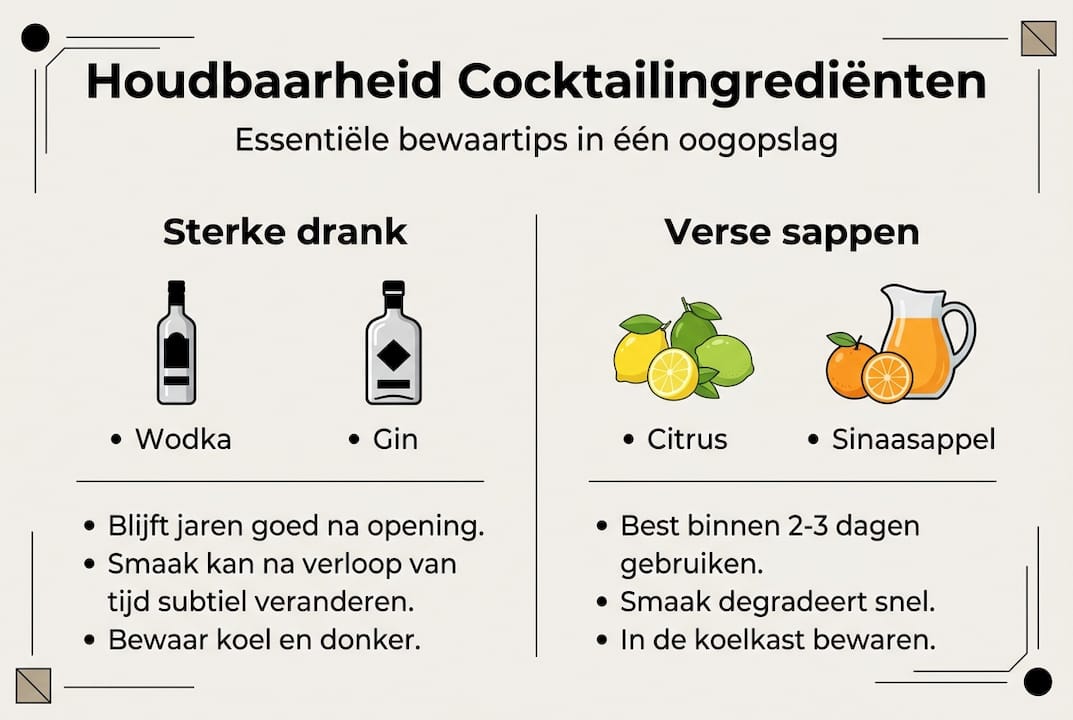
Storage times per ingredient
| Ingredient | Storage location | Shelf life after opening |
|---|---|---|
| Distilled spirits (vodka, rum, gin) | Cool and dark | Indefinite |
| Vermouth | Refrigerator | 1 to 2 months |
| Standard simple syrup (1:1) | Refrigerator | 2 to 4 weeks |
| Rich simple syrup (2:1) | Refrigerator | Up to 6 months |
| Fresh lemon juice or lime juice | Refrigerator | 1 to 2 days |
| Ready-to-drink cocktail mix | Refrigerator | See packaging |
| Soft drinks and tonic | Refrigerator | 1 to 3 days after opening |
| Bitters | Cool and dark | 5 years or longer |
Distilled spirits remain indefinitely shelf-stable after opening, provided they are stored in a cool, dark place. This applies to vodka, rum, gin, tequila, and whisky. The taste may change slightly over the years due to slow oxidation, but they are safe to drink.
Vermouth is shelf-stable for 1 to 2 months after opening, when stored in the refrigerator. Vermouth is an aromatized wine, and like regular wine, it oxidizes after opening. Many people store vermouth outside the refrigerator, which is a common mistake. An open bottle of vermouth on the counter loses its quality within a week.
Syrups show a clear difference based on concentration. Homemade syrups (1:1) remain good for 2 to 4 weeks in the refrigerator. Rich simple syrup (2:1) is shelf-stable for up to 6 months when refrigerated. The higher sugar content effectively inhibits mold growth.
Common storage mistakes
- Storing vermouth outside the refrigerator after opening
- Pressing fresh lemon juice too far in advance
- Storing syrups in unsealed jars
- Placing bitters next to the hob or in direct sunlight
- Storing opened tonic or soft drinks for too long without checking
Pro-tip: add a small splash of vodka to homemade simple syrup. This slightly increases the alcohol content and extends the shelf life by a few extra weeks, without noticeably changing the taste.
Shelf life of batched cocktails: citrus vs. alcohol
With the components explained, let's now extensively discuss complete batched cocktails themselves. A batched cocktail is a larger portion of a cocktail that you mix in advance, for example, for a party or if you want to serve multiple glasses at once.
Cocktails with citrus
Cocktails containing lemon juice, lime juice, or other fresh fruit juices are the most vulnerable. Batched cocktails with citrus remain shelf-stable for 2 to 3 days in the refrigerator. If you want to store them longer, you can freeze them, and they will be shelf-stable for up to a year.
Examples of cocktails with citrus include the Margarita, the Daiquiri, the Cosmopolitan, and the Whiskey Sour. All these cocktails contain fresh lemon juice or lime juice as an essential component. After two days in the refrigerator, the fresh citrus note begins to fade. After three days, the difference is clearly noticeable to most people.
A ready-to-drink cocktail mix solves this problem because the ratios and preservation are already professionally optimized. You don't have to calculate or test anything yourself.
Cocktails without citrus
Spirit-forward batched cocktails without citrus can be stored in the refrigerator for weeks to months. Think of a Negroni, a Manhattan, or an Old Fashioned. These cocktails consist mainly of spirits and possibly bitters or simple syrup, both ingredients with a long shelf life.
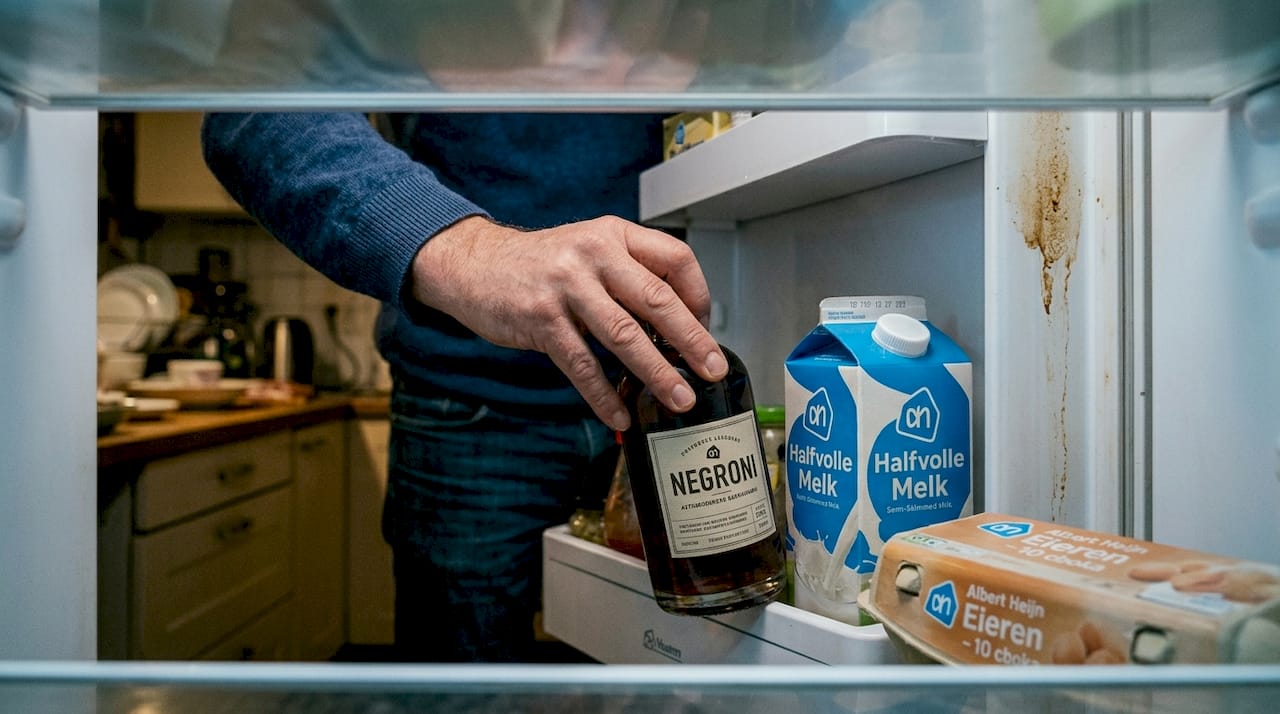
A Negroni that you have batched can be stored in a sealed bottle in the refrigerator and served for several weeks without noticeable loss of quality. Some bartenders even claim that a batched Negroni tastes slightly smoother and rounder after a week, as the ingredients have time to integrate.
Comparison: citrus vs. spirit-forward
| Type batched cocktail | Refrigerator | Freezer |
|---|---|---|
| With citrus (Margarita, Daiquiri) | 2 to 3 days | Up to 1 year |
| Without citrus (Negroni, Manhattan) | Weeks to months | Not necessary |
| With dairy or egg (Eggnog) | 1 to 2 days | Not recommended |
| Non-alcoholic (mocktail) | 2 to 4 days | Up to 3 months |
Freezing: how to do it right
- Use an airtight container or resealable freezer bag
- Always leave some space, as liquids expand when frozen
- Write the date on the packaging so you know when you froze it
- Always thaw in the refrigerator, never on the counter
- Shake or stir well after thawing before serving
Pro-tip: freeze citrus cocktails without the ice. Only add ice at the time of serving. This prevents dilution and maintains the correct balance of flavors.
For those who regularly host guests, ready-made cocktails are a smart choice. They are professionally prepared and have a clear expiration date, so you never have to guess. Non-alcoholic cocktails are also available for guests who don't drink.
How to check and serve fresh cocktails
You now have an overview of shelf life. But how do you know if your cocktail is still good and how do you serve it optimally? This is the practical part you can apply immediately.
Recognizing signs of spoilage
- Smell: A sour, musty, or strange smell is a clear sign of spoilage. Fresh cocktails smell bright and distinct.
- Color: Cloudiness or discoloration, especially in cocktails that are normally clear, indicates oxidation or microbiological activity.
- Taste: A flat, bitter, or metallic taste means the cocktail has passed its peak. Discard it.
- Layering: If ingredients are visibly separated and no longer mix after shaking, the emulsion has broken.
Citrus cocktails oxidize quickly; a freezer extends their shelf life up to a year, but thaw completely before use for the best flavor balance. This is an important point: partially thawed cocktails taste unbalanced because the alcohol-rich and water-rich components behave differently at low temperatures.
Thawing and serving after freezing
Remove your frozen cocktail from the freezer at least 6 to 8 hours before use and place it in the refrigerator. This allows it to thaw slowly and evenly. Then stir or shake it thoroughly. Always taste a small amount before serving it to guests. Only add ice, garnish, and any carbonated ingredients at the last moment.
When is something no longer safe?
This is a question many people answer incorrectly. They think: "It still smells good, so it must be safe." But some bacteria produce no noticeable odor or taste change. The safest rule of thumb is: stick to the storage times in the table above and always discard if in doubt.
Pro-tip: keep a small test portion of your batched cocktail in a separate glass in the refrigerator. Taste this test glass daily. This way, you build a personal reference point and know exactly when the taste starts to change. If you want to avoid this kind of hassle, a cocktail at home experience is the most worry-free option.
Do you want to create a complete DIY cocktail kit for a party? Then it's smart to prepare the cocktails as late as possible or opt for spirit-forward variations that last longer.
Why you're often too late to taste: expert insights
After all the practical tips, we'd like to share our own perspective from experience. Most people wait too long to taste. They make a batch of cocktails, put it in the refrigerator, and only taste it on the evening of the party. At that point, it's too late to adjust.
What we observe is that small changes in color or smell occur early, sometimes within 12 hours. A slight discoloration of citrus cocktails or a subtle change in smell are signals you only recognize if you taste and compare regularly. Someone who only tastes their cocktail at the moment of serving misses these early signals entirely.
"Just smelling or tasting" also doesn't tell the whole story. Your nose quickly adapts to smells, so you no longer notice deviations after a few seconds. Therefore, always taste with a clean palate, for example, after drinking water, and consciously compare it with how the cocktail looked and tasted fresh.
Our recommendation: always make a small reference portion that you freeze at the time of preparation. Thaw that portion just before serving and compare it with the refrigerated version. This way, you immediately see if there has been any loss of quality. If you want to avoid this kind of hassle, a cocktail at home experience is the most carefree option.
Guaranteed fresh cocktails? Discover our solutions
Learned everything about shelf life and freshness? Then you can make it even easier for yourself.

At Cocktails by Nina, all cocktails are professionally prepared with premium ingredients and provided with a clear expiration date. No guesswork, no disappointments on the evening itself. Whether you choose a ready-to-drink cocktail mix for home, a complete cocktail at home experience for your event, or a cocktail box as a gift for someone who appreciates quality. We ensure that the freshness and taste are always right, so you can focus on the company.
Frequently Asked Questions
Can you freeze cocktails with fresh fruit?
Yes, cocktails with fresh fruit or citrus can be frozen and stored for up to a year, provided you thaw them completely before use for the best flavor balance.
How long does an opened bottle of syrup stay good in the refrigerator?
A standard syrup (1:1) will last 2 to 4 weeks in the refrigerator; rich syrup (2:1) can last up to 6 months due to its higher sugar content.
How do I know if my batched cocktail is no longer good?
Look out for an unusual smell, cloudiness, or visible separation of layers in the liquid. When in doubt, always discard it.
Does spirits always stay good after opening?
Yes, distilled spirits remain indefinitely shelf-stable after opening, as long as you store them in a cool, dark place and seal the bottle properly.
Recommendation
- Cocktail at home – Cocktails by Nina
- The Expert Cocktail Fusion Kit - Drink Botanicals Ireland - Award-winning – Cocktails by Nina
- Cocktails at home – Cocktails by Nina
- Ready-made cocktail mix – Cocktails by Nina