You don't need a cupboard full of gadgets to make great cocktails. That's precisely the misconception that holds most beginners back. What are cocktail accessories, really? They are the tools you use to mix, measure, strain, and present ingredients. And the beauty of it is: a basic set with a jigger, shaker, and bar spoon can make 90% of classic cocktails. In this guide, you'll learn which tools you truly need, how to use them, and how to deploy them smartly for parties or events.
Table of Contents
- Key Insights
- What are Cocktail Accessories: The Basic Equipment
- Extra Accessories That Make a Difference
- Accessories for Events and Home Parties
- Techniques That Bring Your Accessories to Life
- My View on Cocktail Accessories After Years of Mixology
- Cocktailsbynina: Everything for a Complete Experience
- Frequently Asked Questions
Key Insights
| Point | Details |
|---|---|
| Basic set is enough | With a jigger, shaker, and bar spoon, you can make by far the most classic cocktails. |
| Material makes a difference | Stainless steel is taste-neutral, durable, and easy to clean. Always choose quality. |
| Technique is everything | Shaking and stirring are not interchangeable. The choice determines taste and texture. |
| Efficiency at events | Keep tools within reach and limit your assortment to 4 to 6 cocktails for quick service. |
| Garnish counts | A good cocktail garnish enhances the experience without additional preparation time. |
What are Cocktail Accessories: The Basic Equipment
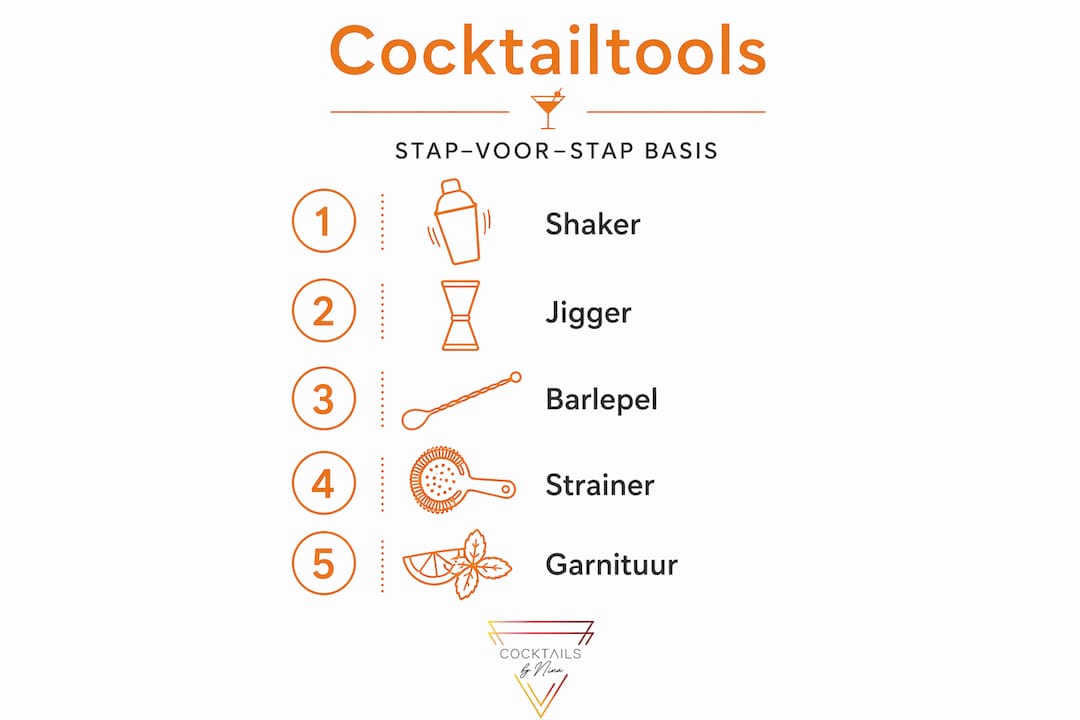
Cocktail accessories are all the tools a bartender uses to prepare, measure, and serve a cocktail. They range from a simple measuring cup to a specialized muddler. But not everything is equally indispensable. Anyone looking to get started at home or at a party would do well to begin with three core tools.
The shaker: Boston or Cobbler
The shaker is the face of the home bar. There are two main types. The Boston shaker consists of two separate cups, one metal and one glass or a second metal one, and is favored by professionals for its speed and larger capacity. The Boston shaker has a capacity of up to 80 cl, while a Cobbler shaker remains around 50 cl. The Cobbler shaker has a built-in strainer and cap, making it easier for beginners to work without an additional strainer.
Choosing for home use? Then a Cobbler is fine. Will you be regularly serving larger groups? Then a Boston shaker is the better investment.
The jigger: measuring is knowing
The jigger is a double-sided measuring glass, also called a bar measure. Good cocktails are all about proportions. Without a jigger, you randomly throw ingredients together and hope for the best. With a jigger, you can reproduce a recipe exactly every time. Standard jiggers measure 25 ml and 50 ml, but there are also models with additional measurements for 15 ml or 35 ml.
Pro-tip: Learn to think of your recipes in terms of ratios. A Margarita is always 2:1:1 (tequila:Cointreau:lime juice). Then you'll never have to look for a recipe again.
The bar spoon: more than stirring
Bar spoons are 30 cm long with a twisted stem, specially designed for smooth stirring without splashing. The twisted stem glides between your fingers and provides control over the movement. Many professional bar spoons have a small fork or muddler at the end for garnishing or muddling.
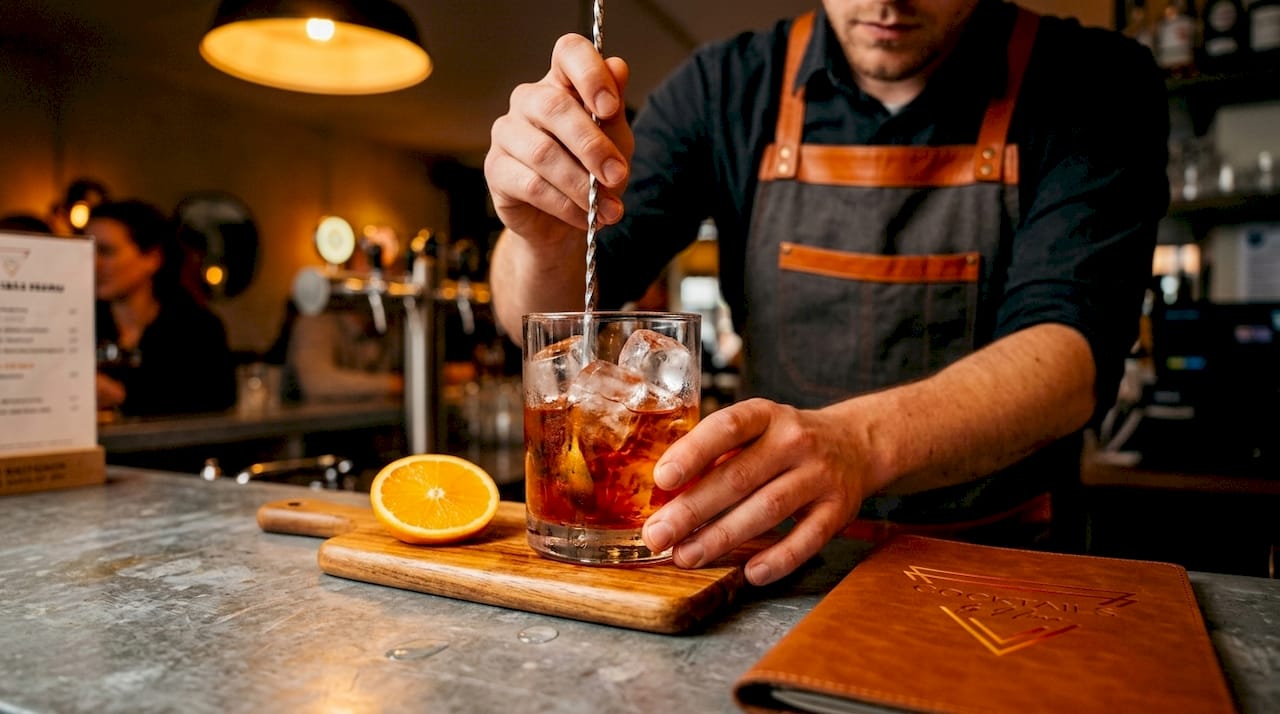
A bar spoon is also useful for building layered cocktails, such as a Tequila Sunrise. You place the back of the spoon in the glass and slowly pour grenadine over the curved side. This way, it sinks to the bottom without mixing.
Strainers and other basic tools
| Tool | Function | For whom |
|---|---|---|
| Hawthorne strainer | Holds back ice and solids when shaking | Anyone with a Boston shaker |
| Julep strainer | For use with mixing glass when stirring | Advanced home bartenders |
| Muddler | Mashing herbs, fruit, and sugar | Those making Mojitos or Caipirinhas |
| Fine mesh strainer | Double straining for clear texture | Those who want perfect presentation |
High-quality stainless steel (304 grade) is the best choice for all these tools. It is taste-neutral, dishwasher-safe, and lasts for years. Cheap plastic or zinc can cause off-flavors and rust.
Extra Accessories That Make a Difference
Those who want to go beyond the basics quickly encounter a world of supplementary tools. Some are genuinely useful. Others are fun gadgets that end up in a drawer after two uses.
Here's what you can actually use:
- Cocktail zester or channel knife: Cuts thin strips of citrus peel for an elegant twist. Essential for cocktails where you express the peel over the glass for its oils.
- Grater or microplane: Finely grates nutmeg or citrus peel over the top of a cocktail. A small grater gives more aroma than a whole peel.
- Ice cube molds: Large ice cubes (4x4 cm or larger) melt slower and dilute your cocktail less. For an Old Fashioned or Negroni on a large ice cube, this makes a noticeable difference.
- Mixing glass: A heavy crystal or glass stirring beaker for spirit-forward cocktails. Not a shaker, but an elegant stirring beaker that can also be served as a presentation piece.
- Cocktail garnish set: What is a cocktail garnish? These are the decorative and flavoring elements on top of or on the rim of a glass. Think of an orange peel, a cherry on a pick, a sprig of mint, or a salt rim. What you use depends on the recipe, but also on the atmosphere you want to create.
Pro-tip: Prepare your garnishes in advance for a party. Cut citrus wedges, prepare sugar rims, and skewer cherries on cocktail picks before the first guest arrives. That saves you ten minutes per hour during the party.
Regarding ice: it makes a bigger difference than most people expect. Cloudy ice contains air bubbles and minerals that affect your cocktail as they melt. Clear ice provides a cleaner taste and looks more professional. You can make clear ice at home by freezing water slowly in an insulated cooler. Freezing then starts at the top, pushing impurities downwards.
Accessories for Events and Home Parties
Making cocktails for yourself is relaxing. Making cocktails for twenty guests at once is something else entirely. The tools are the same, but how you set them up and use them changes completely.
Professionals adhere to a clear rule: 80% of the tools should be reachable within one and a half steps. This means, in practice, that your shaker, jigger, bar spoon, strainer, and garnishes are all on the bar or hanging. You lose precious seconds if you constantly have to walk to another table.
How do you set up an efficient bar?
- Divide your bar into zones. Clean glasses on the left, your workspace with tools in the middle, garnishes and syrups on the right.
- Arrange bottles in order of use. The basic spirits you use most often go in front. Liqueurs and syrups behind them.
- Use one ice bucket per bartender. Two bartenders reaching for the same ice bucket both lose time.
- Keep a wet cloth handy. A wet cloth is the most used accessory at the bar. Your bar stays clean, your hands are dry, and your glassware is streak-free.
- Limit your menu. For events, it is advised to offer an assortment of 4 to 6 cocktails for variety without chaos. You can work faster, purchase fewer ingredients, and maintain quality.
For business occasions, this applies even more strongly. Read more about how to choose the right cocktails for a business reception or corporate event. A well-chosen assortment with the right accessories gives your bar a professional appearance without needing a full bar team.
Techniques That Bring Your Accessories to Life
The most beautiful shaker is useless if you use the wrong technique. And that's exactly where many home bartenders go wrong. They shake everything that's loose, or they stir when they should have shaken.
Shaken or stirred?
Shaking is suitable for cocktails with citrus, egg white, or cream. Think of a Daiquiri, Margarita, Whiskey Sour, or Clover Club. The vigorous movement emulsifies the ingredients, quickly chills the cocktail, and creates a slightly frothy texture. Stirring is used for pure spirit-forward cocktails like a Negroni, Martini, or Manhattan. Stirring maintains the clarity and silky texture of the drink without air bubbles.
The golden times: shaking takes 10 to 15 seconds, and stirring 30 to 40 rotations. More is not better. Shaking too long leads to over-dilution. Stirring too little results in an overly strong cocktail.
Muddling without bitterness
Muddling sounds simple. Just muddle away. But if you press mint too hard, you break the leaf cells and get a bitter, grassy taste. You muddle mint gently, 3 to 5 times, just enough to release the essential oils without crushing the leaf. Press down softly and twist lightly. That's all.
For lime in a Caipirinha, it's different. There you want the juice and the oils from the peel, so you muddle more firmly. The difference lies in the ingredient, not the force.
Double straining for professional clarity
Double straining combines a Hawthorne strainer with a fine-mesh sieve. The Hawthorne catches large pieces of ice and fruit. The fine-mesh sieve filters small ice particles, seeds, and pulp. The result is a clear, silky-smooth cocktail that looks like a professional made it. This difference is immediately noticeable in the glass.
Here are the most common mistakes made by home bartenders and how to avoid them:
- Too much ice in the shaker: Always use fresh, dry ice cubes. Wet ice dilutes your cocktail before you even start shaking.
- Ingredients in the wrong order: Always add inexpensive ingredients first. If you make a mistake, you won't waste expensive spirits.
- Glasses not chilled: A cocktail glass that's warm from the cupboard partially undoes the work of your shaker. Place glasses in the freezer for five minutes or fill them with ice water.
- No taste test: Always taste before serving. Half a teaspoon of sugar syrup can save an unbalanced cocktail.
My View on Cocktail Accessories After Years of Mixology
Over the years, I've collected more bar tools than I'll ever use. And what I've learned is that simplicity wins. My core set consists of a Boston shaker, a good jigger with multiple measurements, a stainless steel bar spoon, a Hawthorne strainer, and a fine-mesh sieve. That's it. With those, I can make anything.
The mistake I made myself in the beginning was investing in cheap sets. Plastic muddlers that bend, jiggers that leak, shakers that open over a white tablecloth. Invest in quality stainless steel, and you'll have tools for the rest of your life. Buying cheap is buying twice.
What also surprised me: the bar spoon is the most versatile tool at the bar. I use it for stirring, garnishing, building layered cocktails, and sometimes just for tasting. A good bar spoon with grip costs little and always works.
For those making cocktails for a group: stop trying to do everything perfectly. A limited menu, good mise-en-place, and quality tools yield more results than ten different shakers. Guests won't taste the difference between a Boston and a Cobbler. They will taste the difference between a well-measured cocktail and one made "by feel."
Enthusiasm is good, but discipline in measuring and technique is better. That's where the real results lie.
— Ruud
Cocktailsbynina: Everything for a Complete Experience
Whether you want to set up a home cocktail bar or organize an event, Cocktailsbynina has what you're looking for. From complete cocktail glass sets to ready-to-serve cocktail boxes that you can serve directly without mixing or preparing. Perfect if you want to surprise guests without spending hours behind the bar.
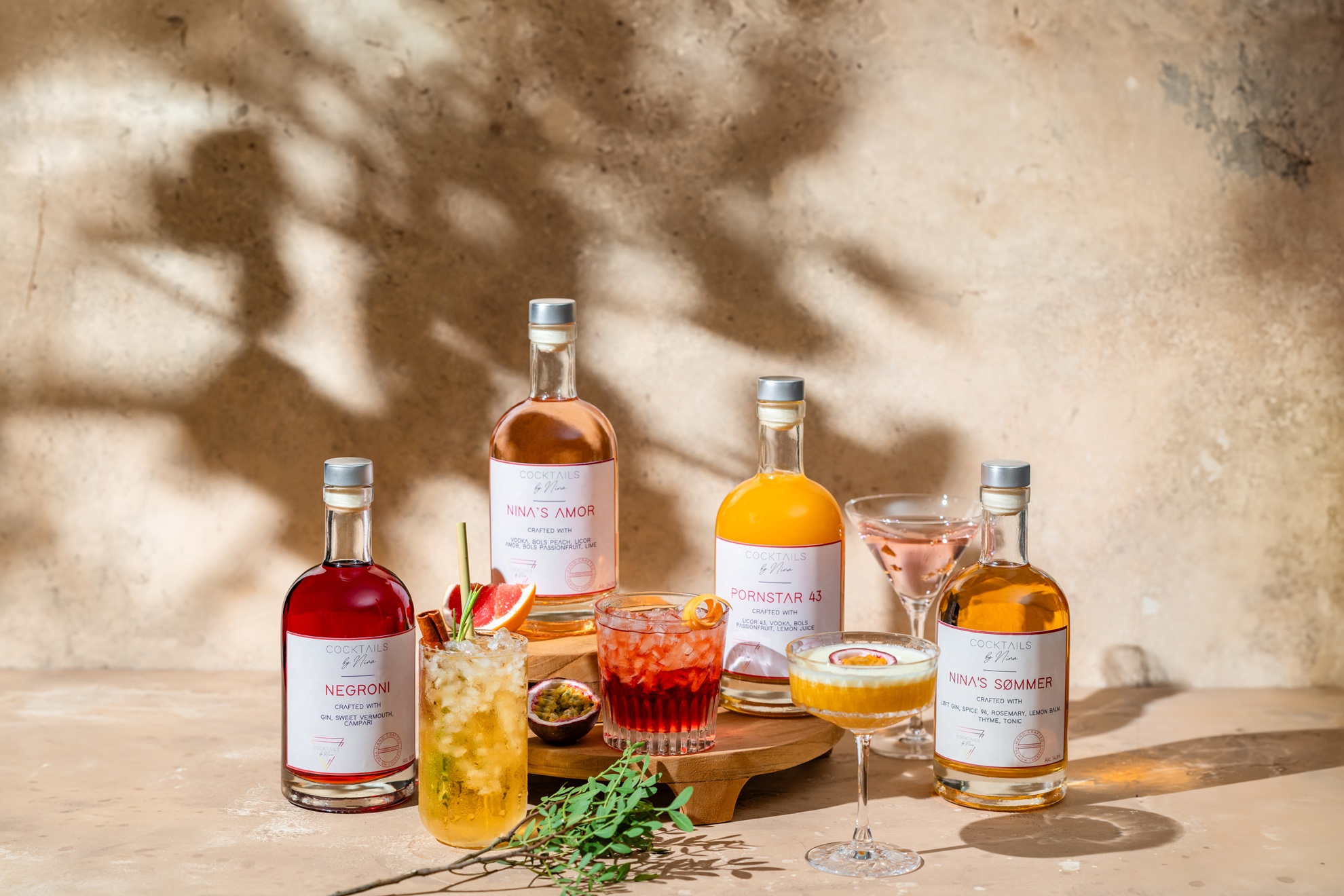
For parties, birthdays, or company receptions, you can also opt for cocktails at home: professional cocktail service where everything is arranged, including the tools, spirits, and presentation. Cocktailsbynina delivers bar-quality cocktails to your home and caters events from small to large. Ideal if you want to enjoy yourself without worries, or if you are looking for original gift ideas for cocktail lovers who already have everything. View the full range and find the set that suits your occasion.
Frequently Asked Questions
What are the most commonly used cocktail accessories?
The three most commonly used tools are the shaker, the jigger, and the bar spoon. Together, they make 90% of classic cocktails possible.
What is a cocktail garnish?
A cocktail garnish is the decorative and flavoring finish of a cocktail, such as a citrus twist, a cherry, a mint sprig, or a salt rim. It enhances the experience and presentation.
Shaken or stirred: when do I use which?
You use shaking for cocktails with citrus, egg white, or dairy. Stirring is for spirit-forward cocktails like a Negroni or Martini. The choice determines the texture and clarity of the drink.
Which material is best for cocktail tools?
304-grade stainless steel is the best choice. It is taste-neutral, dishwasher-safe, and lasts for years.
How do I set up a cocktail bar for an event?
Ensure tools are within one and a half steps' reach, use zones on your bar, and limit your menu to 4 to 6 cocktails for speed and quality.
Recommendation
- Essential cocktail terms: your guide to clear choices – Cocktails by Nina
- Spirits and mixers: the basis for premium cocktails at home – Cocktails by Nina
- What are classic cocktails: the ultimate guide for home – Cocktails by Nina
- Improve your cocktails: the indispensable role of syrups – Cocktails by Nina