An on-site bartender is a mobile hospitality professional who prepares drinks, manages the bar, and actively contributes to the atmosphere and guest experience during events. The role of an on-site bartender goes beyond just pouring. According to the National Hospitality Guide, their duties consist of five core blocks: preparing drinks, preparing and cleaning up, assisting guests, collaborating with the event team, and managing the pace. For event organizers, this distinction is crucial. A well-hired on-site bartender partly determines whether your event runs smoothly or gets bogged down at the bar.
What are the duties of an on-site bartender?
The duties of an on-site bartender involve much more than just filling glasses. A professional bartender combines technical skills with hospitality and operational insight, making the role more versatile than that of a standard hospitality employee.
The specific tasks are as follows:
- Preparing and mixing drinks. From classic cocktails to mocktails and shots. The bartender works with cocktail shakers, measuring cups, and fresh ingredients to deliver consistent quality.
- Preparing and cleaning up the bar. Before the event, the bartender sets up the entire bar, including ice, garnishes, glassware, and drink supplies. Afterward, they clean everything up, leaving the location tidy.
- Advising and serving guests. An experienced bartender reads the guest, asks targeted questions, and advises based on taste preferences. This noticeably increases guest satisfaction.
- Collaborating with the event team. The bartender coordinates with catering staff, event coordinators, and security to maintain the flow of the event.
- Inventory and temperature management. Drinks must be stored at the correct temperature. The bartender actively checks this and reports shortages in time.
- Managing pace during peak hours. During busy periods, speed is crucial for the guest experience. An on-site bartender acts as an operational control point that maintains a tight flow to prevent queues.
Pro-tip: For events with more than 75 guests, always schedule two bartenders. One person prepares the drinks, the other serves and processes payments. This halves waiting times and significantly enhances the experience.
How does a bartender contribute to the atmosphere of an event?
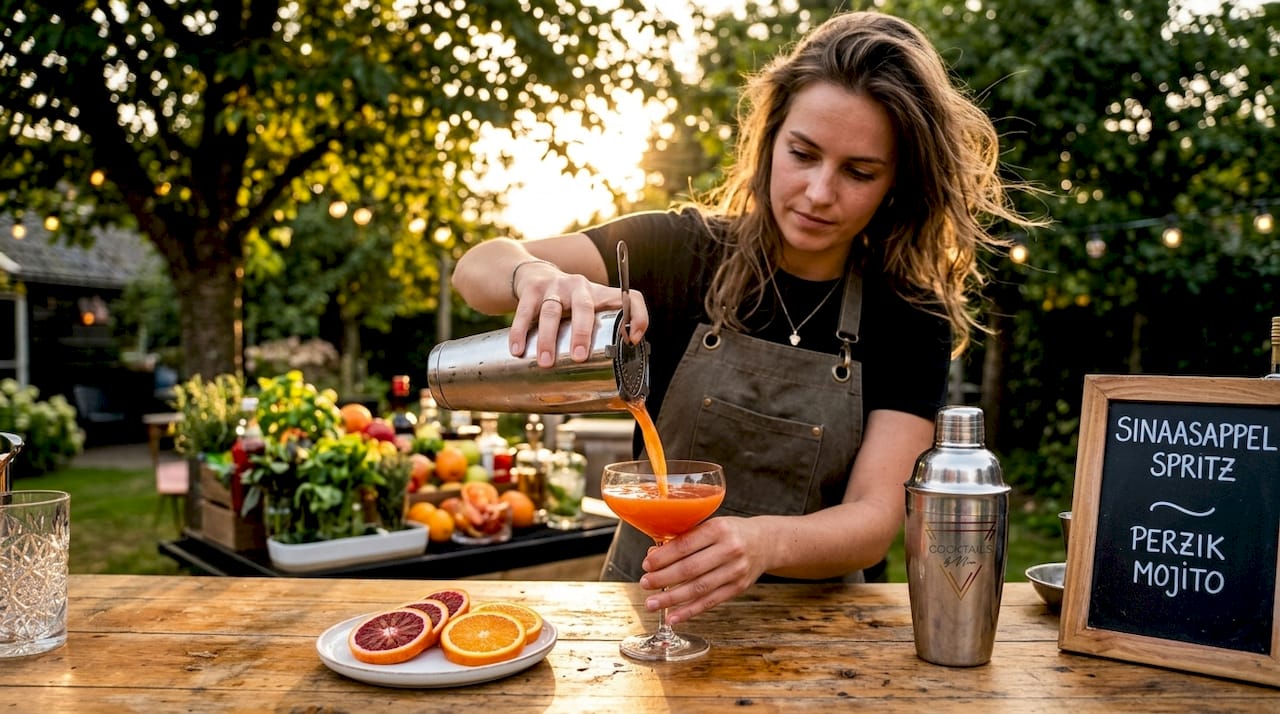
An on-site cocktail bar is not just a service point. It's a meeting place. Guests who don't yet know each other gather at the bar, ask about the drink menu, and start conversations. This face time effect, where guests watch the bartender work, encourages conversation and enhances the experience while waiting.
Their contribution to atmosphere and guest experience occurs through several recognizable mechanisms:
- The bartender as a host. A professional bartender actively welcomes guests, makes eye contact, and introduces themselves. This sets the tone for the rest of the event.
- Interactive involvement in the cocktail process. Guests who see how their drink is prepared are more engaged. A bartender who explains what they are doing creates a mini-show that makes waiting time pleasant.
- Icebreaker for unfamiliar guests. The cocktail bar as a meeting place breaks the ice for guests who don't yet know each other. This is particularly valuable at business events or weddings with mixed groups.
- Dynamics and energy. A bartender who works with energy and humor attracts attention and increases the overall dynamic of the party. Guests watch, laugh, and share the experience.
- Personal attention. By calling guests by name or remembering their preferences, the bartender creates a sense of personalized service that far exceeds standard hospitality service.
Bartenders act as experience engineers who, through interaction and pace, keep the event relaxed and dynamic. For organizers who want to know how this works even at formal occasions, Cocktailsbynina's cocktail etiquette guide offers practical insights.
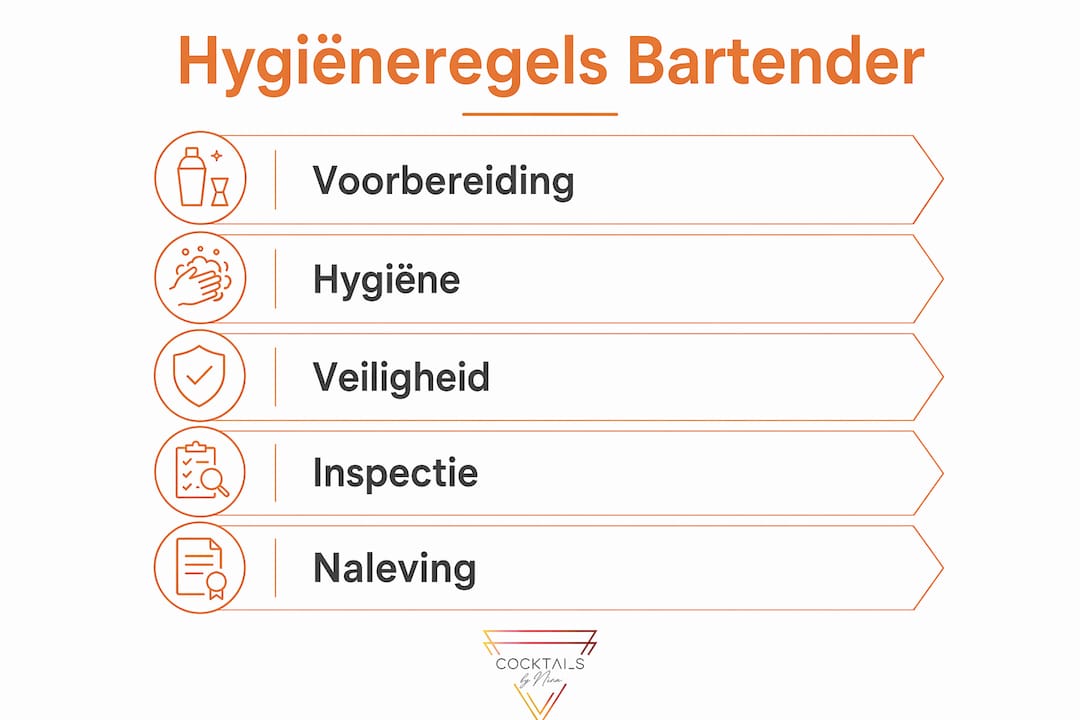
What hygiene rules apply to an on-site bartender?
Hygiene is not an afterthought at events. The NVWA (Netherlands Food and Consumer Product Safety Authority) sets mandatory hygiene and food safety rules for anyone selling food or drinks at markets and events. This also applies to on-site bartenders, regardless of the event's scale.
The most important requirements are:
- HACCP food safety plan or approved hygiene code. Every bartender or drink service at an event must have a valid HACCP plan or work according to a hygiene code recognized by the NVWA.
- Safe storage of drinks and ingredients. Fresh ingredients such as fruit, herbs, and dairy products must be stored chilled at a maximum of 7 degrees Celsius.
- Personal hygiene. Clean hands, no jewelry on wrists and hands, and the use of clean work attire are minimum requirements.
- Clean work environment. The bar must be kept clean before, during, and after the event. Used glasses are immediately removed or rinsed.
- No cross-contamination. Alcoholic and non-alcoholic drinks are stored and prepared separately to prevent cross-contamination.
Failure to comply with hygiene rules can lead to fines or immediate closure of the stand during the event. This is a legal obligation, not a recommendation.
Pro-tip: A professional on-site bartender integrates hygiene so naturally into their work routine that guests don't even notice it. When hiring, always ask about the HACCP plan or hygiene code the bartender uses. This is a reliable indicator of professionalism.
What tips help organizers hire a bartender?
The experience as an on-site bartender varies greatly per professional. As an event organizer, your choice and preparation largely determine the success of the bar service. Use the following tips for event bartenders to avoid disappointments:
- Select based on demonstrable event experience. A bartender with hospitality experience in a permanent bar is not automatically suitable for on-site work. Specifically ask about experience with mobile bar services, weddings, or business events.
- Communicate the drink menu in advance. Provide the bartender with a final drink menu at least one week before the event. This allows time for purchasing, preparation, and practicing specific cocktails.
- Coordinate with the catering team. A bartender who doesn't know when dinner starts or ends will miss the right moment to open or close the bar. Good coordination prevents chaos.
- Ensure a complete bar environment. Think of a stable bar table, sufficient power supply for refrigeration, trash cans, water connection, and adequate lighting. A bartender cannot work professionally without the right infrastructure.
- Position the bar visibly and centrally. A bar in a corner attracts fewer guests than a bar positioned centrally in the room. Visibility increases interaction and enhances the atmosphere.
- Deploy the bartender as an active atmosphere creator. Give the bartender space to approach guests, recommend drinks, and give short cocktail shows. This elevates the experience far above the level of standard drink service.
For organizers who want to tailor the drink menu to the event, Cocktailsbynina's cocktail terms guide offers a clear overview of common terms and categories.
On-site bartender versus standard hospitality employee
The role of an on-site bartender differs in several ways from a regular bar function in a fixed hospitality establishment. The comparison below illustrates the main differences.
| Feature | On-site bartender | Standard hospitality employee |
|---|---|---|
| Work environment | Varied, mobile, temporarily set up | Fixed location with permanent infrastructure |
| Guest interaction | Active and personal, focused on atmosphere | Functional, focused on efficient service |
| Flexibility | High, adapts to location and setup | Limited, works within fixed procedures |
| Hygiene and safety | Self-responsible for HACCP on-site | Falls under permanent hospitality license and procedures |
| Technical skills | Broad, including cocktail preparation and showmanship | Often specialized in one type of service |
| Contribution to atmosphere | Central and visible, acts as atmosphere creator | Supportive, in the background |
An on-site bartender combines technical skills with hospitality and operational insight in a way that a standard hospitality employee rarely needs to demonstrate. The mobile context requires improvisation skills, independence, and a strong sense of timing. For events, this distinction is crucial for the quality of the guest experience.
The services of mobile bartenders are therefore specifically developed for the dynamics of temporary and changing environments, where each setup is different and the bartender must adapt immediately.
Key insights
A professional on-site bartender combines drink preparation, guest contact, and operational management into a single role that directly determines the atmosphere and experience of an event.
| Point | Details |
|---|---|
| Duties are versatile | A bartender prepares drinks, manages the bar, advises guests, and controls the pace during peak hours. |
| Atmosphere starts at the bar | The cocktail bar serves as a meeting place that initiates conversations and enhances the event's dynamic. |
| Hygiene is legally required | On-site bartenders must work according to an HACCP plan or recognized hygiene code from the NVWA. |
| Preparation determines success | Communicate the drink menu in advance, coordinate with the catering team, and ensure a complete bar environment. |
| On-site bartender is not a standard role | The mobile role requires flexibility, independence, and showmanship that a fixed hospitality employee rarely needs. |
What I've learned from on-site bartenders
After multiple events where I hired and observed professional bartenders, one thing stuck with me: the bartender makes or breaks the first thirty minutes of a party. Guests arrive, aren't sure where to stand, and look for a point of reference. The bar is that point of reference. A bartender who actively welcomes, recommends a drink, and cracks a joke sets the tone for the rest of the evening.
The biggest misconception I see among organizers is that they view the bartender purely as an executor. They arrange the drinks, glasses, and table, but forget that the person behind the bar fulfills a social function that is at least as important as the technical one. A bartender who stands silently behind the bar waiting for guests to approach misses half of their value.
What I also frequently see is that organizers communicate too late about the drink menu. A bartender who only finds out on the day itself that mocktails are also on the menu cannot bring the right ingredients. This leads to disappointments that are entirely preventable with an extra week of preparation.
My honest advice: treat the bartender as a valued member of the event team. Invite them for a brief pre-meeting, share the schedule, and allow for their input. The bartenders I've seen shine the most were those who knew what was expected of them and were given the freedom to add their personal touch.
— Ruud
Cocktailsbynina arranges your on-site bartender
Cocktailsbynina offers complete beverage services for events, from ready-to-drink cocktails to professional bartenders who elevate your party.

Through Cocktailsbynina's cocktail at home service, you can arrange an experienced on-site bartender who welcomes, advises, and entertains your guests with a professional cocktail show. The offering includes premium cocktails, mocktails, and custom-designed drink menus for weddings, corporate parties, and private events. Do you also want to serve non-alcoholic options? Cocktailsbynina's ready-to-drink mocktails are perfect for guests who don't drink, without compromising the experience. Contact us to discuss the possibilities for your event.
FAQ
What exactly does an on-site bartender do?
An on-site bartender prepares drinks, manages the bar, advises guests, and controls the pace during the event. The role combines technical skills with active guest interaction and operational management.
How does an on-site bartender differ from a fixed hospitality employee?
An on-site bartender works in varied, mobile environments and is solely responsible for hygiene, setup, and guest contact. A fixed hospitality employee works within established procedures and infrastructure.
What hygiene rules apply to a bartender at an event?
On-site bartenders must work according to an HACCP food safety plan or a hygiene code recognized by the NVWA. Failure to comply can lead to fines or closure of the stand.
How many bartenders do I need for my event?
For events up to 75 guests, one bartender is sufficient. Above 75 guests, a second bartender is recommended, with one person preparing drinks and the other serving and processing payments.
How do I use a bartender as an atmosphere creator?
Position the bar centrally and visibly, give the bartender space to actively approach guests and give cocktail shows. Discuss this in advance so the bartender knows that interaction and atmosphere are as important as speed.
Recommendation
- Explanation of cocktail etiquette for stylish events – Cocktails by Nina
- Essential Cocktail Terms: Your Guide to Clear Choices – Cocktails by Nina
- Shots and Drinks: The Complete Guide to Convenience and Quality – Cocktails by Nina
- What Are Ready-to-Drink Cocktails: The Complete Guide – Cocktails by Nina