

A shot is a standard small serving of spirits, approximately 45 ml, intended for quick consumption. A shooter is a small cocktail consisting of multiple ingredients or layers, focused on taste and experience. That is the core difference, but in practice, it’s more nuanced. What is the difference between shots and shooters in a party setting? The terms are used interchangeably on menus, in drinking games, and at birthdays. This article explains exactly what both terms mean, how they differ, and when to choose which.
What is the difference between shots and shooters?
A shot refers to a standard serving of spirits of approximately 45 ml with an alcohol percentage of about 40%. This makes it a direct, undiluted drinking experience. Think of a glass of vodka, tequila, or whiskey that is drunk in one gulp. The name “shot” describes both the quantity and the manner of drinking.
A shooter is technically a small cocktail in shot format. While a shot consists of one drink, a shooter combines multiple ingredients, such as liqueur, fruit juice, or cream, sometimes in visible layers. The goal is not just alcohol intake, but also a specific taste experience. Bars and parties use “shooters” as a marketing category with taste and presentation as distinguishing factors.
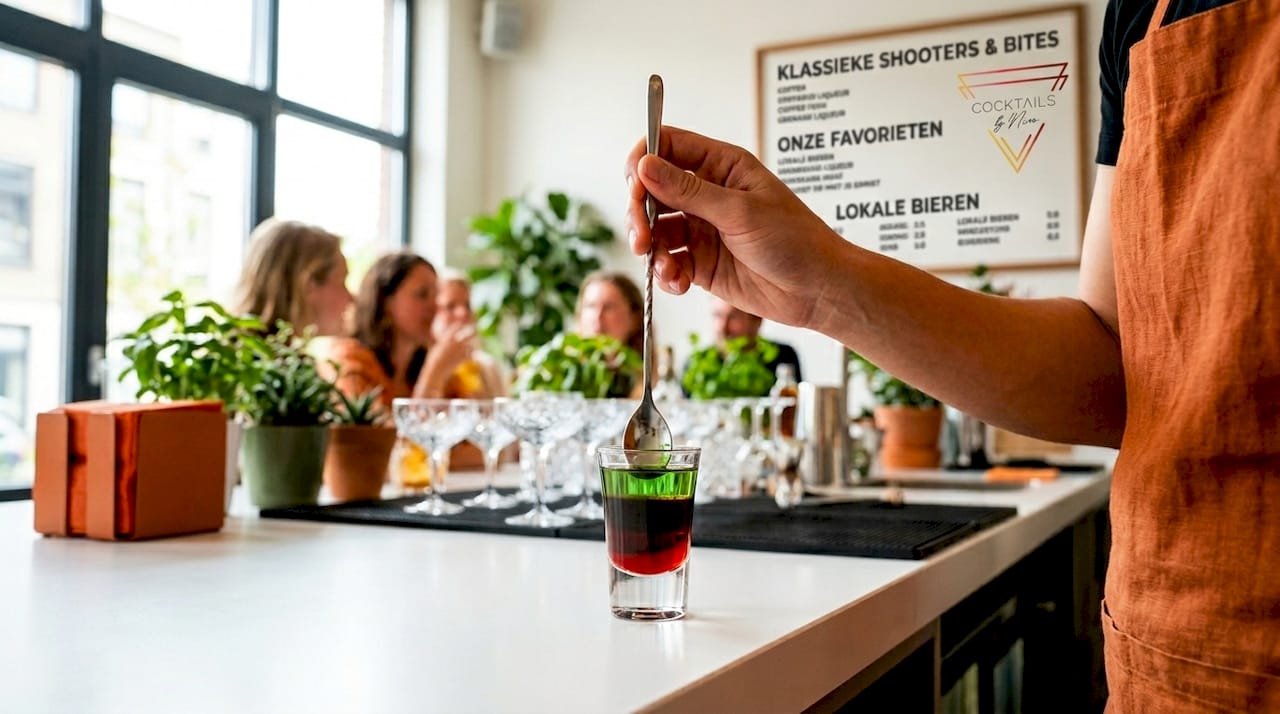
The difference between shots and cocktails is similar: cocktails are larger and drunk more slowly, while shots and shooters are both small and consumed quickly. The distinction for shooters lies in the complexity of the composition, not in the serving size.
Pro-tip: Want to know more about the wide world of small drinks? Read Cocktailsbynina's essential cocktail terms guide for a clear overview of all relevant terms.
What are the characteristics of a shot?
A shot is the most direct form of alcohol consumption you'll encounter in a bar or at a party. The standard volume is around 45 ml with 40% alcohol, although this varies by country. In the Netherlands and Belgium, 35 ml or 50 ml is sometimes used, depending on the occasion.
The main characteristics of a shot are:
- Serving size: 35 to 50 ml, depending on the location and glassware
- Alcohol percentage: usually 35% to 50%, depending on the spirit used
- Composition: one type of drink, no mix or layers
- Drinking pace: drunk in one go, without sipping
- Calories: a 45 ml shot of vodka contains approximately 97 calories
Shots are drunk in social rituals: a round of tequila at a birthday, a drink after work, or a toast on a special occasion. It's about speed and shared experience, not taste experience. 20 ml shot glasses are also used as measuring cups, indicating how precise portioning works in practice.
A common mistake is categorizing "ginger shot" here. Ginger shots are health drinks based on concentrated ginger juice and have nothing to do with alcoholic shots. These are two completely different products that happen to share the same name.
Pro-tip: Use a shot guide for party and wellness to understand how much alcohol you consume per shot. This helps with responsible enjoyment.
What are shooters and how do they differ from shots?
Shooters are layered, flavorful drinks that sometimes contain multiple ingredients and are designed for a festive drinking experience. They are served in the same small glass as shots, but the contents are fundamentally different. A classic shooter like a B-52 consists of three layers: Kahlúa, Baileys, and Grand Marnier, carefully poured over a spoon so that the layers remain visible.
The characteristics of shooters at a glance:
- Composition: two or more ingredients, often liqueur, cream, or fruit juice
- Flavor profile: sweet, fruity, or creamy instead of pure and strong
- Presentation: sometimes layered, colorful, or garnished
- Use: popular at bachelor parties, theme parties, and drinking games
- Purpose: combining taste experience and alcohol intake
Drinking games like Nasty or Nice explicitly use the distinction between “nasty” shooters (strong, sour, unpleasant) and “nice” shooters (sweet, tasty). This shows that the term shooter is deliberately used in social contexts to describe a taste experience, not just a quantity.
The terminology surrounding shots and shooters varies greatly by region and social setting, which causes confusion. In the Netherlands, "shotje" is sometimes used as a synonym for shooter, while in the US, a shooter can actually be a larger serving than a shot. Context determines the meaning.
Pro-tip: Want to try popular shooters for your next party? Check out the top 10 popular shots for inspiration and recipes.
Shots versus shooters: a direct comparison
The difference between shots and shooters becomes clearest when you compare them side by side on the four main criteria: composition, taste, use, and context.
| Characteristic | Shot | Shooter |
|---|---|---|
| Composition | Single spirit, no mix | Multiple ingredients, sometimes layered |
| Flavor profile | Pure, strong, undiluted | Sweet, fruity, creamy, or complex |
| Serving size | 35 to 50 ml | 35 to 50 ml (comparable) |
| Drinking pace | In one go, fast | In one go, but more to taste |
| Social context | Round, toast, ritual | Party games, theme parties, presentation |
| Calories | Lower for pure spirits | Higher due to liqueur and sweet additions |
| Examples | Vodka, tequila, whiskey | B-52, Kamikaze, Sex on the Beach (mini) |
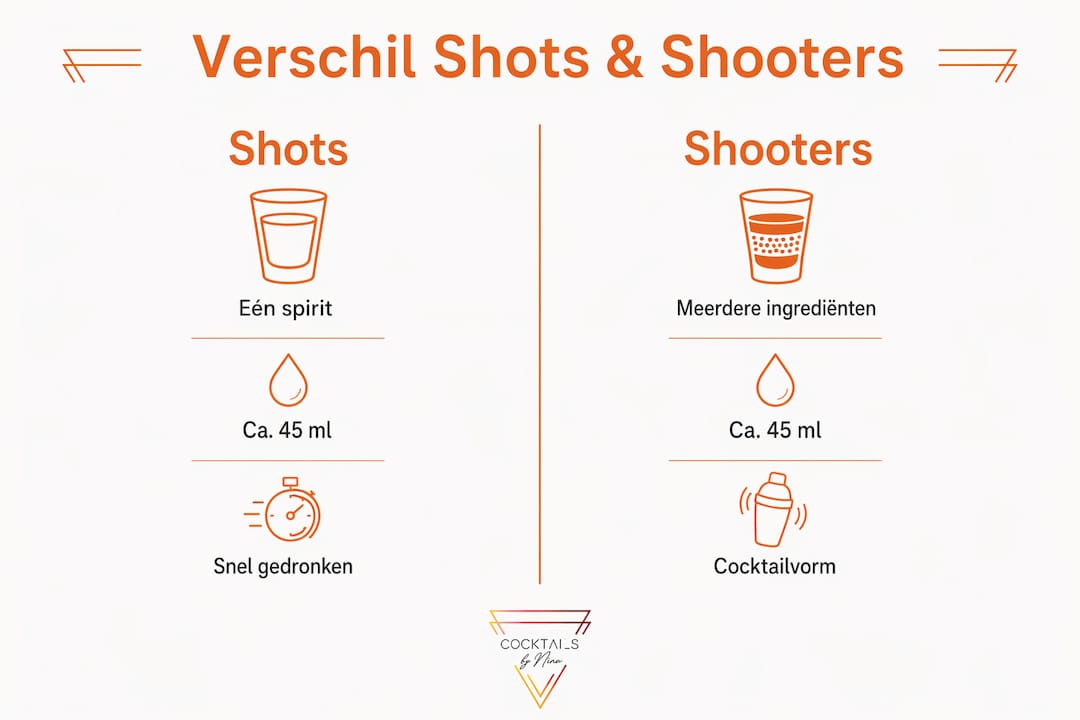
What stands out: the serving size is almost identical for shots and shooters. The difference lies in what's in the glass and why you drink it. Shots technically contain the same amount of alcohol as shooters, but the consumption rhythm and social use determine the conceptual difference. A shot is a statement. A shooter is an experience.
The distinction between shots and cocktails is greater: cocktails are served in larger glasses, contain more mixer, and are drunk over a longer period. Shots and shooters share the small size and quick consumption, but shooters lean closer to cocktails in terms of flavor complexity than shots.
How to choose between a shot and a shooter for your party?

Need help?
Our customer service is open from 9:00 AM to 6:00 PM.
Call us: +31(0)20 - 700 8266
Email us: info@cocktailsbynina.com

No 18, no alcohol
Follow us
- Choosing a selection results in a full page refresh.
- Opens in a new tab.
- Opens external website.
- Opens external website in a new window.