Many people immediately think of "spirits in cocktails" as just hard liquor. However, what spirits actually are, what role they play, and how to use them smartly remains unclear for many cocktail enthusiasts. So, what are spirits in cocktails? Spirits are the distilled base of virtually every cocktail. They determine not only the alcohol content but also the taste, aroma, and structure of your drink. In this article, you will learn everything about the definition, types, role, and smart use of spirits in cocktails. From beginner to experienced shaker.
Table of Contents
- Key Insights
- What are Spirits in Cocktails: Definition and Production Process
- The Role of Spirits in Cocktails
- Types of Spirits in Cocktails
- Quantity of Spirits in Cocktails and Cost Price
- Spirits in Ready-to-Drink Cocktails
- My Perspective on Spirits in Cocktails
- Discover Ready-made Cocktails from Cocktailsbynina
- Frequently Asked Questions
Key Insights
| Point | Details |
|---|---|
| Spirits are the flavor base | Distilled beverages form the heart of almost every cocktail and determine its character. |
| Type of spirit determines technique | Whether you shake or stir depends on the flavor profile of the chosen spirit. |
| Liquor cost requires attention | Standard cocktails have a liquor cost of 15 to 22%, premium variants can go up to 28%. |
| RTD cocktails use real spirits | Modern ready-to-drink cocktails combine real distilled spirits with convenience and bar-quality. |
| Beginners underestimate spirits | Those who understand how spirits work consistently make better cocktails with more flavor balance. |
What are Spirits in Cocktails: Definition and Production Process
Spirits are distilled beverages, that's the short answer. But what that means in practice is something many people overlook. And precisely that knowledge makes the difference between a flat cocktail and one you'll want a second of.
The production process begins with fermentation: yeasts convert sugars into alcohol. This is followed by distillation, where the liquid is heated so that alcohol vaporizes and then cools and condenses. This concentration process ensures that spirits contain 35 to 50% alcohol, much more than beer or wine. That concentration also brings an intense flavor.
The raw materials already determine the character of the spirit early on:
- Grain (wheat, rye, barley) leads to whisky, gin, or vodka
- Sugar cane or molasses forms the base of rum
- Agave is the raw material for tequila and mezcal
- Grapes or fruit give cognac and brandy their character
Aging also plays a significant role. Wood adds aromas like vanilla, caramel, and subtle notes that you would never find in a young spirit. Whisky aged for years in oak barrels, therefore, tastes fundamentally different from fresh rum.
Pro-tip: Smell your spirit before incorporating it into a cocktail. What you smell, you will also taste in the final result. An earthy, smoky whisky calls for different accompanying flavors than a fresh, citrusy gin.
For a broader overview of how spirits and mixers work together, read more on Cocktailsbynina's spirits and mixers page.
The Role of Spirits in Cocktails
Spirits are not just one ingredient among others. They are the architect of the cocktail. Everything you build around them—sour, sweet, bitter, or sparkling—serves the spirit. Those who understand this create balanced cocktails.
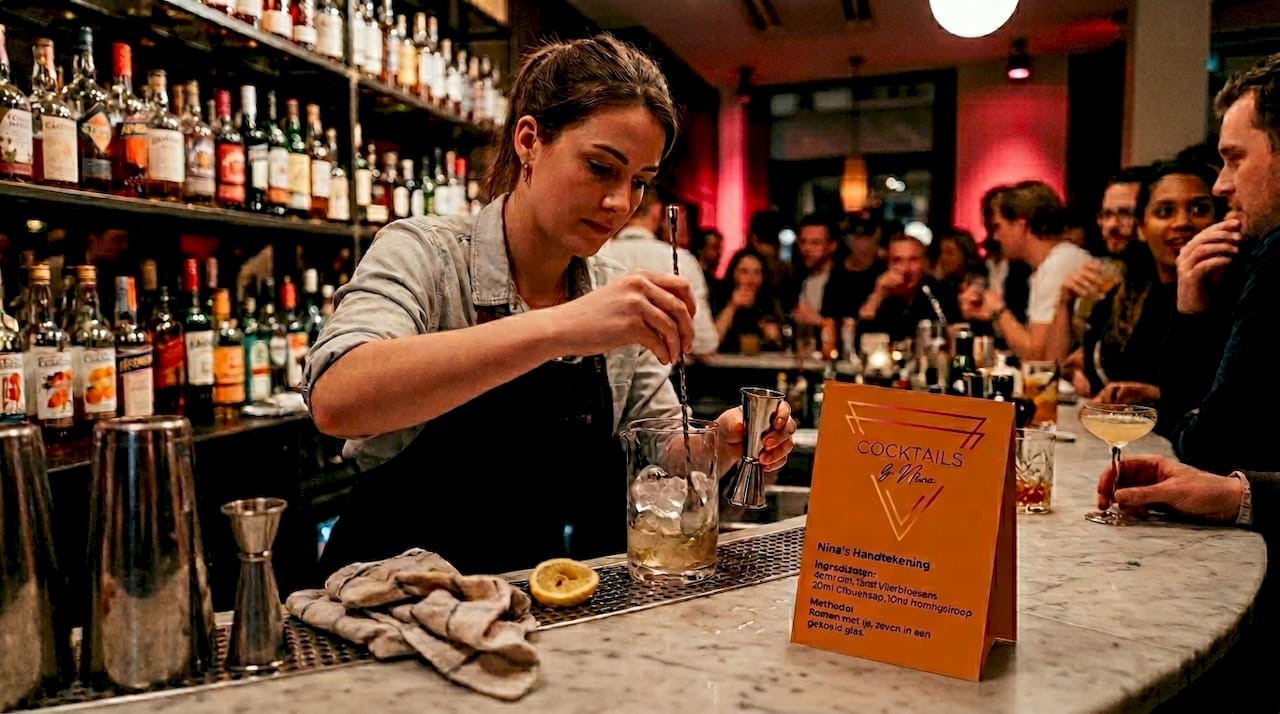
The role of spirits in cocktails is both technical and sensory. They carry aromas, give body to the drink, and determine how much structure a cocktail has. A good cocktail maker not only adjusts flavors but also the preparation technique to the spirit.
How that works in practice:
- Choose the spirit by flavor profile. A smoky mezcal requires different accompaniment than a neutral vodka. Always start with the spirit, not the recipe.
- Determine the mixing technique based on the spirit. Clear cocktails based on whisky or gin are usually stirred for a silky smooth texture. Cocktails with fruit juice or cream are shaken for emulsion and cooling.
- Use sour and sweet as a frame, not as the main role. Lime juice in a Daiquiri enhances the rum. It does not replace it.
- Adjust the amount of spirit to the desired effect. A Negroni with equal parts gin, Campari, and vermouth requires a different gin than a heavily stirred Martini.
- Test with small adjustments. Change one variable at a time to learn how the spirit reacts to other ingredients.
Classic examples clearly show how crucial the spirit is. An Old Fashioned stands or falls with the whisky. A Mojito without characterful rum is watery and bland. And a dry Martini lets the gin speak entirely for itself; there's almost nothing to hide behind.
Pro-tip: Give your spirit some time after mixing. Let a stirred cocktail rest for 30 seconds before pouring it. Temperatures equalize, and flavors integrate better.
Types of Spirits in Cocktails
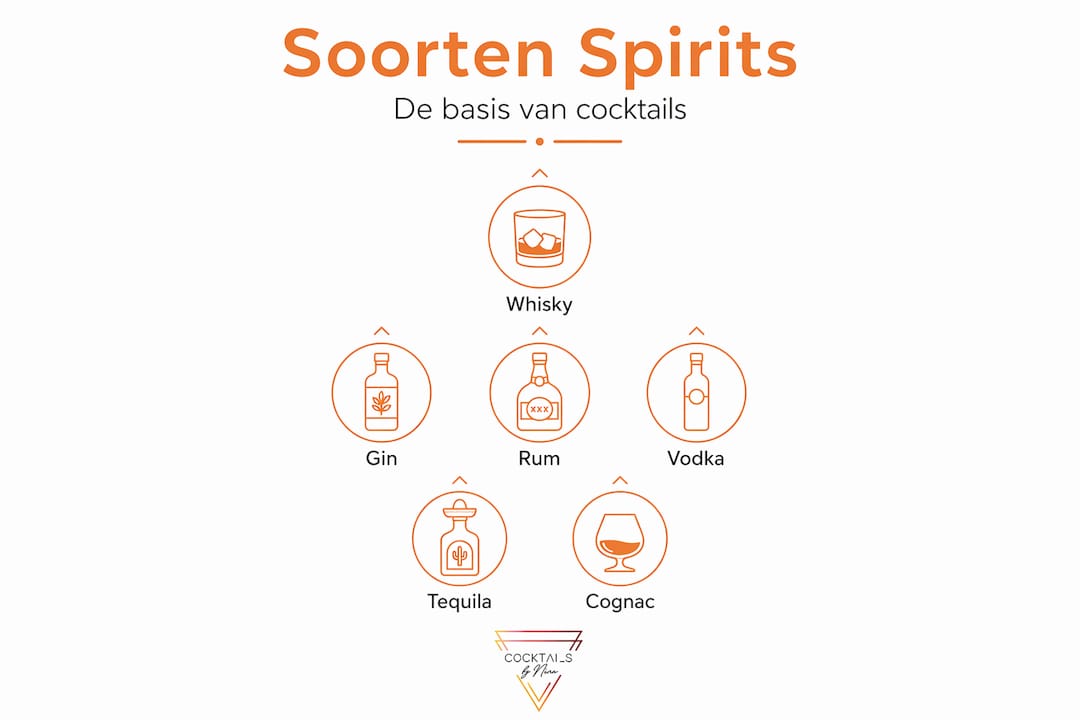
The six basic types of spirits you'll most often encounter in cocktail recipes with spirits are gin, vodka, rum, whisky, tequila, and cognac or brandy. They differ in raw material, production method, and flavor profile. Here's an overview:
| Spirit | Raw Material | Flavor Profile | Classic Cocktail |
|---|---|---|---|
| Gin | Grain + botanicals | Herbal, floral, citrus notes | Gin & Tonic, Negroni |
| Vodka | Grain or potato | Neutral, clean, slight sweetness | Cosmopolitan, Moscow Mule |
| Rum | Sugar cane or molasses | Sweet, tropical, sometimes caramel-like | Mojito, Daiquiri |
| Whisky | Grain (barley, rye, corn) | Smoky, woody notes, vanilla | Old Fashioned, Whisky Sour |
| Tequila | Agave | Earthy, light citrus notes, sometimes smoky | Margarita, Paloma |
| Cognac/Brandy | Grapes | Fruity, warm, complex | Sidecar, Brandy Alexander |
Botanicals in gin versus sugar cane in rum versus woody notes in whisky each require a different approach when mixing. That's not a detail; that's the core of good cocktail knowledge.
Besides these six, there are also emerging spirits that increasingly appear in cocktails:
- Mezcal: smoky brother of tequila, from hand-harvested agave
- Pisco: South American grape brandy with a fruity and floral profile
- Shochu: Japanese spirit based on sweet potato or barley, mild and versatile
- Cachaça: Brazilian sugar cane spirit, base of the classic Caipirinha
The trend towards innovative spirits also aligns with the rise of RTD cocktails. Brands are increasingly experimenting with special spirits in their ready-to-drink formulas. You can read more about ready-to-drink cocktails on the Cocktailsbynina blog.
Quantity of Spirits in Cocktails and Cost Price
The quantity of spirits in cocktails is not a random number. There are rules of thumb for good flavor balance, but behind those rules is also a financial logic that every cocktail maker should understand.
In the hospitality industry, the concept of liquor cost is used: the percentage of the selling price that goes towards the spirits in a cocktail. This is completely separate from the food cost. Ice and garnish are part of the food cost; juices and syrups are calculated separately. Only the spirits count towards the liquor cost.
The guidelines are clear:
- Standard cocktails: liquor cost of 15 to 22%
- Premium cocktails with expensive spirits: liquor cost up to a maximum of 28%
- Above 30%, it becomes financially risky for profitability
Consider this example to make it concrete:
| Cocktail Type | Spirit Purchase Price per Serving | Selling Price | Liquor Cost % |
|---|---|---|---|
| Standard Mojito | €1.20 | €8.00 | 15% |
| Premium Whisky Sour | €2.80 | €12.00 | 23% |
| Luxury Sidecar with Cognac XO | €4.20 | €16.00 | 26% |
Replacing cheap spirits with more expensive ones directly increases the liquor cost. Those who do this without adjusting the selling price eat into their margin without realizing it. This is a mistake that novice bartenders often make.
Pro-tip: Calculate the liquor cost per cocktail before putting it on the menu. Use a simple spreadsheet: purchase price of spirit divided by selling price, multiplied by 100. This way, you maintain control over your margins without guessing.
For home use, this insight is also useful. Those who understand why a good rum makes a cocktail more expensive appreciate the result more and make more conscious choices.
Spirits in Ready-to-Drink Cocktails
The market for ready-to-drink cocktails is growing rapidly, but not all RTD products are created equal. The difference lies in the spirits. Many cheap RTD drinks use flavored alcohol or artificial flavors. The better brands opt for real distilled spirits, and you can taste the difference immediately.
RTD cocktails with real spirits combine convenience with bar-worthy quality. A good example is Coppa Cocktails, which works with real distilled spirits and natural ingredients at 14.9% ABV. No artificial additives, just the same spirits a bartender would use.
What distinguishes a good RTD from a mediocre one:
- Use of real distilled spirits as a base
- No artificial flavors or synthetic alcohols
- A clear and well-documented flavor profile
- Alcohol percentage appropriate for the cocktail type, not too low for balance
- Transparency about the ingredients used on the label
“RTD cocktails with real spirits make it easier for consumers to experience premium cocktails without bar skills.” (Coppa Cocktails, The Spirits Business)
The influence of spirit choice on purchasing decisions is increasing. Consumers are increasingly asking what spirit is in an RTD. This is a sign of growing knowledge and higher expectations. Understanding what spirits do in cocktails also helps you choose better RTD products.
Want to know more about cocktail terms that help you make smarter choices? Cocktailsbynina's cocktail terms guide clearly explains the most common terms.
My Perspective on Spirits in Cocktails
I have been making and tasting cocktails for years, and the biggest misconception I constantly encounter is that people think spirits are interchangeable. That a cheap vodka does the same thing as a premium variant, or that rum and tequila can replace each other in a recipe if you just adjust the rest. That simply isn't true.
What I've learned: the spirit is the starting point, not the supplement. Those who build a cocktail from the spirit make fundamentally better drinks than those who start with a recipe and then fit the spirit into it. It sounds logical, but in practice, most beginners do it the other way around.
Regarding cost-awareness: I also see professionals throwing expensive spirits into recipes without calculating the liquor cost. They are enthusiastic about the taste but forget that the business model needs to be sound. Those who calculate spirits separately in the cost price have much more control over their recipes and margins. This applies to a bar, but also if you are mixing at home for a party and have a budget.
The trend towards RTD cocktails with real spirits is, frankly, positive. It democratizes quality. You don't have to be a bartender to drink a good cocktail. But you need to know what to look for when choosing, and that starts with understanding what spirits do.
— Ruud
Discover Ready-made Cocktails from Cocktailsbynina
Cocktailsbynina offers a carefully curated assortment of ready-to-drink cocktails and mocktails, all prepared with premium ingredients and real spirits. No hassle with mixing, no buying individual bottles. Just bar-quality at home.
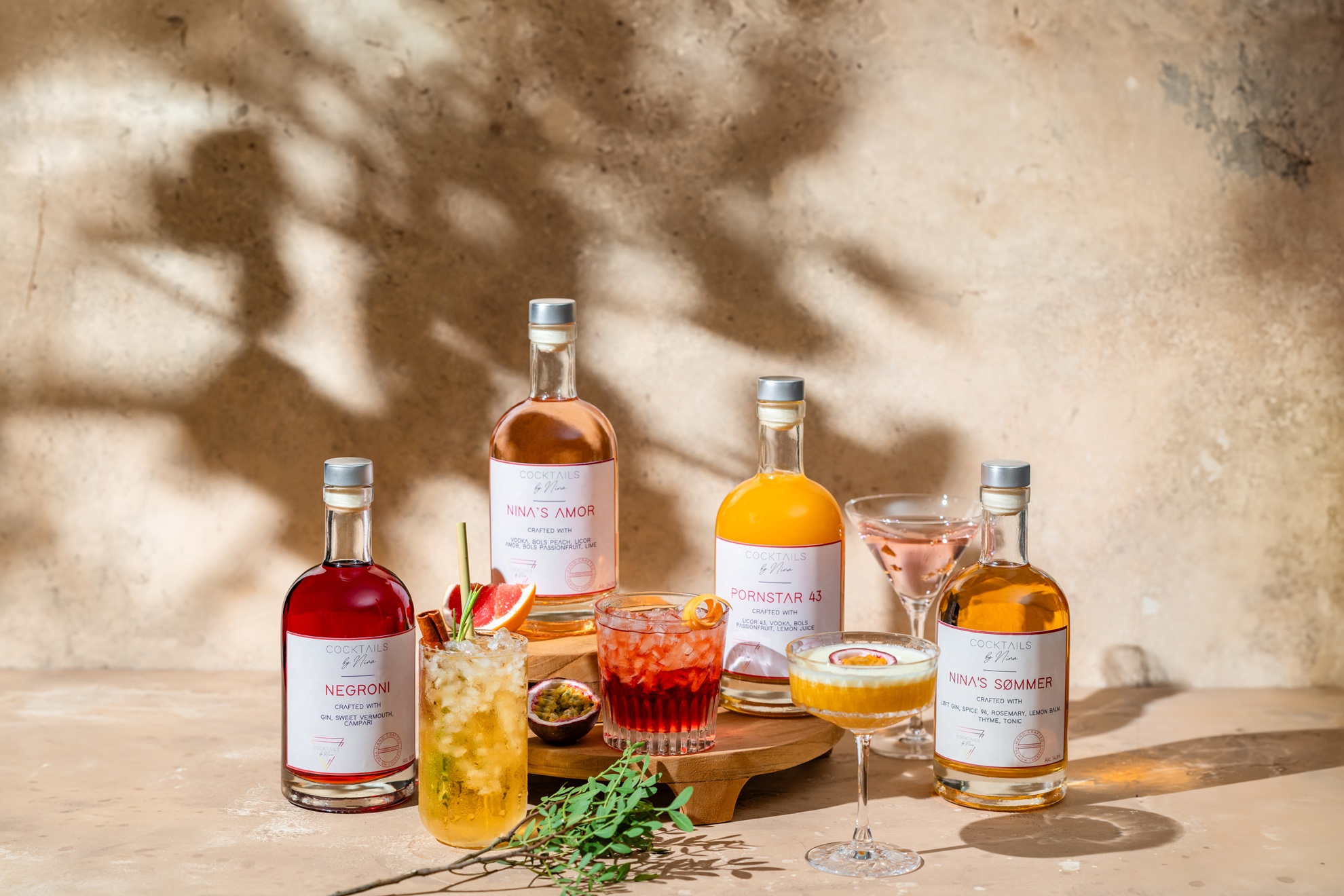
Whether you're looking for non-alcoholic alternatives or a complete cocktail box for home for a party, the quality of the spirits is always central. Also check out the range of ready-to-drink mocktails for those who want to enjoy without alcohol, but without compromising on taste. Everything made with the same attention to balance and character that you have learned to appreciate in this article.
Frequently Asked Questions
What exactly are spirits?
Spirits are distilled alcoholic beverages with an alcohol content of 35 to 50%. They are made through fermentation followed by distillation of raw materials such as grain, sugar cane, or agave.
What is the role of spirits in cocktails?
Spirits form the flavor and aroma base of virtually every cocktail. They determine the character of the drink and influence which preparation technique and complementary ingredients work best.
Which types of spirits are most commonly used in cocktails?
The six most commonly used spirits in cocktails are gin, vodka, rum, whisky, tequila, and cognac or brandy. Each has a unique flavor profile that makes it suitable for specific cocktail styles.
How much spirit goes into a cocktail?
The quantity varies per recipe, but as a guideline, the liquor cost of a standard cocktail is between 15 and 22% of the selling price. For premium cocktails with expensive spirits, this can go up to 28%.
What makes RTD cocktails with real spirits better?
RTD cocktails with real distilled spirits contain the same kind of base as bar cocktails, without artificial additives. This provides a more authentic, richer flavor profile than variants based on flavored alcohol.
Recommendation
- Spirits and Mixers: The Foundation for Premium Cocktails at Home – Cocktails by Nina
- Essential Cocktail Terms: Your Guide to Clear Choices – Cocktails by Nina
- Shots and Drinks: The Complete Guide to Convenience and Quality – Cocktails by Nina
- Improve Your Cocktails: The Indispensable Role of Syrups – Cocktails by Nina