Making bar-quality cocktails at home sounds complicated, but with the right bar-quality drink tips, it’s not that difficult. The difference between a good and a great cocktail isn't about expensive equipment or years of experience. It's about ingredient selection, proper technique, and a little attention to presentation. Whether you're hosting a birthday, entertaining friends, or just want to serve something special on a Friday night, this guide gives you exactly what you need to perform like a true bartender at home.
Table of Contents
- Key Insights
- 1. Start with the Right Base Spirits
- 2. Freshness Makes or Breaks Your Cocktail
- 3. Ice Quality Is Not a Side Issue
- 4. Choose the Right Technique for Each Cocktail
- 5. Master the Glassware
- 6. Garnishes Do More Than Just Look Pretty
- 7. The Essential Tools for Your Home Bar
- 8. Mixers and Bitters: The Unsung Heroes
- 9. Pre-batching: Smarter Parties
- 10. Less Choice, Better Experience
- 11. Cocktail Etiquette and Presentation
- My View on Bar-Quality at Home
- Ordering Bar-Quality Cocktails via Cocktailsbynina
- FAQ
Key Insights
| Point | Details |
|---|---|
| Choose quality base spirits | Invest in a handful of good bottles instead of a large, mediocre collection. |
| Master three core techniques | Shaking, stirring, and building determine the texture and temperature of your cocktail. |
| Pre-chill your glassware | Chilled glassware keeps a cocktail at the right temperature longer and enhances its flavor. |
| Limit your offerings at parties | Two or three well-prepared cocktails work better than an extensive but chaotic drink menu. |
| Pre-batch where possible | Mix liquid ingredients in advance to save time and ensure consistency. |
1. Start with the Right Base Spirits
The foundation of any good home bar is its spirits. Not the quantity, but the quality. You don't need twenty bottles to impress. The basis for premium cocktails at home includes gin, rum, whiskey, tequila, vodka, vermouth, and a few liqueurs.
Start with three or four bottles that you truly enjoy and are versatile. A good London Dry gin works in a Gin & Tonic, a Negroni, and a Gimlet. A white rum opens the door to Mojitos, Daiquiris, and Piña Coladas. Choose mid-range to premium quality. Above 25 euros per bottle, you'll clearly notice the difference in taste and aftertaste.
Pro-tip: It's better to buy one bottle for 35 euros than two bottles for 15 euros. Cheap spirits never compensate with more mixer.
2. Freshness Makes or Breaks Your Cocktail
Fresh citrus is the most underrated factor in home cocktails. Bottled juice from the supermarket contains preservatives that flatten the taste and sometimes even make it bitter. Always squeeze fresh. A Daiquiri with fresh lime juice tastes completely different from the same cocktail made with a bottled solution.
The same applies to herbs. Fresh mint in a Mojito is not just decoration. The essential oils in the leaves give the drink its characteristic freshness. Clap the sprigs in your palms before adding them: this instantly activates the aromas.
You can make simple syrup yourself in two minutes by heating equal parts sugar and water until the sugar dissolves. Syrups fundamentally improve cocktails because they distribute sweetness evenly throughout the drink, something loose sugar never does.
3. Ice Quality Is Not a Side Issue
In most home kitchens, ice is a block from the freezer that smells like frozen pizza. That's the first thing professional bartenders would disapprove of. Ice in a cocktail constantly melts and dilutes your drink. Large ice melts slower than small ice.
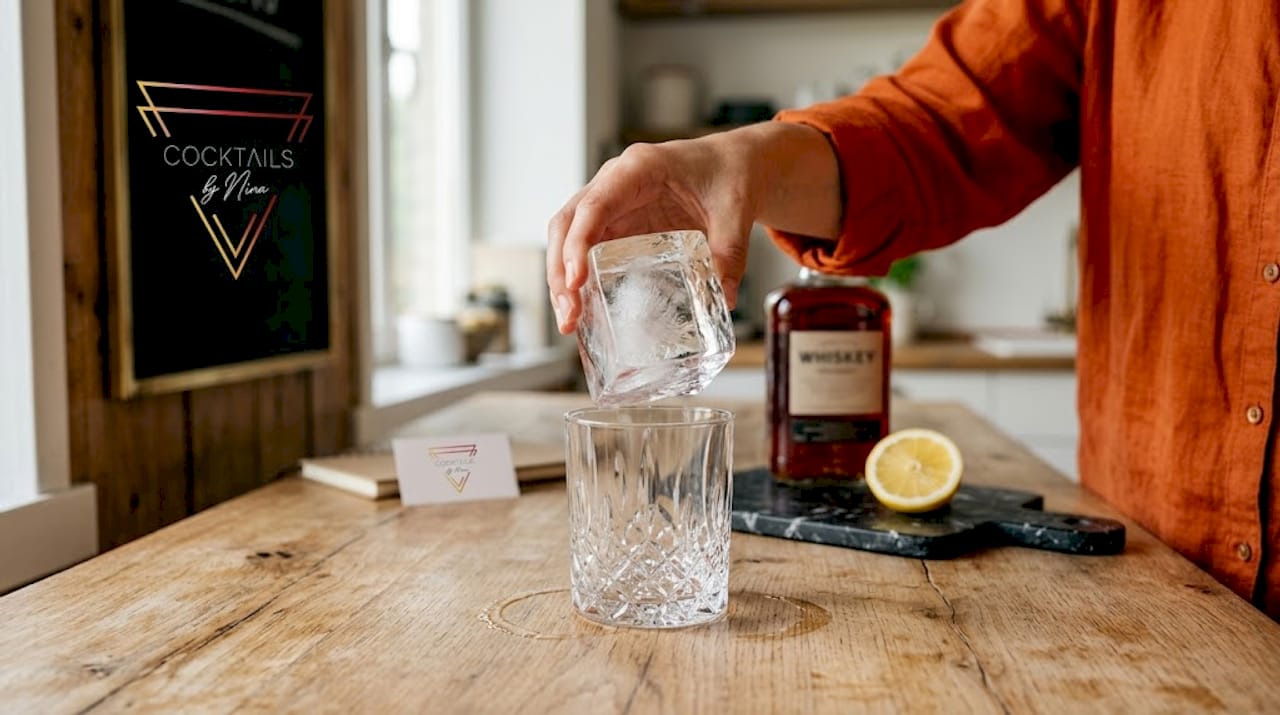
Use large blocks or spheres for long drinks and on-the-rocks drinks. For shaking, use normal ice, but make sure it's dry and cold, not wet or half-melted. Basic cocktails require good ice that melts slowly and doesn't impart off-flavors.
Want to do it perfectly? Boil your water before freezing. Boiled water contains fewer air bubbles and freezes clearer. That makes an impression when you serve a crystal-clear whiskey on the rocks.
4. Choose the Right Technique for Each Cocktail
Not every cocktail is prepared in the same way. The technique you use directly influences the texture, temperature, and clarity of the final result.
- Shaking is used for cocktails with citrus, egg white, or cream. Shaking emulsifies and aerates the drink, resulting in a lighter texture and a slight foam layer.
- Stirring is the technique for cocktails consisting solely of spirits, such as a Martini or Manhattan. Stirring cools and dilutes without adding air.
- Building means mixing the ingredients directly in the glass, as with a Gin & Tonic or Mojito. Simple, effective, and fast.
The double strain technique makes a striking difference: strain your shaken cocktail twice, once through a hawthorn strainer and once through a fine-mesh sieve. This removes ice shards and pulp, ensuring your cocktail is silky smooth and clear in the glass.
Pro-tip: Shake vigorously for at least 15 seconds. Less than that will not cool and dilute sufficiently, making the cocktail watery and flat.
5. Master the Glassware
The right glass is not snobbery. It's functional. A Martini tastes better in a chilled Martini glass than in a tumbler, because the shape concentrates the aromas towards your nose as you drink.
Chilled glassware keeps a cocktail at the right temperature longer and noticeably enhances the taste experience. Place your glasses in the freezer for 30 to 60 minutes before use, or fill them briefly with ice water while you prepare the cocktail.
The basic set for home includes a tumbler (or rocks glass) for whiskey and short cocktails, a highball glass for long drinks, a coupette or Martini glass for classic cocktails, and a wine glass for spritz variations. Four types of glasses are enough for 90% of home cocktail recipes.
6. Garnishes Do More Than Just Look Pretty
A lime slice or a sprig of mint is not just decoration. Garnishes directly enhance flavor and aroma: when you squeeze a citrus peel over a glass, a cloud of essential oils sprays onto the surface of your cocktail.
Avoid the white part of the citrus peel, called the pith, as much as possible. That part contains substances that cause bitterness and disrupt the flavor balance. Cut thin peels with a sharp knife or a special zester.
Also consider garnishes like: cocktail picks with olives for a Dirty Martini, dried flowers for a gin cocktail, or a smoked cinnamon stick for a winter rum cocktail. Small details that guests will remember long after the glass is empty.
7. The Essential Tools for Your Home Bar
You don't need a professional bar cart, but a few good tools make a world of difference. The essential tools for a home bar are: a jigger, a shaker, a fine-mesh sieve, a bar spoon, a muddler, and a citrus press.
| Tool | Purpose | Budget Option | Premium Option |
|---|---|---|---|
| Jigger | Accurate measuring | Plastic double jigger | Stainless steel jigger with engraved measurements |
| Shaker | Shaking and stirring | Cobbler shaker | Boston shaker set |
| Fine-mesh sieve | Double straining | Simple tea strainer | Conical bar strainer |
| Bar spoon | Stirring and layering | Regular spoon | Long spiral spoon |
| Muddler | Mashing herbs and fruit | Wooden muddler | Stainless steel muddler with grip |
| Citrus press | Squeezing fresh juice | Hand press | Electric citrus press |
Start with the budget options. A plastic jigger and a simple shaker do the same job as their expensive counterparts. Only upgrade when you notice you're regularly making cocktails and want to refine the quality.
8. Mixers and Bitters: The Unsung Heroes
Tonic water is not just tonic water. A cheap tonic is sweeter, less bitter, and drowns your gin in sugar water. Premium tonic, like Fever-Tree or Franklin & Sons, has higher quinine ratios and a sharper carbonation that actually supports the gin.
Bitters are the salt and pepper of the cocktail world. A few drops of Angostura bitters transform an average rum cocktail into something with the depth of a bar drink. Aromatic bitters, orange bitters, and mole bitters are the three most versatile options for a home bar.
Syrups can be bought or made yourself. Besides regular simple syrup, agave syrup, gomme syrup, and herbal syrups are good additions. They add layers of flavor that you cannot achieve with extra alcohol.
9. Pre-batching: Smarter Parties
Hosting parties and simultaneously shaking cocktails for twenty people doesn't work. You'll be behind the bar all evening and miss your own party. Pre-batching solves this.
Pre-batching liquid ingredients in advance increases efficiency and ensures consistent taste. Mix all spirits, lemon juice, and syrup for your cocktail the night before in a large bottle or pitcher. Store in the refrigerator. During the party, you only need to add ice and perhaps shake or pour.
Always omit carbonated mixers from the batch. Tonic, prosecco, or ginger beer should only be added at the last moment, otherwise you'll lose all the bubbles.
Pro-tip: Make a batch of 80% of what you expect to serve. You can always make the rest fresh. Leftover batch can be stored for a maximum of 24 hours in the refrigerator.
10. Less Choice, Better Experience
This is the most counter-intuitive advice on this list: offer your guests less choice, not more. It sounds illogical, but two or three well-prepared cocktails work better than a full open bar with ten options.
With a limited menu, you can prepare everything, buy fresh ingredients in the right quantities, and consistently serve every cocktail well. Guests appreciate quality and speed more than a large but chaotic selection. Consistency in quality and attention to hospitality make the difference between an amateurish and a professional experience at home.
Choose one water-based cocktail, one spirit-based cocktail, and possibly a mocktail for non-drinking guests. That's a menu that serves everyone without requiring half a day of preparation.
11. Cocktail Etiquette and Presentation
How you serve a drink matters. A cocktail that shows thought has gone into presentation, taste, and timing immediately feels more professional. Small habits make a big difference at stylish cocktail events.
Always serve cocktails immediately after they are made. A cocktail that sits for five minutes is warmer, more diluted, and less vibrant. Use a cocktail napkin or coaster under the glass. Place garnishes on the rim of the glass instead of dropping them in. Offer your guest the glass by the handle or stem, not with your fingers on the body of the glass.
These details cost nothing extra but communicate care and respect for your guests. That's what transforms a home bar from a hobby into an experience.
My View on Bar-Quality at Home
I've spent years drinking cocktails in bars all over the Netherlands and Belgium and have also experimented a lot at home. What strikes me again and again is that the best home cocktails don't come from people with the biggest collection of bottles. They come from people who do a few things well and are consistent in it.
I once drank a Margarita at someone's home that was better than one at a cocktail bar in Amsterdam. Two ingredients, fresh limes, good tequila, and a chilled glass. No show, no complicated recipe. Just attention to what matters.
My honest advice: start small. Choose one cocktail you truly want to learn how to make. Make it ten times. Only then move on. Understanding essential cocktail terms helps more than a cupboard full of expensive bottles. Simplicity and quality always win over excess and complexity. That applies in professional bars, and certainly at home.
— Ruud
Ordering Bar-Quality Cocktails via Cocktailsbynina
Don't always feel like mixing yourself, or do you want to ensure professional quality without the preparation? Cocktailsbynina offers ready-to-drink cocktails and mocktails delivered directly to your door, prepared with premium ingredients and ready to serve.
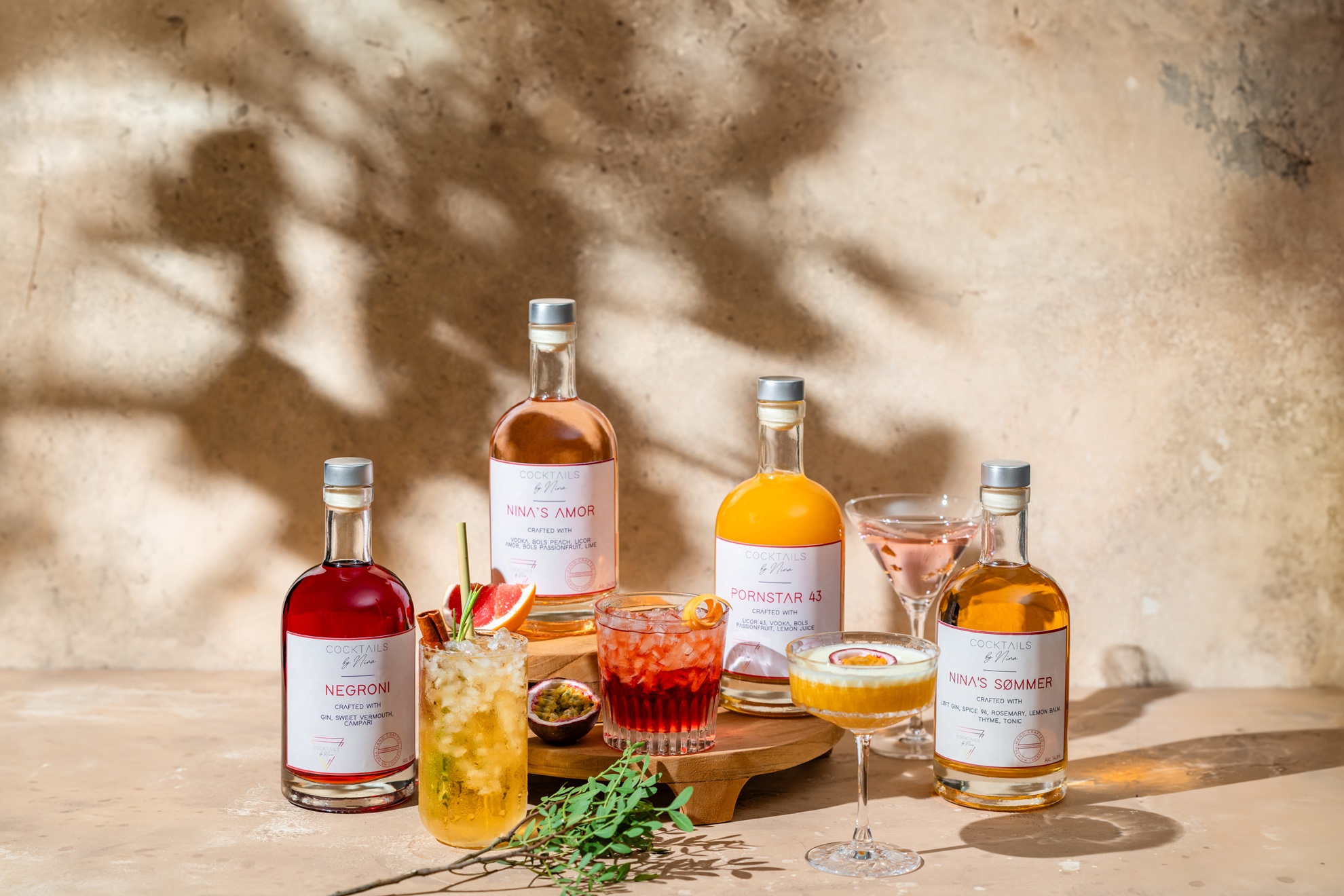
Whether you're organizing a birthday, hosting a corporate event, or just want to enjoy a drink at home that truly tastes great: Cocktailsbynina's assortment suits every occasion. Check out the ready-to-drink mocktails for a refined non-alcoholic choice, or discover the full range of alcohol-free cocktails for guests who don't drink but still want to enjoy a true cocktail experience.
FAQ
Which spirits do I need for a basic home bar?
The most versatile starter set consists of gin, white rum, vodka, tequila, and a good whiskey. With these five bottles, you can make dozens of classic cocktails.
How do I make bar-quality cocktails at home?
Use fresh citrus, good ice, and measure accurately with a jigger. The right technique, shaking or stirring based on the cocktail style, and chilled glassware make all the difference.
What is pre-batching and when do I use it?
Pre-batching means mixing all liquid ingredients in advance. Pre-batching for events ensures consistent quality and saves you a lot of time during serving. Always add carbonated mixers at the last moment.
How many cocktail choices should I offer at a party?
Two to three cocktails is ideal. A limited menu reduces stress for the host and increases the quality and consistency of each cocktail you serve.
What does a garnish really do for a cocktail?
A garnish is not decoration. Citrus peels and herbs add aroma and flavor layers that directly enhance the cocktail experience. Always use fresh ingredients and avoid the white pith of citrus peels to prevent bitterness.
Recommendation
- Shots and Drinks: The Complete Guide to Convenience and Quality – Cocktails by Nina
- Spirits and Mixers: The Foundation for Premium Cocktails at Home – Cocktails by Nina
- Essential Cocktail Terms: Your Guide to Clear Choices – Cocktails by Nina
- What are classic cocktails: the ultimate guide for home – Cocktails by Nina