Syrups are often seen as a simple sweetener, something you carelessly add. But those who think so completely miss the point. A good syrup determines the character of a cocktail: the balance, the aroma, the texture, and even the color. Whether you're hosting a party for twenty people or quietly mixing a drink at home, the syrup you choose makes the difference between an ordinary cocktail and an unforgettable one. In this article, you'll discover how syrups work, what types there are, and how to use them wisely.
Table of Contents
- What do syrups do in cocktails?
- Types of syrups and their uses
- Homemade or store-bought: what's the best choice?
- Shelf life and storage of syrups
- Inspiration: cocktails for home with syrups
- Our vision: what you never hear about syrups
- More convenience and inspiration for home cocktails
- Frequently asked questions about syrups in cocktails
Key Insights
| Point | Details |
|---|---|
| Syrups enhance cocktails | Besides sweetening, they provide depth, aroma, and perfect balance in every cocktail. |
| Homemade or store-bought? | Homemade offers creative freedom; store-bought provides convenience and consistent quality. |
| Proper storage extends enjoyment | Refrigeration and alcohol as a preservative ensure extra long shelf life. |
| Every cocktail can be special | Experiment with different syrups for surprising flavors at home. |
What do syrups do in cocktails?
A syrup does much more than just sweeten. It's a flavor carrier, a texture enhancer, and a binding agent all at once. Without syrup, cocktails often taste flat or unbalanced, even if you use premium spirits.
The four main functions of syrups in cocktails are:
- Adding sweetness: Simple syrup dissolves more easily than granulated sugar and distributes evenly throughout the drink.
- Enhancing aroma: Herbs, fruits, or spices in the syrup give the cocktail extra depth and complexity.
- Improving texture: Syrups provide a slight viscosity that makes the cocktail feel creamier and fuller in the mouth.
- Balancing flavors: The acidity of lemon juice, bitterness of spirits, and sweetness of syrup together form the perfect triangle.
“A cocktail without good syrup is like a dish without salt. You taste that something is missing, but you can't quite pinpoint what.”
That mouthfeel, by the way, is not an incidental detail. Cocktails that feel too thin are less appreciated, even if the flavors are right on paper. Syrups solve that problem without adding extra calories or alcohol.
Storage also plays a role. High sugar concentrations extend shelf life by lowering water activity, but refrigeration remains essential for all types of syrups. For those who want to serve bar-quality cocktails at home, our at-home cocktail service can provide professional support.
Now that it's clear that syrups are essential for the cocktail experience, let's look at the types of syrups and their practical differences.
Types of syrups and their uses
Not all syrups are created equal. The choice of the right type largely determines the final result of your cocktail. Below is an overview of the most commonly used syrups and their applications.
| Syrup | Flavor Profile | Best Use |
|---|---|---|
| Simple Syrup (1:1) | Neutral, lightly sweet | Mojito, Daiquiri, Gin & Tonic |
| Rich Simple Syrup (2:1) | Intensely sweet, full-bodied | Whisky Sour, Old Fashioned |
| Fruit Syrup | Fruity, fresh | Tropical cocktails, mocktails |
| Herbal Syrup | Aromatic, complex | Gin cocktails, Spritz variations |
| Nut Syrup | Nutty, warm | Dessert cocktails, winter drinks |
| Spice Syrup | Warm, spiced | Rum cocktails, holiday drinks |
Simple syrup is the basis of almost every cocktail. The 1:1 ratio (equal parts sugar and water) is light and versatile. The 2:1 version is more concentrated and sweeter, ideal if you want to add less volume but still achieve the desired sweetness.
Fruit syrups bring color and freshness. Think of strawberry, mango, or passion fruit. They work excellently in summer drinks and are indispensable in mocktails. Fruit syrups last 1 to 3 months in the refrigerator, nut syrups 1 to 2 months, and a 2:1 syrup up to 6 months.
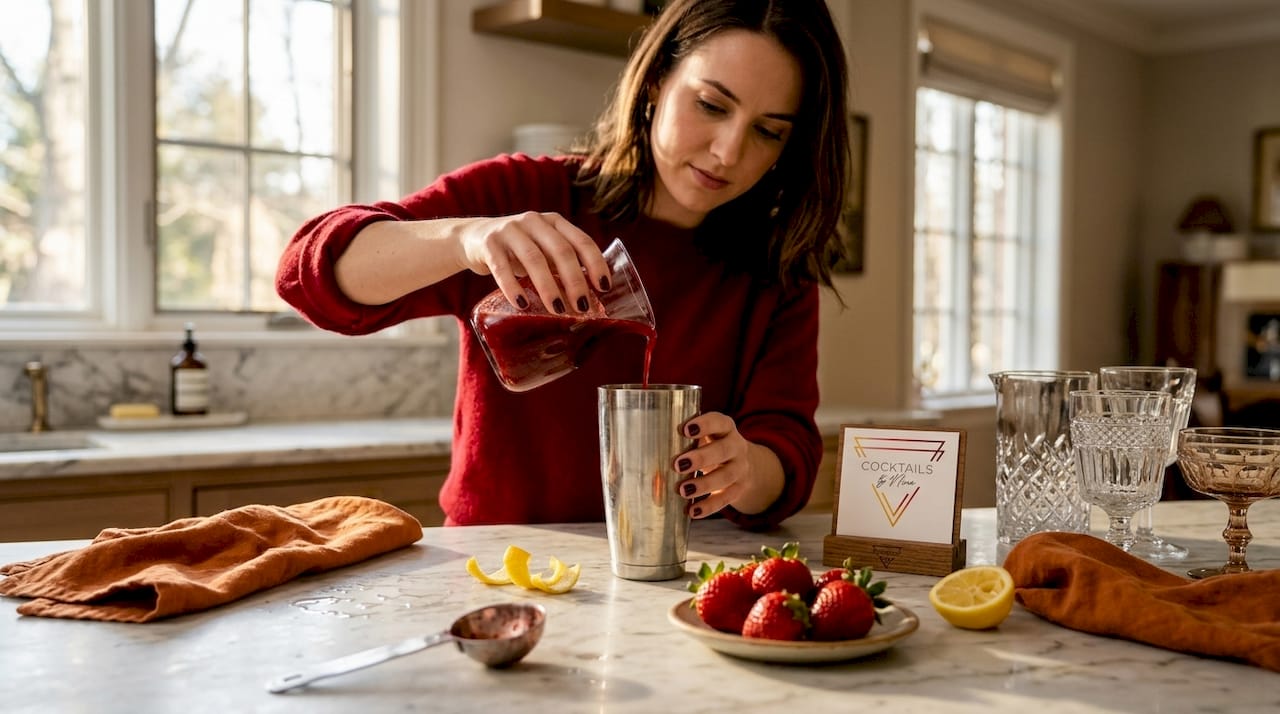
Herbal syrups like rosemary, basil, or mint give a cocktail a surprising twist. A mojito with homemade mint syrup tastes completely different from a standard version with sugar and loose mint leaves.
Pro-tip: Use an herbal syrup instead of loose herbs when making cocktails for a larger group. You'll save time and get a more consistent flavor in every glass.
Three popular cocktails and their ideal syrups:
- Mojito: 1:1 simple syrup or mint syrup for extra aroma
- Whisky Sour: 2:1 simple syrup for balance with the tart lemon juice
- Piña Colada: Coconut syrup or pineapple syrup for tropical depth
For the perfect glass for your cocktail, you can also look at suitable glassware like hurricane glasses, which complete the presentation of tropical cocktails.
Once you know which syrups to use for what, the question remains: do you buy them or make them yourself?
Homemade or store-bought: what's the best choice?
This is a question many home mixologists ponder. The honest answer: it depends on your situation. Both options have clear advantages.
Advantages of making your own:
- You control the ingredients and quality yourself
- Fresh flavors like ginger, vanilla, or lavender are easy to make
- Cheaper with regular use
- You can experiment with unique combinations
- No artificial additives or preservatives
Advantages of buying:
- Ready to use immediately, no preparation needed
- Longer shelf life due to professional production
- Consistent taste with every bottle
- Premium brands like Monin offer unique and complex flavors
- Time-saving, especially for parties or larger groups
| Criterion | Homemade | Store-bought |
|---|---|---|
| Cost | Low | Medium to high |
| Time Investment | High | None |
| Flavor Control | Full | Limited |
| Shelf Life | Shorter | Longer |
| Convenience | Less | High |
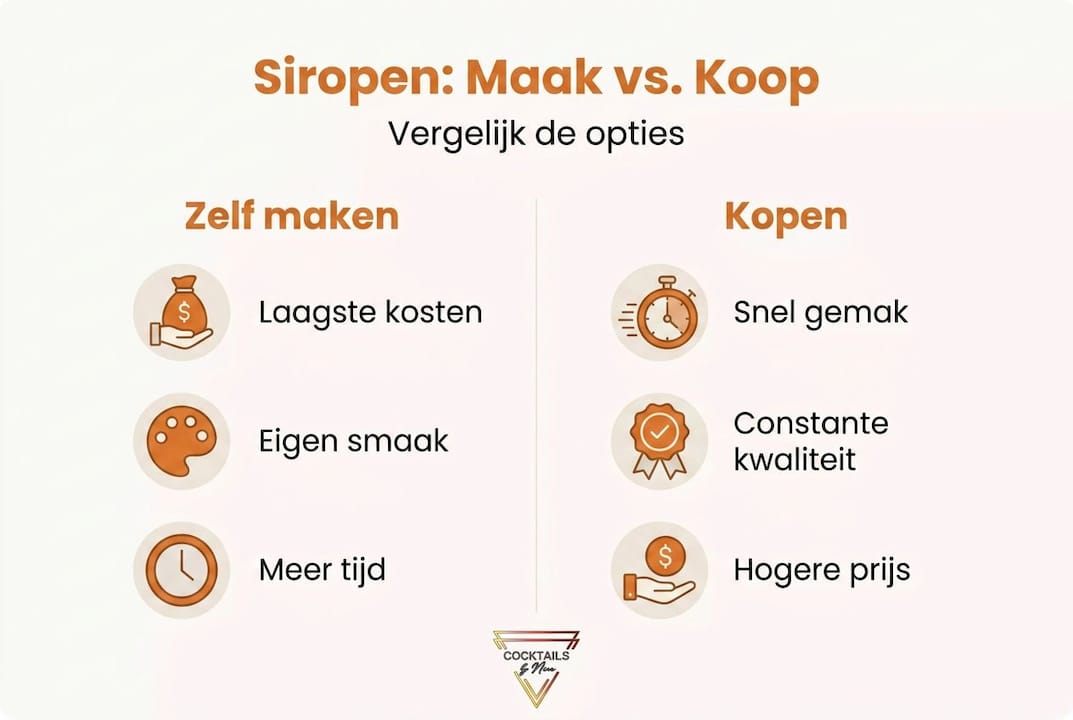
Making your own syrups is inexpensive and gives you complete control over the flavor, from ginger to vanilla. Buying offers convenience, longer shelf life, and access to premium brands like Monin.
Pro-tip: Make a basic simple syrup yourself for daily use and buy one or two premium syrups for special occasions. This way, you combine the best of both worlds.
For those who don't want to mix but still want to enjoy bar-quality drinks, ready-to-drink cocktail mixes offer an excellent solution. And for the true enthusiast who wants to do everything themselves, a cocktail fusion kit is a great investment with professional tools and ingredients.
Now that you know what suits you, here are practical storage tips and the importance of shelf life.
Shelf life and storage of syrups
Fresh syrups taste better, but they also spoil faster than you think. Good storage is therefore not a luxury but a necessity.
The main rules:
- Always store syrups in the refrigerator after opening
- Use clean, preferably sterilized glass bottles
- Close the bottle tightly after each use
- Label the bottle with the preparation date
- Discard syrup if you notice cloudiness, odor, or taste changes
“Refrigeration is crucial for all types of syrups. Fruit syrups last 1 to 3 months, nut syrups 1 to 2 months, and a 2:1 simple syrup up to 6 months. Add a splash of vodka to extend shelf life.”
The difference between a 1:1 and a 2:1 syrup lies in the sugar concentration. More sugar means less free water, and less free water means less room for bacteria and fungi. That's why a more concentrated syrup has a longer shelf life.
Pro-tip: Add a tablespoon of vodka to homemade syrups. Alcohol acts as a natural preservative and significantly extends shelf life without noticeably affecting the taste.
For those who prefer not to store and mix themselves, cocktail delivery offers a convenient alternative. This way, you always have fresh, professional drinks without any hassle. For non-alcoholic options, it's also possible to mix mocktails with ready-made bases.
Finally: how do you creatively apply all this knowledge?
Inspiration: cocktails for home with syrups
Theory is nice, but practice is more fun. Here are four concrete cocktail ideas where syrups play the main role.
-
Classic Mojito with mint syrup Mix 50 ml white rum, 25 ml lime juice, and 20 ml homemade mint syrup. Top with sparkling water and garnish with a sprig of mint. The syrup ensures a uniform mint flavor in every sip, something loose mint leaves don't always achieve.
-
Whisky Sour with honey simple syrup Combine 50 ml bourbon, 25 ml lemon juice, and 20 ml honey syrup (2:1 with honey and water). Shake with ice and strain into a glass. The honey syrup adds warmth and depth that regular sugar doesn't provide.
-
Tropical mocktail with passion fruit Mix 30 ml passion fruit syrup, 20 ml pineapple juice, and 10 ml lime juice. Top with coconut water and serve with ice. Fruit syrups last 1 to 3 months, so make a larger batch for multiple parties.
-
Rosemary Gin Fizz Shake 50 ml gin, 20 ml rosemary syrup, and 15 ml lemon juice with ice. Strain into a glass and top with soda water. The rosemary syrup gives a herbal, almost savory note that beautifully complements the gin.
For more cocktail inspiration, you can browse our full range, from classics to surprising new flavors.
Our vision: what you never hear about syrups
Most articles about syrups are about recipes and ratios. That's useful, but it misses the core. What we've learned after years of experience with cocktails is that most home cooks don't fail due to bad spirits or wrong techniques. They fail due to a lack of balance.
One too-sweet syrup can ruin an entire cocktail. One too little and the drink tastes sharp and unpleasant. The art is not in having ten different syrups, but in understanding one good syrup and how it interacts with the other ingredients.
Our motto is simple: one good syrup says more than ten ingredients. Anyone who learns how a 2:1 simple syrup works differently than a fruit syrup, and when to use which, benefits more from that knowledge than from a cupboard full of bottles.
What we also see: people too quickly choose variety instead of quality. They buy five cheap syrups while one premium syrup from Monin or a carefully homemade herbal syrup has much more impact. Dare to choose. Less is more, especially in cocktails.
For those who really want to invest in the home experience, our cocktail expertise also offers personal advice and catering at home. Sometimes the best syrup is simply the syrup that is already in a perfectly mixed drink.
More convenience and inspiration for home cocktails
Everything you've learned in this article about syrups, balance, and shelf life can be put directly into practice. But sometimes you just want to enjoy without the fuss.
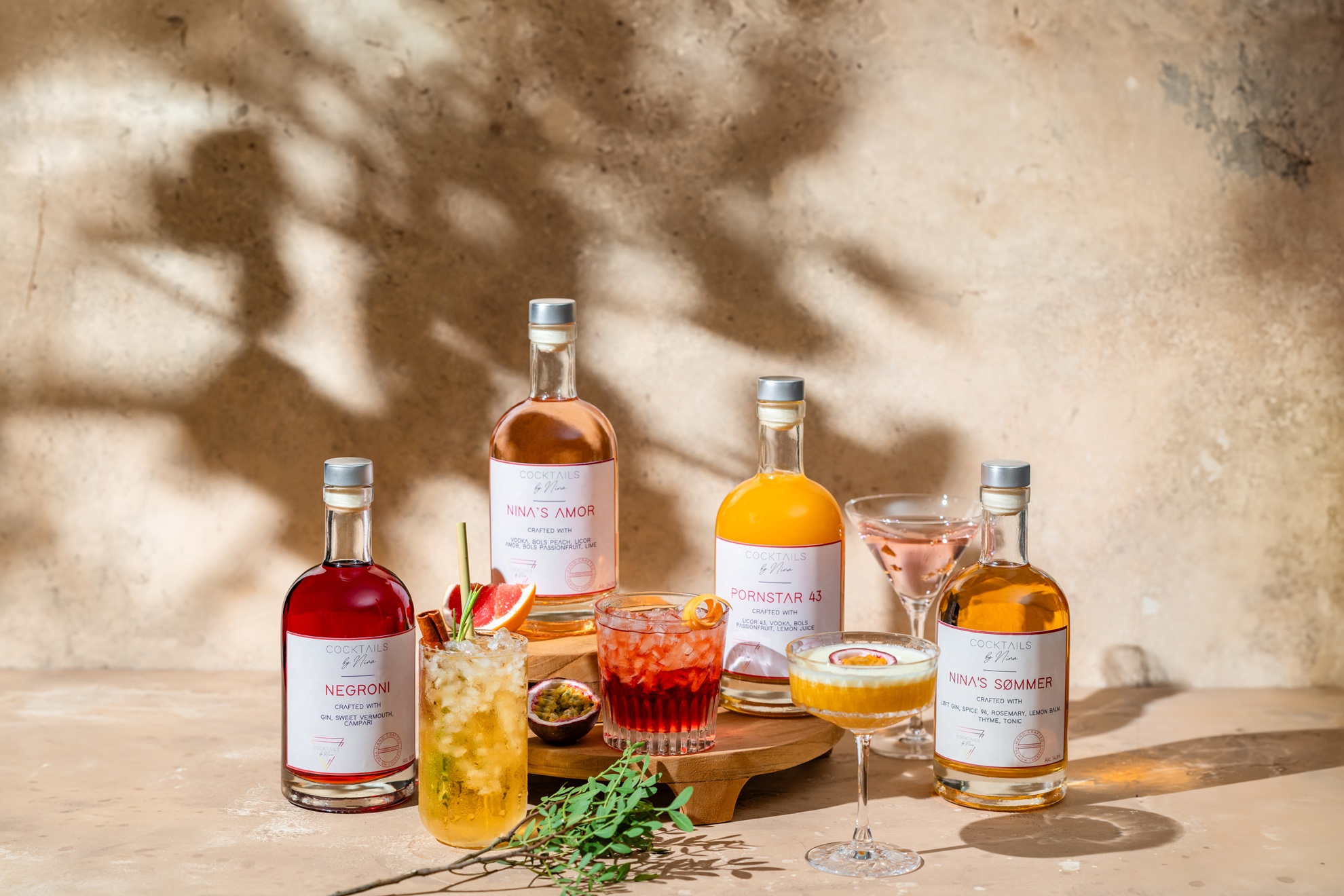
At Cocktails by Nina, you'll find everything you need. From the expert cocktail set for the serious home mixologist to ready-to-drink flavor mixes that you can serve immediately. Do you want to host a party without standing behind the bar yourself? Then our at-home cocktail catering is exactly what you're looking for. Professional quality, without any effort.
Frequently asked questions about syrups in cocktails
How long does homemade syrup last in the refrigerator?
1:1 simple syrup lasts 1 month, 2:1 simple syrup up to 6 months, and fruit syrups typically 1 to 3 months. Always store refrigerated in a clean, sealed bottle.
Is it safe to add vodka to syrup for longer shelf life?
Yes, a splash of vodka acts as a preservative and significantly extends shelf life without noticeably changing the taste.
What is the advantage of premium syrup brands like Monin?
Premium brands offer consistent taste, better shelf life, and often unique flavor combinations that are difficult to replicate yourself.
Which syrups are best for non-alcoholic cocktails or mocktails?
Fruit syrups and herbal syrups work particularly well in mocktails. They provide complex flavors without needing alcohol. Fruit syrups last 1 to 3 months, so you can stock up.
How do I ensure my syrups last longer?
Always store refrigerated, use clean bottles, and consider alcohol as a preservative. Refrigeration is crucial for all types of syrups, regardless of sugar concentration.
Recommendation
- Spirits and mixers: the basis for premium cocktails at home – Cocktails by Nina
- Essential cocktail concepts: your guide to clear choices – Cocktails by Nina
- Cocktail at home – Cocktails by Nina
- Ice in Cocktails: Tips for a Perfect Serving Experience – Cocktails by Nina
- The future of hospitality; Ready-to-drink Cocktails – Tap & Joy