Sustainable cocktails are no longer a niche for the fiercely eco-conscious. They're found at birthday parties, weddings, and casual Friday nights. But what exactly are sustainable cocktail ingredients, and why does what you pour into your glass make a difference? The answer surprises many: sustainable choices not only lead to a clearer conscience but also to better flavors, less sugar, and more creativity in your glass. This article explains how to achieve this, whether at home or at an event.
Table of Contents
- Key Insights
- What Makes Cocktail Ingredients Sustainable?
- Sustainable Base and Flavorings
- Conventional Versus Sustainable Ingredients
- How to Make Sustainable Cocktails at Home or Events?
- My View on Sustainable Cocktails
- Sustainable Cocktails Without Fuss at Home
- FAQ
Key Insights
| Point | Details |
|---|---|
| Definition of sustainable ingredients | Fresh, local, seasonal, and unprocessed are the four pillars of sustainable cocktail ingredients. |
| Flavor benefits too | Seasonal products contain more powerful aromas, requiring less sweetener. |
| No-waste saves money | Reusing citrus peels, herb stems, and fruit scraps reduces costs and waste simultaneously. |
| Non-alcoholic options really work | Ginger, kombucha, and aquafaba replace alcohol in flavor and texture without compromise. |
| Small start, big effect | One change, such as switching to local fruit, makes your cocktail routine measurably more sustainable. |
What Makes Cocktail Ingredients Sustainable?
Sustainable cocktail ingredients are not simply "organic" or "without a plastic straw." It's about a combination of choices that together determine the ecological and social footprint of your drink. Sustainability in cocktails is primarily a systemic choice where flavor and quality are maintained with environmentally friendly alternatives. That sounds abstract, but it becomes very concrete when you look at the criteria:
- Fresh and unprocessed: Fresh products contain no artificial preservatives, colorings, or flavor enhancers. They deliver more flavor per gram and less chemical mess per sip.
- Local and seasonal: A lemon from Sicily has traveled hundreds of miles before it lands in your shaker. An apple from a Dutch grower in October does not. Local products reduce import impact and increase aroma concentration.
- Organically grown: Organic farming means fewer pesticides in the soil and no synthetic fertilizers. For herbs and citrus peels that you use directly in your cocktail, this is especially relevant.
- Minimal packaging: Bottles, cans, and plastic bags all count. Buying products at a local market or in bulk significantly reduces packaging waste.
- Limited sugar use: Industrial cocktail syrups often contain added colorings and high concentrations of fructose syrup. Homemade syrups from cane sugar or honey are much cleaner.
- No-waste thinking: Every peel, stem, and scrap you reuse is waste you don't produce. This principle changes how you read a recipe.
The use of organic and locally grown herbs and fruits is beneficial for flavor, the environment, and significantly reduces CO2 emissions. That makes the choice for sustainable ingredients less of a sacrifice and more of an upgrade.
Sustainable Base and Flavorings
Now that you know what sustainable cocktail ingredients are, the next step is: what exactly do you use? The best base for sustainable cocktails consists of products you already have at home or can easily find locally.
Fresh Fruits and Vegetables
Seasonal fruit is the most logical starting point. Strawberries in June, pears in September, citrus fruits in winter. Seasonal products contain more sugar and aroma than imported varieties, allowing you to make flavorful cocktails with fewer sweeteners. Think of pureed mango in August, roasted beetroot in November, or fresh rhubarb in April. All products that give a cocktail character without having to open a bottle of industrial syrup.

Fresh Herbs
Mint, basil, rosemary, thyme, lavender. Fresh herbs are the most underestimated flavor enhancers in sustainable mixed drinks. They grow easily on a windowsill, they are inexpensive, and you use them completely: leaves for garnish, stems for infusions, flowers sometimes as decoration. Fresh herbs and fruits are essential sources of flavor that also offer health and environmental benefits.
Natural Syrups and Sweeteners
Homemade syrups from cane sugar, agave, honey, or maple syrup are sustainable replacements for industrial varieties. They are easy to make: equal parts water and sweetener, heat briefly, done. Want to go a step further? Add herbs, spices, or citrus peel during cooking for an instant flavorful syrup. More inspiration on sustainable syrups can also be found in recipes specifically focused on fewer additives.
Alcohol-Free and Low-ABV Alternatives
Sustainable cocktails are not automatically alcohol-free, but the category of sustainable mocktails is growing rapidly. Sustainable mocktails use alternatives to alcohol that support flavor and mouthfeel, such as ginger, kombucha, shrubs, and aquafaba. Aquafaba, the liquid from a can of chickpeas, acts as a foaming agent and is also vegan. Kombucha gives a slight tingling and a sour depth reminiscent of wine. Ginger shot provides the "kick" you expect from alcohol, but purely plant-based.
Pro-tip: Make homemade ginger beer from fresh ginger, lemon juice, a pinch of sugar, and sparkling water. This takes five minutes and is one of the best bases for sustainable cocktails you can make.
Conventional Versus Sustainable Ingredients
Below you can see the difference between standard cocktail choices and their sustainable alternatives. The comparison shows that more sustainable is by no means always more expensive or more complicated.
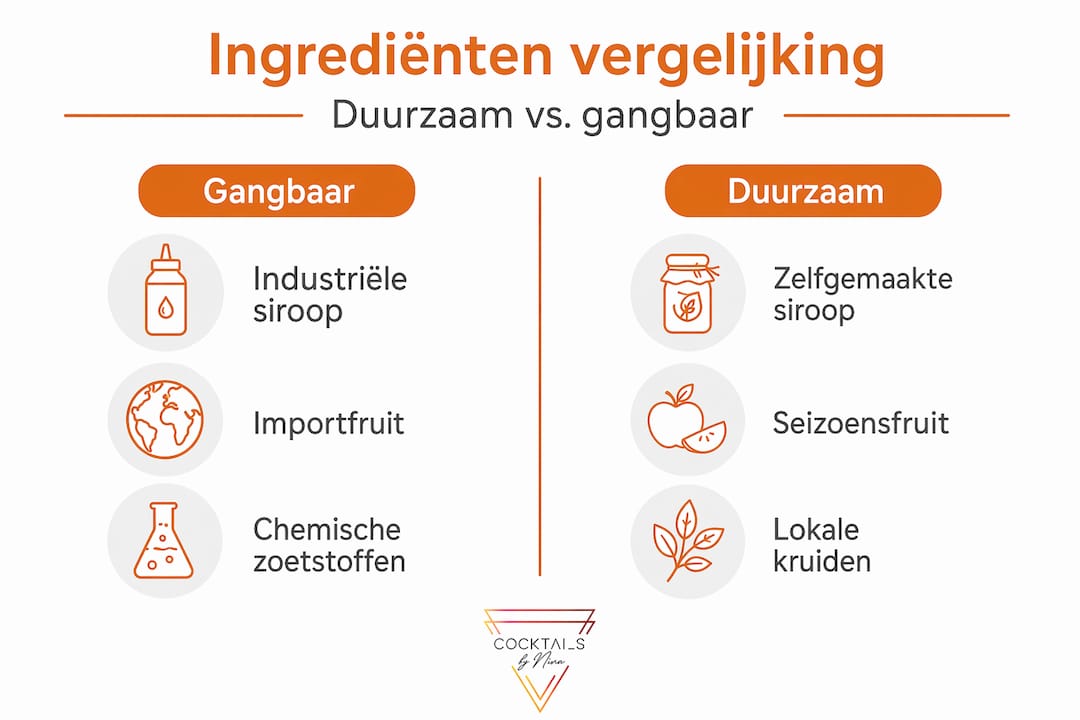
| Standard ingredient | Sustainable alternative | Difference in taste | Environmental impact |
|---|---|---|---|
| Industrial lemon syrup | Homemade lemon syrup with organic lemon | Fresher, less artificial | Much less packaging and additives |
| Canned tropical fruit juice | Fresh seasonal fruit, pureed | Fuller, riper, more character | No transport miles |
| Regular vodka or gin | Organic or local spirits | Comparable to better | Smaller ecological footprint |
| Plastic cocktail straw | Reusable metal or glass straw | No difference | Significant reduction in plastic waste |
| Neon-colored cocktail syrup | Fresh berries or herb infusion | More complex, authentic | No synthetic colorings |
| Packaged egg white | Aquafaba (chickpea liquid) | Comparable foam | Completely plant-based and vegan |
What stands out: in almost every comparison, the sustainable alternative also wins on taste. Fresh pureed fruit tastes richer than a can. Homemade syrup tastes more authentic than a plastic bottle with E-numbers. The balance of sour, bitter, and texture can be achieved sustainably with natural ingredients that also have health benefits.
The only real downside is time. Fresh ingredients require more preparation than opening a bottle of ready-made mix. But with the right planning, this is manageable, especially if you are making for a group.
How to Make Sustainable Cocktails at Home or Events?
Knowing what sustainable cocktail ingredients are is one thing. Putting them into practice is another. Here are the most effective steps to get started immediately, both at home and at a larger event.
-
Buy seasonal and local. Visit a farmer's market or local greengrocer and see what's available that week. Build your cocktail menu around the available products, not the other way around. This way, you automatically choose what is most flavorful and most sustainable.
-
Apply no-waste to citrus. Use citrus peels for syrups, infusions, or as garnish before juicing. Reusing citrus scraps, such as pickling organic lemons, is a practical way to reduce waste. Pickled lemon adds a complex, salty depth to a cocktail that you won't find anywhere else.
-
Batch prepare basic ingredients. Making a large quantity of syrup, ginger shot, or shrub once a week saves time and reduces waste. Store in glass jars in the refrigerator.
-
Manage your garnish smartly. Waste in cocktails is greatly reduced by being small but thoughtful with garnish. Dry excess fruit in the oven at a low temperature and use it later as decoration or in tea.
-
Choose glass or reusable packaging. For events: choose glass bottles over plastic, use reusable glasses, and set up a compost bin for fruit scraps.
-
Use eco-friendly cocktail tools as inspiration when setting up a sustainable bar, whether you're working at home or for a larger party.
Pro-tip: Make a "cocktail infusion" from herbs and alcohol you already have at home. Put a handful of rosemary in a bottle of gin and let it sit for 48 hours. No extra purchases, but a completely different taste.
The no-waste approach to cocktails requires designing recipes so that every component is utilized to its maximum, including peels and scraps. That sounds technical, but it's just a different way of looking at what you already have at home.
My View on Sustainable Cocktails
I hear it regularly: "Sustainable cocktails sound great, but I don't want a glass of lukewarm kombucha with a sprig of rosemary." I understand that reaction. The image of sustainable drinks as virtuous and tasteless is persistent.
What I see in practice is the opposite. The best cocktails I've made were made from what I bought at the market that morning. A mojito with homegrown mint simply tastes better than one with mint from a plastic bag harvested three weeks ago. A shrub of strawberries and apple cider vinegar adds more depth to an alcoholic drink than any cocktail syrup.
The pitfall I most often see with people who want to switch: they try to change everything at once. Organic, local, no-waste, alcohol-free, and homemade all at once. That gets stuck. My advice: start with one thing. This week, buy local citrus instead of the plastic bags. That's it. That small difference in taste will convince you to take the next step.
My personal favorites? A combination of fresh thyme, locally grown grapefruit juice, and ginger kombucha. Or pickled lemon in a mocktail with tonic and black pepper. Both examples show that sustainable cocktail ingredients for sustainability don't mean a compromise on taste. It's just better cooking, but in a glass.
More background on the basics of cocktail terminology helps to make more conscious choices, even when comparing ingredients for the first time.
— Ruud
Sustainable Cocktails Without Fuss at Home
Want to taste what sustainable cocktails can be before you get started yourself? Cocktailsbynina offers ready-made cocktails and mocktails made with premium ingredients, ideal for home or an event.

Whether you're organizing a birthday party or just want to enjoy a quality drink without hassle: at Cocktailsbynina you can order sustainable ready-made mocktails that are ready for immediate use. Want to go bigger? The cocktail at home service brings a complete bar to your location, with attention to quality and ecological awareness. Convenience and sustainability are not mutually exclusive.
FAQ
What exactly are sustainable cocktail ingredients?
Sustainable cocktail ingredients are fresh, locally grown, seasonal, and minimally processed products that offer both flavor and ecological benefits. Think of fresh fruits, herbs, homemade syrups, and non-alcoholic alternatives like kombucha and ginger.
Are sustainable cocktails also vegan?
Not automatically, but it's easy to combine. Replace egg white with aquafaba, use plant-based sweeteners, and choose organic spirits without animal filtering methods. Most sustainable cocktail ingredients are naturally vegan.
How do I prevent waste when making cocktails?
Use citrus peels for syrups or infusions before juicing, dry excess fruit at a low oven temperature, and make weekly batches of basic preparations. Efficient handling of garnish and leftover materials makes a significant sustainable impact.
Do sustainable cocktails taste worse than classic variants?
No, often better. Seasonal ingredients contain more powerful aromas and more natural sugars than imported products, resulting in a fuller flavor profile with fewer added sweeteners.
Which sustainable ingredients are easiest to start with?
Start with fresh mint or basil from the market, homemade ginger beer, and local seasonal fruit. These three ingredients immediately improve the taste and sustainability of your cocktails without extra costs or complex preparation methods.
Recommendation
- Improve your cocktails: the indispensable role of syrups – Cocktails by Nina
- Spirits and mixers: the basis for premium cocktails at home – Cocktails by Nina
- Essential cocktail terms: your guide to clear choices – Cocktails by Nina
- Shots and drinks: the complete guide to convenience and quality – Cocktails by Nina