You have twenty guests, one bar, and the party starts in half an hour. Anyone who has experienced this knows how quickly a cocktail service can get bogged down. Glasses pile up, wait times increase, and the cocktails eventually served taste a little different from the first round. A well-thought-out cocktail serving workflow solves all these problems before they even arise. In this guide, you'll learn exactly how to set up your workflow, from materials to quality control, so you can serve quickly, consistently, and professionally at any event.
Table of Contents
- Key Insights
- Setting up the Cocktail Serving Workflow
- Batching: The Smartest Preparation
- Efficient Service During the Event
- Quality Control During Service
- My Vision on Workflow Optimization
- Serving Cocktails Without the Stress
- FAQ
Key Insights
| Point | Details |
|---|---|
| Preparation is everything | Ensure glassware, tools, and ingredients are ready before the first guest arrives. |
| Batching saves time | Mixing cocktails in advance saves time and improves consistency per glass. |
| Two-step rule | Arrange your bar so that 80% of the necessary items are within two steps. |
| Continuous quality control | Check taste, temperature, and presentation multiple times during serving. |
| Ready-made solutions | Professional ready-to-drink cocktails lower the barrier and immediately increase quality. |
Setting up the Cocktail Serving Workflow
Tools and Equipment You Need
A smooth workflow starts with the right materials. Without the basic toolkit, even the simplest recipe becomes a stumbling block. The list below is the minimum for a professional setup.
| Tool | Function |
|---|---|
| Jigger (25/50 ml) | Accurate measurement of spirits and juices |
| Shaker (Boston or Cobbler) | Mixing and chilling cocktails |
| Bar spoon | Stirring stirred cocktails |
| Hawthorne strainer | Filtering when serving |
| Cutting board and knife | Garnish preparation |
| Ice bucket with tongs | Serving portioned ice |
| Pitchers or dispensers | Serving batched cocktails quickly |
| Pre-chilled glassware | Maintaining temperature longer |
Correct use of jiggers prevents taste differences between glasses, which is immediately noticeable with larger groups. One milliliter too much syrup per glass sounds innocent, but with twenty glasses, you'll notice the difference.
Bar Layout: The Two-Step Rule
The layout of your bar largely determines how quickly you can work. According to the two-step rule for bar layout, 80% of the most frequently used drinks, tools, and ingredients should be accessible within two steps of your workstation. This minimizes unnecessary walking and prevents bottlenecks during peak times.
Work in clear zones. Zone one is your work zone directly in front of you: shaker, jigger, strainer, and garnish board. Zone two is your stock zone: spirits, juices, ice, and glasses. Anything you only need once or twice an evening should be placed further away.
Pro-tip: Pre-chill your glasses by placing them in the freezer for at least thirty minutes before serving or by filling them with ice water. Chilled glassware significantly extends the optimal serving time and enhances every guest's experience.
Inventory management is the silent foundation of good service. Count your ingredients before the event, calculate your needs per person, and always have 20% extra ready. A shortage of lemon juice halfway through a reception is exactly the kind of problem that can completely disrupt your workflow.
Batching: The Smartest Preparation
Why Batching Works
Batching means mixing cocktails in large quantities in advance instead of preparing each glass individually. Batching increases speed and consistency during busy times without loss of quality. For an event of thirty guests, the difference is enormous: you pour from a pitcher instead of shaking each glass separately.
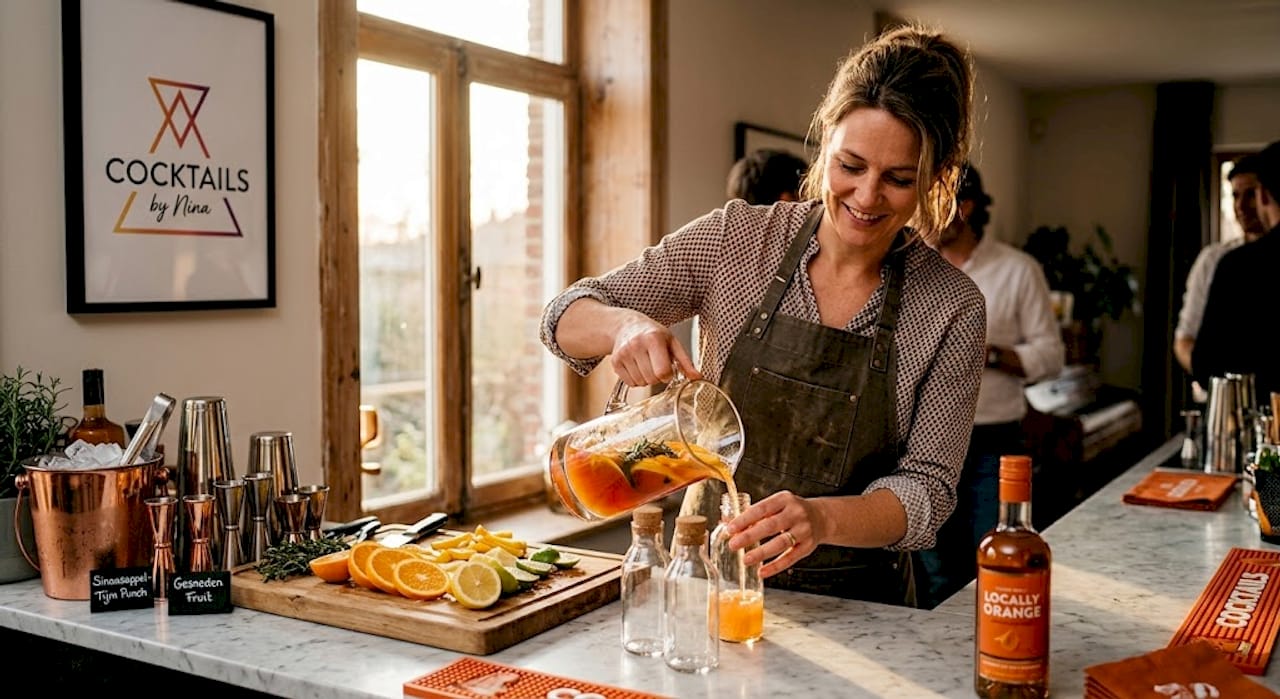
There's an additional benefit that few people mention. Batching reduces reliance on specific bartending skills. Someone without years of bar experience can pour from a pre-mixed pitcher without quality declining.
How to Batch Correctly
The batching process involves a few fixed steps:
- Scale up your recipe to the desired number of portions. Use a spreadsheet or app to correctly recalculate all proportions.
- Add manual dilution. Normally, cocktails dilute by shaking or stirring with ice. For a batch, you need to compensate for this. Add 20 to 25% water to the total volume to maintain the correct flavor balance.
- Mix and store without ice. Do not add ice to the batch yet. Store the mix in a sealed bottle or carafe in the refrigerator.
- Add ice just before serving, or use large ice cubes in a pitcher to slow down dilution.
- Pre-chill everything. Allow the batch to chill in the refrigerator for at least four hours for an optimal temperature at the start.
A timetable is enormously helpful for larger events. Prepare your batch 24 to 48 hours in advance so flavors can integrate. Fill ice buckets and chill glasses a maximum of two hours before starting.
Common Batching Mistakes
Even experienced hosts make these mistakes:
- Too little dilution. The cocktail will be too strong and sharp. Always add water.
- Adding citrus too early. Fresh lemon or lime juice oxidizes quickly and loses its freshness. Add this on the day itself, never 48 hours in advance.
- Ice in the batch too early. The cocktail dilutes too quickly and tastes watery after an hour.
- Not doing a taste test. Always taste your batch at room temperature AND chilled. Flavors change with temperature differences.
- Forgetting to shake or stir before serving. Ingredients can separate with longer storage.
Pro-tip: Use large ice cubes instead of standard ice cubes in your pitcher or punch bowl. Large ice melts slower and keeps your batch at the right temperature longer without excessive dilution.
Efficient Service During the Event
Bar Layout by Event Size
The scale of your event determines how you set up your workflow. For a private reception of ten people, one person with a good setup is sufficient. For a business event of fifty guests or more, you'll work in zones with multiple people.
For larger events, it's smart to work with a serving zone, a mixing zone, and a cleaning zone. Whoever serves doesn't mix. Whoever mixes doesn't clean up. This division of tasks prevents chaos and cross-traffic behind the bar.
Compare the approach by group size:
| Group Size | Recommended Setup | Tools |
|---|---|---|
| Up to 15 people | One bartender, one work zone | Pitcher, 1 shaker |
| 15 to 40 people | Two zones, two helpers | Dispenser, punch bowl, pitchers |
| 40 to 100 people | Three zones, team of three | Large dispensers, multiple batches |
| 100+ people | Fully professional team | Ready-to-drink cocktails recommended |
Presentation and Garnish
Presentation is not an afterthought in a good cocktail catering workflow. Guests first taste with their eyes. A well-presented cocktail enhances the experience, even if the taste is identical to a more sloppily presented version.
Prepare your garnish board before the event. Cut peels, skewer sticks, and thread fruit before service begins. Never cut garnish elements in the middle of a busy service. That takes time and concentration you can't spare.
Use consistent cocktail presentation ideas that match the event's theme. A champagne glass with a rose petal works for a wedding. A tumbler with a large ice sphere suits a business whiskey reception. The right match between glass, garnish, and occasion makes your service feel professional.
Pro-tip: Prepare a garnish box for each cocktail. Each box contains everything for the garnish of that specific drink, so your team doesn't have to search or ask.
Use pitchers, punch bowls, and table dispensers to quickly serve fast cocktail recipes to multiple guests simultaneously. A well-filled punch bowl can fill twenty glasses without anyone having to wait. For events where guests can help themselves, this also enhances the guest experience.
Quality Control During Service
Ongoing Checks
A perfect cocktail workflow doesn't stop at pouring. Professionals continuously check taste, temperature, and presentation during service. That sounds intensive, but in practice, it involves a few focused habits.
Do a spot check every thirty minutes. Grab a glass from the current batch and taste. Pay attention to:
- Is the flavor balance still good? Not too sweet, not too strong?
- Is the temperature cold enough without the cocktail becoming too watery?
- Does the glass look neat? Clean glass, tidy garnish?
- Is the ice level in your bucket or pitcher still acceptable?
Timing and Shelf Life
Batched cocktails with ice should be consumed within two hours for optimal quality. This is not a suggestion; it's a hard limit. After two hours with ice, the cocktail is too diluted and too lukewarm to be enjoyable.
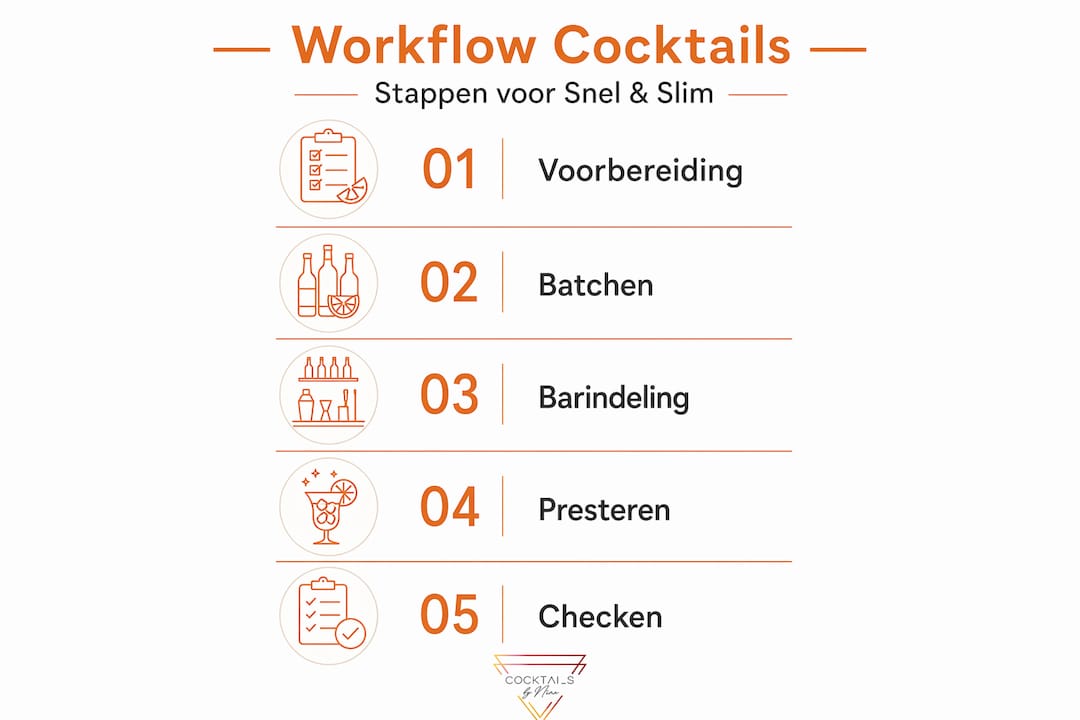
Therefore, plan your batches in rounds. Batch number one goes out when the first guest arrives. Batch number two is mixed while the first one is almost empty. This way, you always have a fresh batch ready without having to start over in the middle of service.
For longer events of four hours or more, a timetable per batch is the best approach. Note when your batch with ice was replenished and keep two hours as the maximum for consumption.
My Vision on Workflow Optimization
I've seen enough events where people worked harder instead of smarter. They shook faster, poured faster, and ran more. The result was always the same: fatigue halfway through, errors in recipes, and guests noticing that the seventh cocktail tasted different from the first.
What I've learned is that preparation dictates service. If your materials are in the wrong place, if your garnish board isn't ready when guests arrive, you'll never get that time back. A smart layout and thoughtful batching beforehand give you the calm during service to truly be present for your guests instead of just surviving.
The point most people underestimate is team communication. If you're behind the bar with two or three people, clear task division is more important than who has the best shaker. I always use a short five-minute briefing beforehand. Who does what, where is what, and what's the signal when a batch is empty. Those five minutes save you an hour of confusion.
One last thing: batching is not a compromise on quality. It's a strategic choice for a better guest experience. Guests never like to wait. A perfectly mixed cocktail that you get two minutes later already loses some of its magic. A well-batched cocktail that you get now wins over perfection that comes too late.
— Ruud
Serving Cocktails Without the Stress
You now know how a good cocktail serving workflow works. But what if you want to halve preparation time without sacrificing quality?
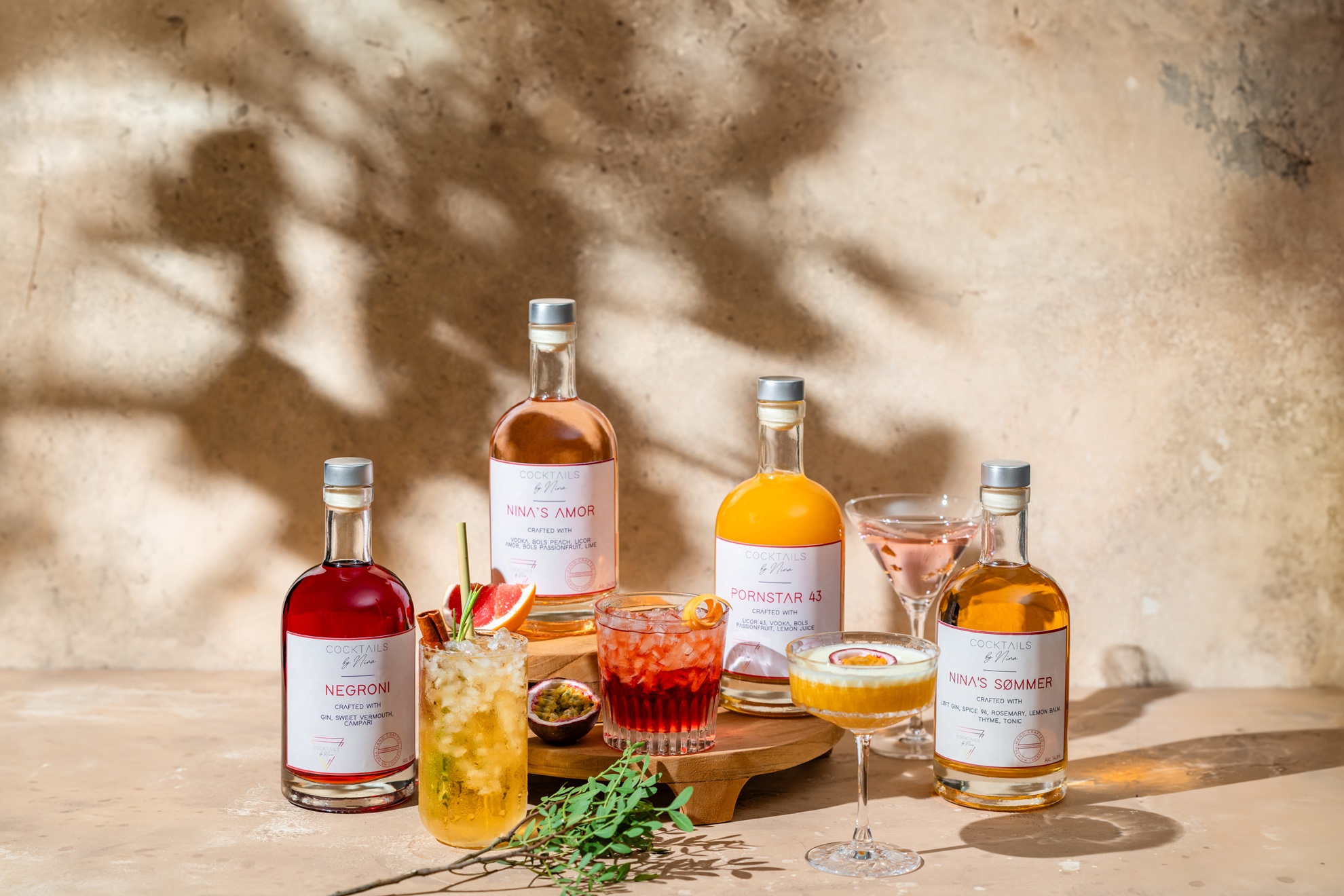
Cocktailsbynina offers ready-to-drink cocktails and mocktails of bar-quality, ready to serve without mixing or batching. Whether you're organizing a birthday, corporate reception, or wedding, the range of cocktail boxes is directly suitable for events of any size. Choose a compact cocktail box for two people or opt for the larger variant for a group occasion. For guests who don't drink alcohol, the ready-to-drink mocktails are a stylish alternative. All products are prepared with premium ingredients and deliver immediate results that would otherwise cost hours of preparation.
FAQ
What is batching in cocktail serving?
Batching means mixing cocktails in large quantities in advance and storing them. Batching increases speed and consistency during busy service without loss of quality.
How much water do you add to a batched cocktail?
Add 20 to 25% water to the total volume of your batch to compensate for the dilution that normally occurs during shaking or stirring with ice.
How long can you store a batched cocktail with ice?
A batched cocktail with ice is optimal for up to two hours after adding the ice. After that time, the cocktail is too diluted and loses its flavor balance.
How do you set up a bar for a large event?
Work with separate zones for mixing, serving, and cleaning. Use the two-step rule so that 80% of your necessities are immediately accessible, and scale your batches according to the number of guests.
When are ready-to-drink cocktails smart for an event?
For events with more than one hundred people, or if you don't have an experienced bartender, ready-to-drink cocktails offer the quickest route to consistent quality. Cocktailsbynina has a complete offering for events available for this.