Infusion is a preparation method where aromatic ingredients such as herbs, fruits, flowers, or spices are steeped in a liquid to release their flavor and aroma. The term "infusion" is the English name for the same process, which is simply called "infusie" in Dutch. What exactly is infusion in beverages? It's not a drink name, but a technique. This technique can be applied to hot tea, cold lemonade, mocktails, and infused water. Anyone who understands how infusion works can make drinks at home with the depth and complexity of a professional bar.
How does infusion in beverages work, technically speaking?
Infusion is a preparation method where aromatic ingredients are steeped in liquid to extract flavor and aroma. Heat accelerates this process because molecules move faster and flavor compounds are more easily released from plant cells. Cold liquid works slower but often yields a softer and more subtle taste.
The steeping time varies greatly by method. Hot infusions typically steep for 5–10 minutes, while cold infusions require 1–8 hours, sometimes longer. Infused water in the refrigerator reaches its full flavor after about 8 hours. That patience pays off in a richer aroma.
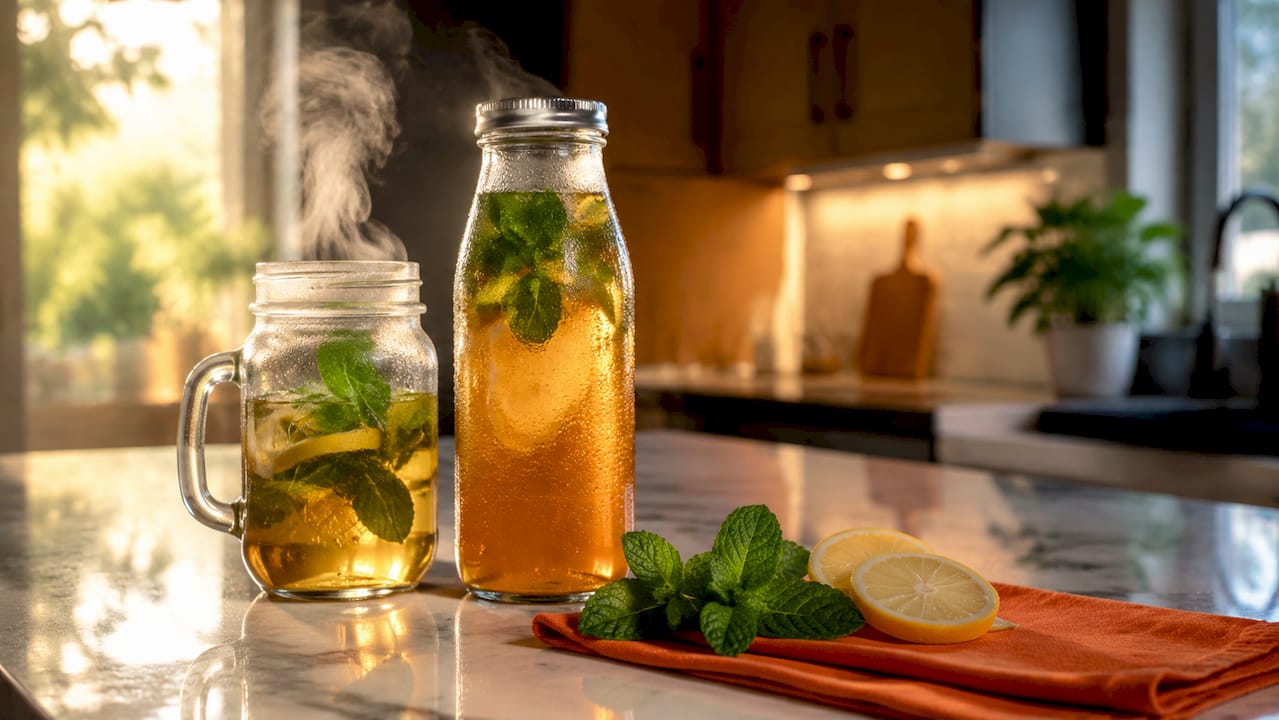
The freshness of the ingredients determines the quality of the final result. Fresh mint releases more essential oils than dried mint. Dried flowers like chamomile, on the other hand, are more concentrated and require a shorter steeping time to avoid bitterness.
Infusion versus maceration and decoction
Infusion is not the only extraction method. Maceration takes 30–40 minutes at room temperature without heat, while decoction involves boiling plant parts. Maceration is used for delicate flowers that lose their aroma with heat. Decoction is applied to hard roots or bark that only release their flavor compounds at high temperatures. For most herbal and fruit infusions at home, the classic infusion method is the quickest and most accessible choice.
Pro-tip: Always use filtered water for infusions. Chlorine in tap water suppresses subtle aromas of lavender, chamomile, and citrus.
Which ingredients work best for beverage infusions?
The choice of ingredients determines whether an infusion tastes fresh, floral, spicy, or fruity. Good combinations are no coincidence. They revolve around complementary flavor and aroma profiles that enhance each other without clashing.
Popular choices for infusions in beverages include:
- Mint and lime: fresh and vibrant, ideal for summer mocktails and infused water
- Lavender and lemon: floral with a light acidity, perfect for gin-based cocktails
- Chamomile and honey: soft and warm, excellent as a hot evening infusion
- Ginger and orange: spicy and sweet, strong enough for cold infusions with a long steeping time
- Basil and strawberry: unexpected but balanced, popular in summer mocktails
Combinations such as mint and lime or lavender with lemon create balanced and attractive infusions. The balance in infusions is about combining ingredients with complementary flavors and aroma profiles. Never add more than three main ingredients to one infusion. More flavors lead to a muddy result without clear character.
Fresh ingredients give more intense aromas, but dried varieties are more practical and last longer. Dried lavender is three times as concentrated as fresh flowers. So use less. Seasonal infusions are the most satisfying: strawberries and basil in summer, apple with cinnamon in autumn, orange with cloves in winter.
Pro-tip: Always combine one dominant flavor with one supporting flavor. Think 70% mint and 30% lime, not fifty-fifty. This way, the infusion retains a recognizable character.
What are the health benefits of infusions?
Infusions contain antioxidants and stimulate taste without artificial additives or caffeine. This makes them a strong alternative to soft drinks and energy drinks. Those who struggle to drink enough water will drink more if the water tastes like something.
The benefits at a glance:
- Caffeine-free: herbal and fruit infusions do not contain theine or caffeine, unlike green or black tea
- Low-calorie hydration: no sugar, no artificial sweeteners, only natural flavor
- Antioxidants: ingredients like ginger, chamomile, and citrus provide plant compounds that support the body
- No artificial additives: you know exactly what's in it, because you make it yourself
Infusions can facilitate hydration by adding flavor without calories or chemicals. That sounds simple, but the effect is measurable. People who drink infused water more easily meet their daily fluid intake. For those who consciously choose healthy drinks, a homemade infusion is one of the smartest choices you can make.
Infusions are also an excellent base for non-alcoholic cocktails. They give mocktails the complexity and depth that otherwise only comes from alcohol or sugar syrups. Cocktailsbynina uses this principle in its ready-to-drink mocktails, where infusion techniques ensure a rich taste experience without alcohol.
What is the difference between infusion, herbal tea, and tea?
The three terms are often used interchangeably, but they mean something different. This distinction is practically relevant, not just academic.
| Begriff | Definition | Caffeine | Example |
|---|---|---|---|
| Infusion | Preparation method: steeping ingredients in liquid | No | Steeping mint in water |
| Herbal tea | Drink made by infusing herbs or fruit | No | Chamomile tea, rosehip tea |
| Tea | Drink from the tea plant Camellia sinensis | Yes | Green tea, black tea, oolong |
Tea always contains theine, while herbal and fruit infusions are caffeine-free. Herbal tea is the result of an infusion process, but infusion itself is the technique, not the product. This distinction is crucial for those who consciously choose based on caffeine intake.
There is often confusion about terms: the distinction between infusion as a process, herbal tea as a product, and true tea with theine is essential for conscious drinking. Someone who drinks a cup of chamomile "tea" in the evening is technically drinking a herbal tea prepared by infusion. No theine, no caffeine. Someone who drinks green tea does consume caffeine. So the word "tea" on the packaging is not enough.
How do you make an infusion for cocktails and mocktails yourself?
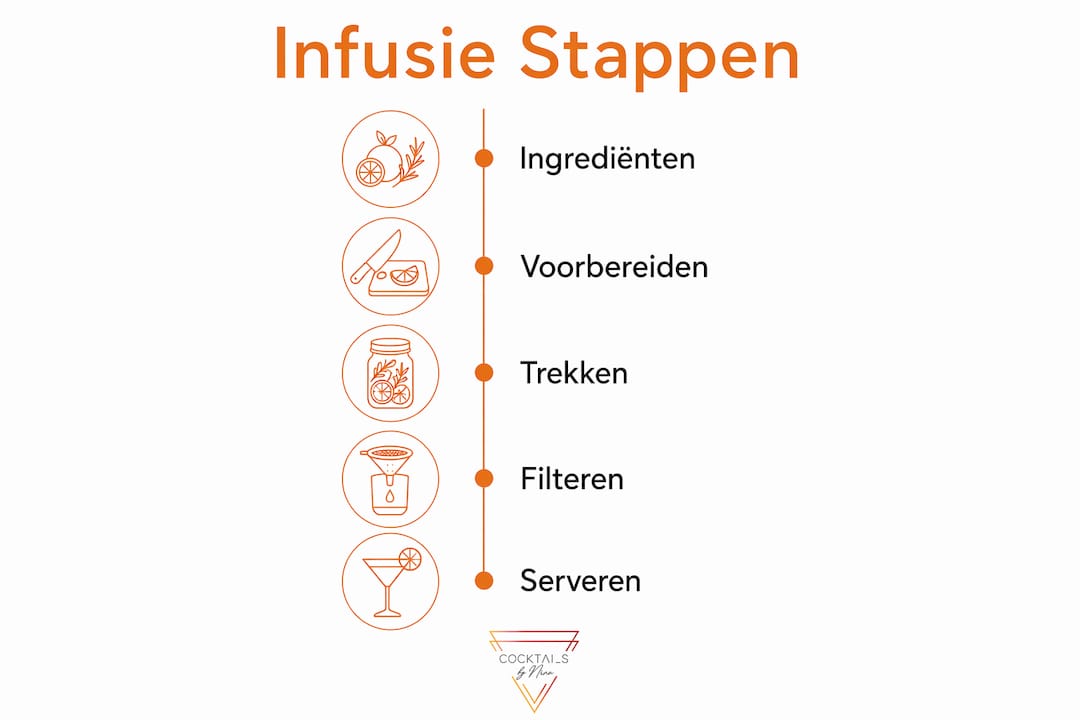
Making your own infusions doesn't require special equipment. A glass jar, a sieve, and good ingredients are sufficient. The step-by-step plan below works for both hot and cold infusions.
- Choose your base: water, fruit juice, gin, or another neutral liquid
- Prepare the ingredients: wash fresh herbs and fruit thoroughly, slice citrus
- Lightly bruise fresh herbs: press them gently with a spoon or mortar to release the aromatic oils
- Add ingredients to the liquid: use a ratio of approximately 10 grams of fresh herbs per liter of water
- Determine the steeping time: hot 5–10 minutes, cold 1–8 hours in the refrigerator
- Strain the infusion: remove all solid ingredients after steeping time
- Taste and adjust: too weak? Steep longer or add more ingredients. Too bitter? Remove ingredients earlier
Lightly bruising fresh herbs significantly increases flavor intensity by releasing aromatic oils. Mint and basil lose their flavor if not bruised before infusion. This is one of the most underestimated steps in the process.
Steeping too long leads to muddy or bitter taste due to overextraction. Set a timer. Always remove ingredients after the recommended steeping time, even if the infusion is still in the refrigerator. The extraction continues as long as the ingredients are in the liquid.
For cocktails and mocktails, use the infusion as a base liquid or as a flavoring agent alongside other ingredients. A lavender infusion in tonic water with a slice of lemon is already a complete mocktail. Transparent glasses and garnish enhance the aroma and atmosphere of the infusion. Presentation contributes to the overall experience.
Pro-tip: Make a larger batch of infusion and store it for a maximum of 3 days in the refrigerator in a sealed glass bottle. This way, you always have a flavorful base ready for spontaneous cocktail moments.
Gin infusions deserve a separate mention. Gin infusion techniques with fresh herbs, fruits, and flowers give a neutral gin a completely new character. Rosemary and grapefruit in gin for 24 hours provide a botanical, bitter note that works perfectly in a Negroni variant.
Key insights
Infusion is the most accessible technique for achieving professional flavor depth in homemade beverages, provided you consciously manage steeping time, ingredient quality, and temperature.
| Point | Details |
|---|---|
| Infusion is a technique, not a drink | Infusion describes the steeping of ingredients in liquid, not the end product itself. |
| Steeping time determines flavor intensity | Hot 5–10 minutes, cold 1–8 hours; steeping too long causes bitterness due to overextraction. |
| Always bruise fresh herbs before use | Bruising releases aromatic oils and significantly increases flavor intensity. |
| Infusions are caffeine-free and low-calorie | Herbal and fruit infusions do not contain theine and support healthy hydration without sugar. |
| Maximum three main ingredients | More flavors lead to a muddy result without a recognizable character. |
Why I see infusions as the basis of every good drink
Over the years, I've seen many people struggle with making cocktails and mocktails at home. They buy expensive syrups, search for exotic liqueurs, but forget the simplest technique: a good infusion as a base. A well-made mint and lime infusion surpasses any ready-made syrup in taste and freshness.
What strikes me is that people underestimate the steeping time. They taste after two minutes, conclude that it "doesn't taste like anything," and throw in more ingredients. The result is an overextracted, bitter liquid. Patience is the most underestimated skill in infusions. Just set a timer and trust the process.
I am also a great advocate of seasonal infusions. In summer, I work with cucumber and mint, in autumn with pear and star anise. This seasonality forces you to be creative and makes each batch unique. Moreover, seasonal ingredients are fresher and cheaper.
My honest advice: start with one simple combination, like mint and lime in cold water. Make it three times. Only then adjust the steeping time, then the amount, then the ingredients. This way, you build intuition. Someone who immediately experiments with five ingredients learns nothing about the process itself.
Infusions are also the key to good non-alcoholic cocktails. A mocktail without an infusion tastes flat. With a good infusion as a base, you already have 80% of the flavor depth you need. The rest is garnish and presentation.
— Ruud
Ready-made infusion drinks from Cocktailsbynina
Making your own infusions is satisfying, but sometimes you just want to immediately enjoy a perfectly composed drink. Cocktailsbynina offers a wide range of ready-made mocktails that are created using the same infusion techniques described in this article.
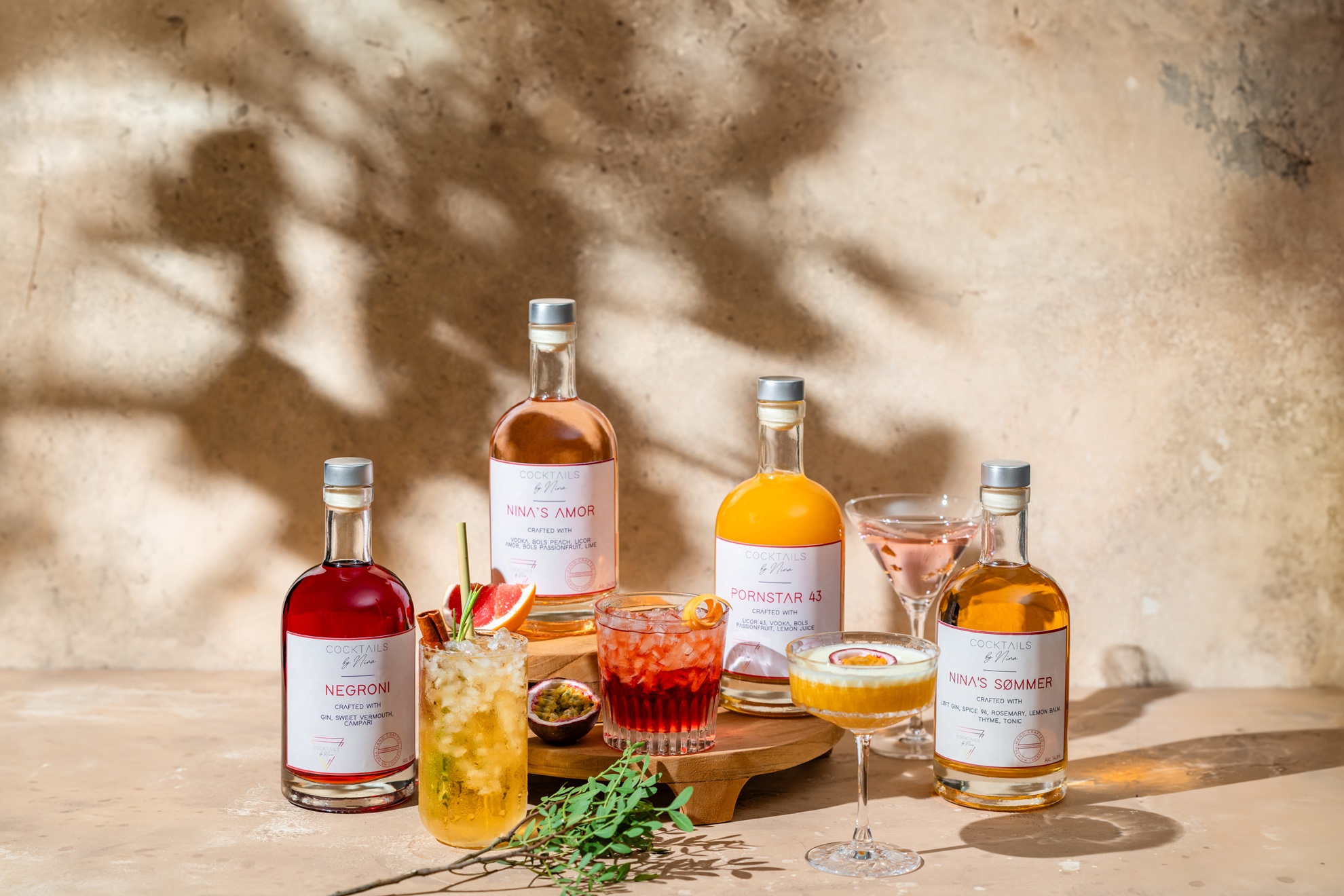
Cocktailsbynina's mocktails are prepared with premium ingredients and offer the complexity of a professional bar, without you having to steep, strain, or time anything yourself. Perfect for a party, birthday, or just a relaxing evening at home. Also check out the cocktail boxes for a complete drink experience as a gift or for a special occasion.
Frequently asked questions
What is the difference between infusion and tea?
Infusion is a preparation technique where ingredients are steeped in liquid. Tea is a drink made from the tea plant Camellia sinensis and always contains caffeine, while herbal and fruit infusions are caffeine-free.
How long should a cold infusion steep?
Cold infusions steep best for 1–8 hours in the refrigerator, depending on the desired flavor intensity. Steeping times vary by season and ingredient: spring and summer require 2–4 hours, specialized infusions sometimes up to 24 hours.
Why does my infusion taste bitter?
Bitterness arises from overextraction: the ingredients have been in the liquid for too long. Always remove all solid ingredients immediately after the recommended steeping time, even if the infusion is still in the refrigerator.
Can I use infusions in cocktails and mocktails?
Yes. An infusion works excellent as a base liquid or flavoring in cocktails and mocktails. A lavender infusion in tonic water with lemon is already a complete mocktail without extra ingredients.
Are fresh or dried herbs better for infusions?
Fresh herbs yield more intense and fresher aromas. Dried herbs are more concentrated and practical for longer storage. When using dried varieties, use less than fresh, and adjust the steeping time to avoid bitterness.