Start with one main flavor, add a counterpoint, and ensure textural contrast. That’s the shortest version of what works. Salt enhances umami and suppresses bitterness; acid cuts through fat and lightens a dish; sweetness tempers sharpness or acidity. Anyone who understands these three principles will immediately cook more interestingly, even without culinary training.
Try it now: prepare a plate with a sweet element (a slice of pear or a teaspoon of honey), an acidic element (a few drops of lemon juice or a pickle slice), and a salty element (a flake of sea salt or a piece of Parmesan). Taste them separately, then together. What you feel is balance in action.
- One main flavor guides the dish.
- A counterpoint (sweet against sour, salty against bitter) creates tension.
- Textural contrast maintains interest.
Pro-tip: Keep a small notebook handy while cooking. Write down what you add and what its effect is. After ten cooking sessions, you’ll have a personal flavor diary more valuable than any cookbook.
Table of Contents
- What do the basic flavors do for your dish?
- What makes a flavor combination successful?
- Which tools help you practice systematically at home?
- A 3-step practice routine of 30 to 60 minutes
- What does science say about food pairing?
- Key Insights
- Practice works, but don't expect miracles on day one
- A drink to complete your tasting meal
- Useful resources for further reading
What do the basic flavors do for your dish?
The five recognized basic flavors are sweet, sour, salty, bitter, and umami. Fat is considered a sixth sensory layer by some researchers, but the five are the foundation for every home cook. Each has a specific function in the whole.
| Flavor | What it does | Home example |
|---|---|---|
| Sweet | Tempers acidity and sharpness, adds roundness | Honey, ripe tomato, carrot |
| Sour | Cuts through fat, cleanses the palate | Lemon juice, vinegar, yogurt |
| Salty | Enhances all other flavors, suppresses bitterness | Sea salt, soy sauce, capers |
| Bitter | Adds depth and complexity, stimulates saliva | Arugula, coffee, dark chocolate |
| Umami | Adds depth and savoriness, reduces salt need | Parmesan, mushrooms, tomato |
Salt is the most versatile tool: it suppresses bitterness and enhances umami simultaneously. Sour has a different power. It cleanses the palate after a fatty bite, making the next bite feel as fresh as the first. Flavor balance is achieved by employing contrasts: sweet against sour or bitter, salt as an enhancer, sour as a cleanser.
Umami deserves extra attention. Ingredients like tomato, Parmesan, mushrooms, and seaweed are rich umami sources that add depth without needing more salt. Add a teaspoon of tomato paste to a stew, and you'll taste the difference immediately.
What makes a flavor combination successful?
Balance doesn't mean all flavors are equally strong. It means no single flavor shouts so loud that the rest disappear. A good dish has a main voice and a few supporting voices that either reinforce or contrast with that main voice.
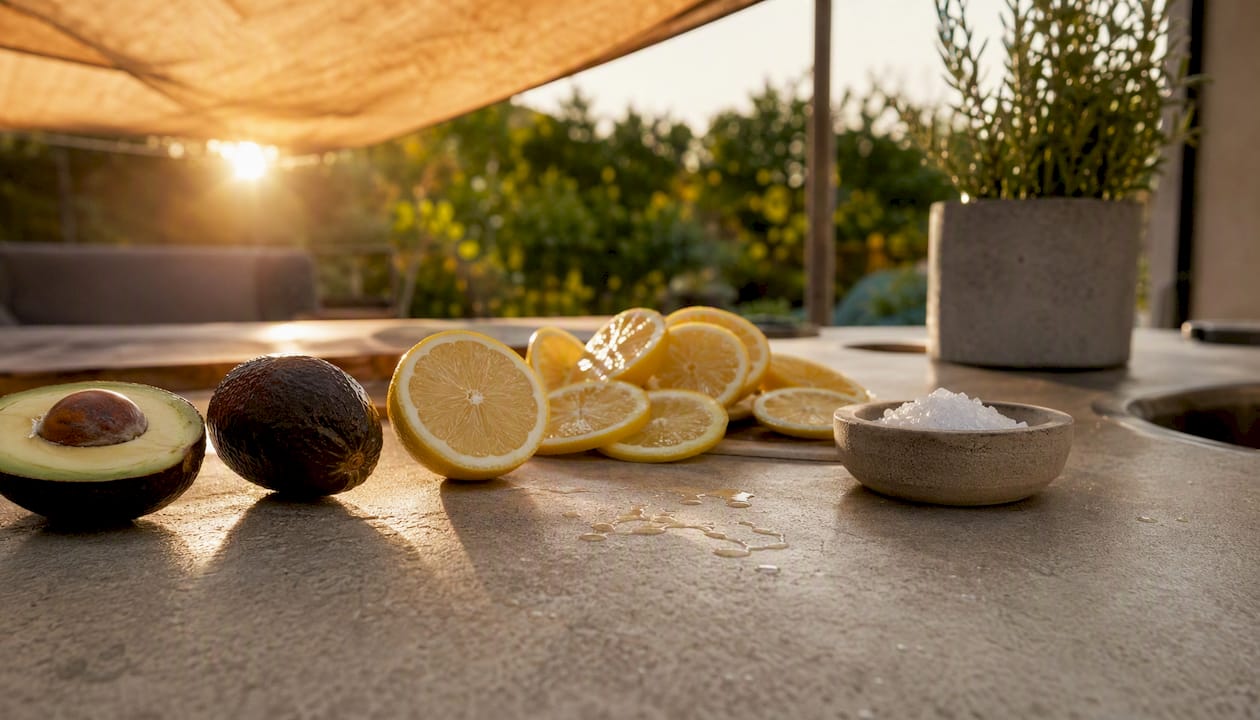
Contrast and harmony are two different strategies. Harmony works by choosing flavors that move in the same direction: creamy, mild, soft. Contrast works by creating tension: a sharp acidity next to something rich and fatty. Which you choose depends on the effect you want. A comforting dish calls for harmony; a dish that keeps you awake calls for contrast.
Timing is underestimated. Experienced chefs build flavor during preparation by adding acid at the right moment, not just at the end. Lemon juice halfway through cooking gives a different depth than lemon juice as a finishing touch. The same goes for salt: adding it early draws moisture from vegetables and concentrates flavor; adding it late gives a sharper, more direct saltiness.
Pro-tip: Taste your dish in three phases: after the first cooking moment, halfway through, and just before serving. Each phase requires a different correction. This way, you learn how flavors develop under heat.
Which tools help you practice systematically at home?
A flavor wheel provides structure to something that would otherwise remain vague. The SCA Flavour Wheel, developed for specialty coffee, moves from broad categories (fruity, floral, nutty) to precise aroma descriptions. Home cooks can use the same model for any ingredient: start with the broad category and work towards the specific. This gives you a shared language to describe what you taste.
- Compare sequentially. First taste A, rinse your mouth with water, then taste B. Sensory studies show that sequential tasting (one by one, with water in between) yields more reliable results than tasting everything at once.
What you need: a small notebook, a few small spoons or dishes, and a glass of water to neutralize your palate. Nothing more.
Pro-tip: Build an odor library by regularly smelling ingredients purely before use. Smell a fresh lemon, then a dried one, then lemon zest. After a few weeks, you'll recognize nuances you previously missed. Smell is responsible for 80% of what you perceive as taste.
A 3-step practice routine of 30 to 60 minutes
Step 1: Tasting (10–15 minutes)
- Prepare five ingredients, each representing a different basic flavor: a piece of dark chocolate (bitter), a lemon slice (sour), a flake of sea salt (salty), a teaspoon of honey (sweet), and a piece of Parmesan (umami).
- Taste each separately, noting three words per flavor.
- Combine two flavors and note what changes.
Step 2: Small-scale cooking (15–30 minutes)
- Grill a few pieces of vegetables (zucchini, bell pepper, or broccoli).
- Divide them into three small portions.
- Portion 1: salt only. Portion 2: salt and lemon juice. Portion 3: salt, lemon juice, and a few drops of soy sauce.
- Taste sequentially with water in between.
Step 3: Evaluation (5–10 minutes)
- Which portion tasted the most complete?
- What was missing in portion 1?
- What did the soy sauce do that the lemon juice didn't?
Repeat this routine once a week with a different central ingredient. After a month, you'll notice that you automatically think in terms of balance and contrast while cooking.
Checklist for each practice session:
- Sweet tested?
- Salty tested?
- Sour tested?
- Umami tested?
- Bitter tested?
- Textural contrast added?
What does science say about food pairing?
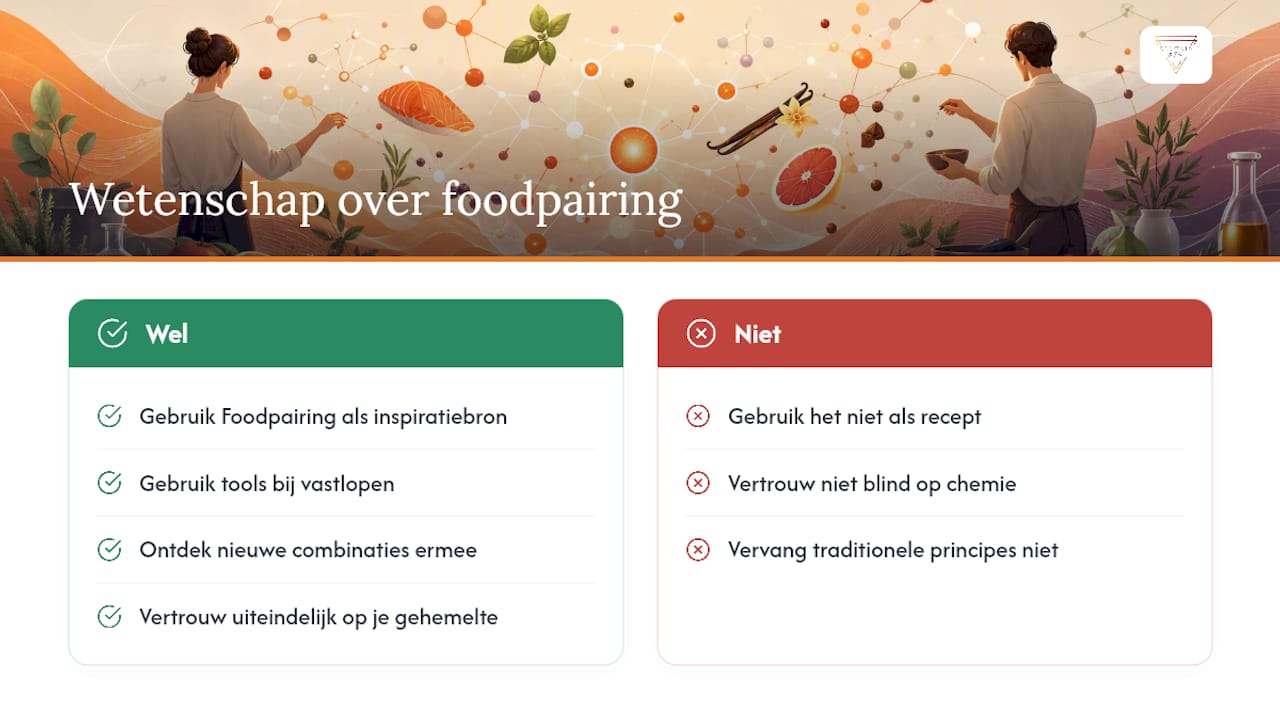
Food pairing theory states that ingredients sharing many aroma molecules combine well. Foodpairing.com built a database on this with visual "pairing trees" showing which ingredients are chemically related. The idea is appealing, and the tool is useful as a source of inspiration.
But the theory has limitations. Large-scale data analyses show that Western cuisines indeed more often combine ingredients that share aroma molecules, while East Asian cuisines seek out contrasts and still taste excellent. Chemical similarity does not predict universal success.
Food pairing works best as a source of inspiration, not as a recipe. Use it to discover new combinations, but ultimately trust your own palate.
The practical conclusion: use food pairing tools when you're stuck or looking for new ideas. Use traditional balance and contrast principles when you want to perfect a dish. The two complement each other.
Key Insights
Combining flavors at home starts with one main flavor, a conscious counterpoint, and textural contrast: these three elements together elevate a dish from good to unforgettable.
| Point | Details |
|---|---|
| Start with the basic flavors | Sweet, sour, salty, bitter, and umami are your toolkit; learn what each does before combining. |
| Use balance and contrast | Harmony brings calm; contrast creates tension. Consciously choose the effect you want for each dish. |
| Texture is not secondary | Add something crunchy or refreshingly tart to every soft element for an engaging taste experience. |
| Practice sequentially | Taste one by one with water in between for reliable results, as sensory studies recommend. |
| Cocktailsbynina as tasting partner | A ready-made mocktail from Cocktailsbynina provides a consistent flavor reference alongside your tasting meal. |
Practice works, but don't expect miracles on day one
Taste is personal, and that's precisely what makes it interesting. What's too sour for one person is just right for another. This doesn't mean there are no rules, but rather that these rules are a starting point, not an endpoint.
What I notice in the kitchen: one extra touch of acidity at the end of cooking changes a dish more than an extra half hour of simmering. A few drops of lemon juice or a dash of vinegar just before serving elevates a stew or soup to another level. Not because it's magic, but because acid awakens the palate and makes all other flavors stand out more sharply.
Start small. Choose one principle per cooking session and practice it until it becomes second nature. Then add the next. Anyone who tries one new combination each week will have a flavor memory after three months that makes most cookbooks superfluous.
A drink to complete your tasting meal
When practicing flavor combinations at home, there's one thing you don't want: a drink that distorts the tasting results. Alcohol affects your taste perception; an overly sweet soda overpowers subtle nuances.

The ready-made mocktails from Cocktailsbynina are exactly what you need for a tasting session: consistent in flavor, ready to serve immediately, and alcohol-free so your palate remains clear. Choose a fresh and tangy variant alongside a savory dish, or a lightly sweet mocktail with a bitter combination. Cocktailsbynina also offers alcohol-free cocktails that you can use as a flavor reference: what does a citrus note do next to grilled vegetables? What does a spicy element do next to something rich in umami? Order a tasting set and discover it for yourself.
Useful resources for further reading
For those who want to delve deeper, here are the most reliable starting points:
- Getting to Know the Five Basic Flavors (Kookuniversiteit): clear explanation of the five basic flavors with practical home examples. Start here if you want to understand the theory.
- Flavor Balance: Mastering Flavor Science (Gusto Webzine): practical rules for balance and contrast, directly applicable in the home kitchen.
- Which Flavors Can You Combine? (Restaurant Ludique): chef's perspective with concrete combinations and practice tips for home.
- Umami Explanation (Gistextract): in-depth explanation of umami-rich ingredients and how to use them as flavor enhancers.
- Food-pairing: Science and Inspiration (Flanders Food): nuanced view on food pairing tools and their practical value, including an explanation of aroma wheels.
- The flavor network and the principles of food pairing (Nature Scientific Reports): the scientific article behind food pairing theory, with data on cultural differences in flavor combinations.
- Review on flavor pairing and methods (Current Opinion in Food Science): academic overview of methods and limitations; useful if you want to take the theory seriously.
- PLOS One tasting studies: research on sequential versus mixed tasting; relevant for anyone who wants to set up their own tasting protocol.
- Zooming in on taste and texture (NRC): journalistic piece on how chefs build taste and texture during preparation; accessible and directly applicable.