The most effective approach for event beverage styling combines one strong theme, a social-first photo opportunity, and a smart service layout. Three concepts that work immediately: a signature mocktail bar with branded garnishes, a pop-up prosecco corner with LED lighting, and a zero-proof cocktail counter with recognizable props. Count on at least one bartender per guest group and turn on refrigeration well in advance. Ready-to-drink beverages from Cocktailsbynina save hours of preparation and maintain consistent quality, from the first guest to the last.
According to Tap & Joy, 80% of all necessities should be within one and a half steps of the bar. This may sound like a detail, but it determines whether your bartender smoothly serves 200 guests or constantly stumbles over their own setup.
Table of Contents
- Which beverage styling concepts work best for your event?
- How do you make a beverage concept Instagram-worthy?
- What do you really need to plan for logistics and budget?
- How do you choose the right beverage formats and presentation style?
- Three mini-cases you can copy directly
- Key insights
- Why most beverage styling concepts fail on the night itself
- Cocktailsbynina handles the drinks, you handle the rest
- Useful resources for further study
Which beverage styling concepts work best for your event?
Ten concepts, each with a clear application moment:
-
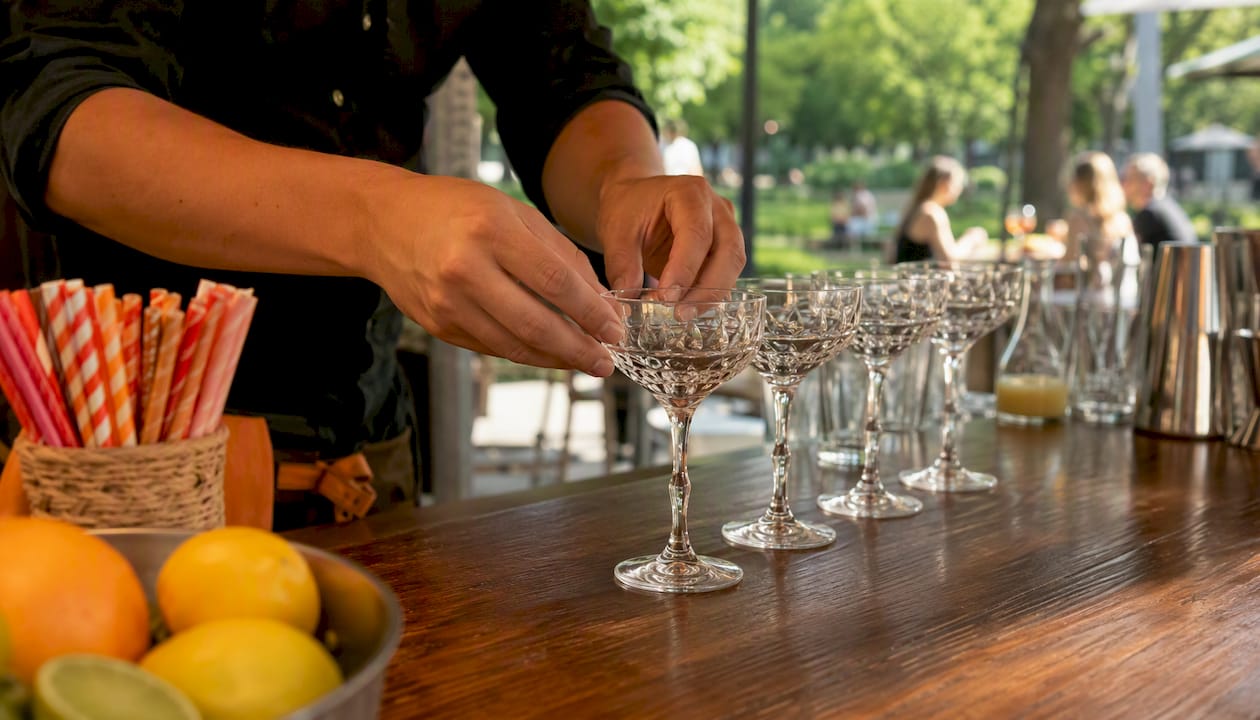
Signature mocktail bar: One non-alcoholic menu with three to four house cocktails, presented on a wooden counter with fresh herbs and edible flowers. Works excellently for inclusive corporate mixers and product launches. One bartender comfortably serves 50 guests. Choose tall, narrow glasses for maximum visual impact in photos.
-
Pop-up prosecco corner: A compact setup with a champagne tower or bottle rack, programmable LED lighting, and a chalkboard with the daily menu. Ideal for networking events and anniversaries. Quick to set up in 45 minutes, minimal staff needed.
-
Zero-proof cocktail counter: Fully non-alcoholic station with ready-to-serve bottles, garnish display, and a clear menu on a standing board. Indispensable for hybrid events where some of the audience does not drink. Non-alcoholic cocktails from Cocktailsbynina fit right in without extra preparation time.
-
Themed bar with color palette: Choose one dominant color (e.g., terracotta or deep green) and carry it through in glassware, napkins, and garnishes. One accent color keeps photos cohesive and reinforces brand memory, as Curated Events demonstrates.
-
Mobile bar on wheels: A movable bar that travels through the space increases guest interaction and creates spontaneous encounters. Works well for large galas and trade shows. Plan the route in advance and ensure a level floor.
-
Cocktail tower or pyramid arrangement: Stacked glasses filled with one signature drink create a visual anchor point that draws guests to the bar. Strong for welcome moments and weddings.
-
Gin & tonic bar with botanicals display: An open setup with five to six botanicals in glass jars, allowing guests to choose their own combination. High engagement, longer stay at the bar. Allow for sufficient counter length per number of guests for comfortable service.
-
Shots station for energy moments: Small shots on a tray or in a display rack, ready to be taken. Works as an icebreaker at team-building events. The Cocktailsbynina shot box is ready to use without extra preparation.
-
Welcome drink corner: Guests receive a pre-poured glass upon arrival. Reduces queues at the main bar and immediately sets the atmosphere of the event. Use one recognizable glass or color to enhance the look.
-
Cocktail box as a table drink or VIP gift: Small cocktail boxes per table or as a corporate gift provide a personal touch without extra staff. The four-piece cocktail box from Cocktailsbynina suits corporate events and product launches.
Pro-tip: Glassware cohesion is the most underestimated styling tool. Choose one glass type per station and adhere to it consistently. Mixed glassware looks chaotic in photos, even if the rest of the styling is correct.
Business events in 2026 are increasingly about experience and customization, with a growing preference for personalized menus and digital orders, as Catering Culinair indicates. This makes a recognizable, thematic beverage concept no longer a luxury, but an expectation.
How do you make a beverage concept Instagram-worthy?
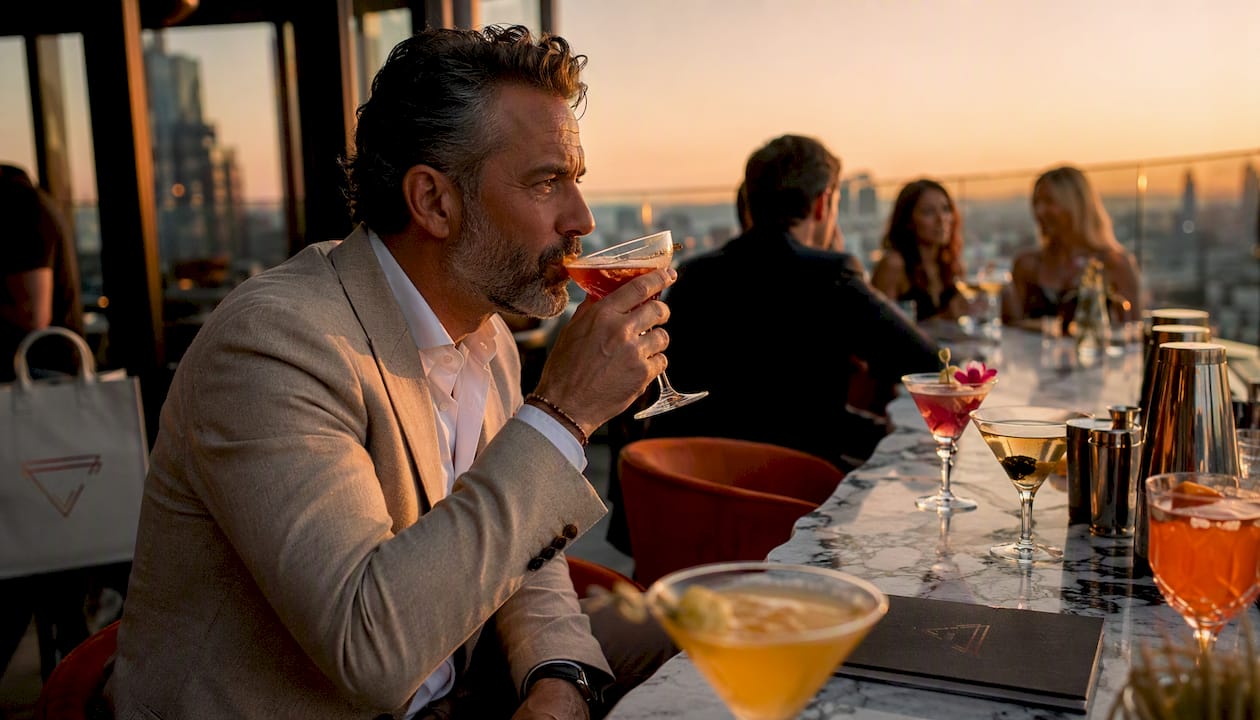
Social-first elements not only increase the reach of your event, but also ensure organic visibility long after the evening itself. A pop-up bar with a well-thought-out content corner creates brand memory that is difficult to buy with paid advertisements, as the BASMA case for Amazon Prime shows.
Checklist for a photogenic bar setup:
- Photo point: One fixed spot with a striking background (neon sign, flower wall, branded backdrop). Place it 1.5 meters from the bar so guests are not in the way.
- Lighting: Programmable LEDs in the brand color or a warm 2,700K spot above the bar. Light temperature determines how a cocktail appears in photos.
- Props: Two to three recognizable objects that fit the theme (e.g., a vintage bottle rack, a chalkboard with a menu, a branded ice bucket). Less is more.
- Signage: A small sign with the event name or hashtag, placed at the photo point. Guests will automatically photograph it.
- Service flow: Ensure the bartender always hands over drinks from the same side, so guests automatically turn towards the photo point.
Hashtag and UGC approach:
- Choose one short, unique hashtag for the event and print it on napkins, menus, and the photo point sign.
- Organize a simple contest: the best photo wins a cocktail box. Low cost, high participation.
- Repost guest photos live on a screen next to the bar. This encourages more people to post.
Pro-tip: One recognizable prop works better than ten separate decorative elements. A large neon letter or a striking cocktail shaker that guests can hold is more likely to go viral than a fully styled bar without a clear anchor point.
What do you really need to plan for logistics and budget?
Start with technology and refrigeration, then the functional layout, only then styling. That order sounds obvious, but most problems on the night itself arise because someone turned on the refrigerator too late or didn't test the tap. Turn on refrigeration units at least two hours before the event and always test tap installations with water.
Timeline on the day itself:
| Moment | Action |
|---|---|
| T-4 hours | Turn on cooling, check ice supply |
| T-2 hours | Test tap with water, polish glassware |
| T-1 hour | Cut garnishes, bar test with first drink |
| — | Check lighting and photo point |
| — | Pour welcome drinks, bar opens |
| Afterwards | Turn off cooling, inventory remaining stock |
Budget bands (indicative, excluding drinks):
- Basic (up to €500): Simple glassware, one light source, chalkboard as signage, one bartender.
- Mid-range (€500–€1,500): Rented furniture, LED lighting, branded backdrop, two bartenders for larger groups.
- Premium (above €1,500): Custom furniture, programmable lighting, professional photo point setup, multiple stations.
Staffing and space standards:
| Scale | Bartenders | Workspace per station |
|---|---|---|
| Up to 50 guests | 1 | 80–100 cm |
| 50 guests | 1 | 80–100 cm |
| 150 guests | 3 | 80–100 cm per station |
| For large events, at least one bartender per 50 guests is required, with a workspace behind the bar of 80–100 cm for smooth operation. |
Permits and responsible serving:
- Always check local regulations for alcohol service at your location and event type.
- For public events, an exemption based on the Alcohol and Catering Act is often required; check this with the municipality.
- Appoint one responsible person for age verification and alcohol policy.
- Consider a combined catering and beverage partner: an integrated approach saves coordination and provides a cohesive guest experience.
How do you choose the right beverage formats and presentation style?
Choose formats based on the target audience and the desired flow. A standing networking event calls for quick, simple drinks that guests can hold with one hand. A seated dinner requires a bit more variety and a longer menu. The distinction between the four main formats:
- Signature cocktails: Custom-made, high visual impact, requires experienced bartender and more preparation.
- Mocktails: Inclusive, suitable for all target groups, strong in combination with a non-alcoholic bar. Ready-to-drink mocktails from Cocktailsbynina are immediately usable.
- Ready-to-serve bottles: Fastest option, minimal staff needed, ideal for welcome drinks and large quantities.
- Tap systems: High throughput, requires technical installation and prior testing.
Sample menu for three stations:
- Welcome station: Aperol Spritz or non-alcoholic alternative, poured into a wine glass, ready upon arrival.
- Signature cocktail station: One house cocktail (e.g., a spicy gin and tonic or a fruity mocktail), prepared à la minute or from a ready-to-serve bottle.
- Non-alcoholic bar: Three mocktails in tall glasses with garnish, clearly labeled, self-service option possible.
Pro-tip: Standardize garnishes per station: one garnish per drink, always in the same place on the glass. This speeds up service and ensures consistent photos. A slice of lemon on the rim looks just as good on 200 glasses as on the first.
Polished metals such as brass or stainless steel combine well with crystal glass for a luxurious look. Velvet works with matte surfaces, but avoid shiny bars with highly reflective fabrics next to each other, as this creates restless photos.
Three mini-cases you can copy directly
Product launch, 120 guests: A tech company opted for a zero-proof cocktail counter with three mocktails in brand colors. All drinks were ready-to-serve, meaning one bartender was sufficient for the entire evening for a maximum of 50 guests per station. Guests shared photos with the branded backdrop in the background. Lesson: ready-to-serve drinks halve the required staff for medium-sized events.
- Adaptation tip for 50 guests: Reduce to two mocktails and one bartender. Same concept, lower cost.
- Adaptation tip for 300 guests: Add a second identical station on the other side of the room. No extra concept development needed.
Pro-tip: Two identical stations on opposite sides of a large room reduce queues without needing to adapt the concept. Guests will naturally spread out.
Wedding, 200 guests: A welcome drink corner with prosecco and a non-alcoholic alternative at the entrance. Guests did not have to go to the bar, which significantly improved the flow upon arrival. The six-piece cocktail box was used as a table drink for tables of six.
- Adaptation tip: Replace prosecco with a house cocktail for a more personal touch without higher costs.
Corporate mixer, 80 guests: A gin & tonic bar with a botanicals display created conversation and extended stay at the bar. Guests took photos of their own combinations and shared them with the event hashtag. Result: organic social shares without extra marketing budget.
- Adaptation tip for smaller budgets: Limit botanicals to three options. Fewer choices speed up decision-making and service.
Pro-tip: An interactive element like a botanicals display or a garnish choice increases UGC more than a beautiful backdrop alone. Guests want to show something they did themselves.
Key insights
The most effective event beverage styling combines one strong theme, a social-first photo opportunity, and a logistically sound service layout, where ready-to-drink beverages speed up execution and ensure quality.
| Point | Details |
|---|---|
| Service logistics first | Turn on refrigeration two hours before start and test the tap with water before starting styling. |
| One bartender per 50 guests; workspace behind the bar 80–100 cm | Plan staff based on sufficient workspace per station and scale stations accordingly for larger numbers. |
| One photo point, one hashtag | Choose one fixed spot with a branded backdrop and print the event hashtag on napkins and signage. |
| Ready-to-serve saves staff | Ready-to-drink beverages reduce preparation time and maintain consistent quality during high throughput. |
| Cocktailsbynina as implementation partner | Mocktails, cocktail boxes, and catering services from Cocktailsbynina are directly applicable for events of any size. |
Why most beverage styling concepts fail on the night itself
Planners spend hours on the visual aspect of a beverage concept and forget that a beautiful bar that functions poorly frustrates guests. A ten-minute queue erases any positive feeling about the styling. The mistake is almost always in the order: styling first, then logistics. That's backward.
The Golden Triangle, where the refrigerator, mixing area, and glassware are within one and a half steps, is not a theory but a practical standard that professionals have used for years. Whoever reverses that order and only discovers on the day itself that the refrigerator is too far away will pay for it with slow service.
Another common pitfall: too many concepts at one event. Three different bar styles in one evening look confusing and require more staff than necessary. One strong concept, consistently implemented in glassware, lighting, and garnishes, makes a bigger impression than five half-baked ideas side-by-side.
Cocktailsbynina handles the drinks, you handle the rest
Ready-to-drink cocktails and mocktails from Cocktailsbynina take care of the heaviest logistical work: no mise-en-place, no inventory risk, no bartender cancelling at the last minute because the ingredients are wrong. You order, you chill, you serve.
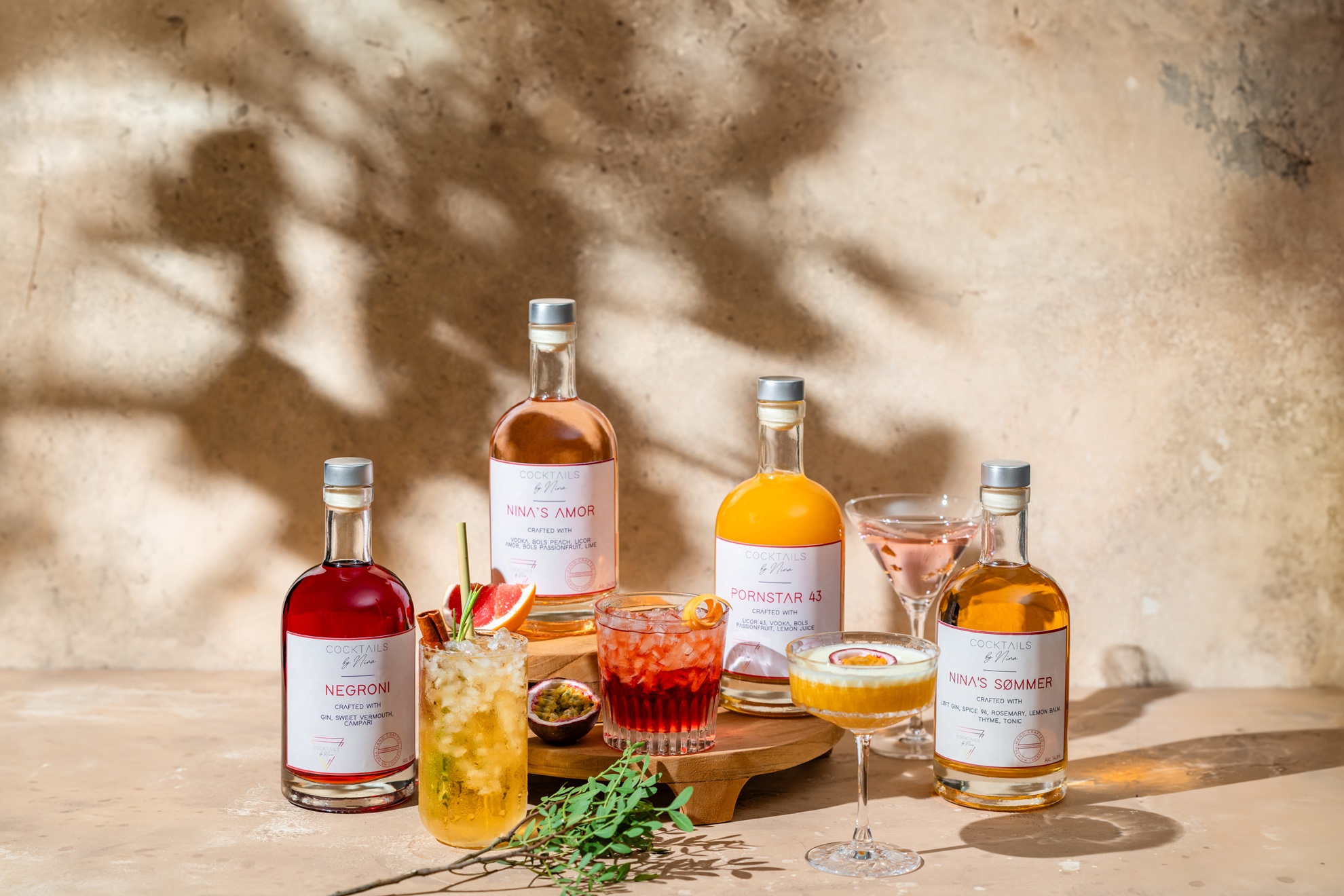
The assortment ranges from alcohol-free cocktails for inclusive events to cocktail boxes as table drinks or corporate gifts. For larger events, customized options and catering services are available, so you have one point of contact for the entire beverage section. This saves coordination and prevents miscommunication between suppliers.
View the full range of ready-to-drink mocktails or request a quote for your event directly via the webshop.
Useful resources for further exploration
A brief selection of reliable sources for planners who want to delve deeper:
- Setting up a party bar step-by-step: complete guide – Tap & Joy: practical guidelines for bar setup, staff norms, and cooling.
- How to Style a Luxury Event Bar – Curated Events: material and lighting advice for luxury bar styling.
- BASMA — Roddel Borrel Bar Amazon Prime: case study for social-first brand activations with pop-up bars.
- Creating a drink experience for home parties – Cocktailsbynina: visual presentation tips and inspiration for cohesive drink concepts.
- Ready-to-drink alternatives for every party – Cocktailsbynina: overview of the ready-made assortment with application examples.
- Characteristics of food & beverage events in 2026 – Frietkar.nl: current trends in visual beverage styling and presentation for events.
- Types of catering concepts for every event – Frietkar.nl: overview of catering concepts and practical feasibility per event type.