A drink experience is the combination of taste, presentation, and ambiance that completely immerses guests in a cocktail moment. With the right approach, you can create an experience at home or at a party that rivals professional bars. This drink experience creation guide gives you concrete steps for recipe development, drink menu construction, and presentation techniques. You'll learn to work with tools like a cocktail shaker, jigger, and muddler, and discover how garnishes and storytelling make the difference between an ordinary drink and an unforgettable evening.
What do you need for a successful drink experience?
The basis of every good cocktail experience lies in three things: the right spirits, fresh ingredients, and professional tools. Without these three pillars, the result remains unpredictable, no matter how good your recipe is.
Essential spirits and mixers
For a party, choose at least four basic spirits: vodka, gin, rum, and tequila. These four cover most classic and modern cocktail recipes. Add standard mixers such as tonic, ginger beer, freshly squeezed lemon juice, and sugar syrup. Premium ingredients make the difference between a bland cocktail and one that guests will ask for the recipe.
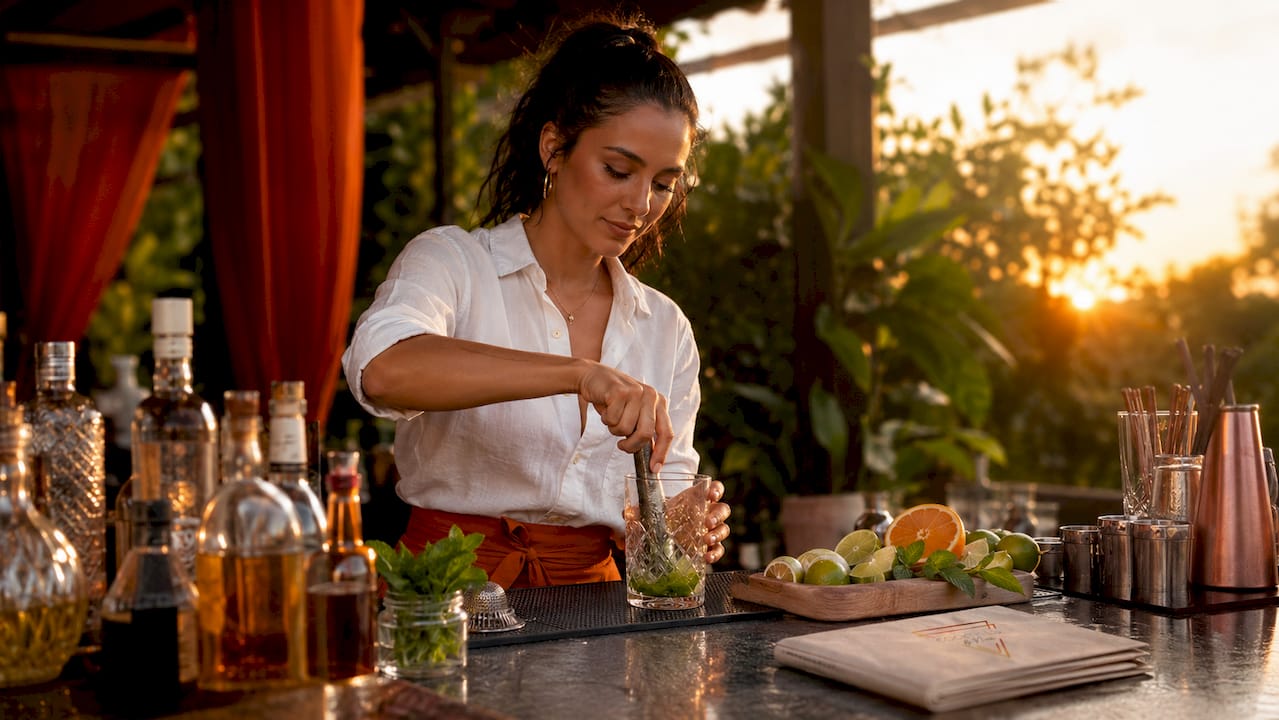
Fresh ingredients are not a luxury but a requirement. Freshly squeezed lime juice tastes fundamentally different from bottled versions. Fresh mint, basil, and rosemary add aroma that you won't get from a bottle.
Tools you really need
| Tool | Function | Priority |
|---|---|---|
| Boston shaker | Mixing and cooling cocktails | Essential |
| Jigger (25/50 ml) | Accurate measurement of volumes | Essential |
| Hawthorne strainer | Straining ice and pulp | Essential |
| Muddler | Mashing fruit and herbs | Recommended |
| Bar spoon | Stirring stirred cocktails | Recommended |
| Citrus press | Squeezing fresh juice | Recommended |
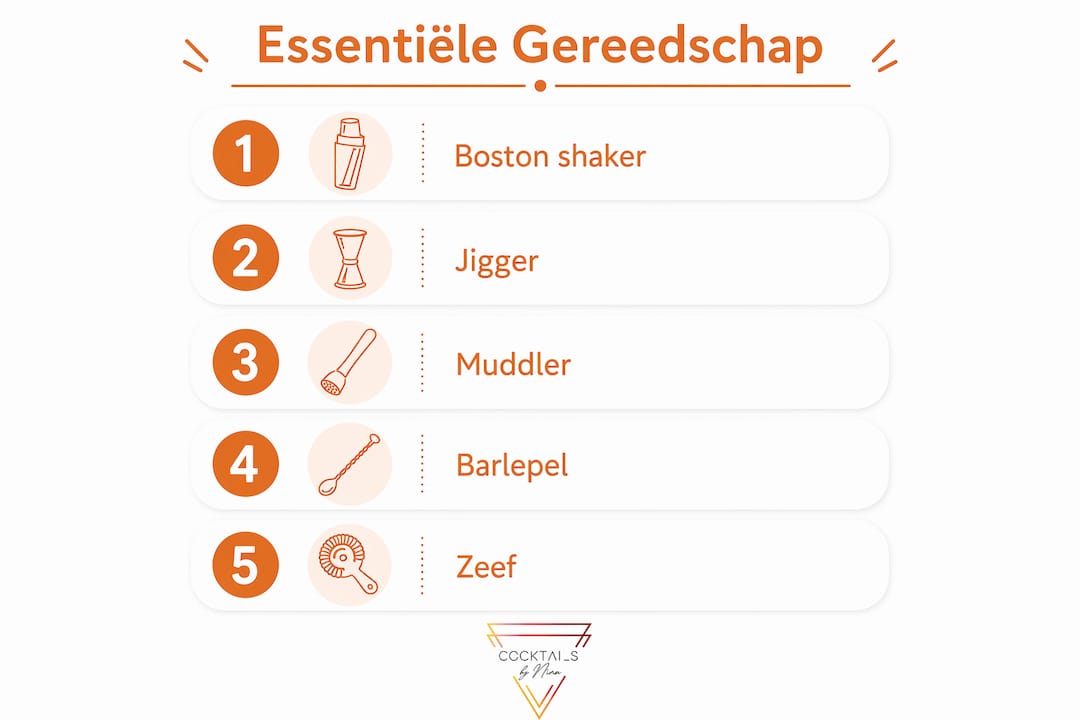
Cheap tools yield inconsistent results. A quality Boston shaker from brands like Cocktailkingdom or a similar professional line costs more, but lasts for years and provides better cooling.
Pro-tip: Chill your glasses in the freezer for at least 15 minutes before serving. A cold glass keeps the cocktail at temperature longer and makes the presentation instantly more professional.
How do you develop a cocktail recipe step by step?
You develop a balanced cocktail recipe systematically, not by feel. Recipe development typically takes 2 to 4 weeks, with multiple test rounds and feedback from others as fixed parts of the process.
Follow these steps for a recipe that works every time:
-
Choose your base spirit. The base spirit accounts for 50–60% of the total volume. This is the backbone of your cocktail. Everything you add afterwards supports or contrasts with this flavor.
-
Add a maximum of three accents. Start with an acidic element (lemon juice), a sweet element (syrup or liqueur), and optionally a bitter or spicy accent. More than four ingredients in a first version makes it impossible to understand what effect each has.
-
Taste after each addition. Add accents in small quantities of 5–10 ml. Taste in between and write down what you taste. Document every ingredient, every quantity, and every flavor note.
-
Test with others. Your palate is subjective. Have at least three people taste and specifically ask about sweetness, acidity, and the finish. Process this feedback in the next iteration.
-
Refine the balance. The classic cocktail balance is 2:1:1, two parts spirit, one part acid, one part sweet. This is a starting point, not a law. Adjust based on your test results.
-
Only scale up when the recipe is stable. Scaling up directly without testing is the biggest pitfall in cocktail development. A recipe that works for two glasses behaves differently in a ten-liter batch.
-
Document the final recipe completely. Note not only ingredients and proportions, but also technique (shaken or stirred), ice type, and garnish instructions. This way, you can reproduce the result every time.
Syrups play an underestimated role in this process. Homemade syrups of lavender, hibiscus, or ginger give your cocktail a unique character that ready-made variants cannot match. Make them yourself by boiling equal parts sugar and water with your flavor enhancer, and store them in the refrigerator for a maximum of two weeks.
Pro-tip: Use bitters as a flavor enhancer, not as a main flavor. Two to three drops of Angostura or Peychaud’s bitters add depth without disrupting the balance. Consult the cocktail terminology guide if you are not yet familiar with terms like “float”, “muddle” or “dry shake”.
How do you put together a drink menu for your party?
A good party drink menu is more than just a list of drinks. It is a curated choice that suits your guests, your theme, and your own capacity as a host.
A complete drink menu contains five categories: alcoholic beverages, basic cocktails, non-alcoholic options, mixers, and garnishes. Each category has a function, and together they ensure a menu that excludes no one.
| Type of drink | Application | Area of attention |
|---|---|---|
| Signature cocktail | Identity of the party | Make one that fits the theme |
| Classic cocktail | Recognizable for guests | Choose a maximum of two classics |
| Mocktail | Non-drinkers and drivers | Give it as much attention as cocktails |
| Wine and beer | Accessible choice | Ensure at least one red, one white |
| Soft drinks and water | Basic for everyone | Always present, never forgotten |
Balance between alcoholic and non-alcoholic is not a trivial matter. Expect at least 20–30% of your guests to not drink alcohol or to want less. A mocktail that looks just as beautiful as a cocktail gives those guests the same feeling of attention.
Practical tips for your drink menu:
- Limit yourself to a maximum of five cocktails. More choice leads to longer waiting times and more waste.
- For each cocktail, write down the flavor profile: sweet, fresh, spicy, or dry. Guests choose faster if they know what to expect.
- Add a QR code that links to the recipes or a short video of the preparation. This acts as a conversation starter and gives your menu a modern look.
- Mention allergens and alcohol percentages, especially at larger parties.
More concrete tools for composing your drink menu can be found in Cocktailsbynina's comprehensive guide.
Which presentation tips make your cocktails unforgettable?
Presentation is the first thing guests see before they taste. A cocktail that looks good already tastes better before the glass touches the lips. This is not psychology but a proven effect of visual expectation on taste perception.
The biggest mistake in a thematic drink experience is focusing only on the drinks. Everything, from glassware and music to the host's clothing, must align with one central story. A tropical theme requires Hurricane glasses, reggae music, and a bartender in a Hawaiian shirt. A speakeasy evening calls for coupe glasses, jazz music, and subdued lighting.
Glassware as a presentation instrument
Every cocktail type has its ideal glass. A Margarita in a Martini glass looks awkward and also changes the taste experience. Use highball glasses for long drinks, coupe or Martini glasses for stirred cocktails, and rocks glasses for cocktails with ice. Professional cocktail glasses are not an unnecessary luxury. They partly determine how guests experience the cocktail.
Garnish as a flavor and aroma enhancer
Fresh herbs that you clap release aromas that directly enhance the taste experience. Briefly clap a sprig of rosemary or mint between your palms before placing it on the cocktail. The essential oils are released, and the guest smells the aroma even before the first sip. This is not a trick but a technique used by every professional bartender.
Other garnish ideas that work:
- Frozen fruit as an ice cube substitute: looks beautiful and doesn't dilute the cocktail.
- Dried citrus slices as a decorative element with subtle bitterness.
- Edible flowers for an elegant, photogenic finish.
- Smoke elements via a smoke gun or an inverted glass with smoke chips for a theatrical effect.
Atmosphere as part of the experience
Storytelling creates connection and depth that distinguishes a luxury drink experience from standard consumption. Tell your guests the story behind a cocktail. Where does the spirit come from? What is the inspiration for this recipe? Even a short thirty-second anecdote makes the cocktail more personal and memorable.
Pro-tip: Create a small menu per glass with the name of the cocktail, the main ingredients, and one sentence about the inspiration. This takes five minutes to make and immediately gives your party a professional look.
Key insights
A memorable drink experience requires the right ingredients, systematic recipe development, and sensory alignment of glassware, garnishes, and atmosphere.
| Point | Details |
|---|---|
| Base spirit as foundation | The base spirit accounts for 50–60% of the volume and determines the flavor direction of each cocktail. |
| Systematic recipe testing | Develop recipes in 2–4 weeks with iterative testing and document every adjustment precisely. |
| Five categories of drink menu | A complete party drink menu always includes alcoholic beverages, cocktails, mocktails, mixers, and garnishes. |
| Garnish enhances aroma | Clap fresh herbs like mint or rosemary before use to release essential oils that directly enhance flavor and scent. |
| Sensory coherence | Glassware, music, and styling must align with one central theme for maximum experience. |
Why attention to detail makes the real difference
I have guided dozens of parties and organized cocktail evenings at home, and every time I learn the same thing: guests don't remember ingredient lists. They remember how they felt. That one cocktail with the smoke cloud. The glass that was already cold before they touched it. The story about the rum that comes directly from a small distillery in Barbados.
What I see in practice is that people tend to want too much. Fifteen cocktails on the menu, ten garnishes, three themes at once. The result is chaos and a host who spends the whole evening behind the bar without seeing their guests. My advice: choose one signature cocktail that you master perfectly, make a story out of it, and serve it with maximum attention. That one moment of perfection is worth more than ten mediocre drinks.
The bar-quality drink tips I use most are also the simplest: chill your glasses, always use fresh juice, and clap your herbs. Three actions that together take five minutes and fundamentally change the experience.
What I've also learned: non-alcoholic options deserve just as much love as cocktails. A mocktail that looks beautiful and tastes complex makes non-drinking guests feel completely included. That is hospitality in its most direct form.
— Ruud
Ready-to-drink cocktails for a perfect home experience
You now know how to build a drink experience from ingredients to presentation. But sometimes you just want to enjoy without spending hours behind the bar. Cocktailsbynina offers bar-quality ready-to-drink cocktails and mocktails, made with premium ingredients and ready to serve.
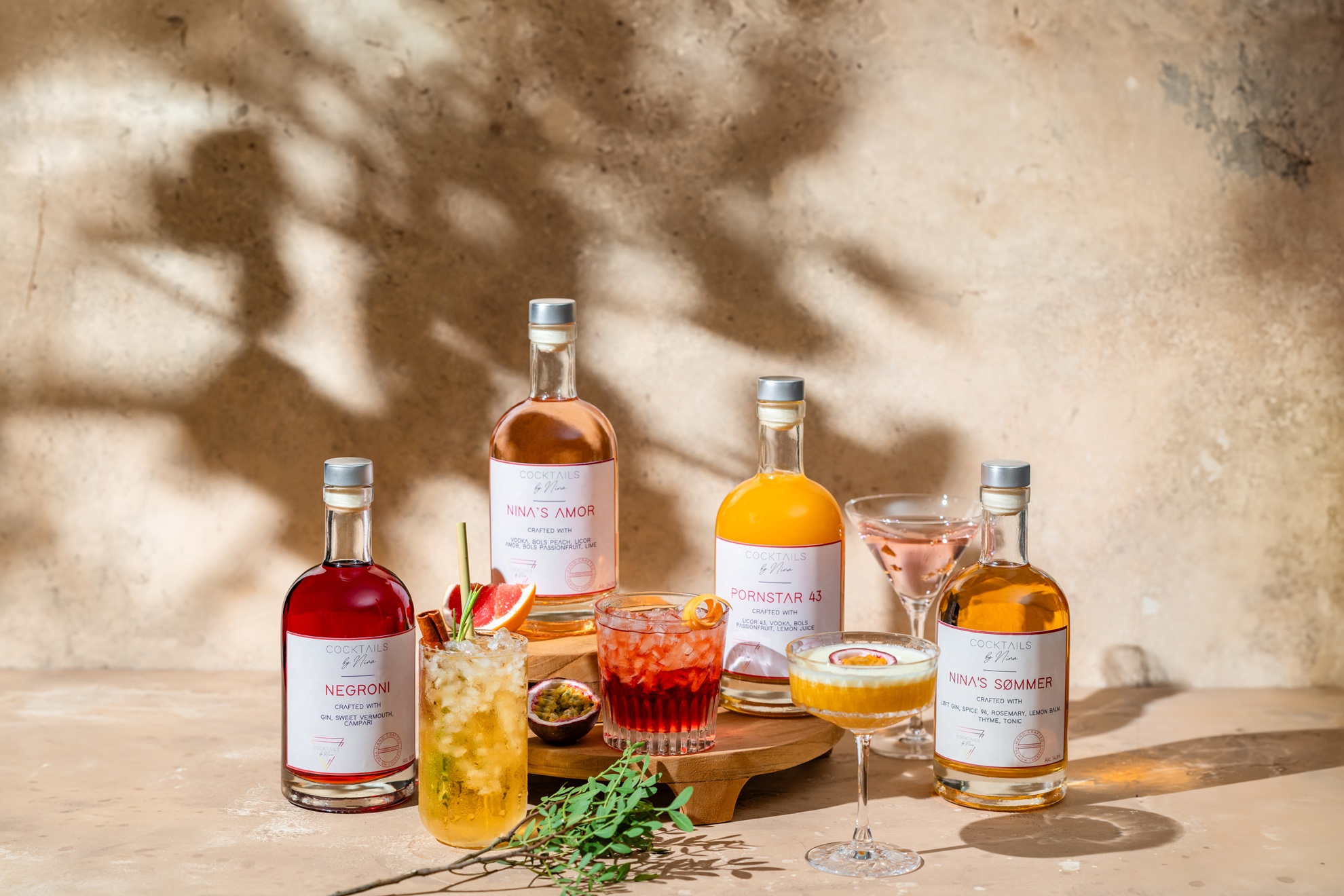
Whether you're organizing an intimate dinner or a big party, Cocktailsbynina's cocktail boxes give you professional taste without the preparation. For guests who don't drink alcohol, Cocktailsbynina offers a complete collection of alcohol-free cocktails that look just as beautiful as their alcoholic counterparts. This ensures that every guest has an equivalent experience.
Frequently asked questions
What exactly is a drink experience?
A drink experience is the combination of taste, presentation, atmosphere, and storytelling surrounding the serving of drinks. It goes beyond simply pouring a drink.
How long does it take to develop a cocktail recipe?
Simple recipes are ready within a few days. Complex creations require 2 to 4 weeks with multiple test rounds and feedback from others.
How many cocktails do I put on a party drink menu?
Limit yourself to a maximum of five cocktails. More choice leads to longer waiting times and more waste during the party.
How do I make garnish professional?
Briefly clap fresh herbs like mint or rosemary between your palms before use. This releases essential oils that directly enhance the aroma and taste.
What does a professional drink tasting at home cost?
Professional tastings with snacks start around 18 euros per person. This includes guidance on themes, glassware, and background stories.