Yes, edible glitter is safe in cocktails, provided the product is explicitly food grade and complies with EU regulations for additives. Three checks determine if a jar of glitter is suitable: does it explicitly say “edible” or “food grade,” are the E-numbers listed on the label, and is titanium dioxide (E 171) absent? For bubbles, a spray works best; for cocktails with body, you generally choose powder.
In summary:
- Edible glitter is safe for consumption if it is explicitly sold as food grade, lists E-numbers, and is free of titanium dioxide (E 171).
- Sprays are best for clear, sparkling drinks, while powders work better in cloudy cocktails or for adding a subtle sheen.
- Always purchase glitter from suppliers that clearly state it is food grade and check the label for ingredients and E-numbers to ensure safety.
- It is difficult to guarantee the safety of homemade glitter; it is better to use ready-made products that comply with EU regulations.
- The biggest misconception is that all glitter is suitable for consumption; always check the label and avoid decorative glitters without a food safety certificate.
Table of Contents
- What types of edible glitter are there and when should you use them?
- What does legislation say about additives and titanium dioxide?
- Where do you buy safe glitter and how do you recognize a good label?
- How do you use glitter practically in cocktails and batches?
- How does Cocktails by Nina apply glitter to ready-made cocktails?
- What is the biggest misconception about glitter in drinks?
- Prefer a festive glass immediately without the hassle?
- Sources
- Frequently Asked Questions
What types of edible glitter are there and when should you use them?
Not every glitter works in every glass. The choice depends on the texture of your drink and the effect you are looking for.
Sprays are liquid and disperse immediately throughout the liquid. They work best in champagne, prosecco, or other clear, sparkling drinks, where the glitter continues to swirl due to the carbonation. The famous cotton candy trick works with these sprays: you fill a cocktail glass with a cloud of cotton candy and pour the sparkling drink over it, after which the spray glitter is carried along in the dissolving sugar.

Powders and luster dusts provide more control. You can sprinkle them dry over a layer of foam or dissolve them first in a syrup or a small amount of alcohol. In clear cocktails like a gin and tonic, luster dust gives a subtle, ethereal effect. In cloudy or mixed drinks, such as a cosmopolitan or anything with fruit juice, fine powder is less noticeable and a coarser type of glitter often works better.
Sets with ready-made glitter jars are convenient for home use or small parties. They usually contain multiple colors in small quantities—exactly enough for an evening without leaving you with a large pack.
- Spray: instantly soluble, ideal for bubbles and the cotton candy trick.
- Powder or luster dust: sprinkle or dissolve, suitable for both clear and cloudy cocktails.
- Sets: multiple colors in small portions, practical for a single party.
What does legislation say about additives and titanium dioxide?
Edible glitter falls under European regulations for food additives, and those rules are stricter than many packages suggest. In the European Union, and therefore also on the Dutch market, every additive in a food product must comply with Regulation (EC) 1333/2008: only substances on the approved list, with an associated E-number, may be used in food and drink.
Titanium dioxide (E 171) is the clearest example of why checking matters. According to the European Commission, the use of E 171 in foodstuffs in the EU has been restricted since February 2022, and the substance may no longer appear in products you eat or drink. Many decorative glitters originally made for cakes and pastries historically contained this specific pigment because it provides a strong, white, shiny effect.
In the Netherlands, additives must be listed in the ingredient list with their category name and E-number, as prescribed by the NVWA. This means that an honest label is never vague: you see exactly which glazing agent or coloring is used.
Homemade mixtures are risky for this reason. A jar of "glitter" without an E-number, without a list of ingredients, and without a claim that it is intended for consumption has not been tested for safety in a drink. Always check the label before stirring anything into a glass, and not afterwards.

Where do you buy safe glitter and how do you recognize a good label?
The safest route is through sellers who focus specifically on baking supplies, hospitality wholesalers, or specialized webshops for pastry and cocktail decoration. These parties usually clearly state whether a product is food grade because they know their customers use it in food or drink.
Note the difference between two types of claims. "Non-toxic" or "for decoration only" means that a product is not poisonous under normal use, but it does not mean that it is suitable to eat. Only "food grade" or "edible," combined with a visible ingredient list and E-numbers, provides the certainty you need.
- Buy from sellers who clearly state "food grade" or "edible" on the product page.
- Avoid jars without an ingredient list, even if the packaging looks festive.
- When in doubt, choose a smaller package to first test for taste and solubility.
Pro-tip: store opened glitter in a dry, dark place and follow the expiration date on the label just as strictly as you would for a spice jar.
How do you use glitter practically in cocktails and batches?
With the right order and dosage, every glass looks polished without risking hygiene or flavor.
- Fill the glass with cotton candy and pour the sparkling drink, such as cava or prosecco, over it slowly so that the cotton candy dissolves and the spray glitter is released.
- For larger quantities, first dissolve luster dust in a small amount of simple syrup or alcohol base, and then mix that into the entire batch.
- Test each new brand of glitter in a single glass before mixing a whole pitcher or bottle, so you can see if it causes foam, cloudiness, or settling.
For events with many guests, batching in syrup is often more practical than individual sprays per glass: you keep the dosage consistent per person and avoid one guest getting a double portion while another gets almost nothing. When portioning, use clean measuring spoons for each color of glitter to prevent transfer between flavors or shades.
Pro-tip: start with half a teaspoon of luster dust per liter of mix and only add more if the effect remains too subtle after stirring.
How does Cocktails by Nina apply glitter to ready-made cocktails?
Glitter is primarily used as a visual finish, not as a substitute for flavor. Our approach to sugar rims and garnishing is described in more detail in our article on salt and sugar rims, which features the same principles of dosage and presentation as glitter.
There are ready-made cocktails, mocktails, and accessories available that allow you to achieve a festive result without building your own glitter inventory.
- Order a cocktail or mocktail that has already been finished with the appropriate garnish.
- Combine with glassware for a polished presentation.
- Use cocktail boxes for events, ensuring portioning and hygiene remain consistent per glass.
More background on combining decoration and flavor can be found in the role of decoration at parties.
What is the biggest misconception about glitter in drinks?
The common assumption is that glitter is mainly a matter of taste or style: choose a color that matches the theme, and you're done. This underestimates the real issue. The biggest mistake people make is not picking the wrong color, but using the wrong label: buying a jar because it looks festive, without checking if the word "edible" is actually on it.
What strikes me is that most questionable cases do not arise from bad glitter, but from glitter that was never intended for consumption yet ends up in a glass. The solution lies not in creativity, but in discipline: check the label first, then the color, then the method.
Anyone who wants to work seriously with glitter for a party or event would do well to start with party games for adults rather than Pinterest. A beautiful result that does not comply with additive regulations is not a beautiful result—it is a risk with some shine on it.
— Ruud
Prefer a festive glass immediately without the hassle?
For those who prefer to skip the testing, dosing, and label checking, Cocktails by Nina offers ready-made cocktails and mocktails that are finished to a complete, festive standard. Our cocktail boxes are convenient when you want to serve multiple guests at once without having to mix or dose yourself.
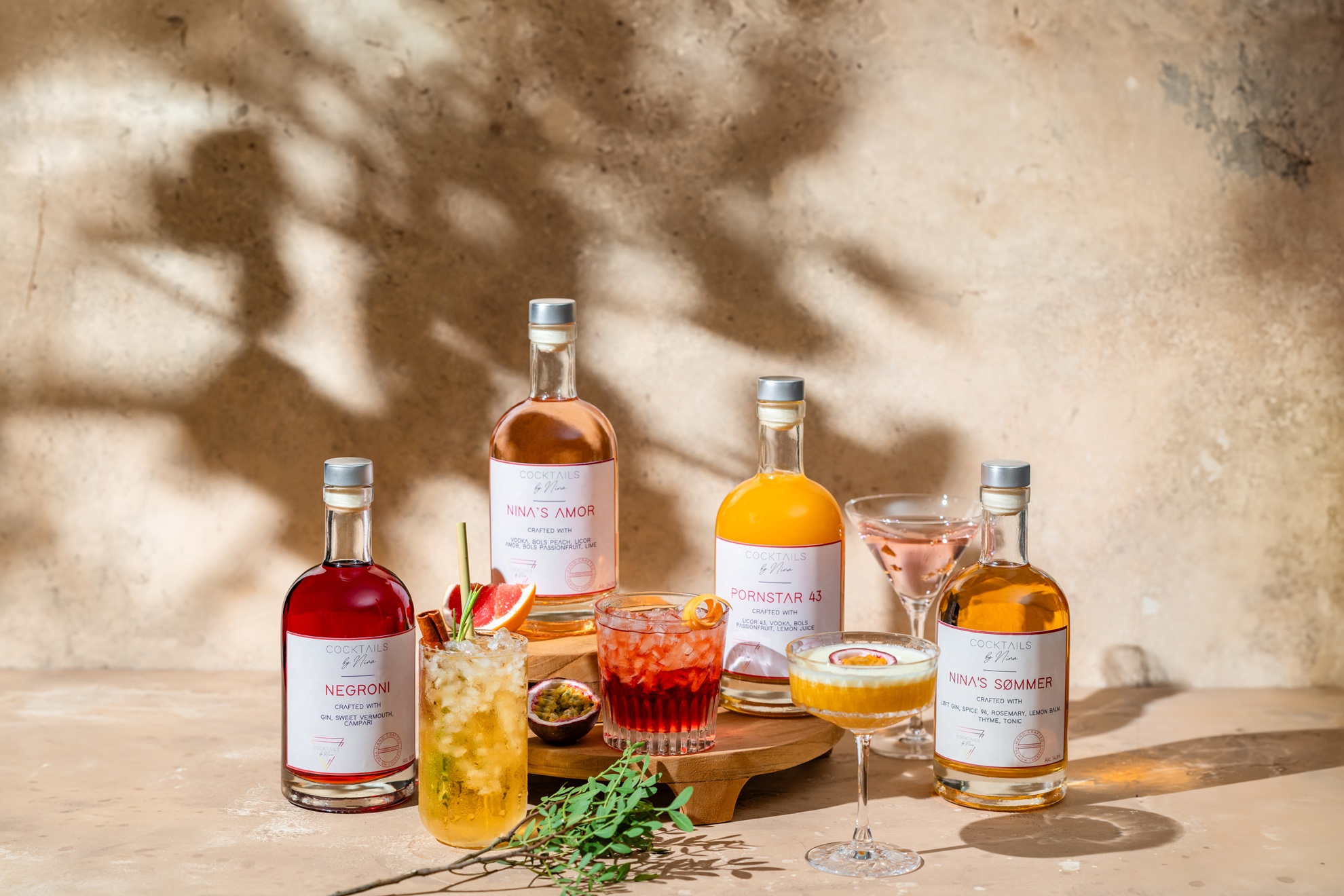
- View the cocktail collection for ready-to-serve options.
- Choose a cocktail box for parties with multiple guests.
- Supplement your bar with glassware and cocktail accessories for a polished presentation.
View the full collection at Cocktails by Nina and order for your next party.
Sources
- Using additives in food | NVWA
- REGULATION (EC) No 1333/2008 on food additives (Consolidated text)
- European Commission — news on titanium dioxide (E 171)
Frequently Asked Questions
Is there edible glitter available for cocktails?
Yes, there are sprays, powders, and sets specifically sold as edible or food grade that are suitable for use in drinks. Always check if the label literally uses that word and if the E-numbers are listed before using it in a glass.
How do I make edible glitter myself?
It is difficult to guarantee the safety of homemade glitter, as most household methods do not produce approved additives with E-numbers as required by EU additive regulations. It is safer and easier to buy a ready-made food grade product than to experiment yourself.
What is edible glitter?
Edible glitter is a decorative additive made of approved substances, usually glazing agents or colorings with an E-number, that is safe to consume in small quantities. It is distinguished from decorative glitter by being explicitly sold as "food grade" or "edible" and labeled according to NVWA regulations.
Which glitters are permitted?
Glitters composed of approved additives with an E-number that do not contain titanium dioxide (E 171) are permitted in food and drink under European regulations. Products claiming only "non-toxic" or "for decoration only" are not intended for consumption, even if they appear suitable for it.