The best cocktails to pair with a cheese board match in terms of intensity and mouthfeel: a fresh, acidic, or sparkling cocktail cleanses the palate after fatty cheese, while a sweet or fortified drink balances sharp, aged cheeses. Think of a spritz or sour with young cheeses, an Old Fashioned or Negroni with bold cheeses, and a sweet sherry or dessert liqueur with blue cheese. Below are concrete combinations to get you started immediately.
In short:
- A fresh or sparkling cocktail such as a spritz or sour pairs best with young cheeses, while a sweet sherry or fortified drink combines better with aged or blue cheeses.
- Carbonation or acidity in the cocktail helps cut through high-fat cheeses, which enhances the flavor balance and optimizes the mouthfeel.
- It is crucial to match the intensity of the cheese with that of the cocktail; drinks that are too strong can overpower subtle cheeses.
- For easy preparation, you can use ready-to-drink cocktails or mocktails that align with the cheese in terms of acidity and freshness.
- Always start by tasting the cheese to determine the right contrast and the best pairing, not with the cocktail first.
Table of contents
- Eight combinations that always work
- Why some combinations work and others don't
- How to put together a cheese board with matching cocktails
- How we use ready-to-drink cocktails with a cheese board
- What most pairing advice overlooks
- No time to mix? Order the pairing directly
- Frequently asked questions
- Sources
Eight combinations that always work
Each combination below is built on the same principle: the cocktail complements what the cheese is missing, or cuts through the fat.
- Young goat cheese with a Vodka Sour. Lemon, vodka, and a little egg white make for a sour, airy cocktail that enhances the fresh, slightly herbal notes of young goat cheese. Serve chilled in a tumbler with a slice of lemon. Alcohol-free: a lemon tonic with fresh mint works just as well.
- Brie or camembert with an Aperol Spritz. The bubbles and bitterness of the spritz cut through the creamy fat of the brie, making every bite feel fresh again. Serve in a large wine glass with plenty of ice and an orange slice. Alcohol-free: a spritz based on bitter soda and non-alcoholic prosecco.
- Medium-aged cheddar with an Old Fashioned. The woody, caramel-like notes of bourbon pair with the nutty depth of aged cheddar, while the bitters keep everything in balance. Serve at room temperature in a tumbler with one large ice cube. Alcohol-free: a spicy ginger beer with a dash of bitters.
- Washed-rind cheeses (such as Reblochon) with a Negroni. The bitterness and herbal notes of gin, Campari, and vermouth hold their own against the distinct, aromatic rind of these cheeses. Serve slightly chilled in a short glass with an orange peel. Alcohol-free: a bitter herbal soda with a citrus peel.
- Smoked cheese with a Mezcal Margarita. The smoky notes of mezcal enhance the flavor of smoked cheese without overpowering it, while lime keeps the drink airy. Serve in a glass with a salt rim and a lime wedge. Alcohol-free: a smoked tea lemonade with a pinch of salt.
- Blue cheese with a sweet sherry or Moscatel. Sommelier Jan-Jaap Altenburg describes how sweet or fortified drinks can balance older, sharp cheeses without overpowering the cheese, and that principle also works with blue-veined varieties. Serve in a small glass, slightly chilled, with a piece of honeycomb on the side. Alcohol-free: a sweet grape juice blend with a dash of lemon.
- Mixed appetizer platter with a classic Gin and Tonic. A neutral, herbal gin and tonic is versatile enough to go along with multiple types of cheese on a mixed board. Serve with clove and citrus peel as garnish. Alcohol-free: tonic with rosemary and lime.
- Creamy brie with a dessert liqueur cocktail. A cocktail based on amaretto or limoncello adds sweetness that complements the creamy, buttery texture of brie. Serve in a small glass after the main portion of the board. Alcohol-free: an almond syrup lemonade.
Why some combinations work and others don't
A pairing revolves around four factors that determine whether a combination is right: intensity, mouthfeel, acidity, and sweetness. A cheese affineur interviewed by Sterck Magazine emphasizes that high-fat cheeses leave a film on the tongue, and that cocktails with carbonation or higher acidity break through that film and reset the taste buds. That mouthfeel is at least as important as the flavor itself.
A few rules of thumb make choosing easier:
- Match the intensity: a strong cheese requires a cocktail with equal flavor strength, otherwise one of the two will disappear.
- Use carbonation or acidity to cut through fat, especially with creamy or fatty cheeses like brie.
- Balance sweetness against umami or blue-veined cheese: a sweet drink balances the sharpness of aged or blue cheeses.
- Avoid too much alcohol or bitterness with mild cheeses, as they quickly overpower a subtle flavor.
Pro-tip: Take a small bite of cheese, a small sip of the cocktail, and wait a few seconds. If the combination doesn't work, you usually feel it immediately—the cheese disappears or the cocktail becomes bitter in the aftertaste.
How to put together a cheese board with matching cocktails
Good planning begins well before the guests arrive.
- Choose four to six cheeses and arrange them from mild to strong, as also recommended in practical pairing guides for home use.
- Select two to three cocktail profiles that cover a wide range: something fresh and sparkling, something acidic, and something rich or fortified.
- Plan on a modest amount of drink per guest for an evening of snacking, and prepare some extra if the party lasts longer. Our guide on quantities for a garden party provides concrete guidelines that are also useful here.
- Serve soft cheeses at room temperature and keep cocktails with bubbles well chilled until just before serving.
Cocktails with a lot of fresh citrus juice or egg white are best made right before serving, while an Old Fashioned or Negroni can easily be mixed a few hours ahead without any loss of quality. Use separate knives for each type of cheese, labels for each combination, and garnishes that visually support the pairing, such as citrus peels next to citrus-heavy cocktails.
How we use ready-to-drink cocktails with a cheese board
When putting together an appetizer board for twelve people, one can combine a cocktail box with extra mixing options: this usually covers the fresh-acidic profile and the richer, fortified profile all at once, without anyone having to shake or measure themselves. A cocktail box is ready within minutes and therefore stays cool until serving, which is just as important as the choice of cheese itself.
There are options for ready-to-drink cocktails for direct pairings such as spritz, sour, or Negroni, mocktails for guests who do not drink alcohol but still want a full-fledged pairing, cocktail boxes that combine multiple flavor profiles in one order, and glassware that is tailored to the type of cocktail, from tumbler to wine glass.

What most pairing advice overlooks
Most advice on cocktails and cheese focuses on flavor alone, while mouthfeel is often the deciding factor. A cocktail can perfectly match a cheese on paper and yet not work because the texture does not align: a sturdy, high-alcohol cocktail with a delicate, young cheese simply crushes that cheese.

What I do see working: don't start with the cocktail, start with the cheese. First, taste what the cheese does on your tongue—fatty, salty, sharp, or mild—and then look for a drink that complements or breaks through that sensation. That is the order that sommeliers and cheese affineurs implicitly follow, and which most home cooks skip because they prefer to start with their favorite cocktail.
Therefore, do not prioritize the most beautiful recipe, but the right contrast. A simple gin and tonic that actually cuts through the fat beats a complicated cocktail that happens to taste good but does nothing for the cheese next to it.
— Ruud
No time to mix? Order the pairing directly
Those who prefer to enjoy rather than mix can also get the combinations mentioned above at home without a shaker. Our ready-to-drink cocktails cover the spritz, sour, and Negroni styles mentioned above, and our cocktail boxes combine multiple profiles immediately for a mixed group.
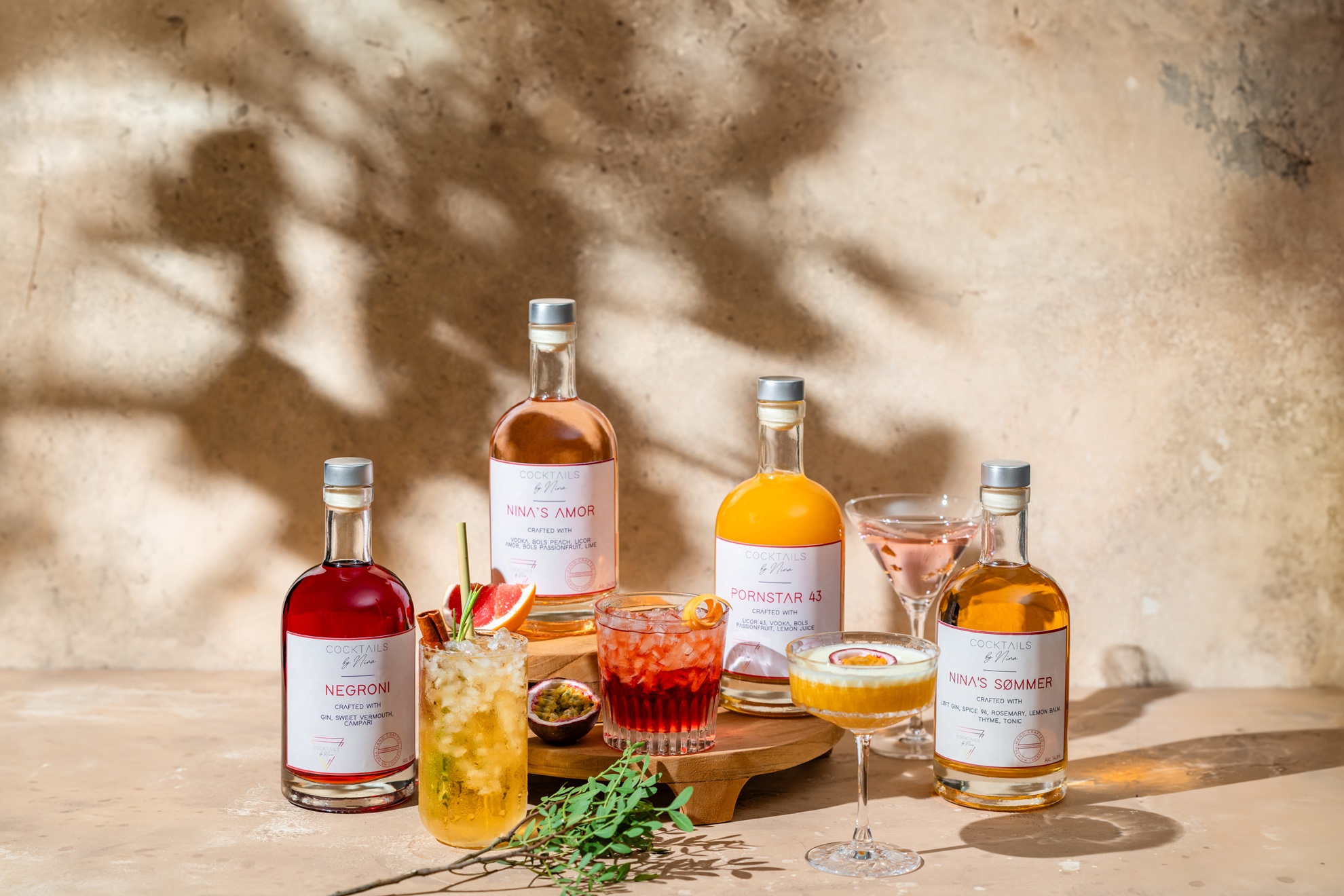
For guests who do not drink alcohol, we offer mocktails that maintain the same acidity and freshness, and with our glassware, you serve everything in the right glass without having to search for it yourself. That saves preparation time and keeps the flavor consistent from the first glass to the last.
View the assortment and put together your own combination today at Cocktails by Nina.
Frequently asked questions
What is best to drink with a cheese board?
A fresh, acidic, or sparkling cocktail works well with young and creamy cheeses, while a sweet or fortified drink like sherry fits better with aged or blue cheeses. The key is that the drink matches the intensity of the cheese rather than overpowering it.
What is a simple and delicious cocktail for cheese?
A Vodka Sour or an Aperol Spritz are both easy to make and work broadly with many types of cheese thanks to their acidity and bubbles. Both cocktails require only a few ingredients and fit well with an informal drink.
What is good to serve with a cheese board besides cocktails?
Nuts, honey, fresh fruit, and crusty bread enhance the combination of cheese and cocktail without overshadowing the flavors. Our guide on the drink experience at home parties provides more presentation tips that align with this.
What are popular cocktails to combine with cheese?
Aperol Spritz, Old Fashioned, Negroni, Margarita, and Gin and Tonic are frequently used in combinations with cheese because each offers a different flavor profile, from bitter and herbal to acidic and smoky. Which cocktail fits best depends primarily on the type of cheese on the board.
Sources
- Sterck Magazine — interview with cheese affineur Frédéric Van Tricht
- Vers van ’t Kaasmes — wine-food pairing by sommelier Jan-Jaap Altenburg
- La Bodega Vinos — pairing wine and cheese like a sommelier