Yes, cocktails can contain allergens. Nuts, milk, egg, crustaceans, sulphites, and gluten appear more often than you might think, often hidden in syrups, liqueurs, or wine components. The immediate action is simple: ask the bar for the ingredients, read the label on ready-made products, or consciously choose a drink with a clear ingredient list.
In short:
- Many cocktails contain hidden allergens such as nuts, dairy, sulphites, or gluten, especially in liqueurs, syrups, and garnishes, which increases risks for allergy sufferers.
- Ingredient lists and ingredient information are rarely shared in full by the hospitality industry and often contain carry-over and technical processing aids that are not visible to the consumer.
- Legally, allergens and sulphite levels above 10 milligrams per liter must be declared, but full labeling is not required for alcohol above 1.2% ABV, leaving allergen coverage incomplete.
- Targeted questions to staff about specific ingredients and substitution options reduce the chance of allergic reactions and contribute to safe consumption.
- Ready-made cocktails with pre-known ingredients are a reliable option for people with allergies who want to be certain of the composition.
Table of contents
- Which allergens are common in cocktails
- Why allergens in cocktails are sometimes hidden
- What the law says about labeling for drinks and hospitality
- How to check for allergens when going out or ordering
- Practical tips to avoid or substitute allergens
- Cocktails by Nina as a reliable source for allergen information
- What most advice on allergens in cocktails misses
- Ready-to-drink and alcohol-free cocktails with clear ingredients
- Sources
- Frequently Asked Questions
Which allergens are common in cocktails
Cocktails consist of multiple layers: spirit, liqueur, syrup, garnish, and sometimes a dairy component. Each layer can contain one of the 14 legal allergens, and it is precisely this stacking that makes cocktails harder to assess than a single product with a fixed label.
- Amaretto and some liqueurs contain almond or other nuts, even if the name doesn't give it away.
- Cocktails with cream, advocaat, or egg white (such as a pisco sour) contain milk or egg.
- Wine, port, vermouth, and sherry often contain sulphites, a preservative that is a point of attention with high intake.
- Bittersweet mixers and bitters can contain sesame, celery, or mustard as a flavor component.
- Certain grain spirits or malt liqueurs can contain traces of gluten, which is relevant for people with celiac disease.
- Garnishes like cocktail cherries or salted rims can contain sulphites or crustacean derivatives in processed form.
The less obvious sources are usually in the small components: a bitter with celery extract, a syrup with sesame oil as a flavor carrier, or a garnish treated with a sulphite solution to maintain color.
Why allergens in cocktails are sometimes hidden
A cocktail rarely shows a full ingredient list to the guest, and that is precisely where the risk lies. Flavorings, technical processing aids, and so-called carry-over (allergens that end up in the final product via a raw material without being functional) often remain invisible to the consumer. The NVWA emphasizes that allergen information also applies to carry-over, flavorings, and technical aids, and that applies just as much to drink as to food.
- Wine is sometimes clarified with gelatin or egg white, residues of which can end up in the glass.
- Syrups use flavorings formulated based on nuts or dairy without this being stated in the name.
- Liqueurs contain additives or stabilizers derived from allergenic raw materials.
Even small amounts can cause symptoms in severe allergies, so "a little bit" is not a safe margin for many people.
Pro-tip: When in doubt, ask for a cocktail with a single spirit and fresh citrus instead of a mix with multiple syrups and liqueurs; that significantly limits the number of hidden components.
What the law says about labeling for drinks and hospitality
Regulation (EU) 1169/2011 mandates that the 14 legal allergens be stated, and the Voedingscentrum explains which 14 allergens those are and that consumers must be able to ask for that information for unpackaged foods, such as in a bar or restaurant. That also applies to sulphites: as soon as a drink contains more than 10 milligrams per liter, it must be declared.
Alcoholic drinks above 1.2% alcohol are legally exempt from a mandatory full ingredient list. The EU report on the labeling of alcoholic beverages confirms that exemption, but allergens from Annex II must still be declared if they are present.

Important to know: despite the exemption regarding the ingredient list, the duty to declare allergens remains in full effect, including for bottles and ready-made cocktails.
For the hospitality industry, this means that staff must have the allergen information available verbally or in writing, even if the menu does not show a full list.
How to check for allergens when going out or ordering
A few targeted questions prevent most problems, both at the bar and when ordering from a webshop.
- Ask explicitly which syrups, liqueurs, and garnishes are in the cocktail, not just "is there anything in this?"
- Probe further if you receive a vague answer: "contains" is a hard statement; "may contain traces" is a warning that calls for extra caution.
- Ask for substitution options, such as a cocktail without cream, without amaretto, or with an alcohol-free syrup.
- For ready-made products, check the product page for ingredients and contact customer service if in doubt.
- If you have a history of anaphylaxis, avoid any product where the bar or the label only states "may contain traces"; never gamble on that.
The NVWA advises that a credible warning such as "may contain traces" (PAL) is only useful if it results from an actual risk assessment, not as a standard phrase.
Practical tips to avoid or substitute allergens
At home, you have more control than at the bar, and that starts with conscious substitutions. Plant-based cream replaces dairy in a cocktail without losing texture, neutral sugar syrup replaces flavored syrups with hidden aromas, and an alcohol-free spirit replaces a liqueur with a nut base.
- Use separate shakers and strainers for allergen-free cocktails to prevent cross-contamination.
- Clean work surfaces and tools between drinks with nuts or dairy and those without.
- Prepare allergen-free orders first in a batch, before other ingredients come into play.
For people sensitive to sulphites, a cocktail based on a pure spirit with fresh citrus is often a safer choice than a wine mix, simply because wine, port, and vermouth are the primary sources of sulphites.
Pro-tip: Keep a short list of your allergens on your phone; that makes it easier to pass it on quickly and completely to bar staff.
Cocktails by Nina as a reliable source for allergen information
Several webshops sell ready-made cocktails, mocktails, and cocktail boxes, and also offer catering for events. With ready-made products, the uncertainty of a bar on the spot is eliminated: the ingredients are fixed and can be checked in advance. For specific questions about allergens in a product, it is best to consult the product page or contact customer service before ordering, especially in the case of a known allergy. Those who prefer to mix their own drinks without hidden ingredients will find the list of premium ingredients for unique cocktails at home a useful starting point.
What most advice on allergens in cocktails misses
The common tip "just ask for the ingredients" is correct but misses a step: many bar staff themselves do not know the composition of syrups and liqueurs in detail, because those products come from suppliers with limited labeling. The EU report on alcoholic beverages confirms that this is partly due to the law: there is simply no obligation for a full list.

What is overestimated is the reliance on visual recognition, such as "wine doesn't smell like sulphites so it should be fine." Sulphites are odorless at the concentrations found in drinks, and the EFSA findings on sulphites in high-level consumers show that exposure among regular wine drinkers quickly adds up.
What truly helps is prioritizing standardized products with a fixed recipe over improvisation at the bar. That is no guarantee, but it significantly reduces the chance of a mistake.
— Ruud
Ready-to-drink and alcohol-free cocktails with clear ingredients
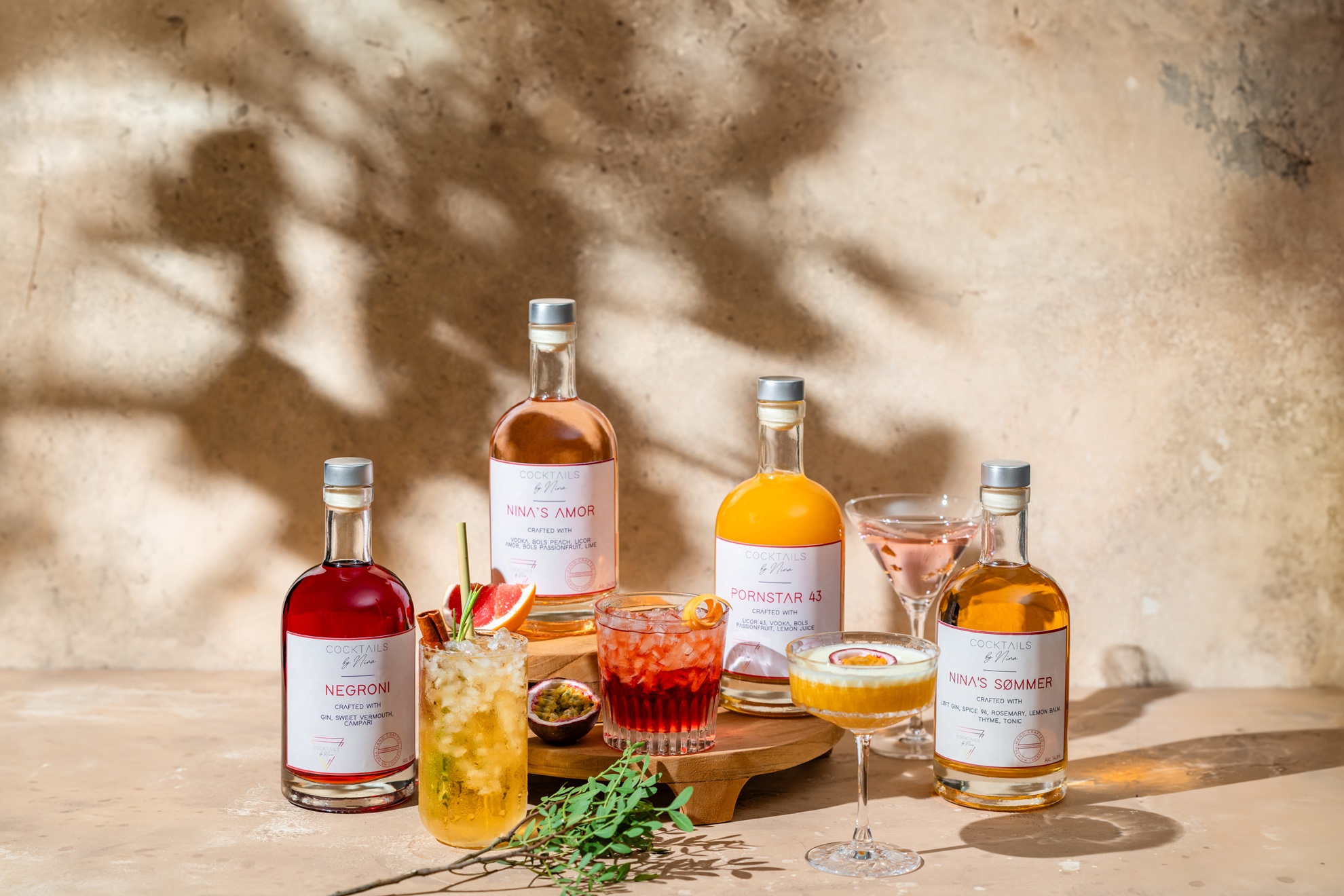
Those who do not want to take risks with hidden allergens benefit from a cocktail whose composition is fixed before it is opened. Cocktails by Nina offers ready-to-drink cocktails, alcohol-free mocktails, and cocktail boxes whose ingredients are listed per product, allowing you to check in advance whether an allergen is involved.
- View the collection of alcohol-free cocktails if you prefer to avoid alcohol or certain alcohol-related allergens.
- When in doubt about a specific ingredient, contact customer service before ordering.
- For a party or company event with guests with various allergies, catering via Cocktails by Nina is an option to coordinate in advance; those who prefer to consult an external party for nut-allergy catering will find practical tips in this guide on nut allergy catering.
View the ready-to-drink cocktails and order with a clear picture of what is inside.
Sources
- Allergenen | Voedingscentrum
- Handboek Etikettering van levensmiddelen (NVWA)
- EFSA — Sulfites: safety concern for high consumers
Frequently Asked Questions
Does a bar always have to say whether a cocktail contains allergens?
Yes, for unpackaged food such as cocktails at the bar, staff must provide allergen information upon request, either verbally or in writing. This follows the rules described by the Voedingscentrum for the 14 legal allergens.
Is there always sulphite in cocktails containing wine?
Not always, but wine, vermouth, port, and sherry are the primary sources of sulphites in cocktails. At levels above 10 milligrams per liter, this must be declared according to the Voedingscentrum.
Why is there no ingredient list on a cocktail bottle?
Alcoholic drinks above 1.2% alcohol are legally exempt from a mandatory full ingredient list, as confirmed by the EU report on labeling. Allergens themselves must still be declared separately if they are present.
Can small traces of an allergen still be dangerous?
In the case of a severe allergy, even small amounts can cause symptoms, so a warning such as "may contain traces" should always be taken seriously. When in doubt, ask for an alternative instead of taking the risk.
Are alcohol-free cocktails safer for people with allergies?
Alcohol-free cocktails avoid alcohol-related sources such as sulphites from wine, but can still contain other allergens such as nuts or dairy via syrups. Always check the specific ingredients, even with a mocktail.