Choose 4 to 6 cocktails for your company drinks, with at least 1 or 2 non-alcoholic options in the selection. Combine a classic everyone knows, one signature drink that gets the conversation going, and a seasonal or ready-made option that keeps the bar simple. Those who don't want to mix themselves can hire a bartender or order ready-made cocktails and cocktail boxes from a specialist like Cocktailsbynina, thereby maintaining control over quality and pace.
In short:
- For company drinks, it is wise to choose a limited range of four to six cocktails, including at least one or two non-alcoholic options.
- Popular options are quick to make, look festive, and fit various moments, such as spritzes, mojito-style long drinks, gin and tonics, and espresso cocktails.
- For shorter drinks gatherings, it is convenient to use large pitchers for long drinks and mojitos, while more elaborate cocktails can be finished live at the bar.
- Calculate an average of one to two cocktails per guest, with 20 to 40 percent non-alcoholic options, and allow for extra glassware and ice as a safety margin.
- For larger or busy events, using ready-made cocktails or bar rental is more efficient than mixing them yourself or hiring staff.
Table of Contents
- Which cocktails are best suited for a company drink event?
- How many cocktails should you order per guest?
- Bartender, bar rental, or ready-made: what to choose?
- What to expect from each service option in practice?
- Four recipes that you can scale to 10 glasses without stress
- How to account for allergies and dietary requirements?
- Why experience outweighs technique
- How Cocktailsbynina makes your company drink event simpler
- Sources
- Frequently Asked Questions
Which cocktails are best suited for a company drink event?
A company drink event requires drinks that are quick to make, look good on a tray, and carry little risk of failure. Experts recommend a limited menu of 4 to 6 cocktails to limit decision fatigue and wait times at the bar. These six types meet that requirement while still providing enough variety.
- Spritz or aperitivo. Light, fresh, and looks festive in a large wine glass with a slice of orange. Perfect as a welcome drink because it is quick to pour without a shaker.
- Mojito-style long drink. Mint, lime, and a hint of sugar provide a fresh, recognizable taste that rarely disappoints. Works well as a batch in a large pitcher, so the bartender only needs to dose and top with soda.
- Gin & Tonic structure. A long drink based on gin or another spirit with tonic is the safest choice for guests who do not like sweet drinks. Serve in a large long drink glass with plenty of ice and a citrus garnish.
- Espresso cocktail. Ideal for the second half of the evening, when guests could use a boost. It does require a shaker and more bar time, so plan this for a moment with less congestion at the bar.
- Low-ABV spritz. A version with less alcohol, made with vermouth or a light liqueur instead of hard liquor. Attracts guests who want to taste something without the full load.
- No-Lo mocktail. A full-fledged non-alcoholic cocktail, served in the exact same glassware and with the same garnish as the alcoholic versions. The latter is no minor detail: No-Lo deserves an identical presentation to alcoholic options; otherwise, the mocktail feels like a fallback instead of a full-fledged choice.
For flow, it works smartly to pre-batch long drinks and the mojito in pitchers, and finish the espresso cocktail and signature drinks live at the bar. This keeps the show where it counts, and the speed where it is needed.
How many cocktails should you order per guest?
The rule of thumb is simple: count on a few cocktails per person for a short networking event, and more for an evening-long party. This guideline comes from practical experience in the hospitality industry and takes into account that not every guest drinks the same amount.
Additionally, incorporate a non-alcoholic share of 20 to 40%, depending on the composition of your guest list. Calculation examples per event type show that this share is often higher for business events than for private parties, simply because people drink less on workdays.
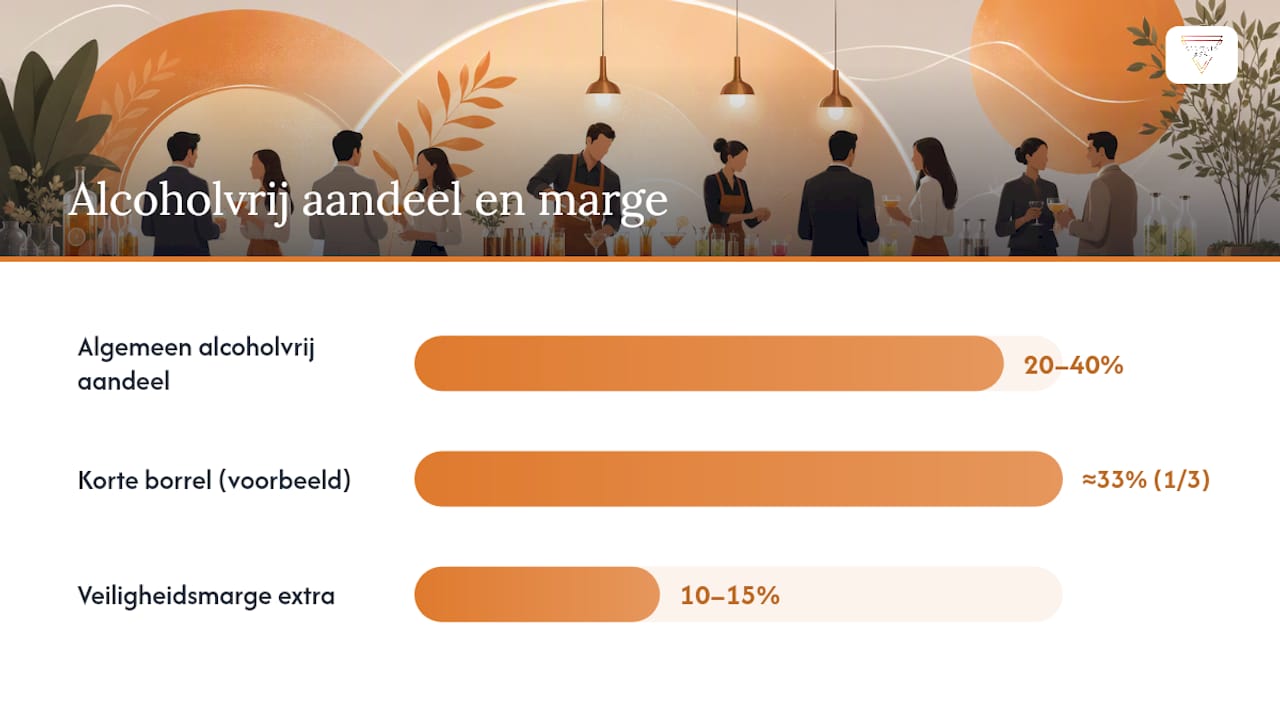
For a shorter gathering and a given number of guests, count on a suitable number of cocktails with one-third being non-alcoholic, to be coordinated via bottles or cocktail boxes.
A few practical tips to prevent running out of ice or glasses halfway through the evening:
- Always calculate 10 to 15% extra on top of your calculation as a safety margin, because an event rarely goes exactly according to plan.
- Plan glassware more generously than the number of cocktails: guests leave glasses behind, so count on 1.3 to 1.5 glasses per drink served.
- Spread the heavier cocktails, such as the espresso variety, throughout the evening so the bar doesn't get clogged up at one peak moment.
Bartender, bar rental, or ready-made: what to choose?
The right service format depends on five factors: flow capacity, experience, costs, storage, and how much effort you want to put into logistics. An event with 200 guests in a small office lobby requires a different approach than drinks for 20 colleagues in a spacious conference room.
Key criteria to go through:
- Flow. How many guests need to be served at the same time, and what wait time is acceptable? For large groups, pre-prepared work at the bar is not a luxury but a necessity.
- Experience. A bartender who shakes drinks and chats adds something that a ready-made bottle cannot. Hospitality and interaction at the bar weigh more heavily in 2026 than technical tricks, so that choice is not only practical but also a statement to your guests.
- Costs. A bartender with their own equipment costs more per hour, but saves you the purchase of shakers, jiggers, and ice buckets.
- Storage and logistics. Do you have cooling space, electricity, and a place for empty bottles and glassware? Without that basis, even the simplest service becomes difficult.
- Inclusivity. Can the supplier or concept effortlessly include No-Lo options, or does it become an afterthought added later?
As a rule of thumb: little preparation time and limited space mean that a cocktail box or ready-made bottle is the smartest choice. Many guests, a longer evening, and a budget for experience argue for a bartender or bar rental instead. More on how to make that choice concrete can be found in this explanation about cocktail formats for company parties.
Pro-tip: Ask every supplier the same five questions in your quote request: what does an extra hour cost, what happens to unsold bottles, is there a minimum order, who provides the ice, and what is the response time in case of a breakdown on the day itself? This allows you to compare quotes fairly rather than just on price.
What to expect from each service option in practice?
A bartender on location provides the best experience, but also requires the most organization. Count on at least one bartender per 40 to 50 guests to keep wait times acceptable, and discuss in advance who will handle the bar setup, ice, and glassware. What a bartender actually does and what you should look out for when hiring one is detailed in this guide to the role of a bartender on location.
Bar rental without staff works well if your own team or caterer takes over the service. You then rent tap or cocktail stations, but remain responsible for the execution yourself.
Ready-made cocktails and cocktail boxes require no staff and hardly any preparation: open the bottle, pour into the glass, garnish, done. That makes this option attractive for gatherings where you don't want or can't set up a bar.
Before you commit to a choice, run through these questions with every supplier:
- Is there liability insurance, and who is responsible in case of damage or an incident?
- What permits are required at the location, and does the supplier arrange them or do you?
- Is there sufficient cooling space available, and who provides the ice?
- What are the exact start and end times for the staff, and what does overtime cost?
- Who will take away empty bottles, crates, and rented glassware afterward?
For larger events, it is smart to combine drinks with a compact, festive selection of appetizers. Ideas for a limited but festive food menu show how you can coordinate that with cocktail stations without the menu becoming too large.
Four recipes that you can scale to 10 glasses without stress
These four cocktails were chosen because they require little technique and are easy to prepare in batches. All quantities are for 10 glasses; double or halve as needed.
- Classic mojito. 500 ml white rum, 250 ml lime juice, 200 ml sugar syrup, a generous handful of fresh mint, and 1 liter of soda water. Mix rum, lime, syrup, and bruised mint in a large pitcher, divide over glasses with ice, and top with soda just before serving. Serve in a long drink glass with a mint leaf as garnish.
- Aperol spritz. 700 ml Aperol, 1 liter prosecco, and 700 ml soda water, mixed in equal parts in a large pitcher with ice. Pour directly into wine glasses and garnish with a slice of orange; this cocktail loses its bubbles quickly, so mix it only shortly before pouring.
- Espresso martini. 500 ml vodka, 250 ml coffee liqueur, and 300 ml fresh espresso, shaken cold per 4-glass portion for sufficient foam. Serve in a cocktail glass with three coffee beans as garnish; this cocktail is less suitable for large batches because the foam collapses quickly.
- No-Lo cranberry fizz (non-alcoholic). 1 liter cranberry juice, 500 ml lime juice, 300 ml sugar syrup, and 1 liter tonic or soda water. Mix everything except the tonic in a pitcher, divide over glasses with ice, and top with tonic. Serve in the exact same glassware as the mojito, with a slice of lime, so the mocktail looks just as well-cared-for as the alcoholic versions.
If you don't want to spend time shaking and mixing, replace these recipes with ready-made bottles that you only need to pour into the correct glass. That saves not only time but also the risk of a batch turning out slightly too sweet or too weak.
How to account for allergies and dietary requirements?
Always ask about allergies and dietary requirements with the invitation, just as you would for the appetizer menu. Cocktails contain more hidden allergens than guests expect: egg white in a sour, lactose in a creamy liqueur, or nuts in syrups and garnishes.
Therefore, put at least one cocktail on the menu that is free of the most common allergens, such as a citrus or fruit-based spritz without dairy or nuts. Mention the main ingredients briefly for each drink on a card at the bar so guests can assess for themselves whether a cocktail is suitable.
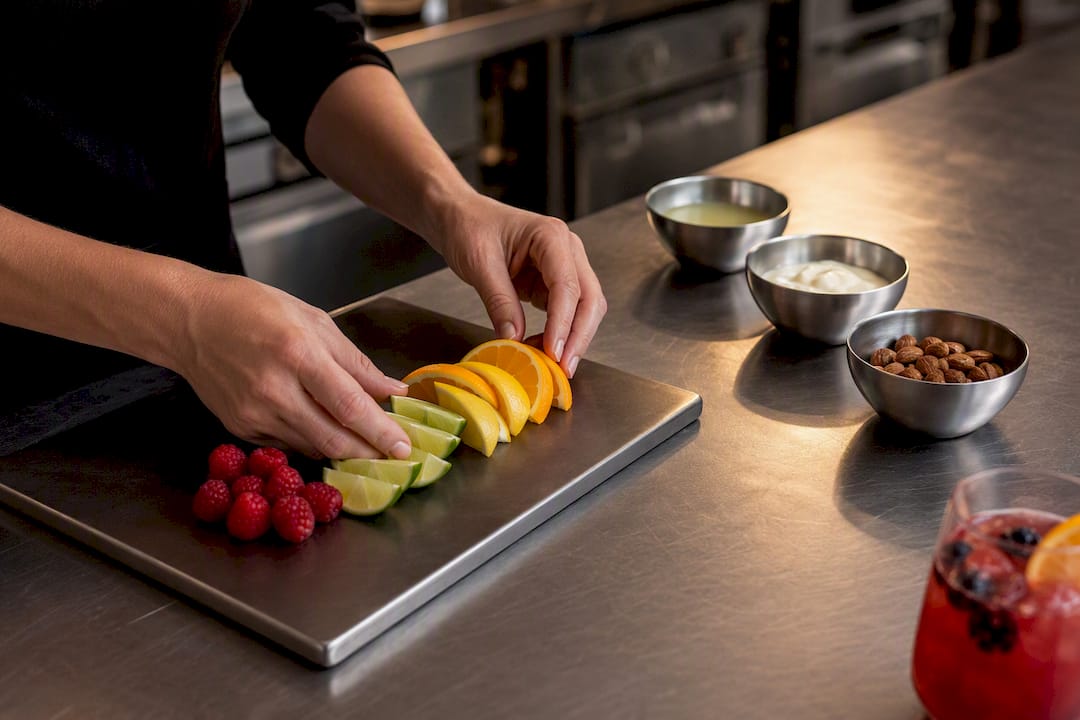
Also consider sugar content for guests who are watching their diet, and offer a variant with less sugar in addition to non-alcoholic options. Those who prefer not to leave anything to chance choose ready-made cocktails with a fixed recipe and a clear ingredient list, so you don't have to figure out what's in them per glass yourself. This also makes communication with guests easier: one label, one answer.
Why experience outweighs technique
What I see going wrong most often at company drinks: organizers put energy into complicated signature drinks, while guests primarily remember how the bar felt. Experience and hospitality beat technical feats, and that applies just as much to the non-alcoholic side of the menu. Whoever treats No-Lo as an afterthought loses exactly the momentum that this trend currently has.
— Ruud
How Cocktailsbynina makes your company drink event simpler
Where hiring a bartender requires days of planning and quotes, you can order ready-made, bar-quality cocktails from Cocktailsbynina that you simply pour into the glass. No rental contract, no staff scheduling, no risk of a batch failing just before the drinks start.
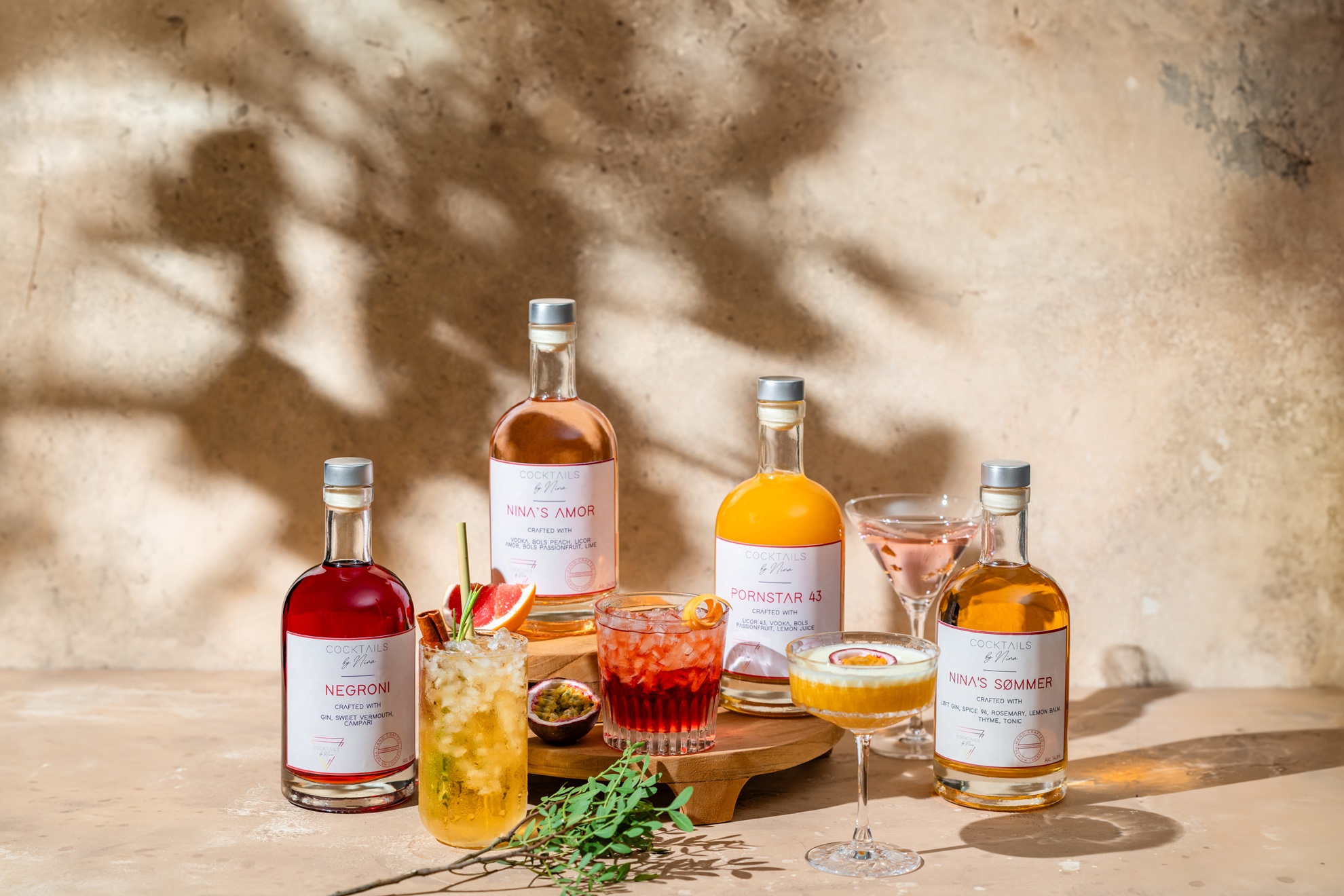
The range of cocktails and non-alcoholic cocktails is prepared with premium ingredients and ready to serve immediately, exactly as this article advises: a mix of classics and a full-fledged No-Lo option. For larger groups, the cocktail boxes are convenient because you can scale by the number of guests without counting individual bottles. Those who also want to arrange glassware and garnish will find matching glassware in the webshop. For larger company events, Cocktailsbynina also offers custom options via the events service. View the range and order in time for your next company drink event.
Sources
For guideline figures per guest, consult BarsOnSight and Noahs Events. For No-Lo and experience trends, Entree Magazine and BarCompany are reliable starting points for further reading.
- The six cocktail trends for 2026 — Entree Magazine
- Trends in event catering: coffee and cocktails as an experience — PlusRubriek
- How many cocktails are normal for an evening? — BarsOnSight
- How many drinks per person for a get-together — Noahs Events
Frequently asked questions
What are the 5 most popular cocktails for a company drink?
Aperol spritz, mojito, gin and tonic long drinks, espresso martini, and a low-ABV spritz appear most frequently on corporate menus. These five were chosen because they are quick to prepare and are widely accepted, even by guests who do not drink cocktails often.
Which cocktails are suitable for a large group of guests?
Cocktails that can be prepared in batches, such as mojitos and Aperol spritz in large pitchers, work best for large groups. They require less bar time per glass, which keeps the flow at the bar high.
What are 4 easy cocktails to make yourself?
Mojito, Aperol spritz, gin and tonic, and a non-alcoholic cranberry fizz are the four easiest options, as they can be prepared without a shaker or advanced technique. Those who prefer not to mix anything themselves can choose ready-to-drink variants from Cocktailsbynina.
How many cocktails should I order per person for a business drink?
Count on 1 to 2 cocktails per person for a short networking event, and 2 to 3 per person for an evening-long party. Additionally, incorporate 20 to 40% non-alcoholic options, depending on your guest list.
What do ready-to-drink cocktails from Cocktailsbynina cost?
Current prices per bottle, cocktail box, or shot package are available on the Cocktailsbynina webshop itself. Current shipping terms can be found on the Cocktailsbynina webshop.