For hassle-free transportation and serving of cocktails at your party, a mobile cocktail service is usually the fastest and safest choice; ready-to-drink cocktail boxes are the practical alternative without the need for a refrigerated truck or bartender. In both cases, pay attention to the cold chain and check whether an Article 35 exemption is required. When requesting a quote, always ask for concrete temperature guarantees and a schedule for delivery and setup.
In short:
- A mobile cocktail service provides bartenders, glassware, and ice, and requires proper cold chain monitoring to prevent spoilage.
- For flexible transport and quick service, ready-to-drink cocktails and cocktail boxes are often more practical than a full mobile bar.
- When preparing and transporting cocktails, the temperature must be continuously recorded, with additional cooling for warm weather or long distances.
- Serving alcohol at outdoor locations may require an Article 35 exemption and an event permit, depending on the situation.
- Total costs vary significantly per event, depending on base rates, price per cocktail, number of guests, and additional rental materials.
Table of Contents
- What a mobile cocktail service provides: services and options
- How do cold chain and HACCP rules work during transport?
- Do I need a permit for alcohol at my party?
- What does it cost to transport and serve cocktails on-site?
- Checklist: what questions should you ask your supplier?
- Alternatives to a mobile bar: when should you choose ready-to-drink?
- Why cooling is often the underestimated risk
- Order ready-to-drink cocktails or request an event quote
- Sources
- Frequently Asked Questions
What a mobile cocktail service provides: services and options
A good package handles more than just drinks. You generally receive a mobile bar with bartenders, glassware, ice supplies, garnishes, and the drinks themselves, plus setup and breakdown on location. The specifics vary by provider and budget, so always ask specifically what is included.
- Full-service bartender: someone mixes on-site, ideal for larger parties with lots of variety.
- Self-serve taps: guests pour their own drinks, useful for a tight budget or limited staff.
- Bag-in-Box solutions: large volumes without mixing, quick to serve, and easy to transport.
- Mocktails: non-alcoholic versions served with the same level of care, essential for mixed groups or designated drivers.
The choice mainly depends on the number of guests and the location. A garden party for fifteen people requires something different than a corporate drink with two hundred guests.
How do cold chain and HACCP rules work during transport?
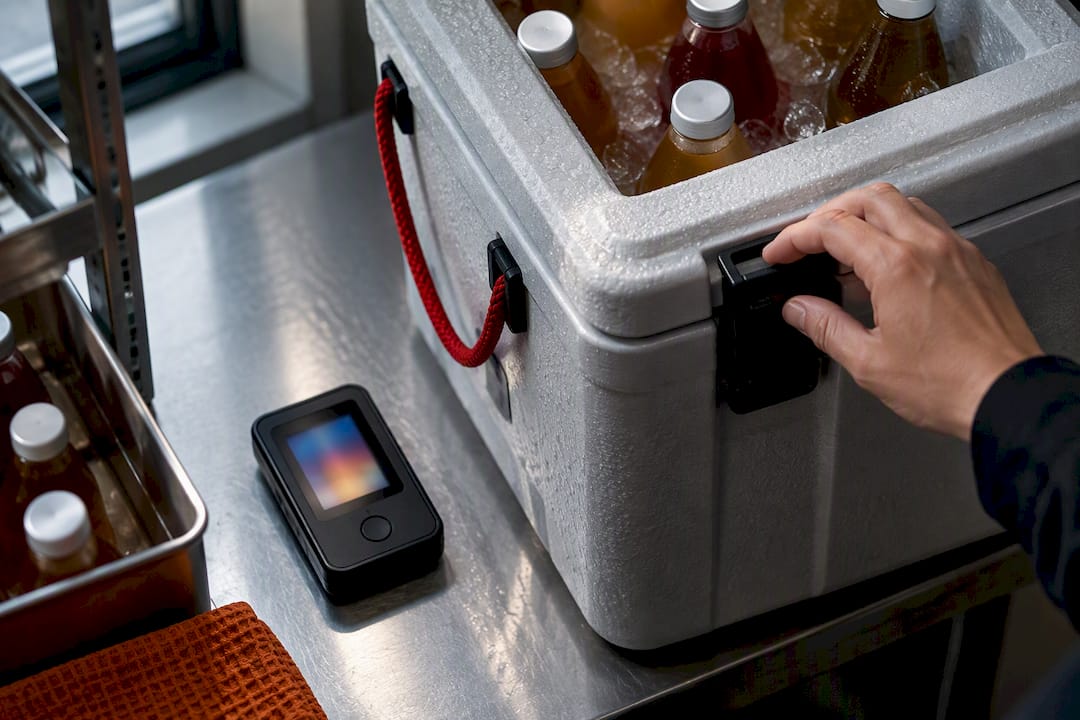
The core principle is simple: cocktails and their ingredients must stay cold, and that starts before leaving for your party. The NVWA (Dutch Food and Consumer Product Safety Authority) mandates that perishable drinks must be kept below 7°C. Without cooling, this is allowed for a maximum of two hours at an ambient temperature of up to 20°C, and only one hour at higher temperatures.
Figure to remember: according to the NVWA, a cocktail at over 20°C may be kept without cooling for a maximum of one hour before the risk of spoilage becomes too great.
Professional caterers therefore work with HACCP protocols, refrigerated vehicles, and data loggers that continuously record temperatures. Such a process follows fixed steps according to the Ordering Fresh Food Workflow:
- Preparation: mixing and portioning ideally happen close to the party location, which reduces the risk of temperature fluctuations according to CateringMeesters.
- Loading: temperature is measured and recorded when loading the vehicle.
- Transport: a refrigerated vehicle keeps the temperature stable, even during long drives.
- Unloading and serving: upon arrival, a new temperature check is performed, and monitoring continues during service.
For a warm outdoor location without a power outlet, extra cooling capacity is not an unnecessary luxury. Think of stackable refrigerators that you rent separately, shade for the bar, and a service pace that prevents drinks from staying in the sun too long.
Pro-tip: Ask your supplier explicitly for the data logger report after the party.
Do I need a permit for alcohol at my party?
That depends on where and how you serve it. Serving low-alcohol drinks at a temporary location, such as a garden, tent, or venue not typically intended for this purpose, often requires an exemption from Article 35 of the Alcohol Act. Larger events usually also require an event permit.
- Article 35 exemption: required for temporary serving outside a permanent hospitality establishment, to be requested from the municipality.
- Event permit: mandatory for larger public gatherings; the municipality evaluates based on visitor numbers and location.
- Example costs: administrative fees (leges) vary per municipality and type of event, so expect custom pricing rather than a fixed rate.
- NVWA supervision: at markets and events, the NVWA checks hygiene and storage temperatures, resulting in warnings or fines for violations.
Check this early with your municipality, not just the week before the party. A good supplier provides the necessary documentation themselves, so ask about it immediately when requesting a quote.
What does it cost to transport and serve cocktails on-site?
The price of a mobile cocktail service usually consists of several components that you can compare individually. A fixed starting fee often covers the bar, setup, and basic equipment, with a price per served cocktail added on top.
- Base rate: covers travel expenses, setup, and the mobile bar itself.
- Price per cocktail: varies by recipe, with premium ingredients costing more than a standard mix.
- Staffing costs: more bartenders are needed for larger groups, which quickly increases the total price.
- Rental of equipment: glassware, extra ice, and cooling units are sometimes charged separately.
- Minimum order quantity: many providers work with a minimum number of cocktails or guests, below which the per-unit rate increases.
Hidden costs are often in the details: extra ice in warm weather, location access fees, or a surcharge for late hours. Therefore, always ask for a complete list of inclusions and concrete temperature guarantees before signing so that you can truly compare quotes.
Checklist: what questions should you ask your supplier?
Before you book, go through a few practical points. This prevents surprises on the day itself.
- Logistics: what is the delivery time, how long does setup take, and who is the contact person on location?
- Temperature: what cooling system is used, are there data loggers, and do you receive a temperature report upon delivery and during service?
- Staff: are the bartenders HACCP-trained, and how much staff is scheduled per number of guests?
- Equipment and waste: who handles glassware and ice, and who cleans up after the party?
- Rules and liability: how is age verification handled, is there allergen information, and is the provider insured against damage or incidents while serving alcohol?
If someone hesitates when asked about data loggers, that is a signal to ask more questions.
Alternatives to a mobile bar: when should you choose ready-to-drink?
Not every party needs a full mobile bar. For smaller groups, outdoor locations without cooling facilities, or a tight budget, ready-to-drink cocktails, Bag-in-Box, or cocktail boxes are often smarter. They reduce cold chain risks, require no bartender, and are easily transported in a cooler.
- Small private party (up to approx. twenty guests): a cocktail box with a few flavors often works better than a full bar.
- Medium event without cooling capability: Bag-in-Box or frozen variants keep the risk low, as advised by providers of alternative serving solutions for outdoor locations.
- Mixed group: mocktails alongside cocktails keep everyone satisfied without separate policies.
Ready-to-drink solutions are available: cocktails, mocktails, and cocktail boxes with matching glassware and accessories, supplemented by event support. For those looking for less logistical hassle without compromising on taste, this is often a more practical route than booking a full mobile bar.
Why cooling is often the underestimated risk
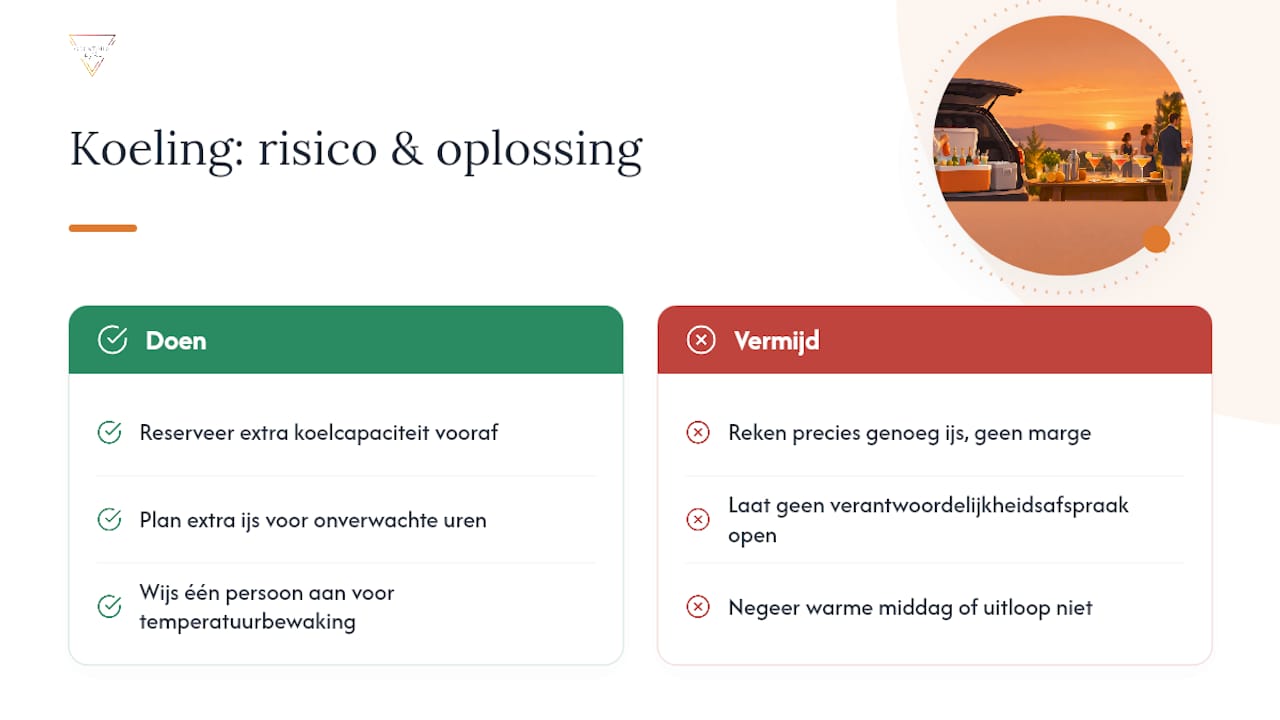
The most common mistake I see at parties: people underestimate cooling capacity. They plan exactly enough ice for the estimated number of guests and forget that a warm afternoon or an event running long consumes that margin in an hour.
Equally important: designate one contact person responsible for temperature monitoring during the party. Without that arrangement, everyone points fingers if something goes wrong, and that is precisely when a cocktail stays out of the cooling for too long.
— Ruud
Order ready-to-drink cocktails or request an event quote
Cocktailsbynina is the alternative for those who prefer to skip the logistics of a mobile bar: no refrigerated truck to book, no bartender to schedule, no temperature report to check afterward. You order ready-to-drink cocktails or mocktails with premium ingredients, and they are ready to serve at your party.
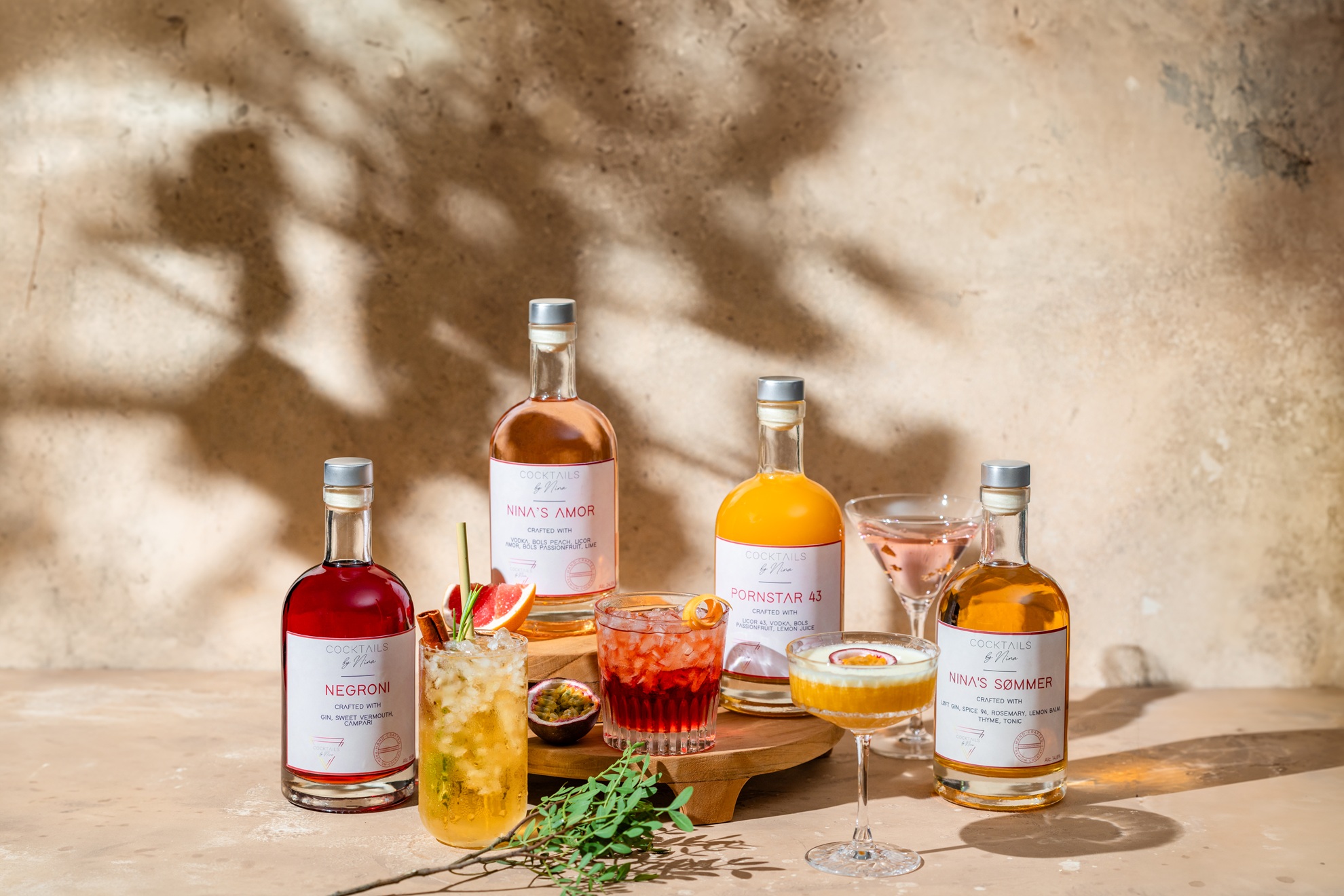
For smaller groups, the cocktail boxes are a compact solution you can easily transport in a cooler yourself. Larger parties with social drinking moments can choose the shots package, and if you are missing glassware or cocktail accessories, you can order them right along with it. Are you organizing a company party or a larger gathering with specific requirements? Request a quote via the events page and discuss the logistical details and desired delivery time immediately.
Sources
- NVWA — Food-safe working in hospitality, craft, and retail
- Ondernemersplein — Selling alcohol / permits
- CateringMeesters — How does food safety work at event catering?
Frequently Asked Questions
Can I make cocktails in advance?
Yes, you can, but then you must strictly monitor the cold chain. According to the NVWA, perishable ingredients must remain below 7°C, and a cocktail outside of cooling may stand for a maximum of one hour at higher temperatures. Ready-to-drink cocktails from Cocktailsbynina are specifically made to avoid these issues: they are already prepared and ready to serve immediately.
How do I arrange drinks for a party?
First, determine the number of guests and the location, then choose between a mobile bar with a bartender or ready-to-drink beverages that you transport yourself. For smaller parties without cooling facilities, ready-made cocktails or cocktail boxes are usually the simplest choice, while larger events are often better served with fully managed catering.
Is there a package for making cocktails at home?
Yes, cocktail boxes are made for this: you receive several ready-to-drink cocktails in one package, without having to mix anything yourself. They are available in sets of two, four, or six and are well-suited for private parties or as a gift.
What does it cost to rent a cocktail bar?
The price consists of a base rate plus an amount per cocktail, supplemented by staffing costs and potential rental of glassware or cooling equipment. There is no fixed rate, as costs depend heavily on the number of guests, location, and the selected drink offerings, so always request a detailed quote.