Zero-waste cocktails are ready-to-drink, pre-packaged beverages designed to leave minimal waste when served. For home use, this means a cocktail box or split shots without individual bottles; for events, bag-in-box and tap solutions or reusable cup sets are the fastest way to reduce waste. Cocktails by Nina supplies both options directly from stock.
In short:
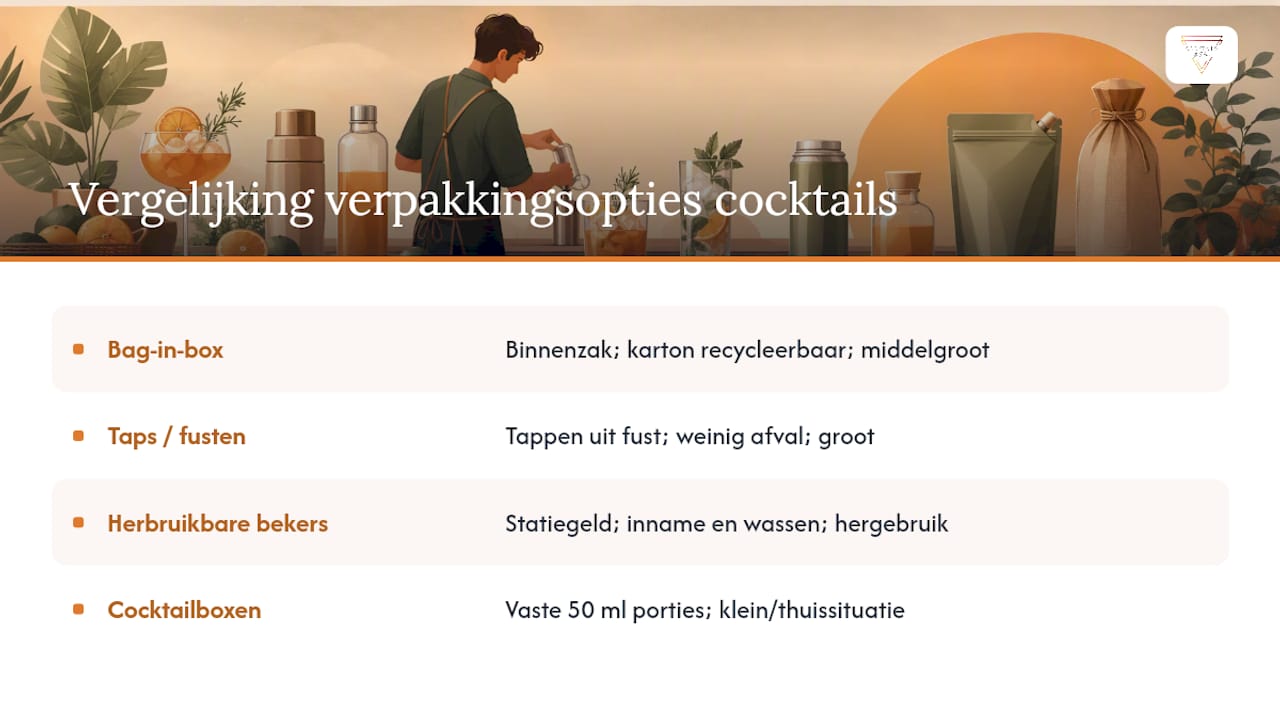
- Bag-in-box is the most environmentally friendly option for medium-sized gatherings due to its low weight and recyclable cardboard exterior.
- Tap and keg systems are best for large events as they minimize waste and operate as efficiently as beer kegs for high volumes.
- Reusable cups with a deposit reduce waste by up to 63 percent, provided the return logistics support multiple use cycles.
- When ordering cocktail provisions, consider the number of guests, consumption patterns, shelf life, and logistical delivery to avoid surpluses.
- Ready-made solutions such as cocktail boxes and split shots save time and reduce on-site waste, as the supplier handles most of the work and packaging waste.
Table of Contents
- Which packaging is truly zero-waste: bag-in-box, tap, or reusable glass?
- How much to order: calculation examples and selection criteria
- How to build a working collection and washing system
- What do the numbers say about reusable systems?
- Cocktails by Nina: ready-made and low-waste ordering
- Why ready-made is often smarter than mixing yourself
- Sources
Which packaging is truly zero-waste: bag-in-box, tap, or reusable glass?
Not all “sustainable” packaging performs equally. The difference lies in what remains after serving.
Bag-in-box is the quiet winner for medium-sized gatherings. An inner bag with a dispensing tap keeps the cocktail fresh after opening, and no heavy glass needs to be transported. This not only saves waste but also fuel: less weight and less volume per serving means lower costs per glass for larger groups, as BN Pack describes. The cardboard is easily recyclable; the inner bag requires a little more attention during processing.
Tap systems and KeyKeg-like kegs do the heavy lifting for large volumes. You pour directly from a single keg, without individual bottles or cans, which makes serving at festivals and corporate events significantly less wasteful than bottle bars. Tap & Joy demonstrates that cocktails on tap now work just as well as beer, provided temperature and pressure are correct.
Reusable cups with a deposit form the third pillar. Guests pay a small deposit, get it back upon return, and the cup goes back into the wash.
For home or small gatherings, this works simpler: a cocktail box with fixed portions or 50 ml split shots prevents half-full bottles from being discarded.
How much to order: calculation examples and selection criteria
Before ordering, you need four figures: number of guests, average number of drinks per person, shelf life after opening, and supplier delivery time.
- 50 guests, house party: count on 2 to 3 cocktails per person. This translates to 2 to 3 cocktail boxes of 6, or a combination of boxes and split shots for those who prefer to taste rather than drink a full glass.
- 200 guests, corporate happy hour: bag-in-box wins here on convenience. Count 2.5 drinks per person, and you're at about 125 liters of cocktail mix, divided among several boxes with dispensing taps so the bar doesn't stall.
- 500 guests, festival or large event: tap systems are more efficient than individual boxes. Calculate the volume based on peak times, not the total number of guests, as serving happens in waves.
Ordering too little is more annoying than a small surplus, especially if your supplier cannot deliver a last-minute reorder.
Ask your supplier four questions before ordering: what is the delivery time, how is the cold chain monitored, is there a deposit system for glassware or cups, and who arranges the return logistics after the event?
Pro tip: Always order a few days earlier than you think you need. Bag-in-box and cocktail boxes remain perfectly chilled for a few days after delivery, and this buffer prevents panic if the event shifts.
How to build a working collection and washing system
A waste-free system isn't about the drink itself, but about what happens once the glass is empty. Without a well-thought-out collection and washing process, even the best bag-in-box ends up in a pile of disposable cups.
Start with the basics:
- Collection points: count on a maximum of three collection points per 1,000 visitors; otherwise, queues will form, and guests will still discard cups wherever they please.
- Deposit system: guests pay a small deposit per cup and get it back upon return. This significantly increases the willingness to return them.
- Washing capacity: a mobile washing unit on-site works faster than having cups cleaned externally but requires power and water on-site.
The number of cups you need to keep in circulation directly depends on the washing capacity of your unit. A rule of thumb from the knowledge document on waste-free cup systems: number of cups = (consumptions per hour × average usage duration in hours) divided by washing cycles per hour, plus 10 to 20% reserve. At a peak of 400 consumptions per hour and a unit that washes 100 cups per hour, you'll quickly need several hundred cups to never run out.
Some local initiatives with deposit and collection programs report high return rates for issued cups.
For tap systems, a flow meter helps to see how much is actually poured per glass, which directly reduces waste due to incorrect tapping technique and ensures accurate per-serving billing. Anyone who prefers to see this kind of logistics fully explained can find a comprehensive approach in this practical guide to beverage logistics at events.
What do the numbers say about reusable systems?
The figures are more convincing than most organizers expect. Event monitoring shows that reusable systems result in 40 to 63% less residual waste per visitor, with the highest percentage at enclosed festival grounds and the lower percentage at open city events where waste is more easily "leaked."
At the Sfinks Mundial festival, waste significantly decreased due to the switch to reusable cups, and after multiple use cycles, a reusable cup becomes environmentally more advantageous than a disposable option.
Those ten cycles are the tipping point that you, as an organizer, should remember: a deposit system that discards cups after one event offers hardly any environmental benefit. The system needs to go through multiple cycles to prove its value, and that's precisely why return logistics are just as important as procurement.
For permits with municipalities, it's wise to arrange a few points beforehand:
- Specify how many collection points and washing capacity you will provide; municipalities often explicitly ask for this in event permits.
- Include expected waste figures in your application, supported by comparable cases from your region.
- Discuss in advance with the municipality who is responsible for final cleaning if the deposit system does not recover all cups.
Organizers who properly document this in advance not only save on waste processing but also on operational cleaning costs afterward, as also shown in evaluations of reusable systems.
Cocktails by Nina: ready-made and low-waste ordering
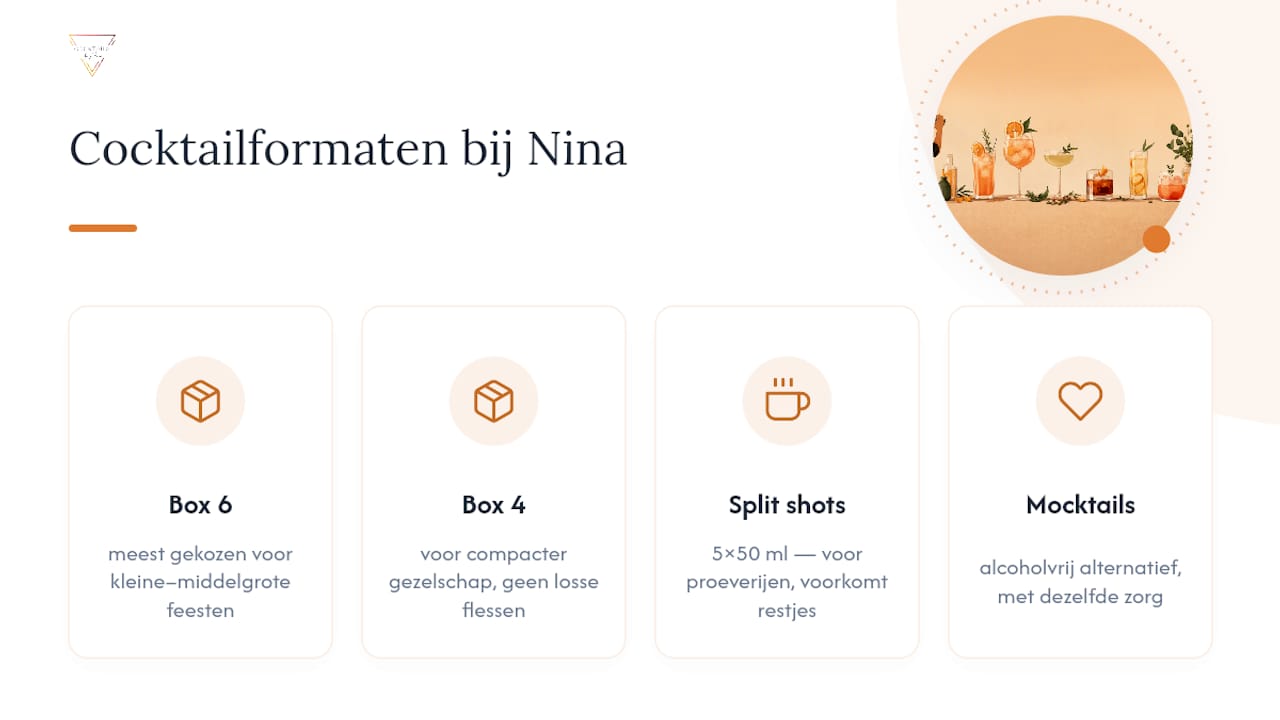
Formats that are highlighted as practically low-waste in this guide are supplied. The Cocktail Box with 6 pieces is the most chosen format for small to medium-sized parties, and the Cocktail Box with 4 pieces suits a more compact gathering without having to keep individual bottles.
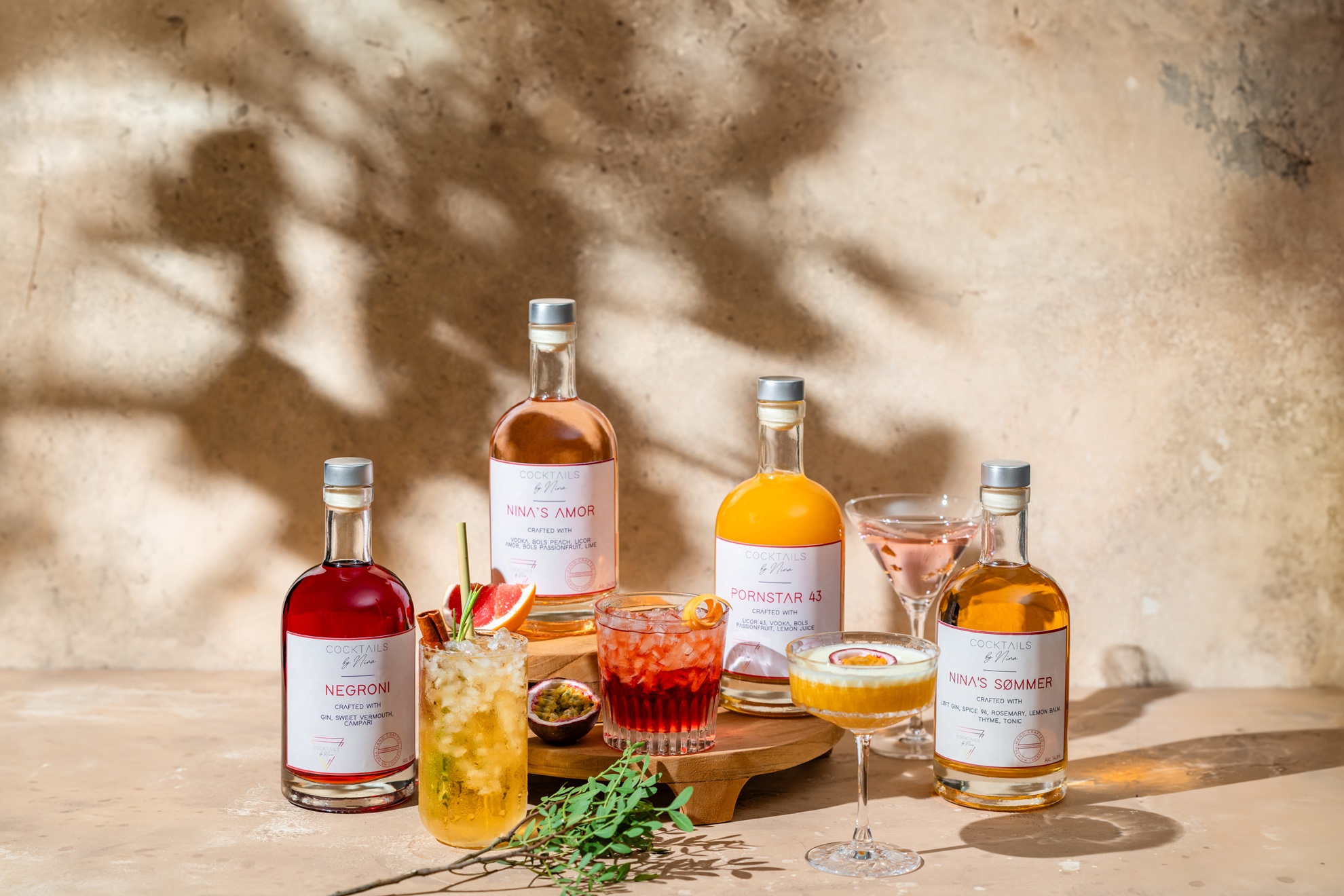
For tastings or a happy hour where guests prefer to try small portions, the split shots box of 5 x 50 ml is more convenient than full glasses that remain half-empty. If you also have guests who don't drink, the collection of ready-made mocktails offers an alcohol-free alternative curated with equal care. For the complete experience, there are also cocktail glass sets, so you don't grab disposable cups just to serve something.
For larger events, custom options and catering are available, where you specify the volumes and formats your event requires. Want to know which format best suits your guest count? Request a quote through the webshop and work with the team to calculate the right quantities, instead of guessing based on rules of thumb.
Why ready-made is often smarter than mixing yourself
What strikes me is that organizers underestimate how much time and money goes into running a full bar with individual bottles, ice, and garnishes. A ready-made solution shifts that effort to the supplier, and that's precisely where the waste reduction often occurs: fewer individual packages on-site, less leftover waste after the event.
A rule of thumb I always share: keep the number of collection points to a maximum of three per 1,000 visitors. More points might seem logical, but in practice, supervision dilutes, and the waste advantage you sought disappears.
— Ruud