Most classic cocktails are naturally gluten-free, as long as you make them with clear spirits or wine. The risk isn't in the drink itself, but in what comes with it: syrups, liqueurs, and cloudy mixes can contain wheat or malt. Three golden rules help immediately: choose clear spirits or wine, ask about ingredients if in doubt or order a mocktail, and check the label on bottles and ready-made mixes.
In summary:
- Only clear distilled spirits such as vodka, gin, and tequila are considered gluten-free, because the distillation process removes gluten proteins.
- When in doubt, always ask for the ingredients of liqueurs and syrups, and ask to see the bottle or label to avoid hidden malts.
- Homemade sugar syrup is safer than commercial varieties, because you know exactly what's in it and most commercial mixers are not kept for more than a few weeks.
- Mocktails based on fresh fruit and herbs are a safe alternative, as they contain no added malt or grain products and pose less risk of gluten.
- At a large gathering, it's best to offer gluten-free drinks yourself or choose ready-made products with clear ingredient lists.
Table of Contents
- Six gluten-free cocktails and mocktails to make now
- Which drinks are naturally gluten-free?
- What are the hidden risks in cocktails?
- Mocktails: the safest choice when in doubt
- Who wrote this and why can you trust it?
- Why most advice on gluten-free cocktails is too cautious
- Gluten-free cocktails without mixing yourself
- Sources
Six gluten-free cocktails and mocktails to make now
These recipes focus on ingredients that are naturally gluten-free. For each recipe, pay attention to specific details.
- Mojito. White rum, lime juice, mint leaves, sugar, and soda water. Rum is distilled and therefore safe; just be careful with flavored rum that has added flavorings.
- Margarita. Tequila, lime juice, and a little agave syrup or triple sec. Pure tequila is gluten-free, but many triple secs contain neutral grain alcohol as a base. Ask for the brand or replace it with a splash of orange juice.
- Gin and tonic with a fresh twist. Gin, tonic, and a slice of cucumber or grapefruit. Gin is often distilled from grain, but the distillation process removes gluten proteins, making most gin considered safe.
- Moscow Mule. Vodka, ginger beer, and lime juice. Choose a clear vodka without added flavors and check the ginger beer for malt extract, which sometimes contains wheat.
- Virgin Sunrise (mocktail). Orange juice, grenadine syrup, and a splash of lemon juice, layered in a glass. Make the grenadine yourself with pomegranate juice and sugar to avoid questionable colorings.
- Berry Spritz (mocktail). Soda with blackberries, mint, and lime, topped with sparkling water. Fully based on fresh fruit, so no hidden risks.
For all recipes: homemade sugar syrup (equal parts water and sugar) is safer than a commercial mix, because you know exactly what's in it. Want to read more about this? Improve your cocktails with the right syrup explains how to make syrups yourself that are undoubtedly safe. Premade mixers usually keep for a few weeks in the refrigerator, but always check the date on the label.
Which drinks are naturally gluten-free?
Distillation is key. During this process, alcohol evaporates and larger molecules, including gluten proteins, are largely left behind. As a result, clear distilled spirits such as vodka, gin, tequila, and whisky are generally considered gluten-free, even if they were originally made from grain.
Safe categories in most cases:
- Wine and champagne, made from grapes.
- Cider, made from apples or pears.
- Pure distilled spirits without added flavorings.
- Beer brewed naturally gluten-free, for example, from gluten-free grains.
Coeliac UK confirms that distilled spirits, wine, and cider are generally suitable within a gluten-free diet but advises extra checks for flavored varieties. Drinks above 1.2% alcohol do not have to display their full ingredient list, but must declare allergens such as gluten-containing grains. This makes the label your best first check, even if the rest of the list is missing.
What are the hidden risks in cocktails?
The real dangers lie in admixtures, not in the base drink. Look out for these three signs and ask three short questions before ordering.
Risk indicators: an opaque or cloudy liqueur, a caramel-colored or malt-flavored syrup, and foam or a thick texture that may indicate egg white or grain extract.
- Question: “Does this syrup or liqueur contain wheat, malt, or barley?”
- Question: “Is this mix homemade or from a bottle?”
- Question: “Can the bartender show me the bottle or label?”
At a buffet or reception with many guests, the risk of cross-contamination is greater, as glasses, stirrers, and spouts are often shared.
Pro-tip: At a large event, ask for a separate pump or mixer for gluten-free drinks. Shared serving glasses are an underestimated risk at buffets and receptions.
Mocktails: the safest choice when in doubt
Mocktails usually contain fewer processed ingredients than cocktails with liqueurs, simply because no alcohol needs to be added to give flavor. Fresh fruit, herbs, and sparkling water form the base, significantly reducing the chance of hidden gluten.
Three mocktails you can serve without worry:
- Strawberry-basil fizz: muddled strawberries, basil, lime juice, and sparkling water.
- Passion fruit-lime cooler: passion fruit puree, lime juice, and ginger tea.
- Cucumber-mint refresher: cucumber juice, mint, and tonic without quinine extract from grains.
For an extra bar look, use a sugared glass rim, a beautiful ice cube with herbs in it, or a slice of dried fruit. This gives just as much visual effect as a cocktail, without the questionable syrup.
Who wrote this and why can you trust it?
This article was written by Ruud, who specializes in cocktail culture and drink safety. Cocktails by Nina, the Dutch webshop behind this guide, sells ready-made cocktails and mocktails with clear ingredient lists. If you have questions about a medical issue related to celiac disease, consult the Dutch Celiac Association or your doctor.
Why most advice on gluten-free cocktails is too cautious
The common approach is: avoid alcohol entirely if you are sensitive to gluten. That is unnecessarily strict. Pure spirits and wine are rarely the problem in practice, as evidenced by the consensus around distillation. The real risk lies in the small, inconspicuous things: a bottle of triple sec without a clear label, a commercial grenadine with malt extract, a shared serving glass at a reception.
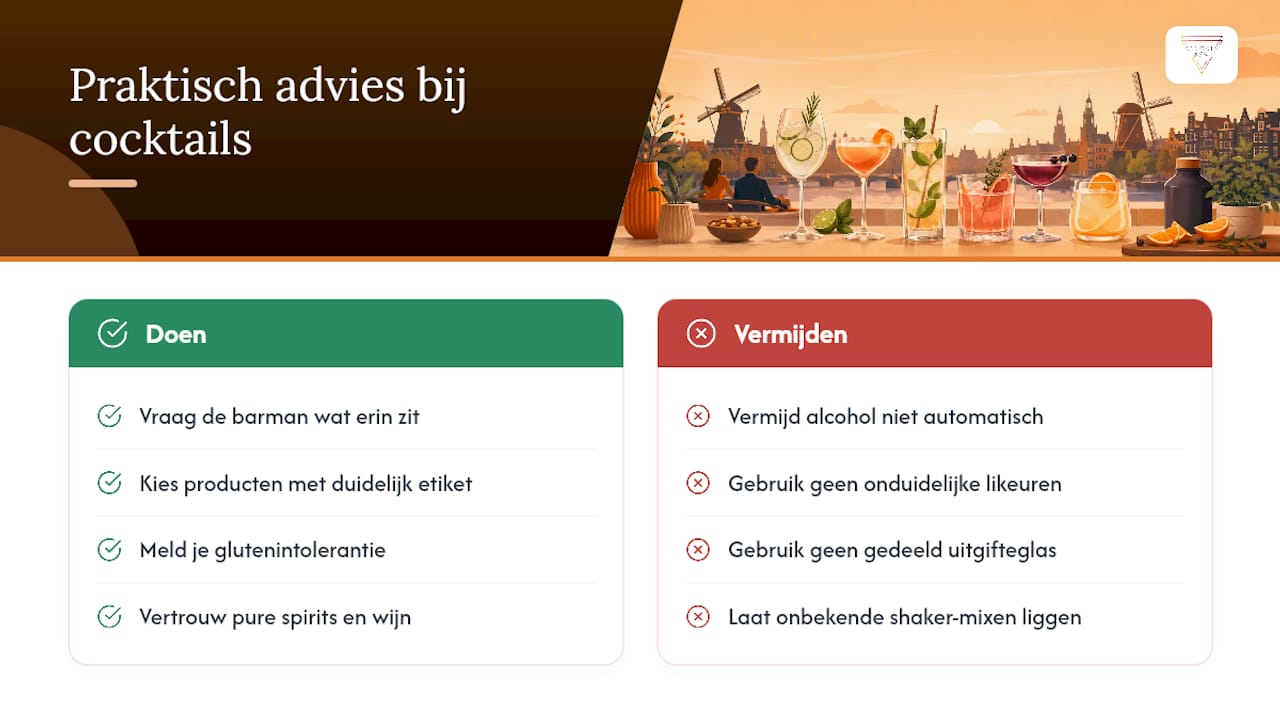
What strikes me: many people with gluten intolerance are afraid to ask a bartender questions, for fear of being a nuisance. That's precisely wrong. The law requires allergen labeling, and a good bar wants you to ask. Those who do ask will find that enjoying a gluten-free cocktail is not complicated at all. The biggest problem is not the drink, but the hesitation to ask what's in it.
Anyone who wants to completely eliminate the risk should choose ready-made products with a transparent ingredient list instead of an unknown mix from a shaker.
— Ruud
Gluten-free cocktails without mixing yourself
Don't feel like checking syrups yourself or bothering a bartender with questions? There are ready-made cocktails and mocktails available where you can check what's in them yourself, without gambling at the bar.
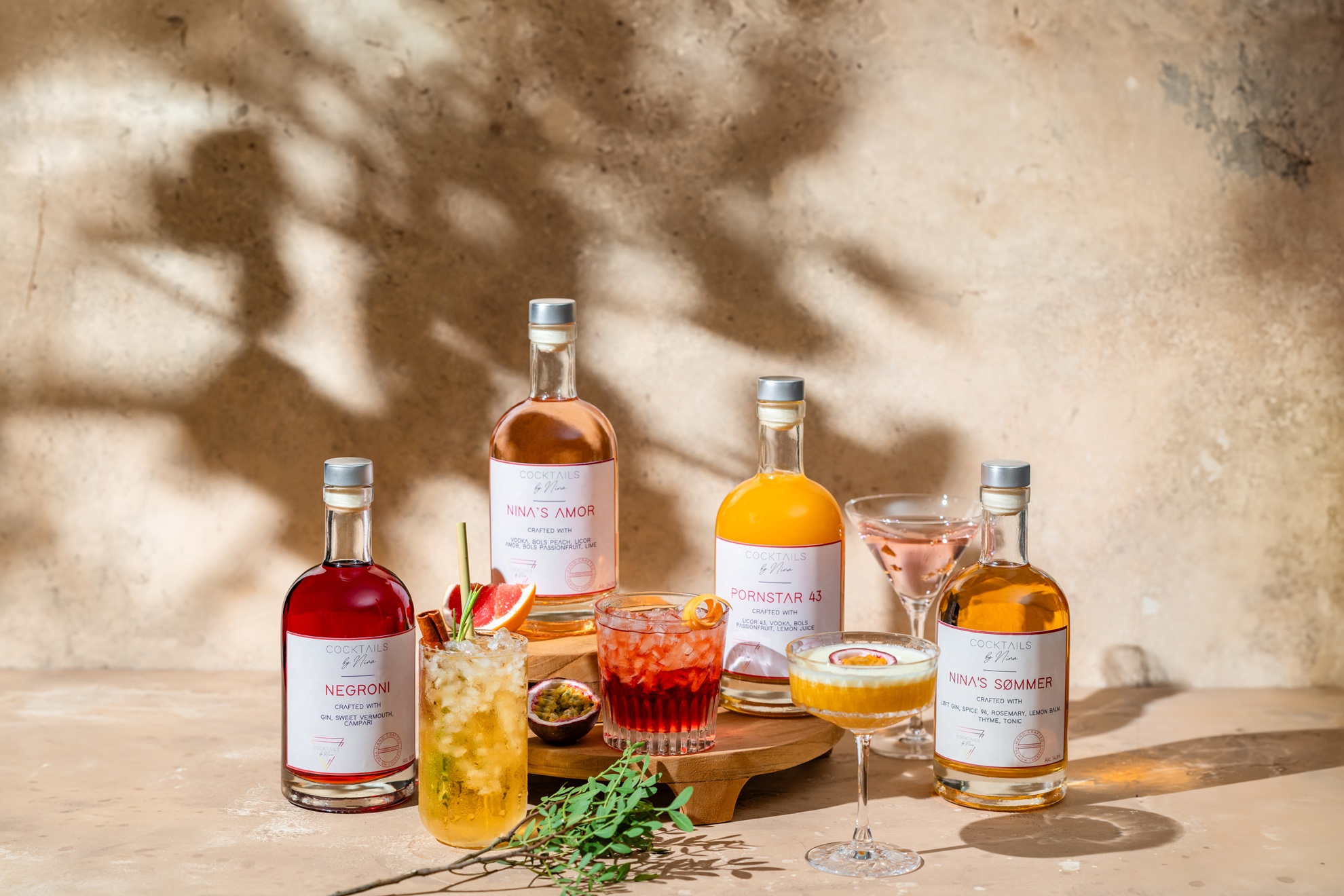
The mocktails are made with fresh ingredients and without the questionable malt or wheat syrups that sneak into some commercial mixers. View Cocktails by Nina's mocktails or discover the ready-made mocktail selection for a complete overview per product. For those who prefer to give a complete package as a gift or order for themselves, the Cocktail Box with 4 pieces is a practical choice with multiple flavors in one delivery.
Check the ingredient list on the product page for each product before ordering, especially if you have celiac disease or a high gluten sensitivity. Undecided between flavors? Check the product pages, read the ingredients, and order the box that suits your party or evening.