Garnishing in cocktails is the deliberate addition of flavor-enhancing and aesthetic elements that improve the aroma, taste, and presentation of a drink. Cocktail garnishing thus goes far beyond a slice of lemon on the rim of the glass. A good garnish enhances the aroma, adds taste contrasts, and gives texture to the overall experience. Think of an expressed orange peel over an Old Fashioned, a sprig of mint on a Mojito, or a salt rim on a Margarita. Each of these elements has a function. Anyone who understands how garnishing works will immediately elevate their mixology skills.
What is garnishing in cocktails and what exactly does it do?
Garnishing is the addition of an element to a cocktail that enhances aroma, adds flavor contrasts, and provides texture, not as a separate snack but as an integral part of the drink. This distinction is crucial. A garnish that is purely decorative without any taste function misses its purpose. Professional bartenders treat garnishing as an extension of the recipe, not as an afterthought.
The English professional term is "garnish" or "garnishing." In the Dutch mixology world, "garnering" and "garnituur" are used interchangeably. Both terms cover the same meaning: the conscious coordination of an addition with the taste, smell, and appearance of the cocktail. Anyone who takes cocktail terms seriously understands that garnishing is a discipline in its own right within mixology.
The importance of garnishing in cocktails lies in three layers. Firstly, the taste layer: a salt rim on a Margarita suppresses bitterness and enhances the fresh lime flavors. Secondly, the aroma zone: the essential oils in a citrus peel are released when expressed, literally guiding what you smell before you drink. Thirdly, the visual layer: a well-placed garnish gives the guest a first impression that already influences the expectation of taste.
What types of garnishes do you use in cocktails?
The types of garnishes in cocktails fall into five main categories, each with its own function and application area.
-
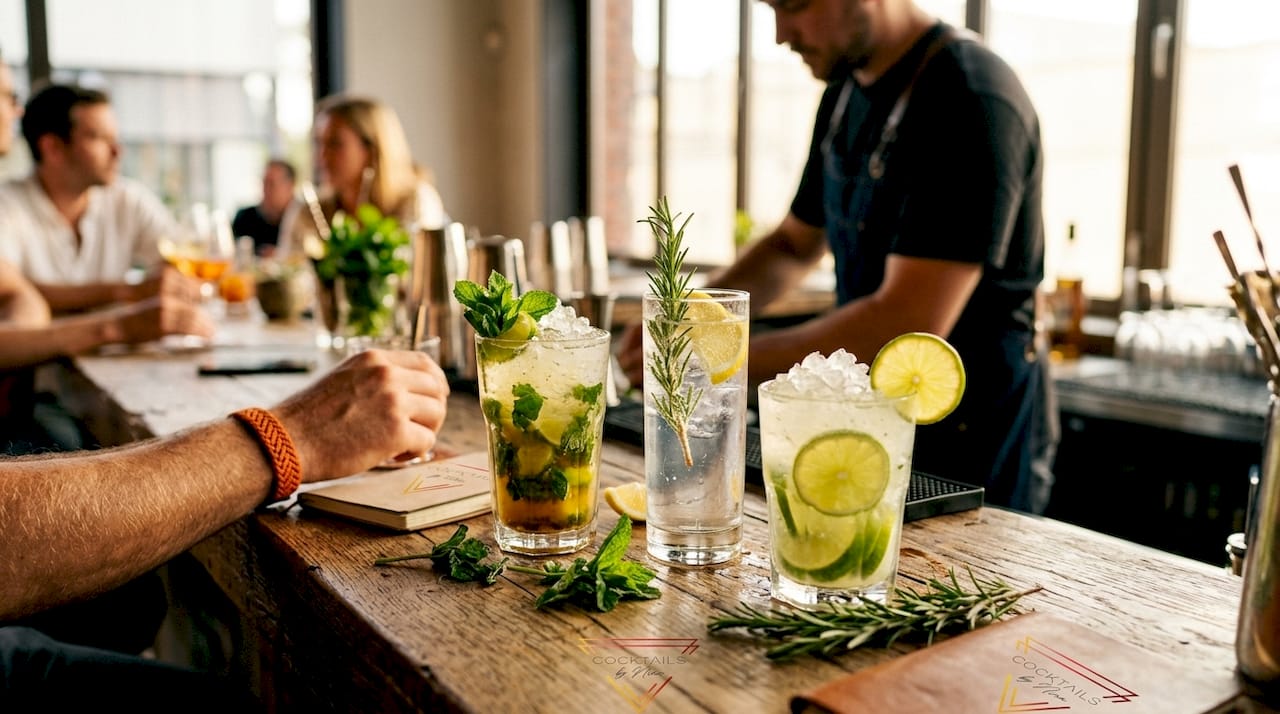
Citrus peels and slices. A twist, wheel, or wedge of lemon, lime, orange, or grapefruit is the most commonly used garnish in the world. Citrus peels contain essential oils that, when expressed, release aromas that guide the cocktail experience. A twist over a Martini gives a completely different nose than a wedge on the rim of a Gin & Tonic.
-
Fresh herbs. Mint, basil, rosemary, and thyme provide fresh aromas that citrus cannot replace. Gentle handling of fresh herbs preserves the aroma better than vigorous crushing. Gently clap a sprig of mint on your palm to activate the oils without damaging the leaves.
-
Salt and herb rims. A salt rim is functional, not decorative. Salt suppresses bitter flavors and enhances sweet and fresh notes by stimulating saliva production. Variations with smoked salt, chili powder, or sugar add an extra dimension of taste.
-
Edible flowers and botanicals. Violets, lavender, and hibiscus are visually striking and add subtle floral notes. They pair well with gin and light spritzes. Note: not all flowers are edible, so only use certified edible varieties.
-
Dried fruit, nuts, and special elements. Dried orange slices, candied ginger, or an olive in a Dirty Martini fall into the category of functional decoration. They add texture and flavor accents that complete the cocktail.
Pro-tip: Always choose a garnish that reflects or enhances an ingredient from the cocktail itself. A basil leaf on a cocktail with basil syrup makes sense. A random strawberry on a whiskey drink does not.
How does garnishing influence taste and aroma?
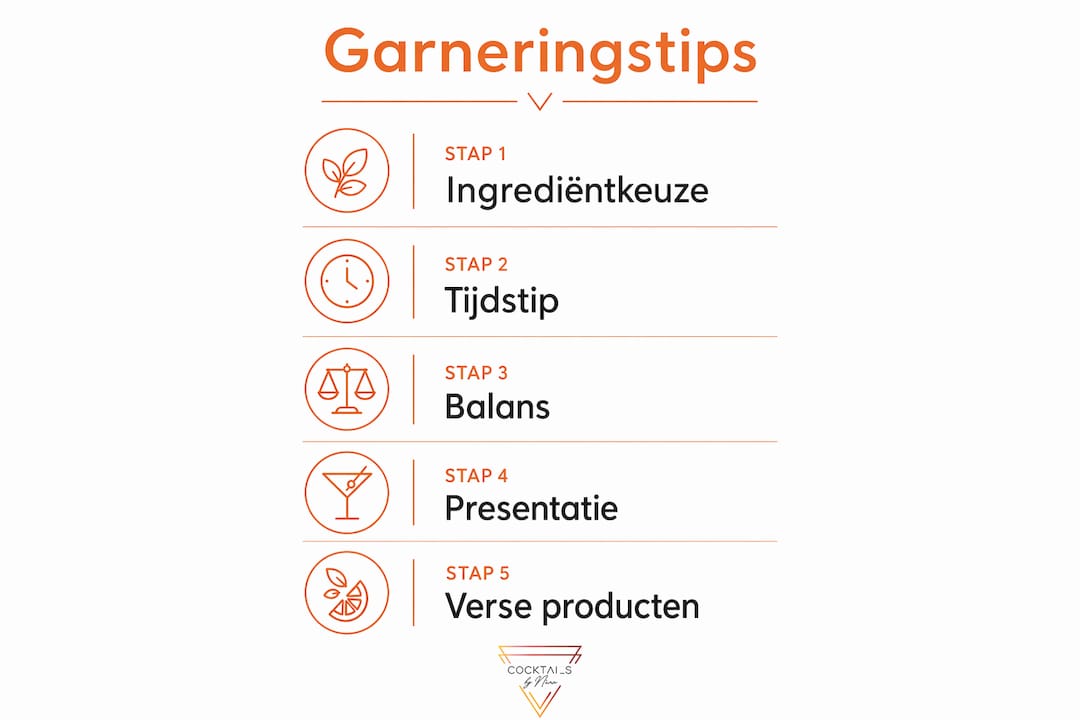
The science behind cocktail garnishing is more concrete than most people realize. Aroma largely determines what you perceive as "taste." Because your nose starts smelling before you drink, the garnish guides the expectation and thus the perception of the first sip.
Here are the four mechanisms that garnishing uses to influence taste and aroma:
-
Expressing citrus peel. The technique of expressing is not semantics. You squeeze the peel over the glass so that the essential oils are actively released and spread over the surface of the cocktail. Fresh citrus peels quickly lose their intensity because essential oils evaporate if cut too early. Always cut the peel at the last moment.
-
Salt as a flavor enhancer. A small amount of salt on the rim or directly in the cocktail acts as a subtle flavor correction without overpowering. The result is a fuller, more complete taste experience.
-
Herbs as aroma carriers. Mint over a Mojito or Mint Julep adds a fresh herbal note through the nose with every sip. The guest smells the mint while drinking, which enhances the perception of freshness.
-
Texture through garnishing. A salt rim provides resistance at the first touch of the lip. A piece of dried fruit provides a chewing moment. Both elements make the drinking experience physically richer.
“A garnish must earn its place through function and alignment with the cocktail. Bartenders who take garnishing seriously treat it as an integral part of the recipe balance.” Source: Slate, 2026
Timing plays a significant role here. The right time for garnishing determines the strength of the aroma experience. Pre-cut garnishes lose their scent. Immediate use is not a luxury; it is the standard.
Which garnish suits which cocktail?
Not every garnish suits every cocktail. The choice depends on the base spirit, the flavor balance, and the glassware. Citrus often pairs with gin, mint with rum cocktails, and salt with tequila. Glass shape also influences how scent and taste are perceived: a narrow glass concentrates aromas, while a wide glass disperses them.
| Garnish Type | Best Application | Function |
|---|---|---|
| Citrus twist | Martini, Negroni, Old Fashioned | Aroma via essential oils |
| Citrus wedge or wheel | Gin Tonic, Mojito, Spritz | Flavor accent and visual freshness |
| Fresh mint | Mojito, Mint Julep, Hugo | Aroma carrier with each sip |
| Salt rim | Margarita, Paloma, Bloody Mary | Flavor enhancement, bitterness reduction |
| Edible flowers | Gin Tonic, Elderflower Spritz | Visual impact and subtle floral note |
| Olive or cocktail cherry | Martini, Manhattan | Flavor contrast and texture |
| Dried fruit | Whiskey cocktails, Tiki drinks | Decorative with subtle flavor addition |
Garnish shapes like twists, wheels, and wedges differ not only in appearance but also in their effect on the taste experience. A twist provides more aroma than a wedge because you actively express the oils. A wheel is visually striking but functionally more limited.
Pro-tip: For gin-based cocktails, use a citrus and gin combination as a starting point. Mediterranean gins with citrus zests as botanicals require a garnish that enhances those notes, such as a grapefruit zest or a blood orange slice.
In classic cocktails like the Negroni or the Margarita, the garnish is already part of the original recipe. With modern and custom creations, you have more freedom, but the rule remains: the garnish must add something to the taste, aroma, or texture. Anyone who studies classic cocktails will see that the garnish almost always has a direct link to the flavor profile of the drink.
Practical tips and common mistakes when garnishing
Good garnishing is a skill that can be learned. Most mistakes stem not from a lack of creativity but from poor timing, incorrect preparation, or excess.
-
Always cut citrus at the last moment. Fresh peels must be used immediately to maintain scent and flavor intensity. A citrus peel cut an hour ago has already lost a large part of its essential oils.
-
Gently clap herbs on your palm. Crushing mint vigorously breaks the cell walls and gives a bitter, grassy note. A gentle clap activates the oils without damaging the leaves.
-
Apply the garnish after pouring, not before. A beautiful garnish that sinks into the cocktail loses its visual function. Place it at the last moment so it stands fresh and upright.
-
Avoid excess. Garnishes should be functional and not excessive. Three different garnishes on one glass confuse the guest and dilute the flavor message. Choose one strong garnish that suits the cocktail.
-
Use only edible and fresh ingredients. Dried or wilted herbs not only look bad, but they also give off a stale odor that negatively affects the cocktail. Fresh ingredients are not an option but a requirement.
-
Match the garnish to the glassware. A large garnish on a small shot glass does not work. A subtle twist fits a narrow champagne glass better than a thick slice of lemon. Also, consider how cocktail glasses influence the presentation of your garnish.
A good rule of thumb: if you remove the garnish and the cocktail looks and smells exactly the same, the garnish was superfluous. Every good garnish leaves a noticeable trace in aroma, taste, or experience.
Key insights
Garnishing in cocktails is a functional discipline where every choice must enhance aroma, taste, or texture, never merely decorative.
| Point | Details |
|---|---|
| Definition of garnishing | A garnish enhances aroma, taste, and texture as an integral part of the cocktail. |
| Citrus is the most versatile garnish | Expressing citrus peel releases essential oils that directly guide the aroma experience. |
| Salt acts as a flavor enhancer | Small amounts of salt suppress bitterness and enhance sweet and fresh notes. |
| Timing is everything | Use fresh garnishes immediately; cutting in advance allows aroma to evaporate. |
| Less is more | One thoughtful garnish works better than three decorative elements without function. |
Garnishing is more than a beautiful finish
by Ruud
After years of making and tasting cocktails, my conviction is clear: most people completely underestimate garnishing. They see it as the finishing touch, the last push for the photo. But the bartenders I admire most start with the garnish. They ask themselves: what do I want the guest to smell before drinking? That's a completely different question than: what looks nice?
What strikes me is that excess in garnishing is almost always a sign of insecurity. If you're not sure if the cocktail is good enough, you pile something on top of it. But a well-balanced cocktail only needs one garnish that confirms the taste. A Negroni with an orange twist is perfect. That same Negroni with an orange twist, a rosemary sprig, and a dried flower is confusing.
My personal lesson: experiment with expressing. Take an orange peel, hold it over a glass, and squeeze. Smell the difference. That moment, that release of oils, is where garnishing truly begins. Everything after that is technique. And for those who take presentation at events seriously: a well-garnished cocktail tells a story without you having to say a word.
— Ruud
Garnish cocktails with Cocktailsbynina products
Anyone who wants to experiment with garnishing at home needs the right foundation. Cocktailsbynina offers ready-to-drink cocktails and mocktails of bar quality, so you can focus on the garnish instead of mixing.
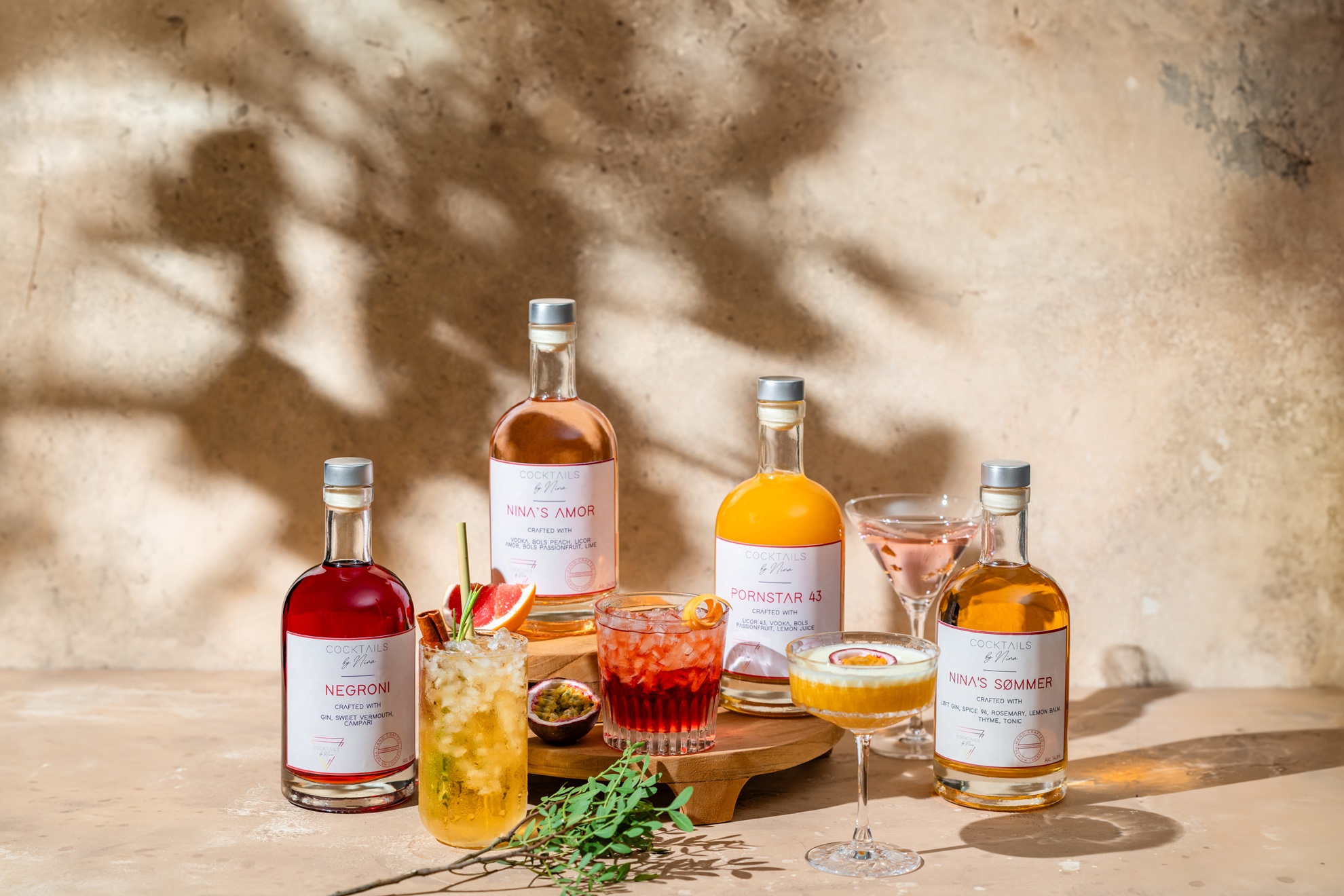
The cocktail box with 4 pieces is an excellent starting point: four premium cocktails where you can practice and refine your garnishing skills. For those who prefer non-alcoholic options, the collection of non-alcoholic cocktails offers plenty of opportunities to experiment with citrus, herbs, and salt rims. Also, check out the gin garnish tips for inspiration with Mediterranean spirits. You learn garnishing by doing, and Cocktailsbynina gives you the perfect basis to start with.
FAQ
What is the difference between garnish and decoration?
A garnish always has a taste or aroma function in addition to its visual effect. Decoration is purely aesthetic. An expressed citrus peel is a garnish; a plastic umbrella is decoration.
Which garnish suits a Margarita?
A salt rim and a lime wedge are the classic choices for a Margarita. The salt suppresses bitterness and enhances the fresh lime notes in the cocktail.
How do you make a citrus twist?
Cut a thin strip of peel from a lemon or orange, avoiding as much of the white pith as possible. Hold the peel over the glass and squeeze it to release the essential oils. Use the twist immediately.
Can you prepare garnishes in advance?
Citrus peels and fresh herbs quickly lose their aroma if cut too early. Prepare garnishes as short as possible before serving, preferably at the last moment.
What are good garnishes for mocktails?
Fresh mint, cucumber slices, edible flowers, and citrus zests work excellently with mocktails. They add aroma and visual appeal without alcohol, completely enhancing the taste experience.