A mixer is an electrical kitchen appliance that mixes, beats, or purees ingredients through rapid rotating movements. For anyone looking to make cocktails or smoothies at home, choosing the right appliance is crucial for the final result. The market offers four main types: the hand mixer, the immersion blender, the stand mixer, and the blender. Each type has its own strengths, power range, and accessories. This article explains how they differ, how they technically work, and which one best suits your drink preparation needs.
What is a mixer, and what types are there?
A mixer is not a single, unambiguous appliance. The term covers four different categories, each performing a different task in the preparation of drinks and dishes.
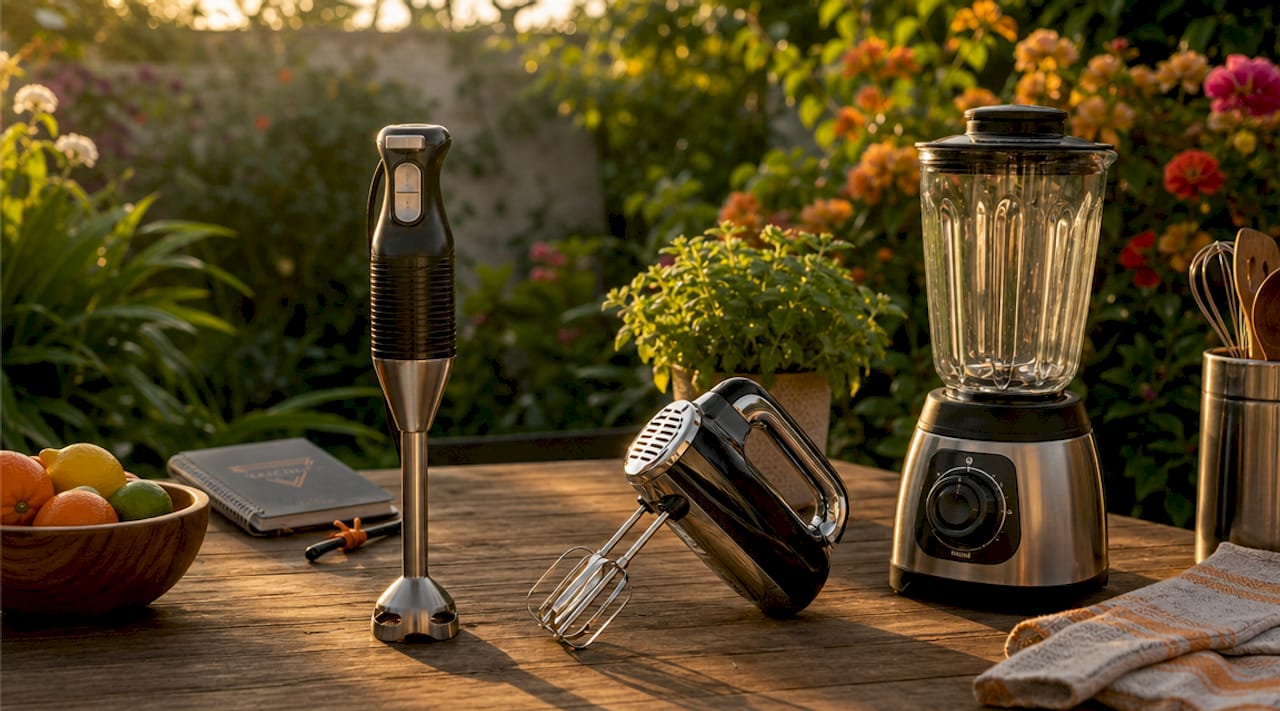
- Hand mixer: A lightweight appliance that you hold by hand over a bowl. Ideal for whipping cream, mixing batter, and aerating ingredients. Brands like Philips, Bosch, and Braun offer reliable models between 150 and 400 watts.
- Immersion blender: A stick-shaped appliance that you insert directly into a pan or cup. According to bestetestreviews.nl, an immersion blender is ideal for making smoothies and sauces. The appliance purees ingredients on the spot, without needing to transfer everything.
- Stand mixer: A heavier appliance with a fixed bowl and a motor in the base. The KitchenAid Artisan is the best-known example. This type processes large quantities and works with interchangeable accessories such as whisks, dough hooks, and spiral hooks.
- Blender: Technically a separate appliance. Mixers are designed for mixing and beating, while blenders finely chop and puree ingredients into liquid. For cocktails with ice or frozen fruit, a blender is the better choice.
The difference between a mixer and a food processor is also worth knowing. Mixers beat and mix, while food processors can also chop and slice. For drink preparation, a good immersion blender or blender is usually sufficient.
Pro-tip: If you're buying a mixer specifically for cocktails with crushed ice or frozen mango, choose a blender with at least 700 watts. A standard hand mixer is not suitable for this.
How does a mixer technically work?
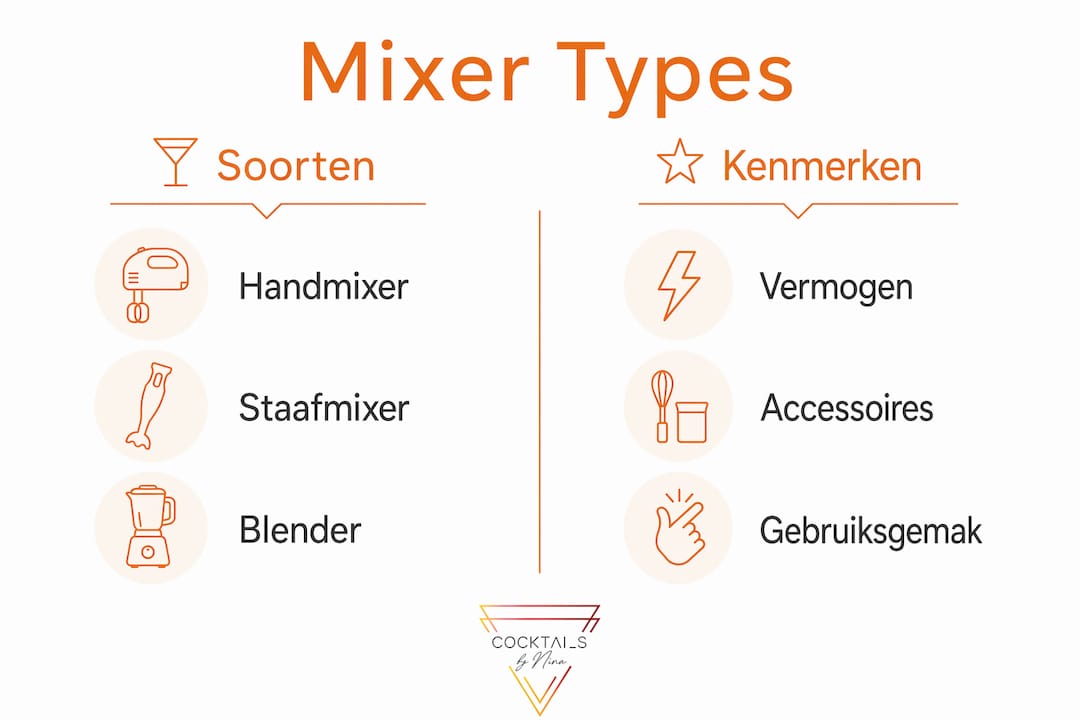
The technical operation of a mixer revolves around three factors: motor power, speed, and accessory movement. If you understand how these three work together, you'll never again buy an appliance that falls short.
Motor power in watts
Wattage determines how much resistance a mixer can handle. Mixers of 200 to 400 watts are ideal for light tasks such as whipping cream and mixing batter. More powerful models of 400 to 600 watts process thicker batter. For smoothies, a different standard applies: immersion blenders need at least 450 watts to puree soups and smoothies without lumps. This is a hard minimum, not a recommendation.
Speed settings
More speed settings mean more control. Low speed settings like 0.5 or 1 are crucial for gently processing delicate ingredients without losing airiness. When making a cocktail syrup or a light dressing, you want that control. High speeds are for finely crushing ice or quickly pureeing fruit.
Planetary mixing action
Stand mixers like the KitchenAid use a planetary system. The accessory rotates on its own axis and simultaneously moves in a circle around the bowl. Planetary kneading systems ensure that the accessory touches multiple points in the bowl, optimizing mixing. The result is an evenly mixed product with no dead spots. For home use in cocktail preparation, this level of technology is rarely necessary, but it explains why professional bartenders and pastry chefs swear by this type of appliance.
Mixing versus blending
Mixers incorporate air into a mixture without breaking down its structure. Blenders completely pulverize ingredients into liquid. This distinction is precisely why you use a blender for a frozen margarita and a hand mixer or immersion blender for airy cocktail foam.
Pro-tip: Always start on the lowest speed setting and gradually increase. This prevents splashing and allows the appliance to incorporate ingredients evenly.
How to choose the right mixer for cocktails and smoothies?
The best mixer for drink preparation depends on what you're making, how often you make it, and how much space you have. Below is a comparison to help you choose.
| Mixer type | Best for | Minimum wattage | Cleaning |
|---|---|---|---|
| Hand mixer | Whipped cream, light cocktail foam | 200 watts | Easy, separate whisks |
| Immersion blender | Smoothies, sauces, soups | 450 watts | Rinse shaft |
| Stand mixer | Large batches, heavy batter | 400 watts | Bowl and accessories separately |
| Blender | Frozen cocktails, crushed ice | 700 watts | Can self-clean |
Matching power to ingredients
Frozen fruit, ice, and nuts require more power than fresh ingredients. A 300-watt immersion blender won't cut it for a frozen banana smoothie. Always choose slightly more power than you think you'll need. An appliance that consistently operates at its limit will break down faster.
Accessories determine possibilities
A mixer often comes with accessories like whisks, dough hooks, and spiral hooks, each serving a different function. For drink preparation, the whisk and the blending shaft are most relevant. A whisk incorporates air into liquids, which is useful for cocktail foam or whipped cream as a garnish. A blending shaft on an immersion blender purees fruit directly in the glass.
Size and ease of use
A stand mixer takes up a lot of counter space. If you only occasionally make a smoothie or cocktail, a compact immersion blender from a brand like Bamix or Braun is a smarter choice. It fits in a drawer and can be cleaned in thirty seconds. For those who regularly make larger quantities, a stand mixer with a bowl of at least 4.7 liters is worthwhile.
Pro-tip: When buying, always check if replacement parts are available. A mixer whose whisk can no longer be ordered after two years will cost you more in the long run.
For more background on which spirits and equipment go well together, read more on premium cocktails at home.
Practical tips for use and maintenance
A good mixer will last for years if you use and clean it properly. Most damage doesn't come from wear and tear, but from improper use.
- Always start on a low speed. If you go straight to the highest setting, the contents will splash everywhere and you'll put unnecessary strain on the motor. Only increase the speed once the ingredients are somewhat mixed.
- Never fill the blender jar more than three-quarters full. Hot liquids expand under pressure. An overfilled jar of hot soup can blow the lid off. Cold or lukewarm is always safer.
- Clean immediately after use. Dried smoothie residues or cocktail syrup are difficult to remove. Rinse the immersion blender shaft or blender jar immediately with warm water. Most blender jars can be self-cleaned in ten seconds with a drop of dish soap and warm water on a low speed.
- Regularly check the cord and connection. A damaged cord is a safety hazard. Cheaper models are more prone to this than brands like KitchenAid or Bamix.
- Use the right accessories for the right task. A dough hook in a smoothie or a whisk for frozen fruit will damage the accessory and yield a poor result. Always switch to the correct attachment for the task.
- Store the mixer dry. Moisture in the motor housing is the quickest way to ruin an appliance. Allow all parts to dry completely before storing them.
The KitchenAid Artisan can whip cream in less than 60 seconds with the right speed and accessories. This is only possible if the appliance is well-maintained and the whisk is clean and straight. A bent whisk will beat less efficiently and strain the motor.
Key insights
The right mixer for cocktails and smoothies is the immersion blender or blender with at least 450 watts, supplemented with the right accessories for your specific drink preparation.
| Point | Details |
|---|---|
| Power is key | Choose at least 450 watts for smoothies and 700 watts for frozen cocktails with ice. |
| Four types, four functions | Hand mixer, immersion blender, stand mixer, and blender each have their own application in drink preparation. |
| Accessories determine the result | A whisk incorporates air into drinks; a blending shaft purees fruit directly in the glass. |
| Always start low | Start on the lowest speed setting to prevent splashing and process ingredients evenly. |
| Maintenance extends lifespan | Cleaning immediately after use and dry storage prevents most damage to the motor and accessories. |
My honest take on mixers for home use
When I first got serious about making cocktails at home, I bought a 250-watt hand mixer. Logical choice, I thought. Cheap, compact, versatile. It took exactly one frozen strawberry daiquiri to understand I was wrong.
A hand mixer is great for whipped cream and light cocktail foam. But for frozen fruit, ice, or thick smoothies, you need a blender or a powerful immersion blender. That's not an opinion, that's physics. A 250-watt motor simply can't handle it.
What I would now advise anyone wanting to make cocktails at home: buy an immersion blender of at least 500 watts if you regularly make smoothies or pureed drinks. Add a compact blender if you also want frozen cocktails. Brands like Bamix and Braun offer reliable immersion blenders in that power range without breaking the bank.
What I also missed with my first purchase: the value of good accessories. The standard whisk that comes with a cheap hand mixer bends after a few months of intensive use. A replacement of better quality costs a few euros and makes a noticeable difference in the result. Also read more about how syrups improve your cocktails once you've mastered the technique.
The best mixer isn't the most expensive one. It's the mixer that suits what you make, how often you make it, and that you consistently keep clean.
— Ruud
Cocktails without a mixer? Cocktailsbynina has the solution
Not everyone wants to invest in a mixer, and they don't have to. Cocktailsbynina offers ready-made, bar-quality cocktails and mocktails, ready to enjoy at home.
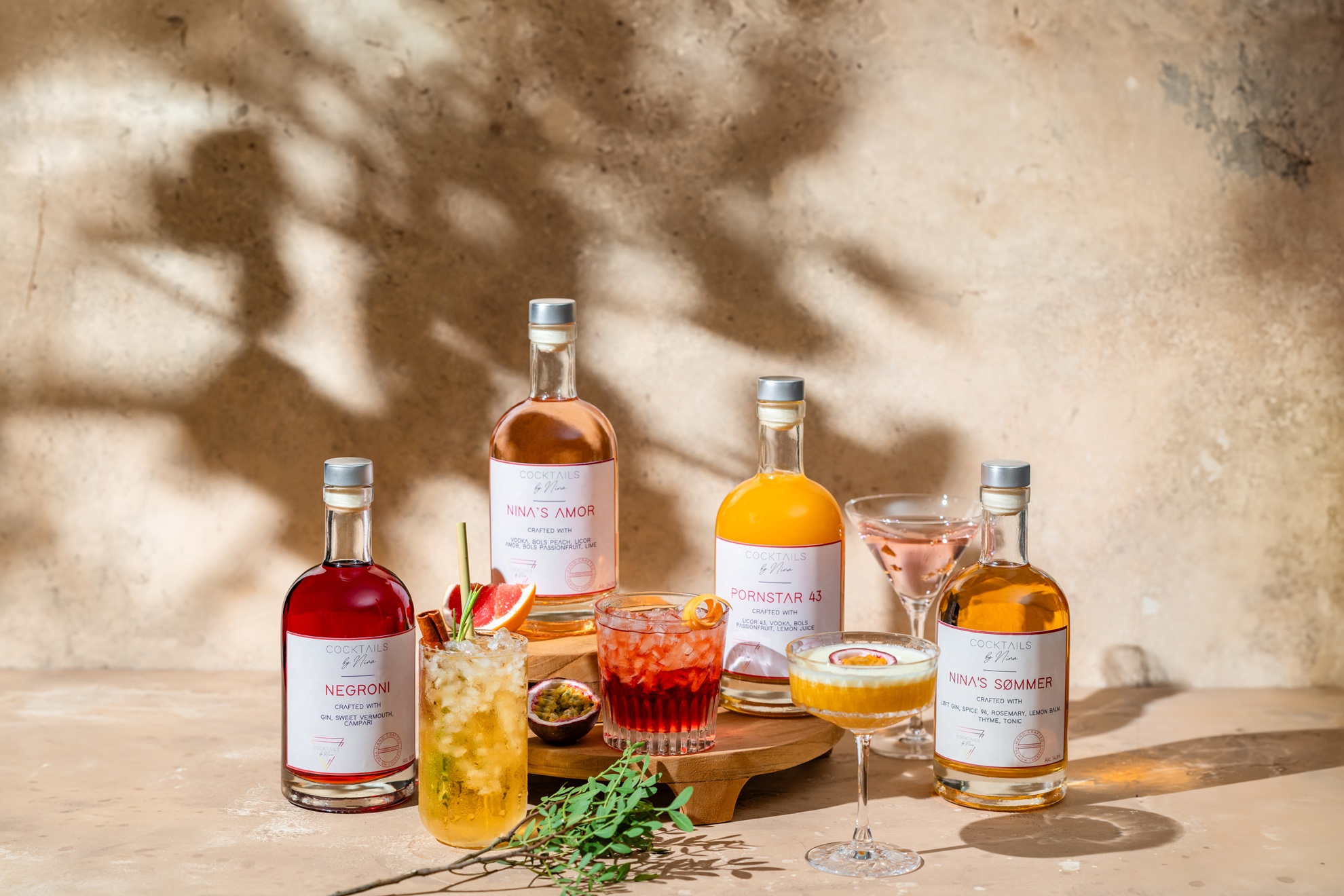
Whether you're hosting a party, looking for a gift, or simply want to enjoy a professional cocktail without the fuss: Cocktailsbynina's assortment is made with premium ingredients and spirits. Check out the mocktail collection for alcohol-free options, or discover the alcohol-free cocktails for a complete drink experience without having to mix it yourself. Convenience and quality in one order.
FAQ
What is the difference between a mixer and a blender?
A mixer mixes and beats ingredients while incorporating air, without completely breaking down their structure. A blender completely pulverizes ingredients into a smooth liquid, which is necessary for frozen cocktails and thick smoothies.
How many watts does a good mixer need for smoothies?
An immersion blender needs at least 450 watts to puree smoothies without lumps. For smoothies with frozen fruit or ice, a blender of at least 700 watts is recommended.
Which mixer is best for cocktails at home?
For most cocktails, a 500-watt immersion blender or a compact blender will suffice. A hand mixer is suitable for cocktail foam and whipped cream as a garnish, but not for frozen or thick ingredients.
Can I use a hand mixer for a smoothie?
A hand mixer is not suitable for smoothies with frozen fruit or ice. The appliance is designed for beating and mixing light ingredients, not for pureeing. Use an immersion blender or a blender with sufficient power for that.
How do I best maintain my mixer?
Clean the mixer immediately after use, allow all parts to dry completely before storage, and regularly check the cord for damage. Always use the correct accessory for the task to prevent wear and tear.