An effective shot serving workflow is the method by which you offer shots in an organized, fast, and festive way without chaos or shortages. Anyone distributing shots at a party without a plan will quickly find guests waiting, glasses missing, and the atmosphere dropping. A good shot workflow combines preparation, batching, and smart timing to ensure each round goes smoothly. In this guide, you will learn exactly how to do this, from calculating the right quantities to setting up a professional serving station. Cocktailsbynina shares the techniques that make the difference between a messy round and an unforgettable party moment.
What is the correct shot serving workflow?
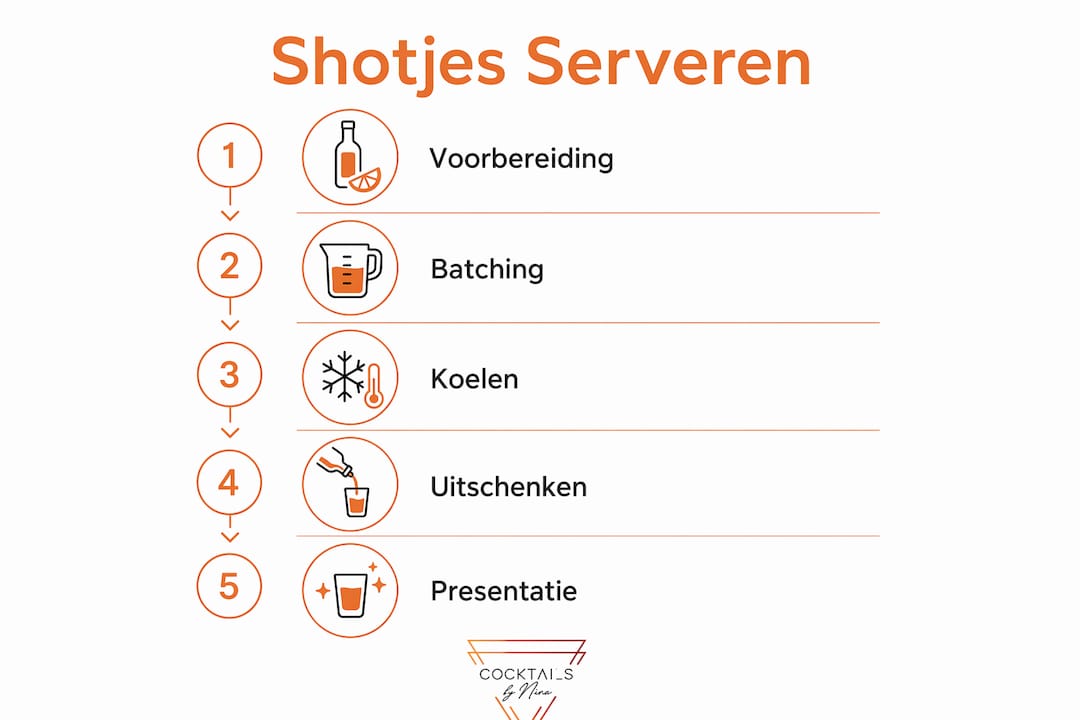
A shot serving workflow consists of three phases: preparation, execution, and presentation. Each phase has fixed steps that you can plan in advance, so you execute rather than improvise during the party. The core of an effective shot serving workflow is that you never start calculating or searching on the spot. Everything is ready, everything is chilled, and each round has a set time.
Batching is the professional technique behind a smooth workflow. This involves mixing large quantities of shots in advance, including calculated dilution, and storing them chilled until the moment of serving. Good batching is the secret weapon of the professional bartender, as it relieves pressure at the moment itself. Premixed shots in PET bottles are the fastest variant: pre-filled, chilled, and directly distributable without washing glasses or mixing errors.
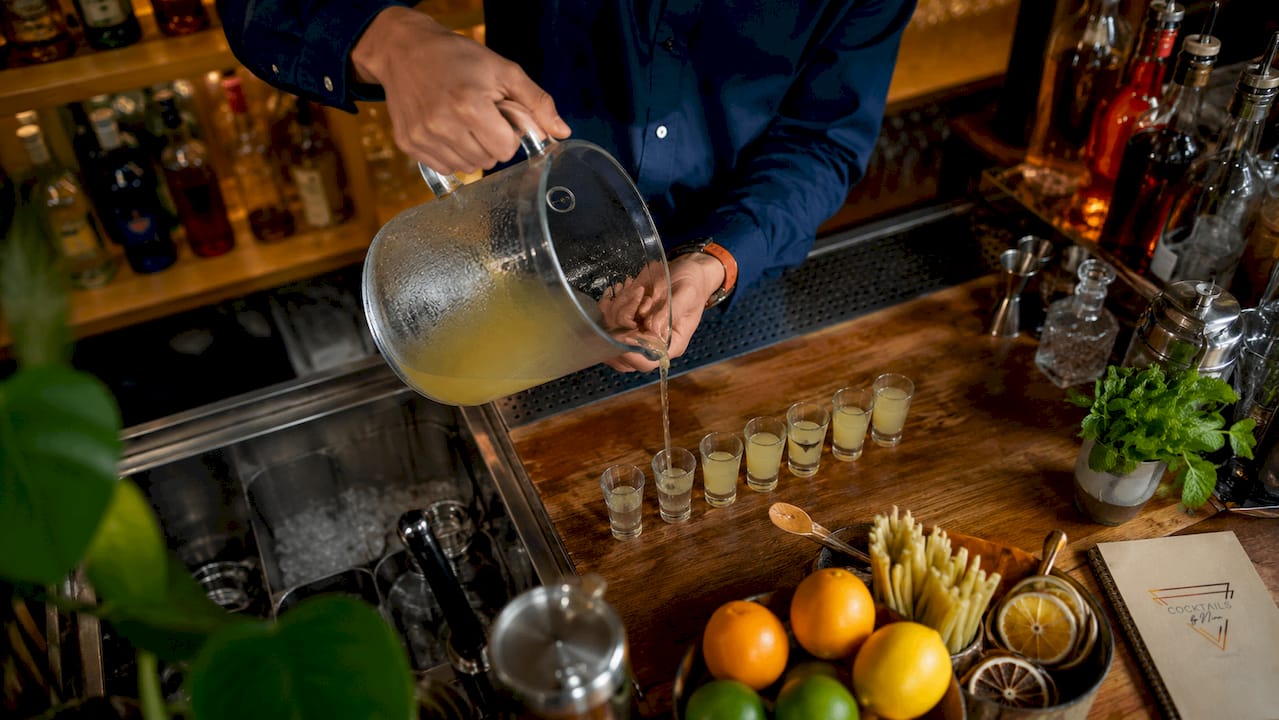
The shot workflow links rounds to fixed party moments. Think of a welcome shot upon arrival, a round when cutting the cake, and a climax round at the peak of the evening. This gives structure to the party and makes serving shots a ritual instead of a logistical chore.
How many shots per person do you need?
Estimating the correct number is the basis of any good shot service organization. Calculate too little, and you'll be empty-handed. Calculate too much, and you'll waste money.
The rule of thumb is as follows:
- Evening party with food and water: 2 to 4 shots per person
- Intimate party or birthday gathering: 4 to 6 shots per person
- Long-running party without extensive food: calculate at the higher end of the range
- Mixed company with non-drinkers: adjust the total amount based on the number of drinking guests
- Unexpected guests or extra rounds: always add a safety margin of 10 to 20%
For 20 guests and 3 shots per person, that's 60 shots. With a 15% margin, you plan for 69. This extra buffer prevents stress if more people show up or if a round extends. Food and water reduce the need for alcohol, so a party with an extensive buffet requires fewer shots than a get-together with just snacks.
Pro-tip: Link each round to a specific party moment, such as the welcome, the cake, or the closing. This way, you plan your stock per round and know exactly what you need when.
What tools are indispensable for a smooth workflow?
The right materials determine how quickly and flawlessly you can serve. A good shot bar workflow stands or falls with the preparation of the serving point.
| Tool | Function | Tip |
|---|---|---|
| Shot glasses (2 to 4 cl) | Standard serving volume | Prepare 20% more than guests |
| Serving board or tray | Distribute multiple shots simultaneously | Choose a board with compartments for stability |
| Shot holder or rack | Organized presentation | Increases visual impact |
| Chilled storage (fridge or freezer) | Keep shots cold until serving | Place glasses in freezer 30 minutes before use |
| Measuring cup and funnel | Accurate batching and filling | Indispensable for large quantities |
| Labels and markers | Distinguish between flavors or non-alcoholic | Prevents confusion with multiple variants |
| Premixed PET bottles | Direct service without mixing | Fast and flawless serving during busy times |
Premixed shots in PET bottles are the smartest choice for busy moments. They are pre-filled, can be stored chilled, and are directly distributable. This eliminates mixing errors and glass breakage, and you don't have to wash glasses between rounds. For a home bar or small event, shot glasses on a beautiful serving board offer the most impressive presentation.
Pro-tip: Set up your serving point completely beforehand, including garnishes, labels, and an extra cloth for spills. Preparing labels and garnishes in advance ensures consistency and speed at the busiest moment.
Step-by-step execution during the event
A good shot presentation starts 48 hours before the party, not on the day itself. Here's the complete timeline:
-
48 hours in advance: Determine the number of shots per round based on your guest list. Order or prepare the ingredients for your batch. Check if you have all the tools.
-
24 hours in advance: Mix your batches without citrus. Calculate the dilution that ice would normally add and add this as water to the batch. Store the batch chilled in a sealed bottle or dispenser.
-
2 to 4 hours before the party: Add citrus elements to the batch. Adding citrus too early leads to flavor loss due to oxidation, so this step cannot be rushed. Place shot glasses in the freezer for an ice-cold presentation.
-
30 minutes before start: Set up the serving point. Prepare serving boards, fill shot glasses for the first round, and lay out labels for multiple variants. Check that non-alcoholic options are visibly separated.
-
At welcome: Serve the first round as guests arrive. This sets the tone and gives everyone a drink in hand immediately. Use a tray to distribute multiple shots at once.
-
During the party: Execute the planned rounds at the agreed times. Link each round to a festive ritual such as a toast or an announcement. Replenish the serving point after each round so you never have to search.
-
During busy times: Work with two people if you have more than 30 guests. One person fills, the other serves. This prevents queues and keeps the atmosphere high.
Pro-tip: Use a pitcher or dispenser for your batch instead of a bottle. You pour faster, more accurately, and with less spilling. This is the approach professional bartenders use at large events.
What mistakes do people make when serving shots?
Most problems when serving shots can be prevented with a little preparation. These are the most common pitfalls:
- Ordering too few shots: Without a safety margin, you risk shortages. Always calculate 10 to 20% extra.
- Forgetting dilution during batching: A batch without dilution tastes too strong and unbalanced. Calculating dilution is not an optional step.
- Adding citrus too early: Citrus elements should only be added to the batch 2 to 4 hours before serving. Adding earlier results in a bitter, flat taste.
- Disorganized serving point: If glasses, bottles, and garnishes are mixed up, you lose time and make mistakes. Set up the point in advance and keep it tidy.
- Forgetting non-alcoholic guests: Not everyone drinks alcohol. Always have a visibly labeled non-alcoholic option separate and presented just as festively.
- Wanting to serve everything at once: For more than 20 guests, one person is not enough. Plan who serves and who refills.
“Serving shots isn't just handing them out, it's a festive ritual. Linking rounds to moments makes it special.” — MPV Drinks
The solution to all these mistakes is the same: write out your workflow on paper before the party begins. A two-minute checklist prevents hours of stress.
Individual preparation versus batching and premix: what works better?
The choice between individual preparation, batching, or premixed shots depends on your event size and priorities.
| Method | Speed | Taste Quality | Suitable for | Disadvantage |
|---|---|---|---|---|
| Individual preparation | Slow | Highest possible | Small groups up to 10 people | Time-consuming when busy |
| Batching | Fast after preparation | Excellent with proper dilution | 15 to 100 people | Requires knowledge and planning |
| Premixed PET bottles | Fastest | Consistent, bar-quality | Busy parties, large groups | Less customizable |
Individual preparation offers the most control over taste and presentation, but is unfeasible for more than 10 guests if you also want to enjoy the party. Batching offers the best balance: you prepare everything calmly and serve quickly. Premixed shots in PET bottles are the choice when speed and consistency are the priority, such as at a large birthday party or corporate event.
For most party organizers and home bartenders, batching is the gold standard. You don't compromise on taste if you calculate the dilution correctly, and you save a lot of time when it matters. Read more about the effect of batching on taste and presentation in this guide on bar-quality drinks. For those who truly have no time to mix, ready-to-drink shots are the most practical choice.
Key insights
A good shot serving workflow combines correct quantity calculation, clever batching, and an organized serving point to make every party smooth and festive.
| Point | Details |
|---|---|
| Calculate quantity | Calculate 2 to 6 shots per person and always add a 10 to 20% safety margin. |
| Batching as basis | Prepare batches 24 hours in advance, including dilution, and add citrus only 2 to 4 hours before serving. |
| Set up serving point | Prepare glasses, labels, and garnishes in advance for speed and consistency during busy times. |
| Plan rounds | Link each shot round to a party moment for structure and a better guest experience. |
| Non-alcoholic option | Always ensure a visibly labeled non-alcoholic option alongside regular shots. |
Why the workflow makes the difference: my honest opinion
I've seen enough parties where shots were an afterthought. Someone runs to the kitchen, searches for glasses, pours too much or too little, and by the time the round is done, the moment has passed. That's a shame, because a well-timed shot round is one of the most powerful mood enhancers you have.
What I've learned: preparation takes longer than execution. If you invest 45 minutes in preparing your batch, your serving point, and your timeline, serving itself takes less than five minutes per round. That's the trade-off most people don't make, and they pay the price for it at the party itself.
Batching has changed the way I work. Not because it's easier, as it requires more knowledge than simply pouring. But because it gives me freedom. I'm not behind the bar mixing while everyone is dancing. I grab the pitcher, walk into the room, and it's done. The taste is consistent, the temperature is perfect, and the presentation is spot on.
One detail I always include: frozen shot glasses. It takes zero extra effort if you put them in the freezer 30 minutes before the party, but the effect on the experience is enormous. Guests notice the difference, even if they don't know exactly why the shot tastes so good. Small details like this are what distinguish a good workflow from an ordinary one. Also, check out the complete guide to shots and drinks for more practical insights like these.
— Ruud
Ready-to-drink shots from Cocktailsbynina
Cocktailsbynina offers a complete range of ready-to-drink shots, cocktail boxes, and mocktails that perfectly align with a professional workflow. You don't have to mix or batch yourself: the products are already prepared with premium ingredients and are ready to chill and serve.
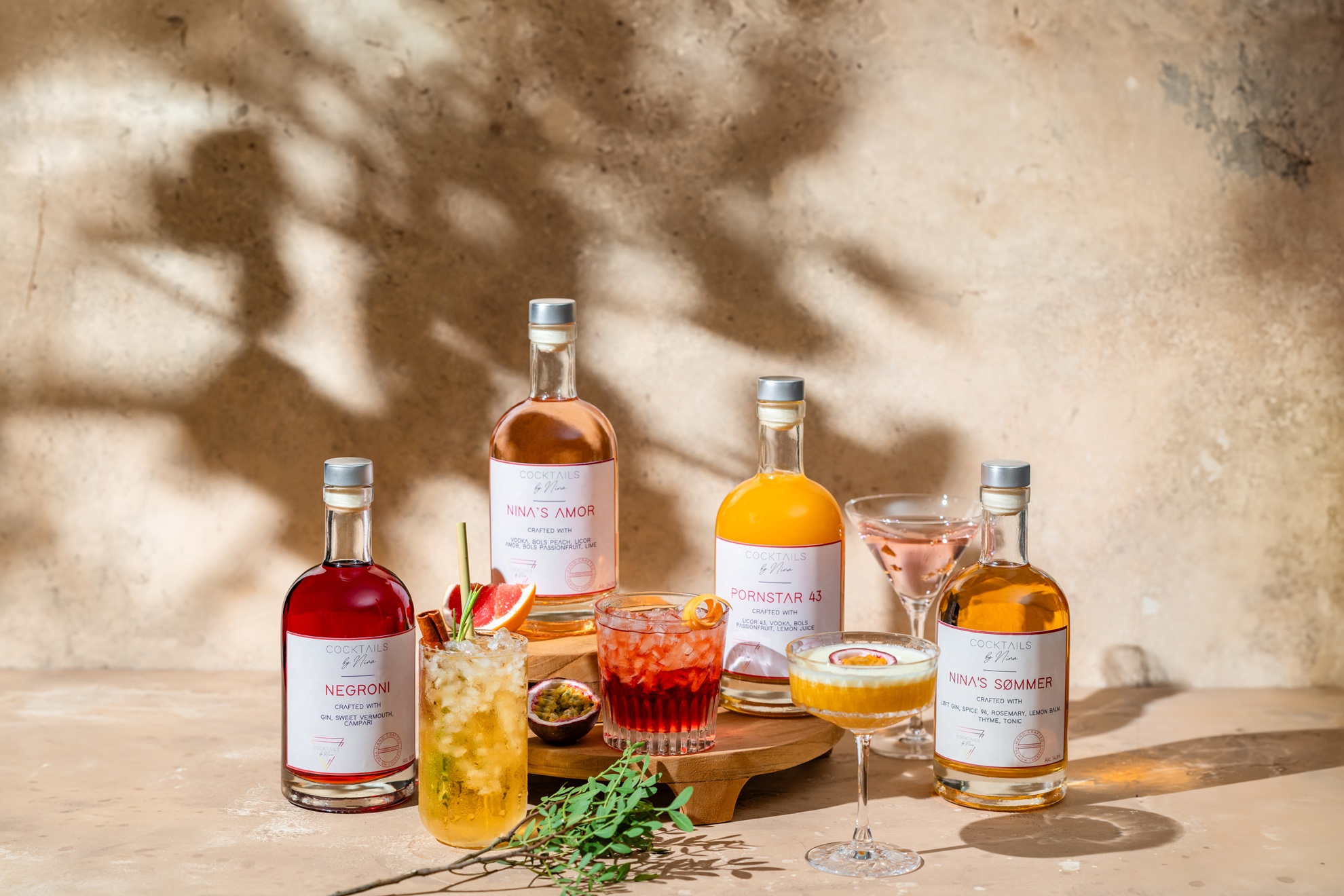
For party organizers and home bartenders who want to combine speed and quality, Cocktailsbynina's ready-to-drink shots are the most practical choice. The shot box with five 50ml split shots is ideal for small groups and perfect portioning. Those who also want to surprise non-alcoholic guests will find high-quality options in the mocktail assortment that look just as festive as the alcoholic variants.
FAQ
How many shots per person should I order?
Count on 2 to 4 shots per person for an evening party with food, and 4 to 6 per person for an intimate party or gathering. Always add 10 to 20% extra as a safety margin for unexpected guests or extra rounds.
What is batching when serving shots?
Batching means mixing large quantities of shots in advance, including calculated dilution, and storing them chilled until the moment of serving. This saves time during the party and ensures consistent taste with each round.
When do I add citrus to a batch?
Add citrus elements only 2 to 4 hours before serving to your batch. Adding it earlier leads to oxidation and loss of flavor, making the shots flat and bitter.
What is the difference between batching and premixed shots?
With batching, you mix large quantities yourself in advance. Premixed shots are pre-filled in bottles and require no preparation. Premix is faster and more error-free; batching gives more control over taste and composition.
How do I keep shots cold during a party?
Store the batch or bottles in the refrigerator until just before serving. Place shot glasses in the freezer 30 minutes before use for an ice-cold presentation. Use a chilled dispenser or pitcher if you are serving large quantities at once.