A successful party begins with the right preparation. The best tips for organizing a party revolve around three pillars: a clear theme, a realistic budget, and a tight schedule to keep you on track. Whether you're organizing a birthday, garden party, or corporate reception, the choices you make in the first few weeks determine how relaxed you'll be on the day of the party itself. This guide provides concrete party planning tips from start to finish, including decoration ideas, smart venue tips, and everything you need for an unforgettable event.
1. Start with a clear plan and guest list
The first step in how to organize a party is to decide what kind of party you want to throw and for whom. Write down the type of party, the desired atmosphere, and a rough guest list. These three elements will guide all subsequent choices.
For large parties with 50 or more guests, a recommended preparation time of 6 to 8 weeks applies. That may sound long, but venues, catering, and entertainment are quickly booked on popular dates. If you start later, you significantly limit your options.
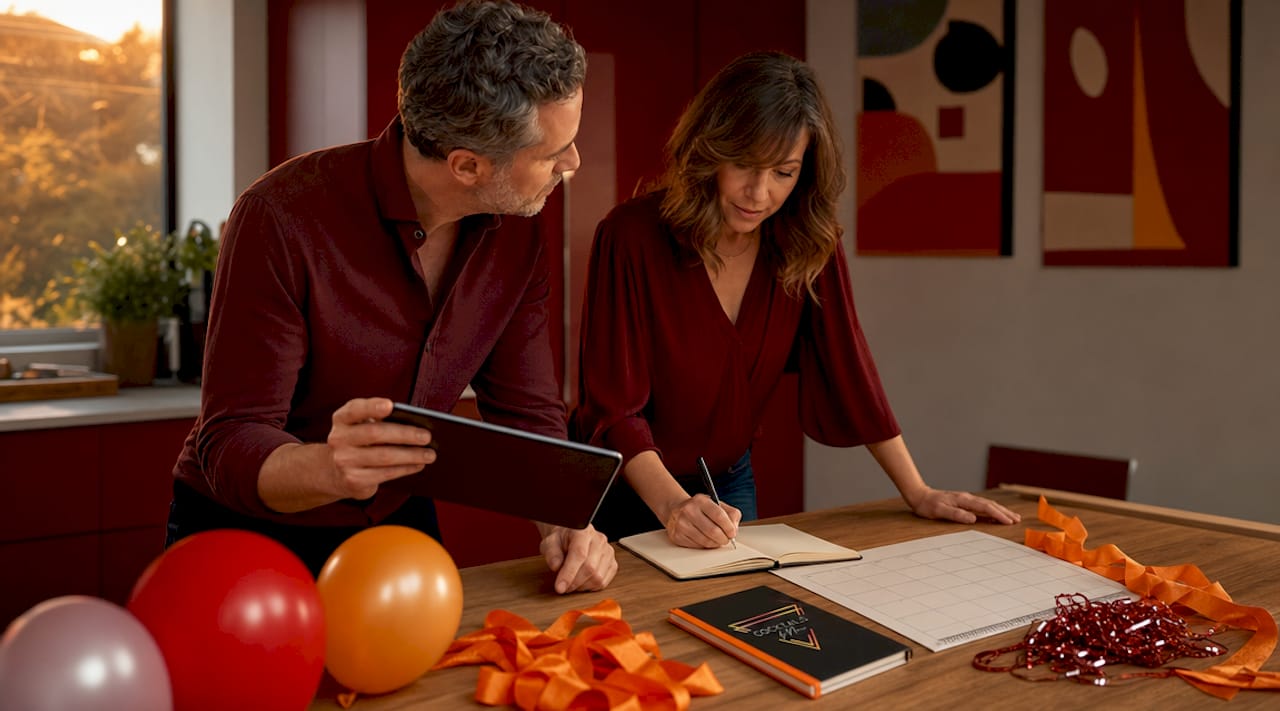
Send out invitations at least three weeks in advance. Use a digital tool like Partiful or a simple WhatsApp group for small parties, and ask for confirmation so you know how many people to expect.
Pro-tip: Make a separate list of guests you definitely want to invite and a reserve list. This way, you can quickly adjust if someone cancels without panicking.
2. Set a party budget and keep track
Establishing and monitoring a budget prevents unexpected costs and makes your planning more realistic. Divide your total budget into categories: venue, food and drinks, decoration, entertainment, and contingencies. Always reserve 10 to 15 percent as a buffer.
For each category, write down a maximum amount before you start booking. Once you reach that amount, stop spending in that category. This sounds strict, but it prevents you from discovering halfway through planning that you've already gone over budget.
Always compare at least three quotes for larger items such as catering or a tent. Price differences of 20 to 30 percent for comparable services are not uncommon. Also, note which costs have already been paid and which are still outstanding, so your cash flow remains clear.
3. Choose a theme that suits your guests
A clear vision and theme give direction to all choices and make the party cohesive and memorable. A theme doesn't have to be over-the-top. Think of a color palette, a decade, a country, or a style such as "garden party" or "80s disco."
Choose a theme that matches the personality of the birthday person or the purpose of the party. A theme that the host or hostess genuinely likes exudes authenticity, and guests will feel that. Choosing party themes is best done by starting with the question: what feeling do I want guests to have when they go home?
Let the theme be reflected in invitations, decorations, music, and drinks. This coherence is what distinguishes a party from a regular evening. Small details like themed cocktail cards or appropriate glasses from Cocktailsbynina enhance the experience without requiring a large budget.
4. Choose the right location and arrange the space smartly
The choice of location determines the atmosphere, comfort, and logistics of your party. Indoors offers more control over sound, temperature, and catering. Outdoors provides space and a relaxed atmosphere but requires a weather plan.
The required space per guest depends on the party type: count on 0.5 to 0.75 m² per person for a standing reception and 1 to 1.5 m² for a seated dinner or party with a dance floor. For a dance floor, add another 5 to 10 m² for buffet tables or a bar, so traffic flow remains smooth.
| Party Type | Space per person | Extra space needed |
|---|---|---|
| Standing reception | 0.5 to 0.75 m² | Minimal |
| Seated dinner | 1 to 1.5 m² | Separate buffet or bar |
| Party with dance floor | 1 to 1.5 m² | 5 to 10 m² extra |
Also consider practical matters such as sufficient electrical outlets. Distribute the power supply well to prevent overload, especially if you are using professional sound systems or extra lighting. Also check parking options and accessibility for guests with disabilities.
Pro-tip: Walk through the venue the day before with a floor plan on paper. Sketch in the entrance, bar, dance floor, and seating areas. This way, you'll immediately see if there are any bottlenecks before guests arrive.
5. Create atmosphere with lighting and decoration
Atmosphere is created not by expensive decoration, but by the right lighting. Warm, dimmed lighting enhances the ambiance and makes a party more inviting and cozy. Replace harsh overhead lights with string lights, candles, or colored spotlights that match your theme.
Decoration tips for parties revolve around cohesion. Choose two to three colors and stick to them. Use flowers, balloons, fabrics, or props that support the theme. Less is often more: a well-chosen centerpiece attracts more attention than an overcrowded space.
Don't forget the entrance. The first impression sets the expectation. A welcome sign, a few balloons, or a themed photo wall at the entrance immediately puts guests in the right mood. More inspiration for atmospheric party decorations can be found at Cocktailsbynina.
“A strong theme party for adults is about experience, not just decoration. Musical build-up and subtle details create atmosphere without being childish.” — Joeps.be
6. Music as an atmosphere creator from start to finish
Music is the invisible backdrop of your party. Start gently with background music as guests arrive and gradually build the energy as the evening progresses. A sudden transition from calm lounge music to loud dance music breaks the atmosphere.
Prepare three playlists in advance: one for arrival, one for dinner or drinks, and one for dancing. Spotify and Apple Music offer ready-made party playlists by genre or decade. If you hire a DJ, provide a briefing with must-play songs and songs you absolutely don't want to hear.
Make sure the volume is adjusted to the phase of the party. During dinner, you should be able to have a conversation. That sounds logical, but it's one of the most common mistakes made at home parties.
7. Organize food and drinks that appeal to everyone
Creating a good drink offering starts with your guest list. Count on a mix of alcoholic and non-alcoholic options. Mocktails and alcohol-free alternatives are no longer an afterthought in 2026. They are a full-fledged part of any party menu and are appreciated by a growing group of guests.
For food: buffets are efficient and offer variety. Ensure a logical setup to prevent congestion: plate, salads, main courses, sauces. Ask for dietary requirements in the invitation so you don't surprise guests with a menu they can't eat.
Practical checklist for food and drinks:
- Request dietary requirements in the invitation
- Count on 6 to 8 bites per person per hour for a reception
- Always offer water and soft drinks alongside alcohol
- Ensure sufficient ice, glasses, and napkins
- Plan who will manage the bar or buffet so it doesn't run itself
Pro-tip: Order ready-made cocktails or mocktails from Cocktailsbynina for a professional drink offering without the hassle. You don't have to mix anything, and the presentation is immediately on point. Check out the cocktail etiquette tips for a stylish drink presentation.
8. Plan entertainment that suits your party
Choose entertainment based on your guests, not on what's trending. A photo booth with props works well for a 30th birthday. A pub quiz suits a more intimate gathering. A live band or DJ suits a larger party with a dance floor.
Also consider transition moments. What do guests do while food is being served? What's the plan if the music temporarily stops? Small activities like bingo, a scavenger hunt, or a guest book fill these moments and keep the energy high.
Hire professionals for larger parties. A professional DJ or photographer costs money but also takes a lot of responsibility off your shoulders. You can then enjoy yourself instead of spending the whole evening troubleshooting.
9. Create a detailed schedule for the party day itself
A detailed schedule is indispensable to maintain control and prevent stress on the day of the party. It doesn't have to be an elaborate document. A simple timeline with the most important moments is enough.
Note what needs to happen at each time and who is responsible for it. Think about: when do suppliers arrive, when does dinner start, when is the cake cut. Share the schedule with everyone who is helping so you're not the only one with the overview.
Steps for a good schedule:
- Write down all moments from setup to breakdown
- Assign a responsible person to each task
- Add contact details of suppliers and helpers
- Build in a 15-minute buffer after each major moment
- Check the schedule the evening before the party
Pro-tip: Print out the schedule and hang it in a fixed place, such as the refrigerator or a clipboard near the entrance. This way, everyone can quickly consult it without having to ask you.
10. Inform neighbors and prevent complaints
Personally informing neighbors about the party and the expected end time prevents complaints and fosters understanding. Do this at least a week in advance, not on the day itself. A personal conversation or a note in the mailbox works better than a message via the neighborhood app.
Indicate what time the party will end and offer to be contacted if there are any problems. Most neighbors appreciate the effort and are then much more tolerant of some noise. Also, don't forget to check municipal rules for noise and end times, especially for outdoor parties.
11. Make a weather plan for outdoor parties
An outdoor party without a weather plan is a gamble. Check the weather forecast five days in advance and make a concrete Plan B. This could be a party tent, an indoor alternative venue, or simply extra parasols and blankets.
Inform guests in a timely manner if the plan changes. Send a message 24 hours in advance with the definitive location or adjustments. Guests who are surprised by a last-minute location change will be less happy than guests who know in advance.
Key Insights
Organizing a successful party requires an early start, a clear theme, and a detailed schedule that keeps everyone on the same page.
| Point | Details |
|---|---|
| Start on time | Begin 6 to 8 weeks in advance for parties with 50 or more guests. |
| Set a budget | Divide the budget by category and reserve 10 to 15 percent as a buffer. |
| Choose a cohesive theme | Reflect the theme in decorations, music, and drinks for a memorable experience. |
| Create a detailed schedule | Note times, tasks, and responsibilities to ensure the day runs smoothly. |
| Don't forget the drink selection | Always offer non-alcoholic options alongside alcoholic beverages for all guests. |
Why the small details make all the difference
Over the years, I've experienced many parties up close, as both a guest and an organizer. And what always strikes me is this: the parties that people remember longest are not necessarily the most expensive or the largest. They are the parties where you feel that attention has been paid to the details. The right music at the right time. A welcome drink that matches the theme. A table setting that encourages conversation instead of blocking it.
What I've also learned: letting go is a skill. Many organizers want to do everything themselves and are so busy on the day of the party that they don't enjoy it themselves. Ask for help. Delegate tasks. Accept that not everything will be perfect, and that's okay. Guests will notice your stress more than a small error in the planning.
The trend of adult theme parties is stronger than ever in 2026. But it's not about kitschy costumes or over-the-top decorations. It's about creating a feeling. An evening that is different from the usual. That starts with a clear choice and ends with attention to the experience of your guests, from the first drink to the last farewell.
— Ruud
Organizing a party without hassle? Cocktailsbynina can help
Do you want to surprise your guests with a professional drink offering without having to stand behind the bar yourself? Cocktailsbynina delivers bar-quality ready-to-drink cocktails and mocktails directly to your home.

Whether you're organizing an intimate dinner or a large garden party, Cocktailsbynina's ready-made mocktails are instantly ready to serve and look beautiful. No hassle with ingredients, no mixing, just pour and enjoy. Also check out the cocktail boxes for home for a complete drink experience that suits any party theme.
FAQ
How far in advance should I plan a party?
For parties with 50 or more guests, a preparation time of 6 to 8 weeks is recommended. Smaller parties can be organized in 2 to 3 weeks, provided you make quick decisions about the venue and catering.
How much space do I need per person at a party?
Count on 0.5 to 0.75 m² per person for a standing reception and 1 to 1.5 m² for a dinner or party with a dance floor. Add another 5 to 10 m² for a buffet or bar.
What is a good budget for organizing a party?
That depends on the number of guests and the type of party. Always divide your budget into categories such as venue, food, drinks, and decoration, and reserve 10 to 15 percent for unexpected costs.
Should I inform my neighbors about my party?
Yes. Inform neighbors at least a week in advance personally about the party and the expected end time. This prevents complaints and creates more understanding if things get a bit louder.
How do I create a detailed schedule for my party?
Write down all moments from setup to breakdown, assign a responsible person to each task, and build in a 15-minute buffer after each major moment. Share the schedule with everyone who is helping so you can enjoy yourself as well.