Cocktail etiquette is about much more than knowing what drink to order. Yet, many people think exactly that. The explanation of cocktail etiquette shows that it involves a whole system of rules of conduct: how to address a bartender, when to drink, which glass goes with which cocktail, and how to behave as a guest or host. Those who understand this will confidently step into a cocktail reception. Those who ignore it will stand out for the wrong reasons. In this article, you will learn everything you need to know to show your best self at chic gatherings.
Table of Contents
- Key Insights
- What is Cocktail Etiquette?
- Presentation and Timing with Cocktails
- Ordering Cocktails and Behaving at the Bar
- Etiquette at Events: Attire, Conduct, and Interaction
- My View on Cocktail Etiquette
- Stylish Serving with Cocktails by Nina
- FAQ
Key Insights
| Point | Details |
|---|---|
| Etiquette is more than choosing a drink | Cocktail etiquette includes presentation, timing, interaction, and behavior in social situations. |
| Glassware sets the tone | The right glass for the right cocktail signals knowledge and meticulousness. |
| Drink timing follows a structure | From aperitif to digestif: a cocktail evening has a logical sequence you should know. |
| Polite ordering makes an impression | Clear and respectful communication with the bartender is a basic rule often forgotten. |
| Attire and drinking behavior go hand-in-hand | A cocktail dress code requires appropriate clothing AND appropriate drinking behavior. |
What is Cocktail Etiquette?
Cocktail etiquette is the set of unwritten rules surrounding the drinking, serving, and experiencing of cocktails in social situations. It differs from general drinking etiquette in that it is specifically associated with semi-formal occasions: cocktail receptions, happy hours, dinners, and parties where cocktails are central.
While wine etiquette is strongly focused on knowing grape varieties, pouring techniques, and terroir, cocktail etiquette is more about social interaction. Think about how you present yourself, how you interact with other guests, and how you consciously engage with the atmosphere of the moment.
Its origins lie in the cocktail culture of early twentieth-century America, where cocktail parties were a fixed social ritual among the upper class. At that time, strict rules of conduct were expected from guests and hosts. Today, those rules are less strict, but no less relevant.
Some basic rules that apply in almost any context:
- Make eye contact with the bartender when ordering and nod friendly to get attention.
- Never say what you don't want. Say what you do want.
- Do not order if someone else is already ordering. Wait your turn.
- Thank the bartender after receiving your drink.
- Drink at the pace of the group, not faster.
Pro-tip: Memorize two or three cocktail names you genuinely enjoy. This way, you'll never hesitate or be shy when ordering. It exudes confidence and shows respect for the bartender's and other guests' time.
Politeness, respect, and self-confidence form the core of cocktail etiquette explained. It is not a strict protocol. It is simply knowing how to participate with style.
Presentation and Timing with Cocktails
The role of presentation in cocktails is often underestimated. Yet, how a cocktail looks, in which glass it is served, and when it appears, is at least as important as the taste itself.
Glassware is the first factor here. The right glass not only determines the appearance but also how you hold the drink and how you drink it. A coupe for lighter cocktails like a Daiquiri invites small, conscious sips. A highball glass for a spritz suits a relaxed, longer drinking moment. The glass is a non-verbal clue about the drink's intention.
Timing is the second factor. Cocktails at a dinner follow a three-act structure: an aperitif before the meal, a suitable cocktail with the meal, and a digestif as a conclusion. Those who understand this rhythm enhance the atmosphere of the entire evening.
| Moment | Type of Drink | Purpose |
|---|---|---|
| Before dinner | Aperitif: light and fresh | Open appetite, welcome guests |
| During dinner | Wine or light cocktail | Accompany the meal without overpowering it |
| After dinner | Digestif: richer and stronger | Conclude, digest, chat quietly |
An aperitif hour typically lasts 45 to 90 minutes. During this time, you serve lighter, less alcoholic drinks that stimulate the appetite and get the conversation flowing. Think of an Aperol Spritz, a Lillet Blanc, or a light gin and tonic. Light, festive, and not too heavy significantly enhances the social atmosphere.
Pro-tip: Always serve an appealing non-alcoholic option at a cocktail reception. It removes the barrier for guests who don't drink and shows that you consider everyone. That's etiquette at its best.
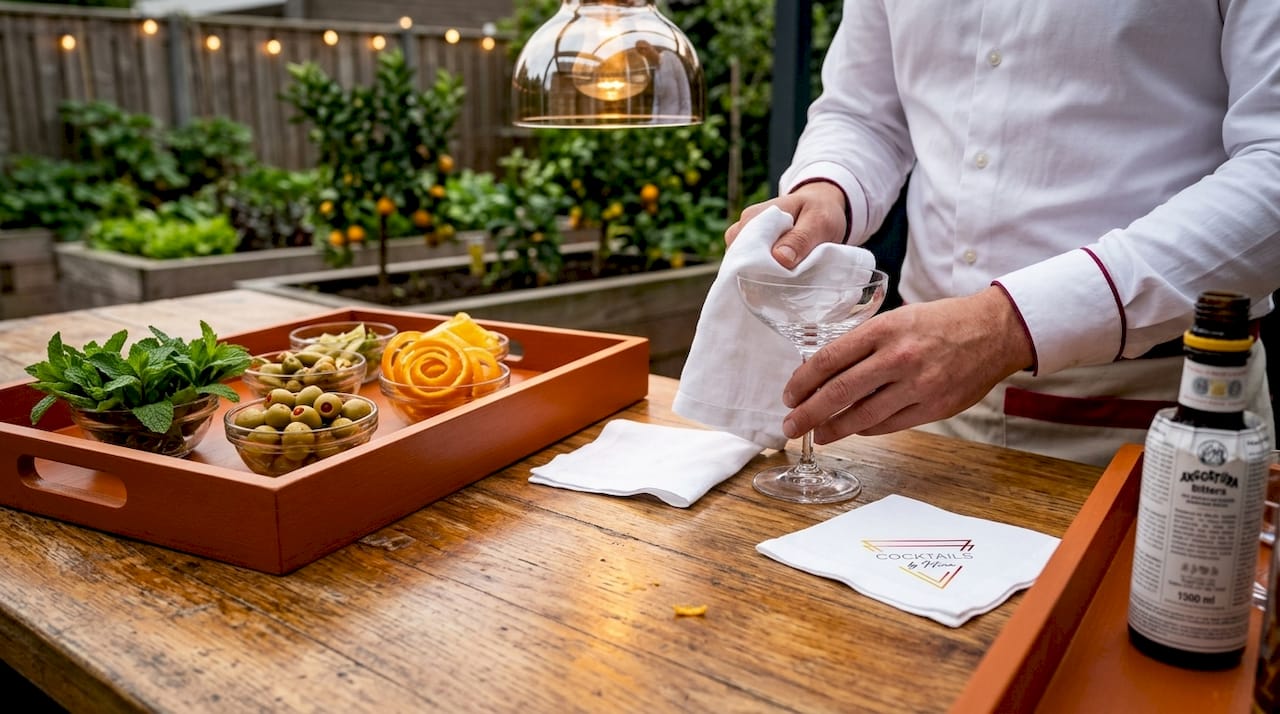
The role of drink presentation at events also concerns details: a clean garnish, a dry glass without fingerprints, a napkin underneath. These are subtle signals that determine the quality of the moment.
Ordering Cocktails and Behaving at the Bar
This is where most mistakes happen. Not because people are rude, but because they simply don't know how it works. Practical cocktail etiquette tips start with interacting with the bartender.
Follow this sequence when ordering a cocktail:
- Wait for eye contact. Don't wave, don't shout, don't bang on the bar. Patience is the first rule.
- Greet briefly and concisely. "Good evening" or a simple nod suffices.
- Order specifically. Don't say "just give me something tasty." Say what you like: dry or sweet, with or without alcohol, based on what spirit.
- Don't repeat constantly. If the bartender is busy, order for the entire group at once. That saves time and shows understanding for their work.
- Always say thank you. After receiving the drink, with a smile.
Clear and respectful communication makes a bigger difference than most people think. Bartenders remember guests who are friendly and clear, and generally give them better service.
A useful technique for hosts is the so-called 'offer first' method. Instead of confronting guests with a full drinks list, offer two concrete options: "Would you like a Mojito or rather a Spritz?" This prevents choice paralysis for guests and makes receiving smoother.
Pro-tip: Know the basic spirits and their flavor profiles. If you know you like citrusy and fresh, you can always make a good choice. Check out cocktail terms and spirits to quickly build your knowledge.
What is also rarely said: never pick up someone else's drink without asking. It seems obvious, but at busy parties, glasses disappear faster than you think. Hold your own glass or place it in a fixed spot you remember.
Etiquette at Events: Attire, Conduct, and Interaction
Cocktail etiquette and dress code are inextricably linked. The way you dress partly determines how you are received and how you behave in the space.
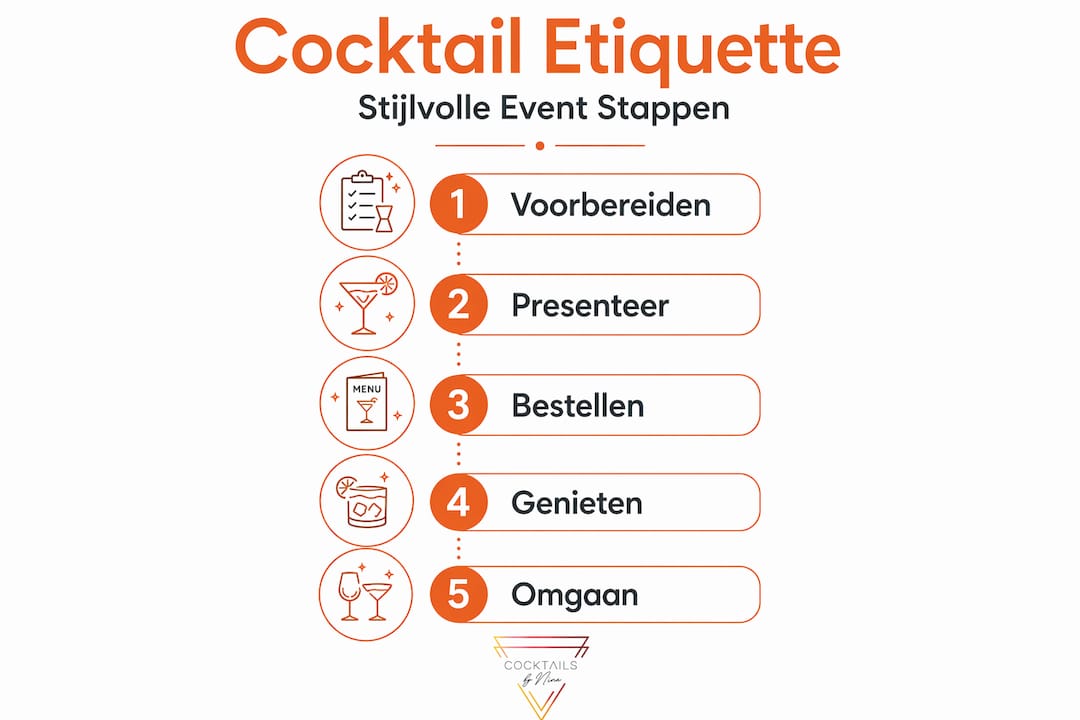
Cocktail attire for women ideally falls around the knee or mid-calf. No jeans, no sneakers, but also no ball gowns. It's about the middle ground: elegant, festive, and approachable. For men, similar logic applies: a blazer in a more festive fabric, a shirt without a tie, and smart shoes. The cocktail dress code is deliberately positioned between formal and casual.
Rules of conduct during a cocktail reception or happy hour:
- Mingle with guests. A cocktail reception is not a sit-down affair. Moving and chatting are the intention.
- Hold your glass in your left hand so your right hand is free to greet people.
- Don't eat too many appetizers at once. The combination of snacks and drinks should be balanced.
- Don't address anyone while they are actively drinking. Wait until they put their glass down.
- Drink at a pace appropriate for the occasion. Moderation is a sign of self-control.
As a host, additional rules apply. The host limits their own alcohol consumption to stay sharp and ensure the evening runs smoothly. Drink along at the beginning of the evening, but then switch to water or a light drink. You are the anchor of the party.
In case of accidents, a broken glass, or a spilled cocktail, the golden rule applies: resolve it discreetly without drawing attention to it. No drama, no exaggerated apologies. Just act calmly. That is the mark of an experienced host or hostess.
My View on Cocktail Etiquette
I've seen at many events how cocktail etiquette makes the difference between an evening that shines and one that falters. And every time, I notice that most people stumble over the same thing: they think etiquette is about rules. It's not. It's about paying attention to the people around you.
What I most often encounter is the guest standing at the bar, hesitating about what to order while there's a queue behind them. That's not a character flaw. It's simply unpreparedness. And that's exactly what you can avoid. Knowing two cocktails you like is enough.
What also strikes me: people forget that the host themselves also plays a role in the atmosphere. The most relaxed host makes the most relaxed guests. If you, as the host, are calm and confident in your drink management, everyone feels that.
My honest tip: etiquette is not a mask. It's an expression of respect for the situation and the people in it. Those who understand that don't need to work through a checklist. They just feel it.
— Ruud
Stylish Serving with Cocktails by Nina
Do you want to put all the above into practice without having to stand behind a shaker yourself? Then Cocktails by Nina is exactly what you're looking for.
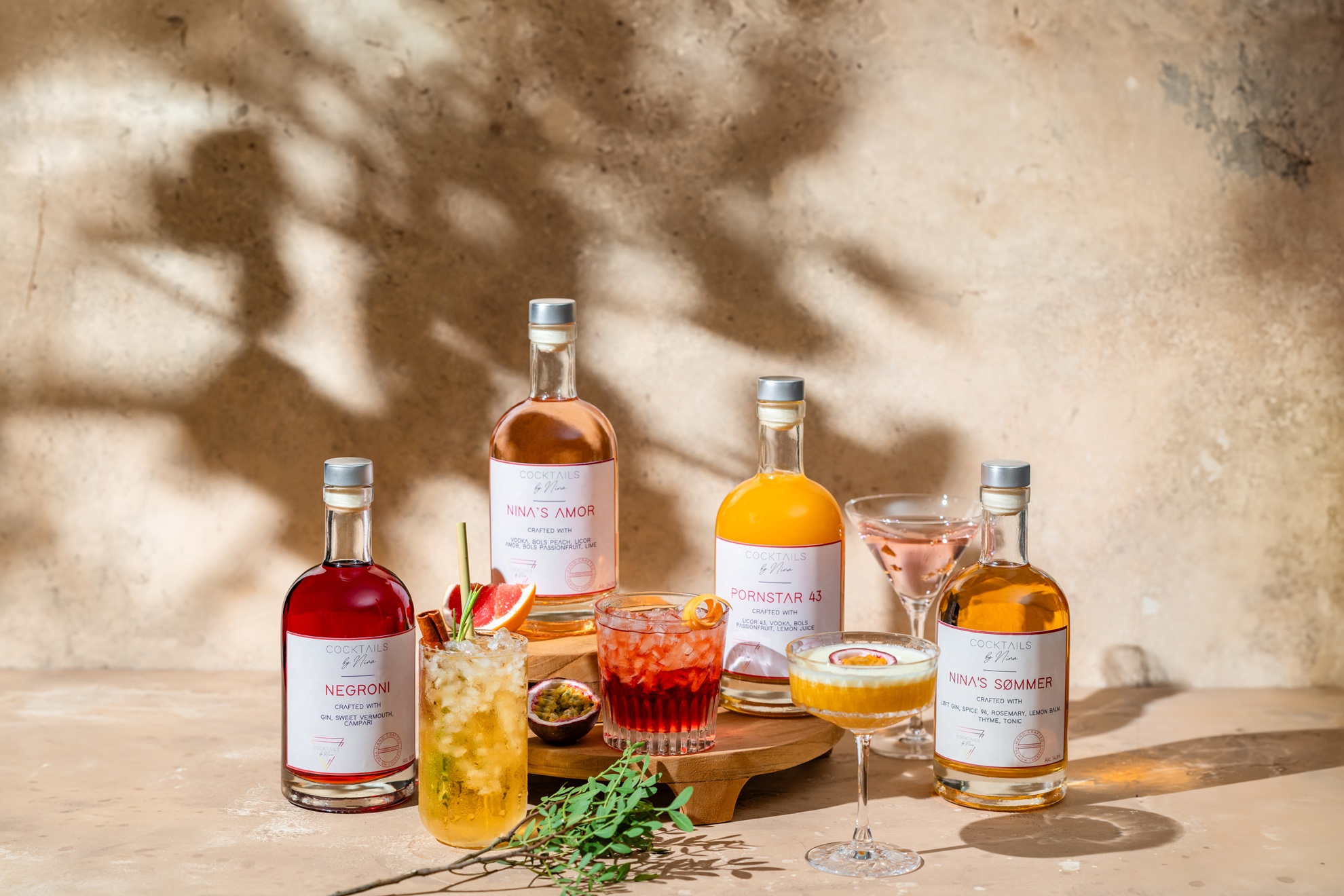
Cocktails by Nina offers ready-to-serve bar-quality cocktails and mocktails, made with premium ingredients. Whether you're hosting a cocktail reception at home, celebrating a birthday, or setting up a corporate happy hour, the at-home cocktail service takes care of the presentation and quality for you. No hassle with mixing, no risk of bland drinks. Just a stylish drinking experience that aligns with all the etiquette rules you now know.
Looking for something alcohol-free? The ready-to-drink mocktails are perfect as a more inclusive alternative for the aperitif moment. Do you also want to enhance your presentation with the right glassware? Then check out the cocktail glass set for home or events. Professional serving has never been easier.
FAQ
What exactly is cocktail etiquette?
Cocktail etiquette is the set of rules of conduct surrounding the ordering, serving, and drinking of cocktails at social occasions. It's about presentation, interaction, and timing, not just the choice of drink.
Which glass do you use for which cocktail?
That depends on the cocktail: a coupe for lighter drinks like a Daiquiri, a highball glass for long drinks, and a rocks glass for strong, unmixed drinks. The right glassware affects both the experience and drinking behavior.
How do you politely order a cocktail?
Wait for eye contact with the bartender, greet briefly, and order specifically. Avoid vague requests like "just give me something tasty" and always thank them after receiving your drink.
What do you wear to a cocktail reception?
The cocktail dress code calls for semi-formal attire: for women, a dress to the knee or midi, for men, a blazer with smart trousers. Avoid both casual wear and full gala outfits.
How do you behave as a host at a cocktail party?
As a host, you limit your own alcohol consumption to stay sharp, discreetly handle incidents, and ensure every guest feels welcome. The atmosphere of the evening starts with your behavior as a host.
Recommendation
- Essential Cocktail Terms: Your Guide to Clear Choices – Cocktails by Nina
- Spirits and Mixers: The Basis for Premium Cocktails at Home – Cocktails by Nina
- What Are Classic Cocktails: The Ultimate Guide for Home – Cocktails by Nina
- Shots and Drinks: The Complete Guide to Convenience and Quality – Cocktails by Nina