Sugar-free cocktails are drinks without added sugars or sugary fruit juices, made with sparkling water, fresh citrus, and herbs. The fastest options to make tonight: a Skinny Bitch (vodka with sparkling water and lime), a sugar-free mojito mocktail with mint and stevia, or a ginger fizz with fresh ginger and soda water.
- Skinny Bitch: vodka, soda water, fresh lime, ice.
- Sugar-free mojito mocktail: mint, lime, erythritol or stevia, sparkling water.
- Ginger fizz: freshly grated ginger, lemon, sparkling water, optionally gin.
Statistic-callout: A regular 250 ml can of non-alcoholic drink can contain a relatively high sugar content and caloric value, about five sugar cubes. That's exactly why you still need to check the label when it says "alcohol-free."
Key insights
Sugar-free cocktails work best when you replace the sweetness of sugar with a conscious combination of acidity, aroma, and a natural sweetener in the right dosage.
| Point | Details |
|---|---|
| Always check the label | "Alcohol-free" does not guarantee a low sugar content; some cans contain about five sugar cubes per 250 ml. |
| Use the flavor triangle | Combine one sweet, one sour, and one aromatic element for a balanced sugar-free cocktail. |
| Choose the right sweetener | Erythritol works 1:1, stevia is highly concentrated, and monk fruit is in between in terms of sweetness. |
| Pay extra attention with diabetes | Convert sugars per 100 ml to the actual amount in your glass, not just according to the label itself. |
| Ready-made as an alternative | Cocktailsbynina offers sugar-free mocktails and cocktail boxes with fixed, transparent ingredient lists. |
Table of Contents
- How to build flavor without sugar
- Five sugar-free recipes you can make today
- Which sweetener suits which cocktail?
- What the label doesn't immediately tell you
- How Cocktails by Nina makes it easier for you
- Why "healthy" and "tasty" clash more often in cocktails than you think
- Prefer to order your sugar-free mocktail ready-made?
- Sources
How to build flavor without sugar
Sugar in a cocktail essentially does one thing: it smooths out rough edges. If you miss that sweetness, you often taste only bitterness or acidity. The solution lies in what bartenders call the flavor triangle: one sweet element, one sour element, and one aromatic element, combined without using more than three strong flavors at once, as also shown in practical advice on sugar-free toasting. Replace the sugar with a natural sweetener, keep the acidity with fresh citrus, and use herbs or bitters for the aromatic layer.
Four building blocks do most of the work:
- Sparkling water: adds volume and texture without calories.
- Fresh citrus: lime and lemon provide the acidic component and a fresh character.
- Fresh herbs: mint, rosemary, or basil add aroma without sugar.
- Bitters and extracts: a few drops add depth that sugar would normally mask.
Take a classic mojito as an example. Normally you would use cane sugar or sugar syrup. Replace that with a splash of erythritol syrup or a few drops of stevia, keep the mint and lime intact, and the drink remains just as refreshing without the sugar spike.
Pro-tip: Muddle your mint briefly, not finely. Mashing too long makes the drink bitter, which is precisely what you're trying to avoid if you don't have sugar to compensate.
Five sugar-free recipes you can make today
Three alcoholic and two non-alcoholic options, all with specific quantities. No guesswork, no sugary syrup needed.
- Skinny Bitch. 45 ml vodka, 120 ml soda water, juice of half a lime, ice cubes. Don't shake anything, just stir in the glass. Garnish with a lime slice instead of a sugar rim on the glass, which immediately saves extra sugar. A standard glass comes out to barely more than the calories of the vodka itself, well under the 92 kilocalories that an average can of non-alcoholic drink already reaches.
- Sugar-free mojito mocktail. 10 mint leaves, juice of a whole lime, 2 grams erythritol (or 4 to 5 drops of liquid stevia), 150 ml sparkling water, crushed ice. Lightly muddle the mint, mix with lime and sweetener, fill with ice and sparkling water. Erythritol works as a 1:1 substitute for sugar by volume, stevia is much sweeter so start with less and taste as you go.
- Ginger fizz. 40 ml gin, 15 ml freshly squeezed lemon juice, 1 tablespoon freshly grated ginger, 120 ml soda water. Briefly shake gin, lemon, and ginger with ice, strain into a glass with fresh ice cubes and top with sparkling water. Fresh ginger provides a spicy kick that makes sugar unnecessary, do not use more than one tablespoon per glass, otherwise, the drink will be too sharp.
- Cucumber-lime spritzer. A quarter cucumber in thin slices, juice of half a lime, 150 ml sparkling water, a sprig of mint. Squeeze the lime, add cucumber and mint, fill with sparkling water and let it steep for five minutes before serving. Variation: replace lime with grapefruit for a slightly bitter profile.
- Cranberry-light mocktail. 8 to 10 frozen cranberries, juice of half a lime, 150 ml sparkling water, a sprig of rosemary. Lightly crush the frozen berries in the glass so they release their color and flavor, fill with lime and sparkling water. Frozen berries completely replace the sugary cranberry juice here and keep the drink cold immediately without extra ice diluting it.
Which sweetener suits which cocktail?
Not every sweetener behaves the same in a glass. Stevia is considerably sweeter than sugar and can leave a slightly bitter aftertaste in higher dosages, so start with two to three drops per glass and build up. Erythritol dissolves less easily in cold liquids but has almost no aftertaste and works approximately 1:1 as a sugar substitute. Monk fruit is in between in terms of sweetness and blends well in syrups for cocktails with a lot of citrus.
| Sweetener | Dosage | Best application |
|---|---|---|
| Stevia | 2 to 5 drops per glass | Mocktails with strong mint or citrus |
| Erythritol | 1:1 substitute, dissolve in warm water | Homemade syrup, mojito-style drinks |
| Monk fruit | According to packaging, usually less than sugar | Fruity cocktails with raspberries or berries |
For a basic syrup, mix equal parts water and erythritol, heat until dissolved, and let it cool before use. If you don't want to add sweetener, a few drops of aromatic bitters often work just as well to round off a drink. You can read more about the role of syrups in cocktails in this article about syrups.
Pro-tip: Always add sweetener before the ice, not after. Cold liquid dissolves stevia and erythritol more slowly, and you'll end up with a drink that's sweeter at the bottom than at the top.
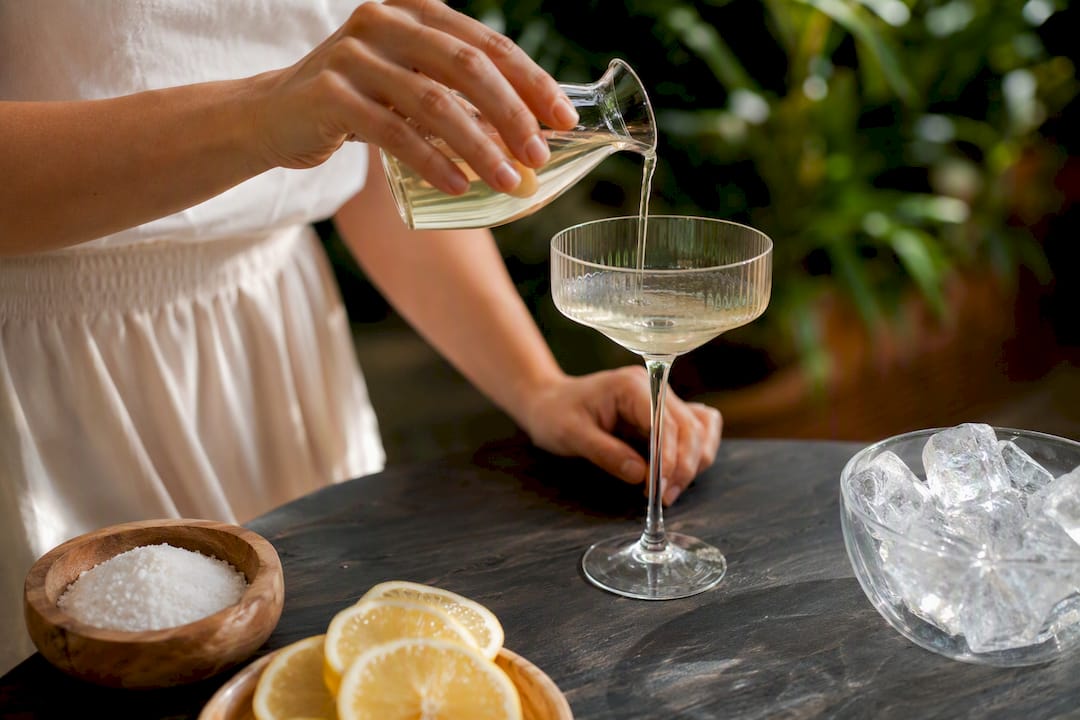
What the label doesn't immediately tell you
"Alcohol-free" and "sugar-free" are two different promises. A drink can be completely without alcohol and still be full of sugar, as Trimbos also emphasizes. Therefore, always look at sugars per 100 ml on the label and convert that to the amount you actually pour into your glass: with 150 ml of a drink with 9 grams of sugar per 100 ml, you quickly reach over 13 grams, almost three sugar cubes, in one drink.
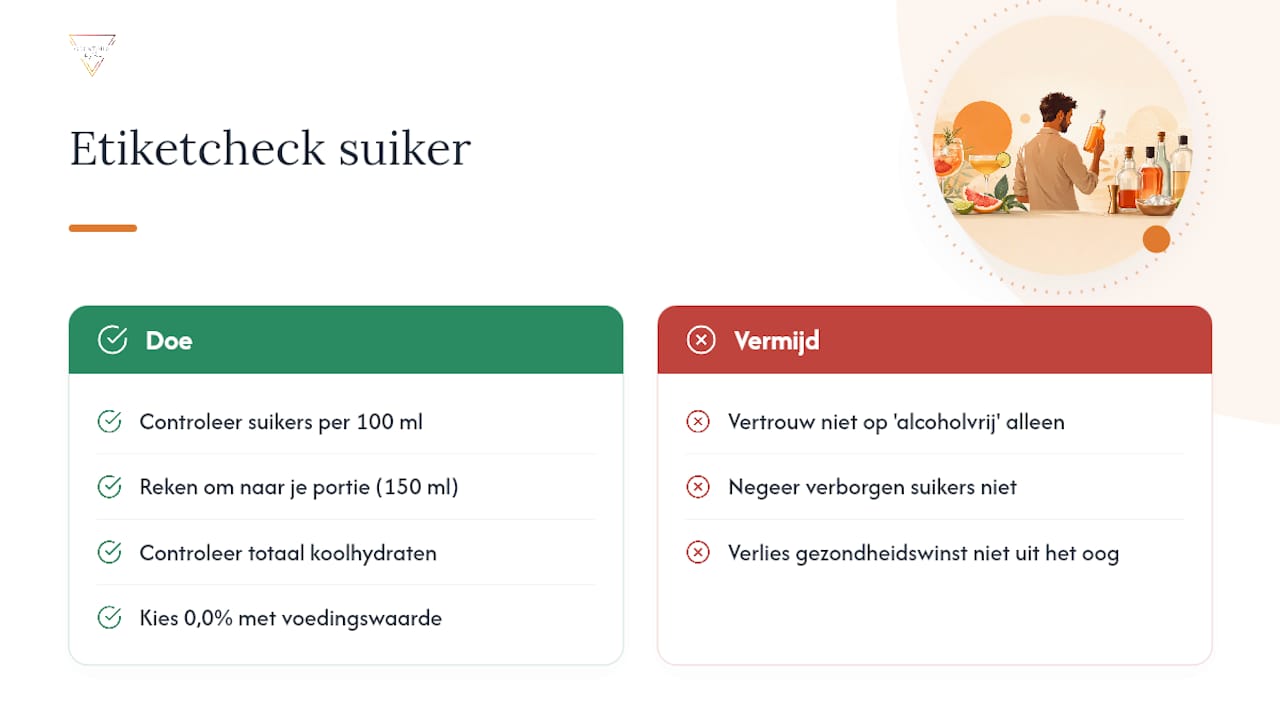
For people with diabetes, this calculation is not a side issue. Check not only the sugar content but also total carbohydrates, and consciously choose 0.0% products whose nutritional value is listed separately. The Health Council advises limiting alcohol consumption anyway, and those switching to alcohol-free should not overlook these hidden sugars, otherwise, the health benefits will be lost.
How Cocktails by Nina makes it easier for you
If you prefer not to measure and mix yourself, Cocktails by Nina offers ready-made mocktails and cocktail boxes with a fixed, verifiable ingredient list.
- Fixed recipes, so no surprises in sugar content from batch to batch.
- Labels that show you at a glance what's inside.
- No shopping list, no measuring, immediately ready to serve.
For more background on creating your own drinks, also check out the list of premium ingredients for home use.
Why "healthy" and "tasty" clash more often in cocktails than you think
The assumption that sugar-free automatically tastes bland is simply not true. What is true: most people who cut sugar from their cocktail forget to replace it with something else. They remove the sugar and are left with a flat, one-dimensional drink, and then conclude that sugar-free is simply less tasty. That's a misconception, not a taste fact.
The real problem lies in the complacency with "alcohol-free" as a quality mark. Many people assume that a bottle without alcohol is automatically the healthy choice, while the sugar content can sometimes be higher than in a regular soda. That's precisely why, as a cocktail lover, you shouldn't blindly trust a label with "0.0%" on it, but rather the nutritional value table underneath.
As far as I'm concerned, the biggest missed opportunity is that people treat sugar-free cocktails as a compromise instead of as a separate craft. The flavor triangle, meaning consciously balancing sweet, sour, and aroma, works better than simply replacing sugar with "something sweet" and not adjusting anything else. Those who understand this will never again reluctantly reach for a sugar-free drink.
— Ruud
Prefer to order your sugar-free mocktail ready-made?
Mixing yourself is fun, but not always practical if guests are arriving within an hour or you simply don't feel like measuring and experimenting. Cocktailsbynina delivers ready-made sugar-free mocktails with a fixed ingredient list, so you know exactly what you're serving, without guesswork about sugar content.
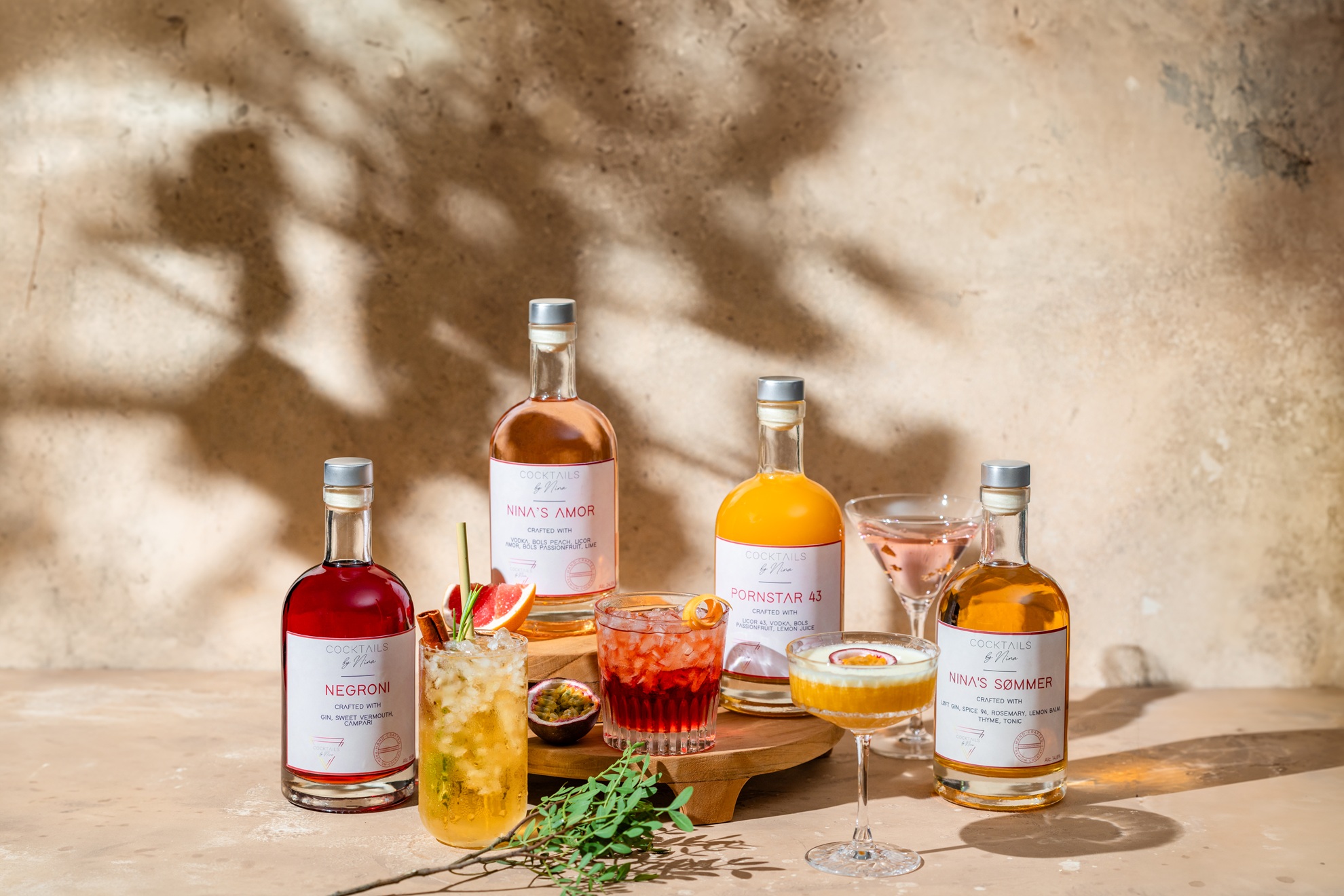
View the collection of ready-made mocktails for alcohol-free options with a fixed recipe, or go directly to the order mocktails page if you want something on the table tonight. For a small party, a cocktail box with four pieces is also a handy gift idea: everyone tastes something different, without you having to stand behind the bar yourself.
Sources
- Alcohol-free drinks | Voedingscentrum
- Are alcohol-free drinks healthy? - Trimbos
- Diabetes
- Alcohol and health in a broad sense | Health Council
This article contains general information and does not replace the advice of a qualified physician. Consult a qualified healthcare professional about your own situation before acting on the basis of this content.