Shaking techniques are the methods by which a bartender mixes, chills, dilutes, and emulsifies ingredients by vigorously moving a shaker. The role of shaking techniques goes far beyond simply shaking ingredients together. Each movement determines the temperature, dilution, and texture of the final result. Tools such as the Boston shaker, the Cobbler shaker, and a strainer are indispensable here. Mastering the technique makes the difference between a flat cocktail and a drink that truly impresses.
What effects do shaking techniques achieve on taste and texture?
Shaking does four things simultaneously: it chills, dilutes, aerates, and emulsifies ingredients. Each of these effects directly influences how a cocktail tastes and feels in the mouth.
Cooling and dilution work together. Ice cubes rapidly cool the liquid while partially melting. This melting layer of water dilutes the cocktail, tempering the alcohol's sharpness and balancing flavors. Shaking promotes emulsification and aeration which improve taste and mouthfeel in a way that stirring never achieves.
Aeration is the third effect. The vigorous movement draws air into the liquid. This gives the cocktail a lighter body and a softer mouthfeel. In a Daiquiri or a Margarita, that's exactly what you want: fresh, light, and lively.
Emulsification is the fourth effect and the most underrated. When a cocktail contains lemon juice, egg white, or cream, the shaking motion ensures that these components bind with the alcohol and sugars. The result is a smooth, coherent texture without oily or grainy layers.
- Cooling: rapidly lowers the temperature to serving level
- Dilution: tempers alcohol and balances sweet and sour
- Aeration: provides a lighter body and lively mouthfeel
- Emulsification: binds citrus, egg white, and cream into a smooth texture
Pro-tip: Pay attention to the outside of your shaker. After 10–15 seconds, the surface should feel ice-cold and lightly fog. That's the sign that the cocktail has reached the right temperature and dilution.
What are the main types of shaking techniques?
Not every cocktail requires the same movement. The choice of technique determines the quality of the final result.
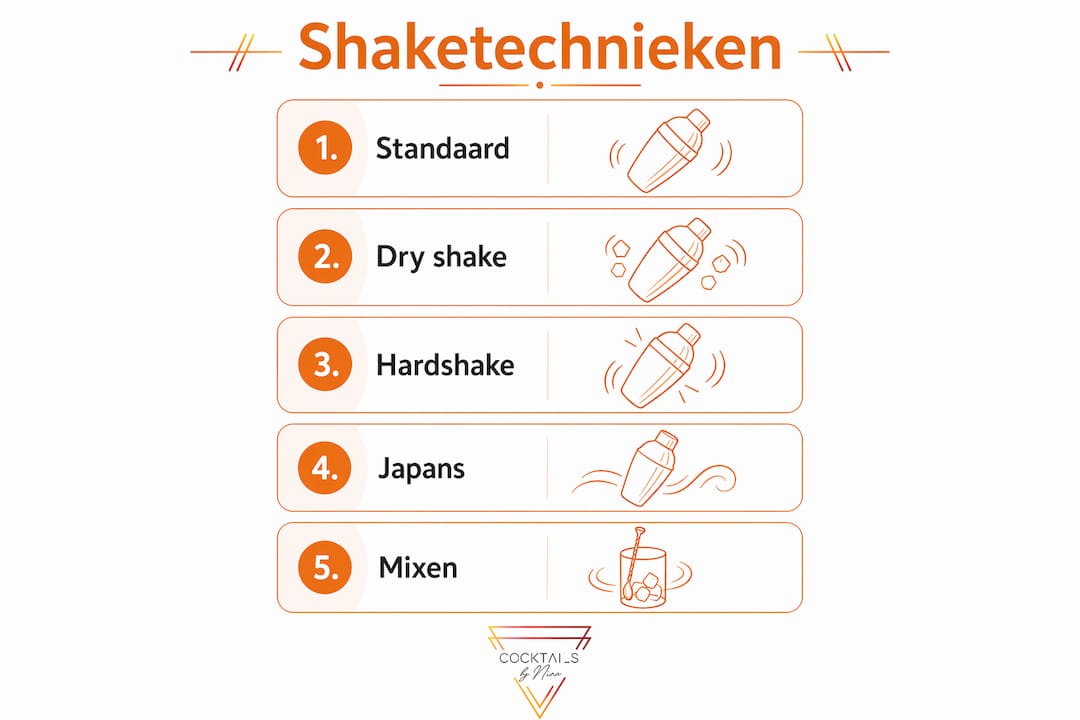
1. Standard shaking
Standard shaking is the basic method. You fill the shaker with fresh ice, add the ingredients, and shake vigorously for 10–15 seconds. This technique works for most cocktails based on citrus and spirits, such as a Margarita, a Daiquiri, or a Gimlet. The Boston shaker is preferred by professionals for this due to its better seal and larger volume.
2. Dry shake
Dry shake means shaking without ice. You shake the ingredients dry first, then add ice and shake wet again. 5–10 seconds of dry shaking before the wet shake ensures optimal emulsification and a lasting foam layer. This technique is essential for cocktails with egg white or aquafaba, such as a Whiskey Sour or a Pisco Sour.
3. Hardshake and Japanese shaking
The hardshake is a technique where you move the shaker in a fluid, controlled arc. The ice travels from one end to the other without breaking. Hardshake and Japanese shaking create fine and stable foam layers in contrast to rough shaking techniques. For an Espresso Martini, the hardshake produces a dense, mousse-like foam layer that elevates the cocktail visually and texturally to another level.
Boston shaker vs. Cobbler shaker
| Feature | Boston shaker | Cobbler shaker |
|---|---|---|
| Components | Two cups (glass + metal) | Three parts with built-in strainer |
| Seal | Strong, requires practice | Simple, less powerful |
| Use | Professional bar | Home use and beginners |
| Capacity | Large, suitable for double portions | Smaller, ideal for one cocktail |
| Preference | Bar managers and advanced users | Cocktail enthusiasts at home |
Pro-tip: For the dry shake, use a spring or coil in the shaker. This extra resistance helps the proteins emulsify faster, resulting in a thicker and more stable foam.
What shaking mistakes negatively affect your cocktail?
Technical errors in shaking are the most common cause of a disappointing cocktail. Recognize them early and you'll save yourself many failed drinks.
- Shaking too short: the cocktail doesn't reach the right temperature and the ingredients don't mix sufficiently. The result tastes unbalanced and too strong.
- Shaking too long: after 10–15 seconds, optimal dilution is achieved. Shaking longer makes the cocktail watery and flat.
- Using bad ice: small or melted ice cubes melt too quickly and cause excessive dilution in the first few seconds.
- Shaking too aggressively: shaking too aggressively breaks ice, leading to too much dilution and a poorer texture in the glass.
- Confusing dry and wet shake: for egg white cocktails, always dry shake first. If you start directly with ice, you'll never get a stable foam.
- Adding sparkling water before shaking: carbonation disappears immediately when shaken. Always add sparkling water after pouring the cocktail into the glass.
Pro-tip: Always use large, fresh ice cubes. Larger blocks melt slower, cool more efficiently, and give you more control over dilution during shaking.
The grip on the shaker also counts. Hold the Boston shaker with both hands: one hand on the metal cup, the other on the glass cup. This prevents the shaker from opening during shaking. A shaker opening over a guest is a classic mistake you only make once.
How do you apply shaking techniques per cocktail type?
Choosing the right technique for each cocktail is the core of craftsmanship behind the bar. Here's a practical overview.
Egg-white cocktails: Whiskey Sour and Pisco Sour
The Whiskey Sour is the prime example for the dry shake. The difference between dry shake and wet shake is crucial: dry shake first emulsifies the egg white components without ice, after which the wet shake chills and further mixes. If you skip the dry shake, you'll get a thin, unstable foam layer that disappears within a minute. With the right technique, you'll maintain a thick, creamy foam layer that lasts for minutes.
Citrus and spirit cocktails: Daiquiri and Margarita
For a Daiquiri or Margarita, use standard shaking. Fill the shaker with large ice cubes, add rum or tequila, lemon juice, and sugar syrup, and shake vigorously for 12–15 seconds. Strain the cocktail directly into a chilled glass. The aeration from shaking gives these cocktails their characteristic freshness.
Cocktails with cream or aquafaba
Cream behaves differently than egg white. Always shake cream vigorously and briefly: 8–10 seconds is sufficient. Shaking longer can curdle cream. Aquafaba as a vegan alternative to egg white works excellently with the dry shake technique and produces a stable foam even without animal products.
| Cocktail type | Technique | Shaking duration | Ice |
|---|---|---|---|
| Whiskey Sour | Dry shake + wet shake | 8 sec dry, 12 sec wet | Large and fresh |
| Daiquiri | Standard shake | 12–15 seconds | Large and fresh |
| Espresso Martini | Hardshake | 15 seconds | Large and fresh |
| Cocktail with cream | Standard shake | 8–10 seconds | Large and fresh |
| Mocktail with aquafaba | Dry shake + wet shake | 8 sec dry, 10 sec wet | Large and fresh |
For gin-based cocktails like a classic gin sour, the same principles apply as for the Whiskey Sour when egg white is in the recipe. Without egg white, standard shaking suffices.
Key insights
The effectiveness of shaking techniques stands or falls with the combination of the right movement, the correct shaking duration, and the right ice quality.
| Point | Details |
|---|---|
| Shaking duration is crucial | Shake for 10–15 seconds for optimal cooling and dilution without a watery cocktail. |
| Dry shake for foam | Dry shake for 5–10 seconds before the wet shake for stable foam with egg white or aquafaba. |
| Ice quality matters | Use large, fresh ice cubes to prevent excessive dilution in the first few seconds. |
| Technique per cocktail | Choose standard shake, dry shake, or hardshake based on the ingredients in the recipe. |
| Frosting as a signal | An ice-cold, frosted shaker after 10–15 seconds is the reliable sign that the cocktail is ready. |
What I've learned about shaking after years behind the bar
Many bartenders learn to shake by imitation. They see someone else do it, copy the movement, and assume it's correct. That's exactly where it goes wrong.
The biggest mistake I see in both beginners and advanced users is haste. People shake too briefly because they think the cocktail is already cold enough. But the frosting on the outside of the shaker doesn't lie. If it's not there yet, the cocktail isn't ready. That might cost you an extra five seconds, but the difference in taste is immediately noticeable.
What surprised me most in practice is the impact of the dry shake. For years, I thought it was a trick for show. Until I made a Whiskey Sour with and without a dry shake side by side. The difference in foam thickness and stability was so significant that I never went without it again. The application of shaking techniques like the dry shake is not a luxury for advanced users. It's simply the correct way to make an egg white cocktail.
My advice for bar managers: train your team not only on the movement but also on the feel. Let them hold the shaker until they feel the frosting. Let them make a Whiskey Sour with and without a dry shake. These types of comparative exercises teach more than any theory. Consistency in technique is what distinguishes a good bar from an ordinary one.
— Ruud
Cocktailsbynina: taste the quality without shaking
Mastering shaking techniques takes time and practice. Cocktailsbynina offers a direct route to bar-quality drinks for home, without needing a shaker.
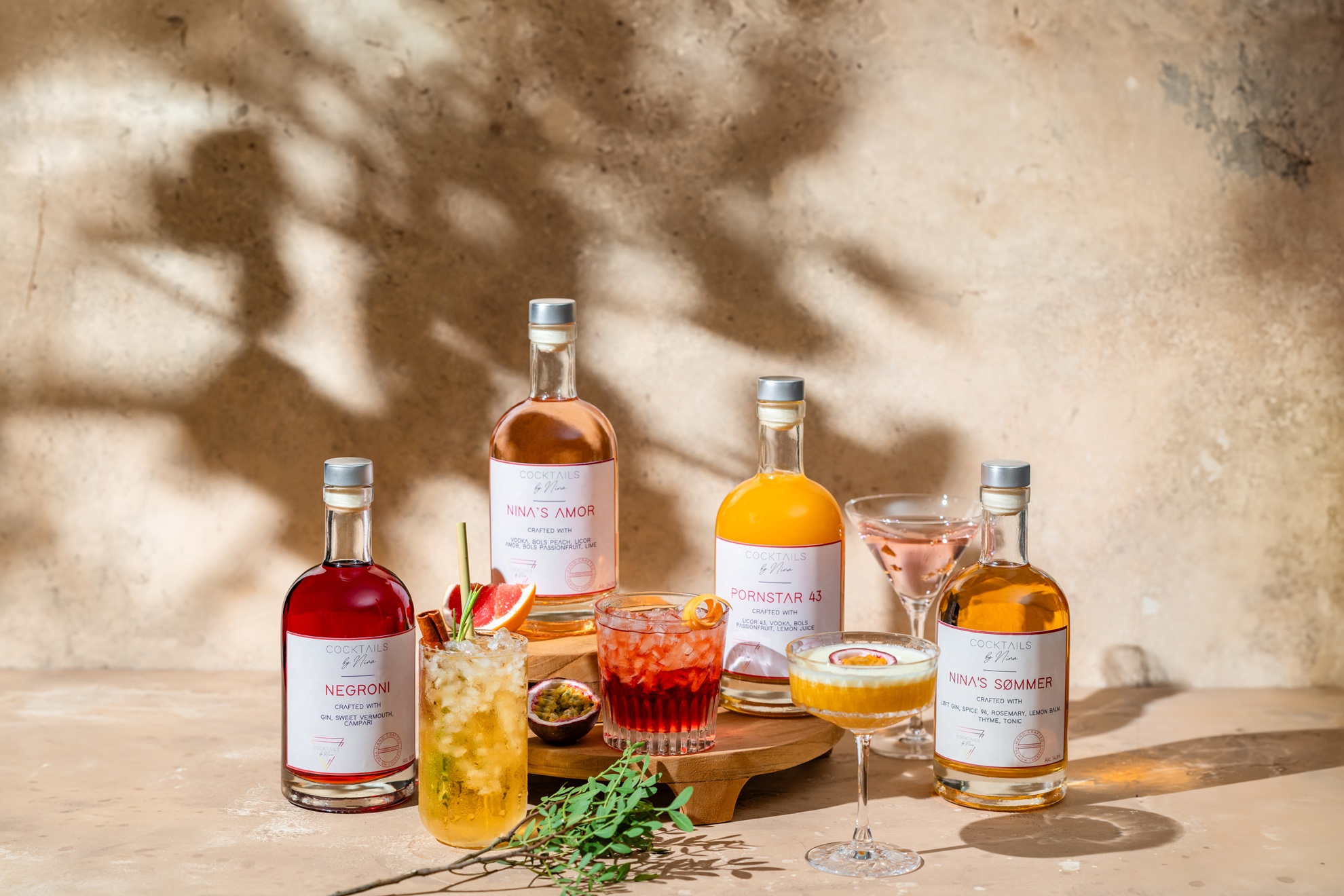
Cocktailsbynina's range includes ready-to-drink mocktails and alcohol-free cocktails prepared to a professional standard. For those who want to enjoy a perfect cocktail experience at a party or birthday, the cocktail box with 4 pieces offers a complete and stylish solution. Each drink is made with premium ingredients and ready to serve immediately. This way, you enjoy the quality of a good shake, without having to master the technique yourself.
Frequently asked questions
What does shaking do to a cocktail?
Shaking chills, dilutes, emulsifies, and aerates the cocktail. This improves the flavor balance, texture, and mouthfeel compared to stirring.
When do you use a dry shake?
Use a dry shake for cocktails with egg white or aquafaba, such as a Whiskey Sour or Pisco Sour. Dry shake for 5–10 seconds before the wet shake for a stable, thick foam.
How long should you shake a cocktail?
Shake for 10–15 seconds until the outside of the shaker feels ice-cold and fogs up. Shaking longer leads to excessive dilution and a watery cocktail.
What is the difference between a Boston shaker and a Cobbler shaker?
The Boston shaker consists of two cups and is the choice of professionals due to its strong seal and large volume. The Cobbler shaker has a built-in strainer and is easier to use for home users.
What ice is best to use when shaking?
Use large, fresh ice cubes. Small or melted ice cubes melt too quickly and cause excessive dilution in the first few seconds of shaking.
Recommendation
- Essential Cocktail Terms: Your Guide to Clear Choices – Cocktails by Nina
- Improve your cocktails: the indispensable role of syrups – Cocktails by Nina
- Shots and drinks: the complete guide to convenience and quality – Cocktails by Nina
- Spirits and mixers: the basis for premium cocktails at home – Cocktails by Nina