Garnish is the visual and flavorful finishing touch that elevates a cocktail or mocktail from good to unforgettable. Adding the right garnish gives any drink a professional look, even at home. You only need a few basic tools: a sharp knife, a Y-peeler, and fresh ingredients. Cocktailsbynina knows from experience that presentation is just as important as taste. A well-placed citrus twist or a sprig of fresh mint makes the difference between an ordinary drink and a true experience.
What materials do you need to add garnish?
The right tools determine the result. Without sharp tools, cuts become irregular, and your garnish looks sloppy. The three basic tools you should always have on hand are a Y-peeler, a sharp chef's knife, and a sturdy cutting board.
A Y-peeler for citrus twists is the best tool because it creates wide, thin strips without taking any bitter white pith. A cheap model often works better for this than an expensive alternative. The cutting board should be stable, preferably on a damp tea towel so it doesn't slip.
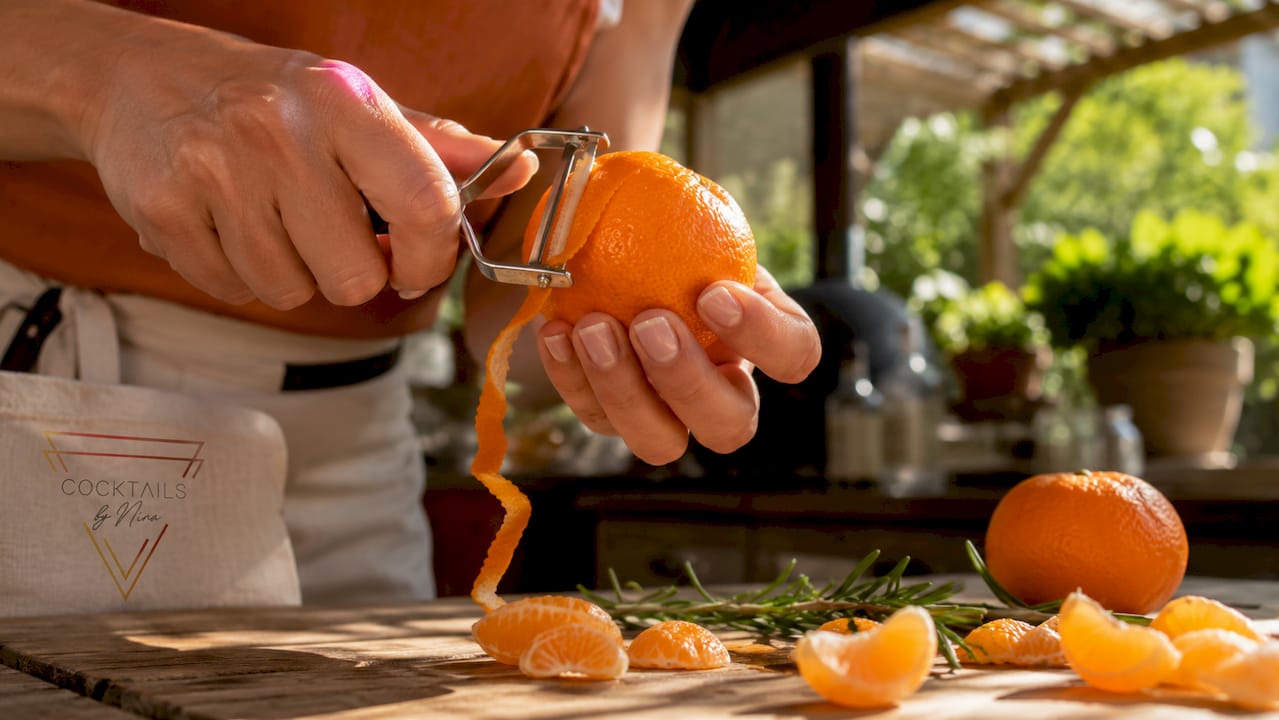
In addition to tools, you need fresh ingredients. Wilted herbs and low-quality fruit emit stale odors that negatively impact the cocktail experience. Always opt for fresh, preferably organic products. Store cut garnishes in airtight containers in the refrigerator until you need them.
Basic necessities at a glance
- Y-peeler: for citrus twists and thin peel strips
- Sharp chef's knife: for slices, wedges, and herbs
- Cutting board: keep stable and clean
- Airtight containers: for storage in the refrigerator
- Damp paper towel: for herbs and edible flowers
Pro-tip: Prepare all your tools and ingredients before you start. This way, you work faster and keep your workspace tidy.
| Necessity | Function |
|---|---|
| Y-peeler | Thin citrus strips without pith |
| Chef's knife | Cutting slices, wedges, and herbs |
| Cutting board | Safe and stable work surface |
| Airtight containers | Keeping garnish fresh until use |
| Damp paper towel | Storing edible flowers and herbs |
How to prepare different types of garnishes?
Garnish preparation varies by type. Citrus twists, slices, fresh herbs, and edible flowers each require their own approach. Knowing the technique for each category allows you to work faster and with better results.
Citrus twists and slices
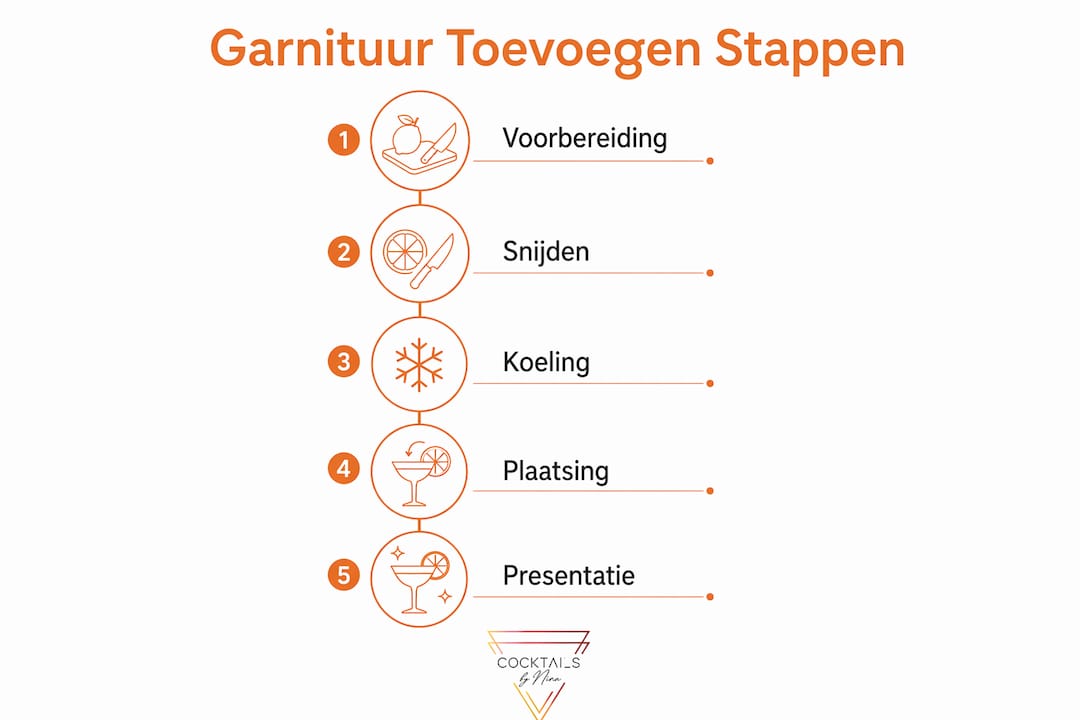
Cut a wide strip of peel with your Y-peeler. Avoid the white pith, as it is bitter and will disrupt the balance of your drink. Always hold the colored side towards the glass when expressing so that the oils are well distributed.
For slices, cut the fruit into rounds about 5 millimeters thick. Make a small incision to the middle so you can hang the slice on the rim of the glass. Remove any seeds for a neat presentation.
- Wash the fruit thoroughly under cold water.
- Cut off the ends and place the fruit stably on the cutting board.
- With a Y-peeler, cut a strip of peel from top to bottom.
- Check that there is no white pith on the inside. Cut it away if necessary.
- Roll the strip tightly and let it rest for a nice curl.
Pro-tip: Store citrus twists in a glass with cold water in the refrigerator if you prepare them in advance. They will maintain their curl and not dry out.
Fresh herbs
Mint, basil, and rosemary are popular choices. Lightly clap fresh mint between your palms before adding it to a cocktail. This movement activates the essential oils and enhances the aroma without overpowering the taste.
Always cut herbs with a sharp knife. A dull knife crushes the cells and results in a bitter, dark edge. Use herbs as fresh as possible and store them upright in a glass with a little water, covered with a plastic bag, in the refrigerator.
Edible flowers
Edible flowers can be prepared up to 24 hours in advance if stored in the refrigerator between damp paper towels. Always remove the pollen to prevent bitter flavors. Choose flowers specifically sold as edible, such as violets, lavender, or calendula.
Safety when cutting is not an afterthought: always cut away from yourself and keep your fingers bent. A stable cutting board and adequate light prevent accidents. Work calmly and concentrated, especially when preparing multiple garnishes simultaneously.
How to effectively add garnish to your drink?
Adding garnish is more than just placing something on the glass. The moment, the technique, and the coordination with the glassware determine the final result. A well-placed garnish enhances both the scent and the visual appeal of your cocktail.
Start by expressing a citrus twist. Expressing citrus peel over the glass releases essential oils that enhance the cocktail's aroma and taste. The oil spray floats on the cocktail and positively influences the first sips. Hold the strip about 10 centimeters above the glass and quickly squeeze it with the colored side down.
Match the garnish to the glass type. A tall glass calls for a long garnish, such as a rosemary sprig or a long piece of cucumber. A wide coupe glass is better suited for a delicate flower or a thin citrus twist on the rim. Read more about matching with glassware for optimal presentation.
- Expressing citrus: quickly squeeze the peel over the glass, colored side down.
- Herbs: clap them first and place them on top of the ice or against the rim.
- Edible flowers: gently place them on the surface of the cocktail or on the rim.
- Fruit slices: hang them on the rim using the incision as a hook.
- Theatrical effect: flambé an orange peel over the glass for a caramel-like scent.
A garnish should be sized and flavored to match the glass and cocktail type to be visually and sensorily balanced. A subtle garnish of appropriate size works better than too much on one glass. Less is almost always more here.
Pro-tip: Always add garnish last, after you have poured the cocktail and added any ice. This keeps everything looking fresh and neat.
What mistakes should you avoid when adding garnish?
Even experienced home bartenders make the same mistakes repeatedly. Knowing the pitfalls makes it easier to avoid them and consistently deliver better work.
“A garnish added too early or of poor quality does more harm than good. The garnish is the first thing your guest sees. Make that first impression count.”
- Leaving pith on: the white layer under the citrus peel is bitter. Always cut it away before expressing or serving.
- Using damp fruit: wet slices will slip off the rim and look sloppy. Always pat fruit dry with paper towels.
- Preparing too early: cut fruit becomes soft and discolors. Prepare garnishes no more than an hour in advance, unless you store them chilled.
- Too much on one glass: an overcrowded garnish distracts from the cocktail itself. Choose one or two complementary elements.
- Using wilted herbs: fresh, organic products are essential for good garnishing. Wilted herbs smell stale and look unkempt.
Adding garnish at the very last moment prevents the fruit from softening or sinking into the cocktail. Cool storage helps, but immediate use gives the best result. Plan your timing so your garnish is ready when you pour.
Pro tips for a professional presentation and storage
Professional bartenders distinguish themselves not only by technique but also by timing and attention to detail. These habits are easy to adopt.
Always use the best garnish ideas that match the flavor profile of your drink. A gin cocktail with botanicals requires different garnishes than a refreshing mocktail based on citrus. Think about the flavor bridge between cocktail and garnish.
The visual impact of garnishes makes drinking more sensory. A minimalist and appropriate garnish is often more effective than an abundance of decoration. Choose one strong element instead of three mediocre ones.
Scent plays a bigger role than most people realize. The nose experiences a drink before the mouth does. A citrus twist or a sprig of rosemary held above the glass creates the first impression before anyone takes a sip. Read more about how to create a complete drinking experience for parties at home.
Pro-tip: Create a small “garnish station” on your counter: all tools and ingredients in a row, so you can work quickly and without searching during a party.
Store cut citrus in an airtight container in the refrigerator. Store herbs upright in water. Place edible flowers between damp paper towels. With these three methods, your garnish will stay fresh and presentable for up to 24 hours.
Key insights
The most effective garnish is fresh, matched to the glass type, and added at the very last moment.
| Point | Details |
|---|---|
| Use a Y-peeler | A Y-peeler creates thin citrus strips without bitter pith, ideal for twists. |
| Express citrus | Squeeze the peel over the glass to release essential oils that enhance aroma and flavor. |
| Timing is everything | Add garnish just before serving to prevent wilting and softening. |
| Less is more | A subtle, appropriate garnish works better than an abundance of decoration on one glass. |
| Fresh ingredients | Wilted herbs and low-quality fruit emit stale odors and ruin the experience. |
What I learned from years of adding garnish
After years of making cocktails for parties and events, my biggest lesson is simple: most people start too complicated. They buy expensive tools, search for exotic flowers, and forget that a perfectly cut citrus twist makes a bigger impression than five half-hearted elements on one glass.
My turning point was a party where I only had fresh mint, lime slices, and a good Y-peeler. No edible flowers, no theatrical flares. Yet, I received more compliments than ever. Guests respond to care and precision, not quantity.
What I also learned: scent is underestimated. I now always clap mint before adding it, and I always express citrus over the glass instead of next to it. These two habits take zero extra time but double the sensory impact. For those who want to experiment with gin cocktails: Gin Niro's step-by-step gin recipes provide good inspiration for garnish combinations that really work.
Patience is the third lesson. You don't prepare garnish at the last minute while guests are waiting. Plan an extra fifteen minutes, set everything up, and work calmly. The result always looks more professional, and you'll enjoy it more yourself too.
— Ruud
Ready-made cocktails with garnish at Cocktailsbynina
Cocktailsbynina offers ready-made, bar-quality cocktails and mocktails that you can easily serve at home and finish with a homemade garnish.
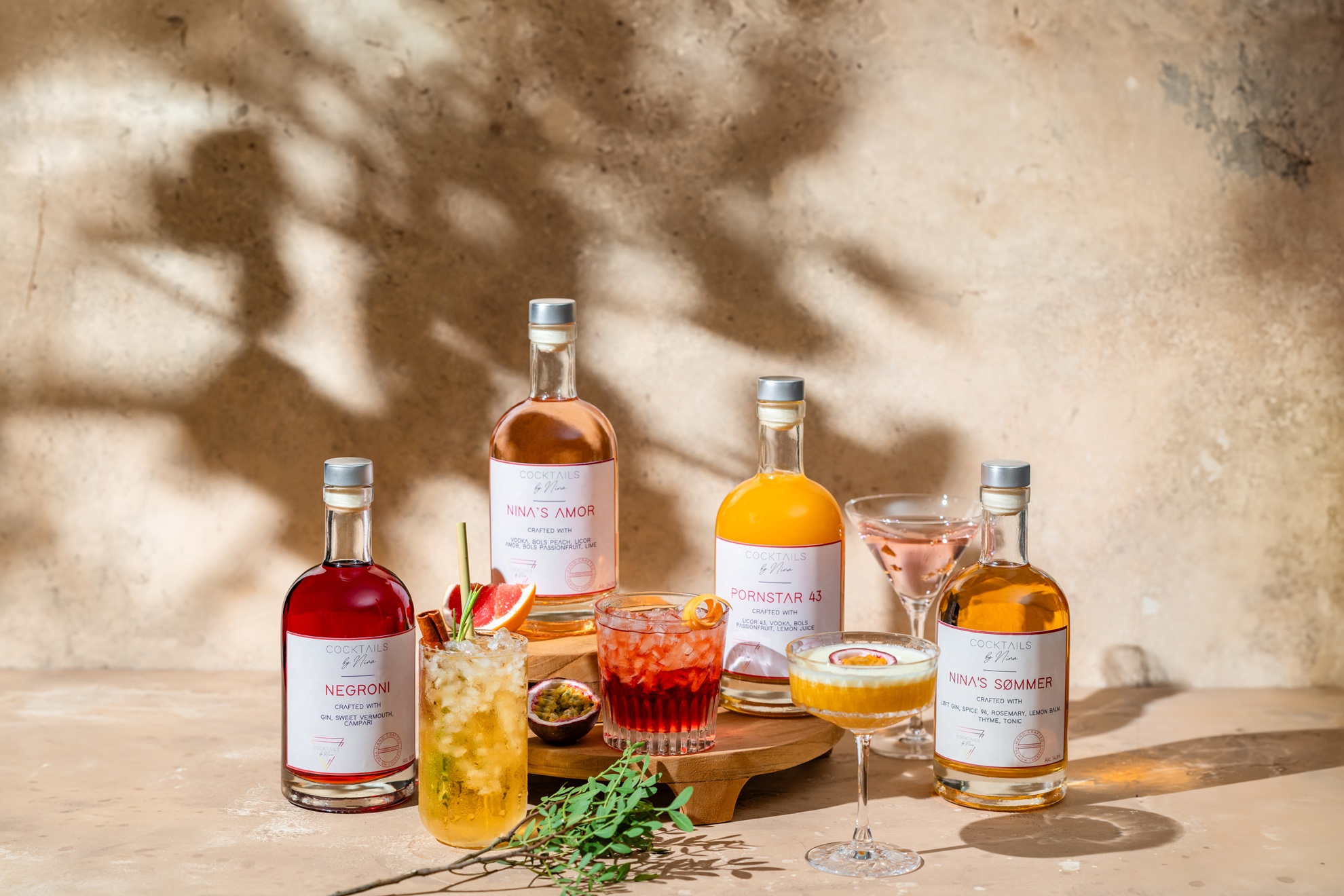
Whether you're organizing a birthday or an informal party at home, Cocktailsbynina's ready-made mocktails are ready to pour. Add a citrus twist or a sprig of mint yourself, and you'll have a professional-looking drink in seconds. For larger groups, the cocktail boxes are a practical choice: six cocktails in one box, ready to use. This way, you combine the convenience of ready-made drinks with the personal touch of a homemade garnish.
Frequently asked questions
What is garnish in a cocktail?
Garnish is the decorative and flavorful addition to a cocktail, such as a citrus twist, a sprig of mint, or an edible flower. It enhances both the visual appeal and the aroma of the drink.
How do you add a citrus twist to a cocktail?
Cut a wide strip of citrus peel with a Y-peeler, avoid the white pith, and squeeze the strip over the glass with the colored side down. This releases the essential oils onto the surface of the cocktail.
How far in advance can you prepare garnish?
Edible flowers can be prepared up to 24 hours in advance if stored between damp paper towels in the refrigerator. Cut citrus and herbs should be stored for a maximum of a few hours before use to prevent loss of quality.
Which garnish goes with which glass?
A tall glass calls for a long garnish such as rosemary or cucumber. A wide coupe glass is better suited for a delicate flower or a thin citrus twist. Always match the size and style to the glass type and cocktail.
Should you make garnish edible?
Not always, but edible garnishes add extra flavor dimensions. Always remove pollen from edible flowers to prevent bitter tastes. Non-edible garnishes, such as a decorative stem, are purely visual and do not need to be consumed.
Recommendation
- Essential cocktail terms: your guide to clear choices – Cocktails by Nina
- Shots and drinks: the complete guide to convenience and quality – Cocktails by Nina
- Aperitif cocktails characteristics: the complete guide – Cocktails by Nina
- Creating a drink experience guide for parties at home – Cocktails by Nina