The 2026 cocktail scene is all about conscious choices: less alcohol but no less flavor, agave taking center stage, and a hint of umami that would have raised eyebrows a year ago. Eight themes will define what appears on menus and in glasses this year: from no/low-alcohol and RTD cocktails to theatrical presentation and Dutch distillates. Those who test a trend in their own bar or home bar now will be ahead of the curve next season.
In short:
- The use of no/low-alcohol and zero-proof cocktails will become standard in hospitality venues and at home, with price parity with alcoholic beverages being desirable.
- RTD and canned cocktails are gaining popularity, especially at events and during busy services, as they are fast and reliably high quality.
- Agave spirits like mezcal and tequila are taking over classic whisky and gin recipes, with smoky and spicy flavor profiles.
- Presentation and theatrical techniques remain important, as long as they enhance the flavor experience without overwhelming the guest or disrupting workflow.
- These trends call for a focus on local ingredients, Dutch distillates, and minimalist styling for a recognizable, sustainable experience.
Table of Contents
- The main cocktail trends of 2026 at a glance
- No and low-alcohol cocktails as a permanent menu choice
- Ready-to-drink cocktails: when cans are truly a solution
- Agave spirits: why mezcal and tequila are taking over the menu
- Theatrical presentation: how far can you go without losing the guest
- Highballs as a reliable pillar on every menu
- Umami and fermentation: the flavor layer that deepens cocktails
- Functional spirits: adaptogens and CBD without false promises
- Local ingredients and Dutch distillates on the menu
- How Cocktails by Nina moves with these trends
- Concrete serving and styling tips for bars and at home
- Personal recommendations: what to test in the coming month
- Ready-made cocktails for every 2026 trend
- Sources
The main cocktail trends of 2026 at a glance
Eight movements will define the menu this year, not all with equal impact. Some require a complete menu overhaul, while others can be tested within a week.
- No/low-alcohol & low-ABV: guests want choice without compromising on taste. Tip: start with one zero-proof signature alongside your classics.
- RTD and canned cocktails: ready-made quality is gaining ground at events and in hospitality itself. Tip: test a canned format during a busy shift.
- Agave: tequila & mezcal: smoky, spicy profiles sometimes replace whisky in classic recipes. Tip: replace bourbon with mezcal in a sour and taste the difference.
- Theatrical maximalism: presentation as part of the taste experience, not as a distraction. Tip: one visual element per drink is enough.
- Highballs and light serves: speed and consistency without sacrificing flavor. Tip: build a mini-menu of three highballs.
- Savory/umami & fermentation: miso, fermented citrus, and ginger appear in unexpected combinations. Tip: add a drop of umami bitters to a stirred drink.
- Functional spirits: adaptogens and CBD find their way into wellness-oriented menus. Tip: communicate clearly, without medical claims.
- Local sourcing & Dutch distillates: jenever and Dutch gin give the menu its own story. Tip: center one Dutch brand in a signature drink.
No and low-alcohol cocktails as a permanent menu choice
The demand for alcohol-free options is no longer an afterthought on the drinks menu. Sales of alcohol-free beer rose sharply in the first half of 2026, and guests now expect a good zero-proof cocktail as naturally as a classic gin and tonic, according to research by Culinea.
Pricing is the trickiest point here. Work with price parity between alcoholic and non-alcoholic versions of the same drink: this prevents the feeling that a zero-proof option is a "cheap alternative," while your margin is often higher due to lower excise duties and drink costs.
- Work with non-alcoholic distillates such as distilled herbal extracts or alcohol-free amari.
- Use bitters with character (smoky, spicy, citrus) to compensate for depth.
- Serve in the same glassware as your alcoholic signature drinks, so it feels equivalent.
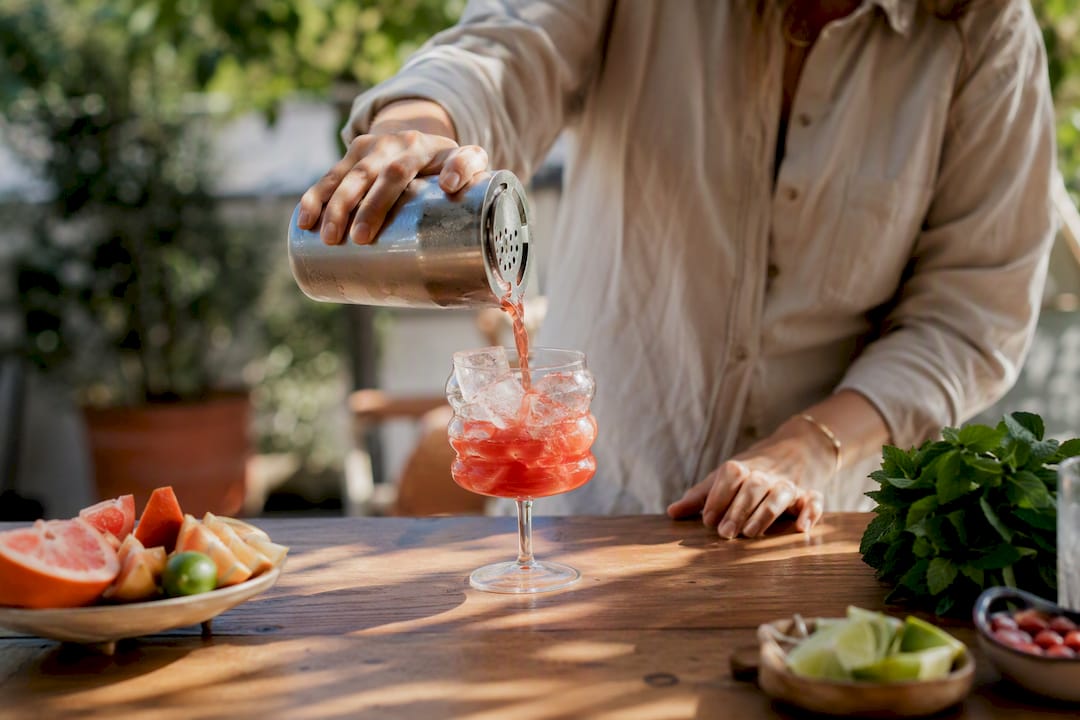
Pro-tip: Batch an alcohol-free aperitif spritz in a large carafe for early evening. You save preparation time and maintain consistent flavor, drink after drink.
For those who want to experiment at home, the range of alcohol-free cocktails already offers ready-made examples of what such a balance looks like.
Ready-to-drink cocktails: when cans are truly a solution
RTD cocktails have evolved from "emergency solution" to a serious alternative. The volume of quality RTDs grew by about 20% in 2025, and this trend continues while hard seltzer loses ground, reports Distiller Magazine.
For hospitality, this is especially relevant at times when staff is scarce: a busy terrace, a festival, or an evening with too few bar shifts. For home use, it's just as logical: no shaker, no searching for ice, just pour directly.
- Pay attention to ingredient lists: premium RTDs use real spirits, not flavorings.
- Serve at the correct temperature, usually well chilled and directly from the packaging.
- Use canned formats as an upsell at events where speed counts.
- Store RTDs upright and out of direct sunlight for the best flavor preservation.
Cocktail boxes with ready-made variants, such as the cocktail box with 4 pieces, perfectly cater to this convenience without compromising on bar quality.
Agave spirits: why mezcal and tequila are taking over the menu
Agave spirits are no longer a niche category for connoisseurs. Tequila and mezcal are appearing in classic recipes where whisky or gin once stood, aligning with a broader desire for smoky, spicy flavor profiles.
Mezcal lends itself well to stirred drinks with a smoky finish, while blanco tequila provides freshness to highballs and sours. Combine agave with citrus, chili, or smoked salt for a menu item that stands out without being complicated.
- Stock at least one blanco and one reposado tequila alongside a smoky mezcal.
- Place agave drinks centrally on the menu, not as a footnote in the whisky section.
- Serve formats range from neat with an orange slice to mezcal-based sours with egg white.
For those who want to dive deeper into recipes and origin, the guide to Mexican cocktails is a good starting point.
Theatrical presentation: how far can you go without losing the guest
Presentation is back, but functionally so. Research from Impressivemagazine shows that a large majority of bar professionals actively seek memorable presentation techniques, provided they don't overshadow the taste.
Think of smoke released upon serving, a garnish finished at the table, or a glass that matches the drink's story. It becomes problematic when the show lasts longer than the drinking itself, or if it makes consistency between shifts impossible.
- One visual or aromatic element per drink is enough; don't overdo it.
- Test each theatrical addition for reproducibility by different bartenders.
- Keep preparation time under thirty seconds for busy shifts.
Pro-tip: Choose one signature drink per season for the theatrical treatment. The rest of the menu remains fast and reliable.
NBC chairman Richard Zijlstra emphasizes that technique should support the guest, not overshadow them: hospitality ultimately trumps showmanship, he states in Entree Magazine.
Highballs as a reliable pillar on every menu
Highballs are the silent winner of 2026. They are quick to make, foolproof, and align with the broader desire for lighter, fruit-forward drinks without sacrificing alcohol content or complexity.
The secret lies in the details: fresh carbonation makes or breaks a highball, and a good balance of sweet and sour prevents the drink from feeling flat. Always use freshly opened sparkling water or tonic, never anything that has been open for hours.
- Build a fixed mini-menu of three highballs around one base spirit.
- Work with homemade syrups for distinction without added inventory pressure.
- Serve in tall glassware so the carbonation remains visible.
- At home, a highball works perfectly with ready-made mixers and a good supply of ice.
For those who want to specifically elaborate on aperitif moments, the guide on aperitif cocktails offers concrete serving formats that seamlessly connect with this trend.
Umami and fermentation: the flavor layer that deepens cocktails
Umami is the flavor layer that defines 2026. Thirty bartenders told VinePair that miso, fermented citrus, and even a hint of MSG are becoming structural flavor components, no longer just an experiment for the menu.
Yuzu kosho works well in a sour, fermented peel adds depth to a stirred martini variant, and miso syrup works surprisingly well with agave spirits. The risk lies in communication: guests who don't know what they're drinking might be put off by an unfamiliar ingredient.
- Clearly list unusual ingredients on the menu, also for allergy-sensitive guests.
- Start with small doses of umami; too much can quickly overpower the rest of the drink.
- Test fermentation ingredients first in a sour, where acidity balances the umami flavor.
Bartenders worldwide now treat fermentation as a structural part of the menu, not as a curiosity, which also means guests are increasingly asking for explanations of unusual ingredients.
Functional spirits: adaptogens and CBD without false promises
Functional drinks are growing, but the biggest pitfall is over-claiming. Adaptogens, nootropics, and CBD are appearing in wellness-oriented menus, especially among guests who drink consciously but still seek a "ritual" around their evening drink.
The most important advice: avoid medical or health claims entirely. A drink with adaptogens can be called "soothing in atmosphere," but never suggest "reduces stress" or similar claims without substantiation.
- Combine functional ingredients with an NA/low-ABV base for a consistent target audience.
- Communicate ingredients transparently, without health promises.
- Position functional drinks as a supplement, not a replacement for your core menu.
This category works best as an addition to a broader zero-proof offering, something the range of ready-made mocktails already provides space for.
Local ingredients and Dutch distillates on the menu
Origin sells a story, and that story is precisely what makes a menu distinctive. Dutch jenever, artisanal gin, and local bitters give a drink context that an imported spirit can never offer.
Local sourcing also means shorter delivery times and less waste: fresh herbs from the market instead of imported garnishes that have been in transit for three days.
- Feature at least one Dutch spirit centrally in a signature drink.
- Collaborate with local distilleries for small, exclusive batches.
- Use seasonal Dutch herbs and fruits as garnish instead of standard citrus.
This approach also aligns with broader trends in the leisure sector, where personalization and local stories are increasingly important for managers who want to make their offerings stand out.
How Cocktails by Nina moves with these trends
The trends of 2026 demand products that combine quality and convenience, and that is precisely what Cocktailsbynina has been focusing on for some time. The range of ready-made cocktails, mocktails, and cocktail boxes is built with premium ingredients and spirits, ready to serve directly without a shaker or bartending knowledge.
For the zero-proof trend, Cocktailsbynina offers a range of alcohol-free cocktails that aim for the same depth of flavor as their alcoholic counterparts. For the RTD movement, the cocktail boxes fit seamlessly: they suit events, parties, and the growing demand for consistent quality without preparation time. For hospitality businesses experiencing staff shortages at peak times, an assortment of ready-made drinks functions as a practical addition to their own menu.
Those who want to try out the theatrical or savory trends themselves without stocking all ingredients will find the basic building blocks to experiment with at Cocktailsbynina, supplemented with accessories and glassware for the complete experience.
Concrete serving and styling tips for bars and at home
The right presentation starts with the right glassware. A highball in a low tumbler glass looks different than in a tall glass, and that difference influences how a guest experiences the drink even before tasting it. For fruit-forward serves, spritzer glasses of 62 cl work well because they allow space for ice and garnish without the drink warming up quickly.

For tropical and agave-based cocktails, the glass literally makes a difference in the experience. Mai Tai glasses of 49 cl suit drinks with lots of garnish, while hurricane glasses of 44 cl lend themselves to layers and visual effects, precisely what the theatrical trend demands.
Some practical styling principles that work in any setting:
- Always use fresh ice, never ice that has melted and refrozen; that dilutes the flavor.
- Limit garnish to a maximum of two elements per drink, keeping it clear.
- Choose glassware that matches the volume of the drink: a glass too large with too little content looks sloppy.
- Serve shots in a shared presentation for group moments, such as a shot box with 5 split shots of 50 ml, for a festive moment without individual preparation.
- For gift-giving occasions, packaging makes all the difference: a bottle on a bed of straw in a gift box adds a tactile layer that a simple bottle lacks.
At home, the same logic applies as behind the bar: consistency and presentation outweigh complicated techniques. Anyone organizing a party will find concrete steps in the guide to creating a drink experience to turn a simple drink into a complete experience.
Personal recommendations: what to test in the coming month
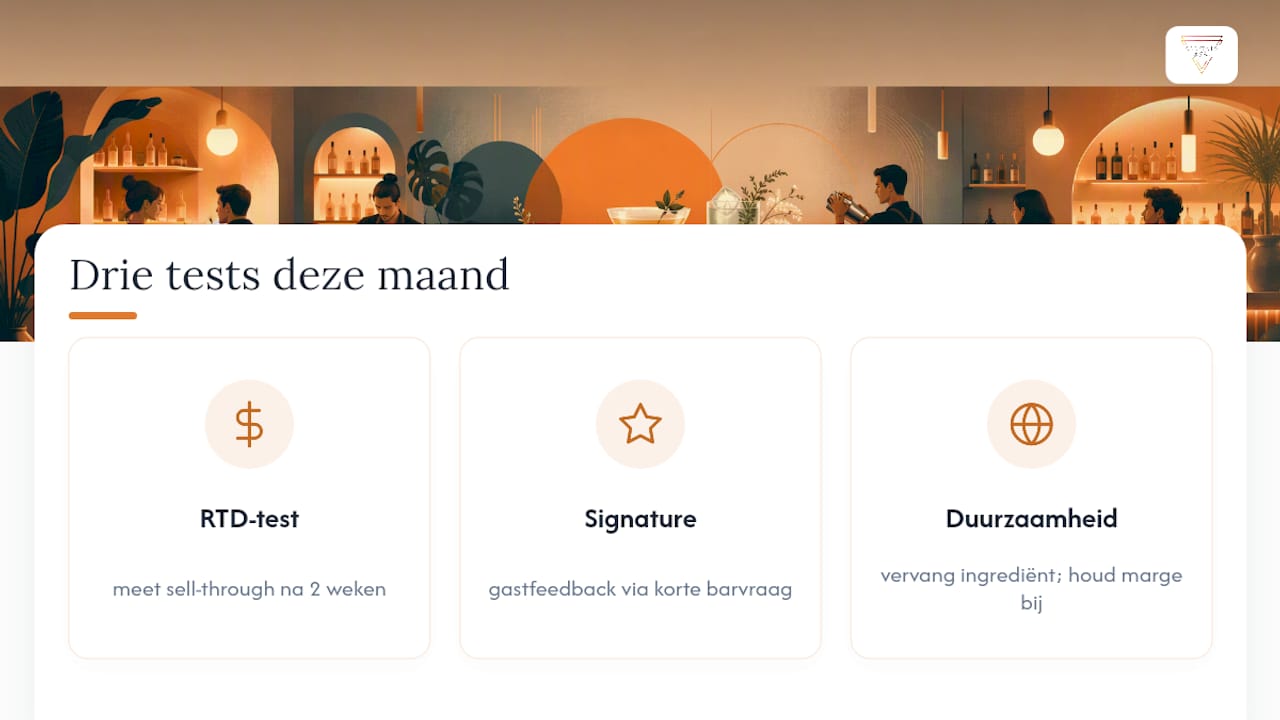
Don't test everything at once. Choose three experiments, each serving a different purpose. For revenue: add one RTD format to your menu and measure sell-through after two weeks. For experience: introduce one theatrical signature drink and collect guest feedback through a short question at the bar. For sustainability: replace one standard ingredient with a local alternative and monitor the margin.
The power is in measuring, not assuming. A drink that sells well but scores poorly on guest feedback does not deserve a permanent spot on the menu. Anyone who wants to work step-by-step on a complete serving experience will find a practical starting point for implementation in the guide to ready-made bar quality.
The biggest mistake I see: bars trying to implement all eight trends simultaneously and therefore excelling nowhere. Better to do three things well than eight things halfway.
— Ruud
Ready-made cocktails for every 2026 trend
Cocktailsbynina is the answer for those who want to follow these trends without having to stock ten new ingredients themselves. Looking for a zero-proof signature? The alcohol-free mocktails deliver bar-quality without alcohol and without preparation time. Are you organizing an event where RTD convenience matters? A cocktail box with 2 pieces or a larger variant offers precisely the combination of quality and speed that the trend demands.
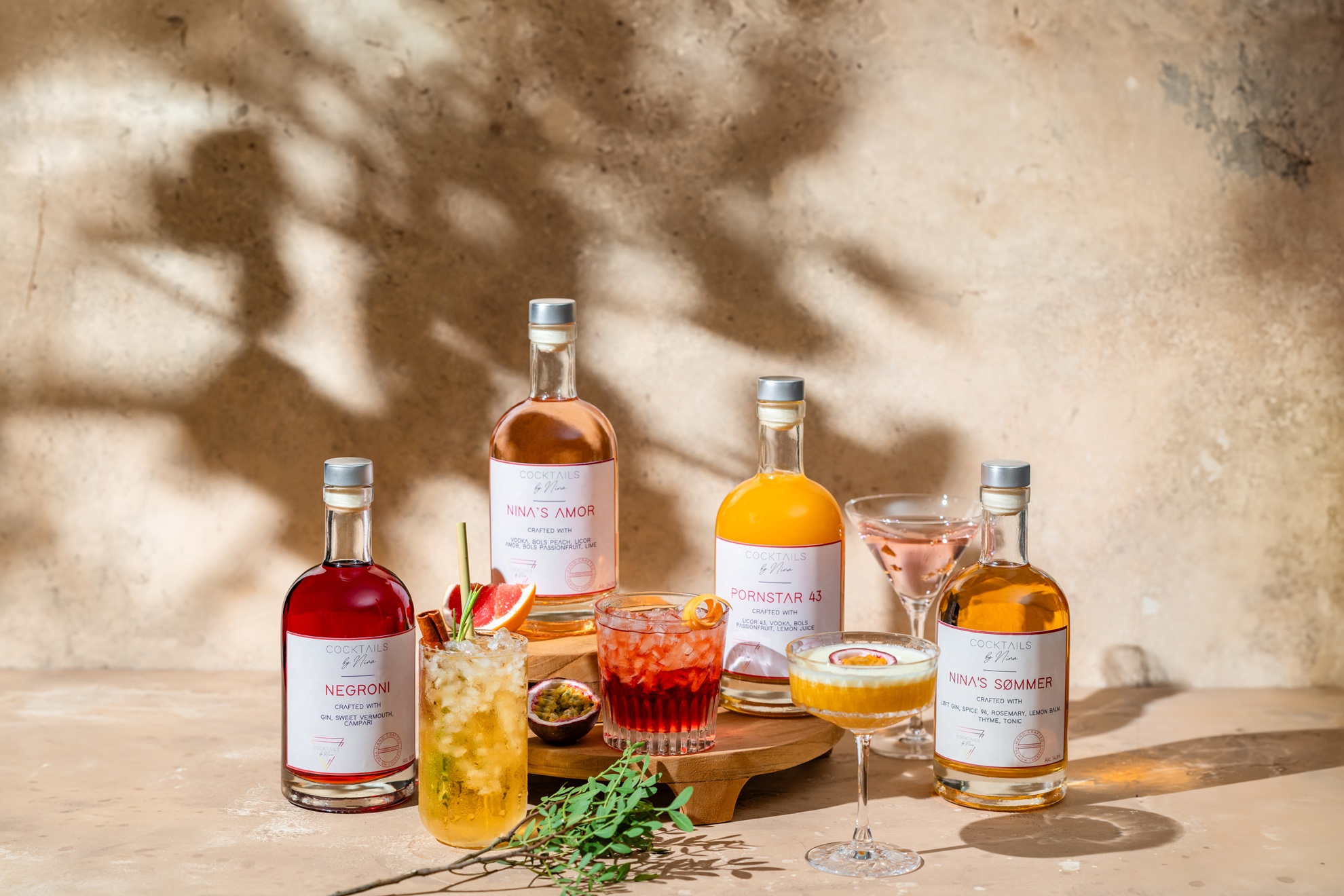
Want to taste the agave trend without buying a bottle of mezcal yourself? The MAI-TO lets you experience that flavor profile directly, ready to pour. For parties, corporate events, or just an evening at home without hassle: order a cocktail box, choose your favorite mocktail, or inquire about catering options for larger groups. Each drink is prepared with premium ingredients, ready to serve directly.
Sources
- Culinea
- 6 cocktailtrends for 2026: 'Hospitality more important than ever' | Entree Magazine
- What Flavors Will Dominate the Cocktail Scene in 2026? | VinePair
- 12 Cocktail Trends in 2026: Low-ABV and Zero-Proof | Impressivemagazine