Cocktail intensity is the perceived combination of alcohol strength and flavor components: sweet, sour, bitter, and alcohol together determine whether a cocktail feels integrated or sharp and unbalanced. Three rules you can apply immediately: start with a proven ratio as a baseline, systematically taste from nose to finish, and adjust in small steps. A balanced cocktail does not allow any single component to dominate. As flavor balance is explained through four pillars: when sweet, sour, bitter, and alcohol are in proportion, the whole feels integrated and palatable. The sour formula (2:1:0.75) is the classic starting point for drinks like a daiquiri or whiskey sour; the 1:1:1 logic of a Negroni applies to spirit-forward cocktails.
Key insights
Cocktail intensity is not about more or less alcohol: it's the interplay of sweet, sour, bitter, and alcohol that determines whether a cocktail feels integrated or not.
| Point | Details |
|---|---|
| Start with a ratio | Use 2:1:0.75 for sours or 1:1:1 for spirit-forward cocktails as a starting point, then adjust. |
| Dilution is an ingredient | Shaking provides 25–30% dilution, stirring 20–25%; choose the technique based on the desired mouthfeel. |
| Adjust in small steps | Add 5–10 ml of acid or sweetener per adjustment; large corrections disrupt the structure. |
| Taste systematically | Nose, attack, mid-palate, finish: each phase reveals something different about the balance. |
| Cocktailsbynina as a learning tool | Ready-made cocktail boxes offer consistent ratios for targeted experimentation with temperature and adjustments. |
Table of Contents
- Which four pillars determine flavor balance and intensity?
- Which ratios do you use as a starting point for a cocktail?
- Why are ice, dilution, and temperature crucial for intensity?
- How do you taste systematically and fix an unbalanced cocktail?
- Which ingredients influence intensity and how do you substitute them wisely?
- Which tools help you make intensity reproducible?
- How does Cocktailsbynina apply this in practice?
- What home enthusiasts underestimate about cocktail intensity
- Cocktailsbynina as a starting point for practice and enjoyment
- Sources
Which four pillars determine flavor balance and intensity?
Flavor balance in cocktails revolves around four components that constantly influence each other.
- Sweetness provides body and softens sharpness. Simple syrup, agave syrup, or a liqueur like Cointreau fill the space between acid and alcohol. Without sweetness, a cocktail can taste flat or sharp.
- Acidity brings tension and brightness. Fresh lime juice or lemon juice cuts through sweetness and makes flavors more vibrant. Bottled juice doesn't work: its acidity is too unpredictable.
- Bitterness adds depth and prolongs the finish. Angostura bitters, Campari, or an amaro make a cocktail resonate longer on the palate. Sweetness dampens bitterness, so an extra splash of syrup can temper an overly bitter finish.
- Alcohol is the carrier. It transports aromas and provides warmth. An overproof rum (57%+) will dominate more quickly than a standard 40% gin, which has direct consequences for the proportion of the other components.
Pillars constantly mask or enhance each other. Sugar dampens both bitterness and the burning sensation of alcohol. Acid makes sweetness less cloying. Acid, sugar, and alcohol together form the structural core of balance: professionals use these three purposefully to achieve precision and consistency.
Pro-tip: Always taste a cocktail cold. Cold suppresses sweetness and reduces alcohol burn, causing a cocktail to score differently as it warms up. What seems too sweet at room temperature can be perfectly balanced when chilled.
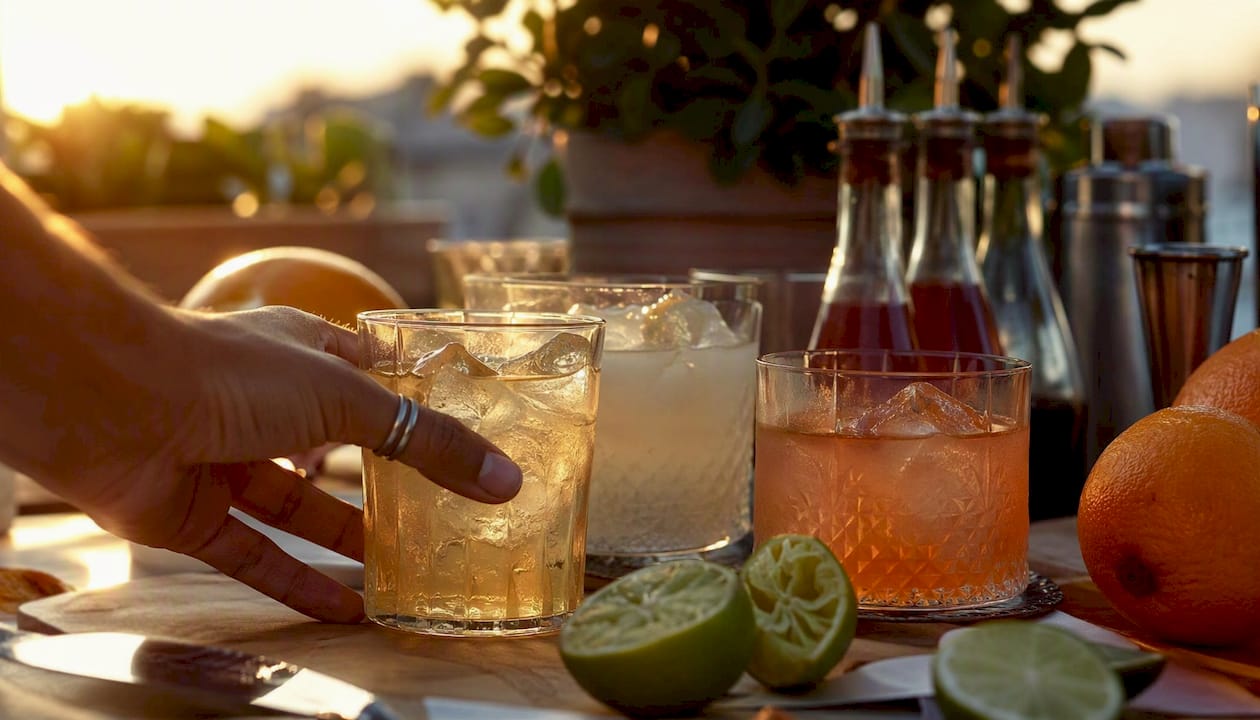
Flavor components also have different perception curves. Sweetness is noticed quickly and briefly; bitterness builds up and lingers. That's why a Negroni feels different on the first sip than on the third.
Which ratios do you use as a starting point for a cocktail?
Ratios are not laws, but starting points that you fine-tune to taste and spirit intensity. The sour formula and other templates are practical starting points that bartenders then adjust based on the specific spirit and desired intensity.
| Template | Ratio | Example | Why it works |
|---|---|---|---|
| Sour formula | 2 : 1 : 0.75 | Daiquiri (rum, lime, syrup) | Acid and sweet balance the spirit; 0.75 sweet prevents excessive sweetness |
| Golden sour | 2 : 1 : 1 | Whiskey Sour (bourbon, lemon, syrup) | Slightly more sweet for heavier spirits like bourbon |
| Spirit-forward | 1 : 1 : 1 | Negroni (gin, Campari, vermouth) | Three equal parts; bitter and sweet vermouth surround the gin |
| Spirit-forward light | 2 : 1 : 1 | Manhattan (whiskey, vermouth, bitters) | Spirit dominates; vermouth and bitters as modifiers |
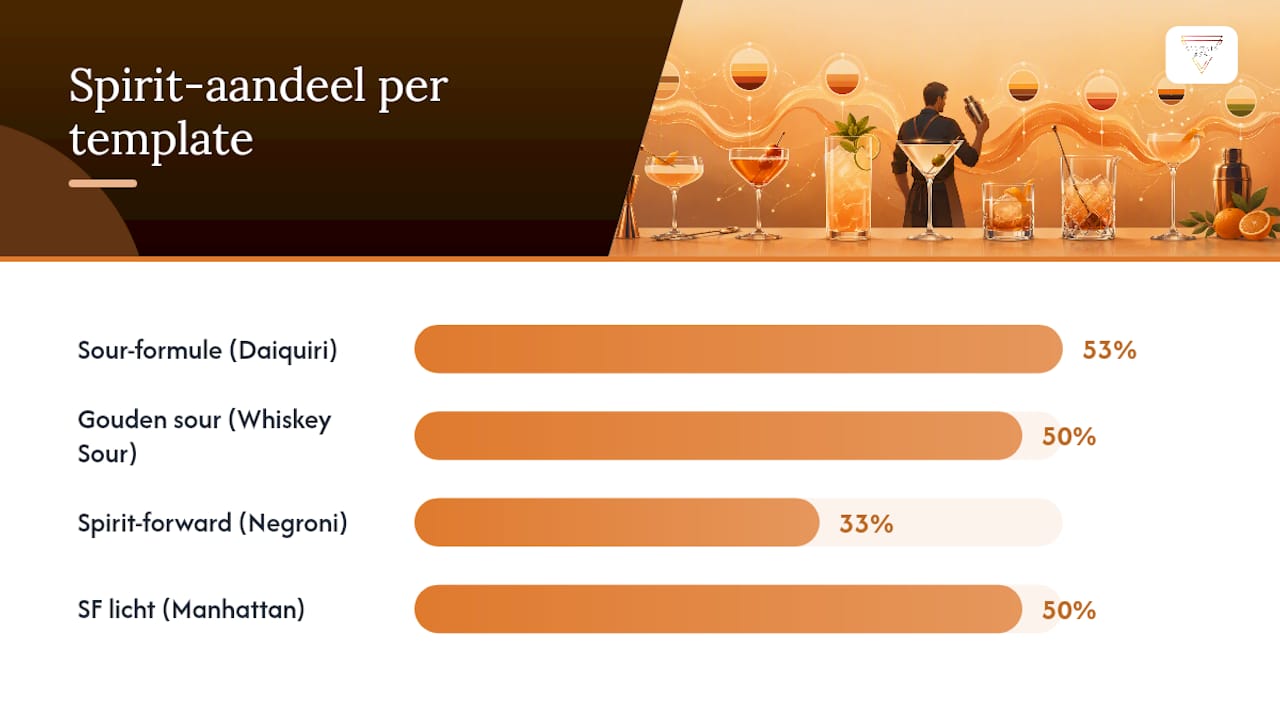
More classic cocktail examples show how the balance between bitter, sweet, and alcohol plays out in practice.
Why are ice, dilution, and temperature crucial for intensity?
Water is an invisible ingredient. Dilution from ice or water lowers alcohol intensity, integrates flavors, and changes texture. A cocktail without sufficient dilution tastes sharp and unintegrated; too much dilution makes it watery and flat.
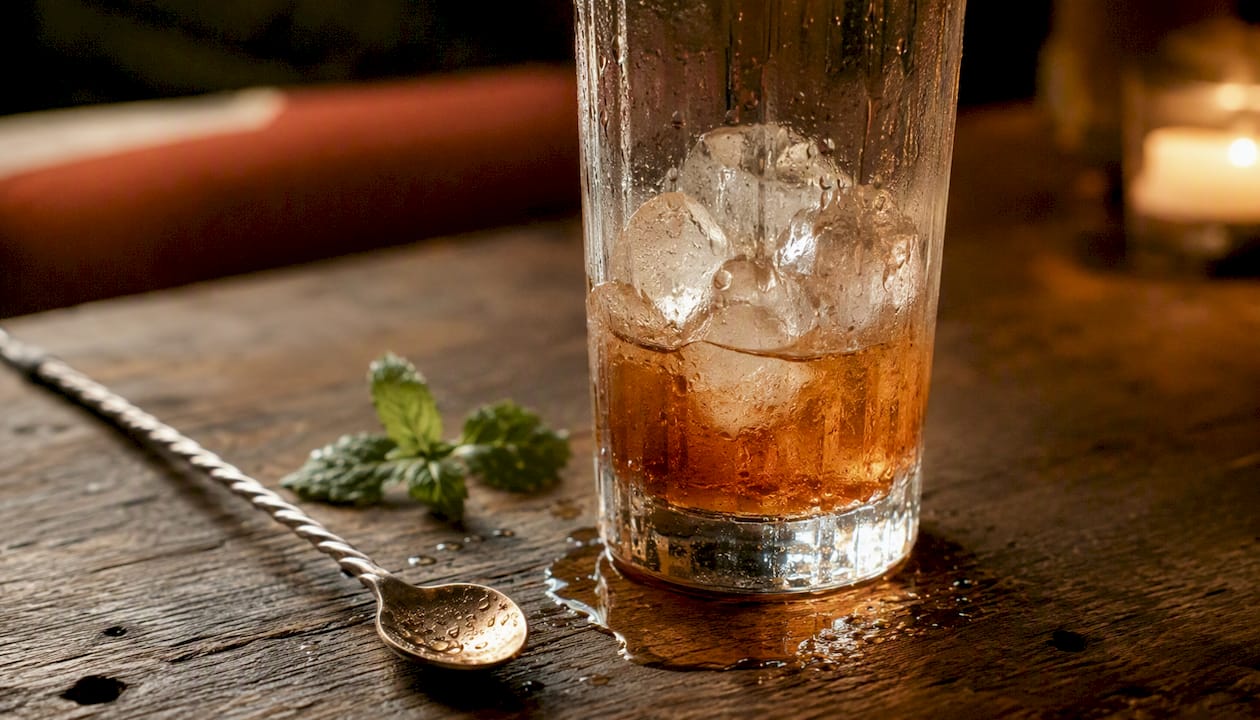
The difference between shaking and stirring lies precisely here. Shaking typically adds 25–30% water; stirring remains at 20–25%. That sounds small, but it noticeably changes the mouthfeel.
| Technique | Dilution | Texture | When to apply |
|---|---|---|---|
| Shaken | 25–30% | Aerated, lightly frothy | Citrus, egg white, syrup, milk drinks |
| Stirred | 20–25% | Silky smooth, clear | Pure spirit-forward: Negroni, Manhattan, Martini |
Shaking also breaks off small ice crystals that make the cocktail cloudy. That's fine for a daiquiri, but undesirable for a Martini where clarity and texture are key. Always stir with large, dry ice: small ice melts faster and causes too much dilution.
Pro-tip: Make the same cocktail twice: once shaken for 10 seconds, once for 20 seconds. Taste them side by side. You will directly experience what dilution does to alcohol burn and flavor integration. This is the fastest way to learn the correct melting point.
How do you taste systematically and fix an unbalanced cocktail?
Flavor intensity is dynamic: professionals taste systematically to determine appropriate adjustments. Follow this sequence:
- Smell. Hold the glass to your nose before drinking. Dominant alcohol or a sharp citrus scent already reveals where the balance is off.
- Attack. The first impression on the front of the tongue: sweet and sour come through strongest here. Too sweet or too sharp? Make a note.
- Mid-palate. The middle of the mouth reveals the body and the spirit. Does the alcohol feel too warm or too present? Then the dilution is too low.
- Finish. Bitterness and tannins linger. A long, bitter finish indicates too much modifier or too little sweetness.
Diagnosis patterns and their fixes:
- Too sweet: add 5–10 ml fresh lemon juice or lime juice. Acid cuts through sweetness without breaking the structure.
- Too sour: add 5–10 ml simple syrup, or half a teaspoon if you're already close to the limit.
- Too bitter: a dash of extra sweetness (5 ml syrup) or 10–20 ml extra water/ice tempers the finish.
- Too strong/too hot: 10–20 ml extra dilution via water or extra ice, or reduce the spirit by 10 ml and top up with a light modifier.
Small, incremental adjustments are more effective than large corrections. Always start with acid if too sweet, and with sweetness if too bitter. Specifically: a too-sweet daiquiri first gets extra lime; a too-bitter Negroni variation gets an extra half teaspoon of simple syrup. A too-warm Old Fashioned benefits from a larger ice cube that melts slower and gradually increases dilution.
Which ingredients influence intensity and how do you substitute them wisely?
Not all ingredients weigh equally. High-intensity ingredients include overproof spirits, concentrated liqueurs like Chartreuse or Fernet-Branca, and fresh citrus. Low-intensity ingredients include light white wine, fruit juices, and light syrups.
Substitution rules that work:
- Substituting sugar with liqueur: a liqueur like Cointreau brings both sweetness and aroma, but also alcohol. Slightly reduce the spirit (5–10 ml) to maintain the overall alcohol balance.
- Substituting fresh citrus with citric acid: citric acid solution (1 gram citric acid per 100 ml water) provides similar acidity without the aroma of fresh juice. Handy, but it lacks the fresh scent.
- Substituting bitters: Angostura is warm and spicy; Peychaud's is lighter and more floral. Don't swap them 1:1 without tasting, as the intensity differs.
Flavor-pairing research shows that both similar and contrasting ingredients can work well, but concentration and order are crucial. An amaro as a modifier adds bitterness and herbal depth but requires a bit more sweetness to balance the finish. Some substitutions require more dilution: a thick honey syrup dissolves slower and needs more stir time than regular simple syrup. More on spirits and mixers will help you understand the intensity differences per spirit.
Which tools help you make intensity reproducible?
Consistency starts with measurement. Without the right tools, every cocktail is a guess.
- Jigger: measure every component, even if you already know the recipe. A difference of 5 ml of acid or sweetener noticeably changes the balance.
- Barspoon: use it for stirred drinks. A long spoon provides less dilution than a short one, as you create less friction.
- Shaker (cobbler or Boston): the Boston shaker offers more control over shaking time and force; the cobbler is easier for beginners.
- Fine strainer: filters ice crystals and pulp, making the texture smoother.
- Ice molds: large ice (40 mm or larger) melts slower and provides less unwanted dilution in the glass.
- Notebook or note-taking app: record every adjustment with date and quantity. Without notes, you'll repeat the same mistakes.
Pro-tip: Make small batches of 2–3 servings at a time when testing a recipe. This way, you can adjust one variant and taste them side by side without wasting large quantities. Achieving bar-quality at home is faster with targeted comparisons than with endless experimentation.
Also standardize your shaking and stirring time. Ten seconds of shaking is a good starting point for most sours; fifteen seconds for drinks with egg white. Stir spirit-forward cocktails for at least 30 seconds with large ice.
How does Cocktailsbynina apply this in practice?
A good example of intensity adjustment in practice: imagine a ready-to-drink cocktail mix feels too sweet at room temperature. Serving it chilled solves part of the problem, as cold suppresses sweetness. If you then add a splash of fresh lemon juice, the balance shifts further towards freshness. This is precisely the diagnostic approach described above: taste, identify, correct in small steps.
Use ready-to-drink mixes as a learning tool with this checklist:
- Taste the mix directly from the bottle at room temperature. Note what you notice: too sweet, too sour, too strong?
- Serve chilled (with ice or a chilled glass) and taste again. Note the difference.
- Add a small adjustment: 5 ml lemon juice or a splash of water. Taste again.
- Compare the adjusted version with the original. Which do you prefer and why?
- Record your findings for next time.
Cocktailsbynina delivers ready-to-drink cocktails and mocktails prepared with premium ingredients and consistent ratios. This consistency makes them ideally suited as a reference point: you know what's in them, and you can experiment with small adjustments in a targeted way. Ruud, as a content expert for Cocktailsbynina, uses this approach to gradually familiarize home enthusiasts with combining flavors and diagnosing imbalances.
What home enthusiasts underestimate about cocktail intensity
Most home enthusiasts look for the fault in the recipe. Incorrect ice, too little shaking time, or a room-temperature glass are just as often the culprit as an incorrect ratio.
What I also see: people correct too aggressively. They taste a too-sweet daiquiri and immediately throw in half an extra lime. Then it's too sour, and they add syrup again. After three rounds, they have a cocktail with double the quantities and a completely different structure. Small steps, 5 ml at a time, and tasting again: that's the only way to learn what each adjustment does.
The most underrated learning tool is the A/B test. Make two versions of the same recipe with one difference: more acid in one, more sweetness in the other. Drink them side-by-side. You'll learn more in five minutes than from an hour of reading. Mistakes are not a problem; they are the point. Note what you did, what you tasted, and what you would do differently next time. This way, you build an intuition that no recipe can give you.
Cocktailsbynina as a starting point for practice and enjoyment
A cocktail box is the fastest learning tool for anyone who wants to understand cocktail intensity without having to weigh ingredients themselves. Cocktailsbynina's ready-to-drink cocktails are prepared with fixed ratios and premium ingredients, making them a reliable reference point: you know exactly what you're tasting, and you can experiment specifically with temperature, dilution, and minor adjustments.
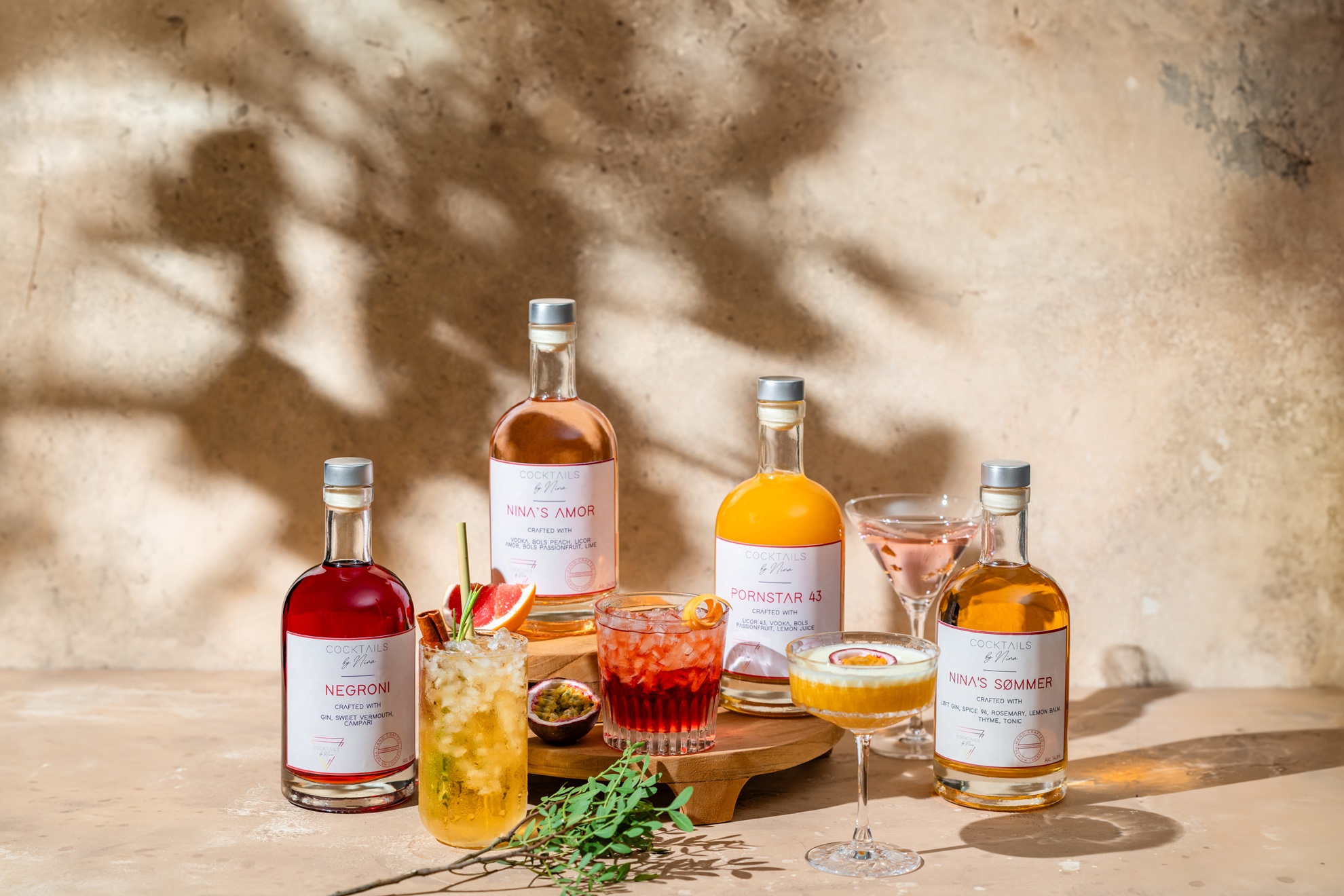
Order a cocktail box for 4 people and use it as a tasting session: serve one portion directly chilled, a second with extra ice, and a third with a splash of fresh lemon juice. Note what each adjustment does. Practicing this way with real, consistent products will accelerate your understanding of flavor balance more than any recipe. Want to practice without alcohol? Cocktailsbynina's alcohol-free cocktails offer the same structure of sweet, sour, and bitter, without the alcohol variable.
Sources
- Cocktail Balance Explained Through Science and Structure – The Art Of Shaking
- Understanding Cocktail Balance: The Science Behind Perfect Proportions | Elixiary Education
- Balance: The Foundation of Great Cocktails — CocktailFYI
- The Chemistry of Balance | Order of Mixology
- Acid, Sugar, and Alcohol: Mastering Cocktail Balance | Empire Mixology