Batching in a punch bowl or large pitcher is the most practical approach for cocktails for large groups. You prepare the base (alcohol, syrup, juice) in advance, keep it chilled, and only add ice and carbonation, if any, when serving. This ensures everyone quickly has a glass in hand, every portion tastes the same, and you don't spend the entire evening behind the bar.
The three most party-proof batch types:
- Fruity punch or sangria: easy to scale, little technique required, always popular.
- Mojito punch or margarita pitcher: recognizable flavors, easy to prepare, add carbonation separately.
- Frozen daiquiri: impressive result with a blender, ideal for summer parties.
Key insights
Batching in a punch bowl or pitcher is the most reliable method for cocktails for large groups: prepare the base in advance, only add ice and carbonation when serving, and always taste a test portion before finishing the full batch.
| Point | Details |
|---|---|
| Store base without ice | Mix alcohol, syrup, and juice in advance; only add ice when serving to prevent dilution. |
| Citrus has a short shelf life | Batches with freshly squeezed citrus should be used within 4–6 hours for the best flavor. |
| Calculate quantities | Estimate 2–3 drinks per person per hour plus a margin; plan 0.5–1 liter of water per guest. |
| Always taste a test portion | Make one glass as a test and adjust ratios before mixing the full batch. |
| Cocktailsbynina as an alternative | Ready-made cocktail boxes and mocktails save party hosts the entire preparation time. |
Table of Contents
- Which batch cocktails work best for large groups?
- Punch bowls and batching: how does it work and what are the rules?
- How many cocktails do you need for your party?
- What equipment do you need for a smooth cocktail evening?
- How do you set up a self-service cocktail station?
- Non-alcoholic punch and mocktails that scale well
- Responsible serving: safety and hydration
- Taste, adjust, and treat your batch as a living process
- What I've learned from making cocktails for large groups
- Cocktailsbynina helps your party run smoothly
- Sources
Which batch cocktails work best for large groups?
Below are six reliable choices with mini-recipes scaled for 10 and 20 people. Allow for a moderate amount of finished cocktail per serving.
Serving tips per cocktail:
- Fruit punch: serve in a large punch bowl with ice cubes and orange slices. Add sparkling water (200 ml per 10 people) just before the party starts.
- Sangria: let it steep in the refrigerator for at least 2 hours. Only add sparkling water or cava for fizz when serving.
- Mojito punch: mix rum, lime juice, and sugar syrup in a pitcher beforehand. Only add sparkling water when serving and garnish each glass with a mint sprig and a lime slice.
- Margarita pitcher: salt the glasses in advance. Briefly shake the batch with ice before pouring.
- Moscow Mule batch: keep the vodka-lime base chilled. Ginger beer is only added to the glass, otherwise, you'll lose all carbonation.
- Frozen daiquiri: blend in portions of 4–6 glasses at a time, serve immediately. Keep the unblended base chilled and blend per round.
For snacks to accompany your cocktail station, you can find great combinations on Kellerkookt.
Punch bowls and batching: how does it work and what are the rules?
The power of batching lies in one simple separation: store the base without ice, add ice only when serving. Ice dilutes a cocktail quickly. A batch that sits in a punch bowl with ice for hours will taste like colored water by the end of the evening. Store the base airtight and chilled, and add ice the moment you pour.
Carbonated ingredients, such as sparkling water, ginger beer, or cava, should never be included in the pre-made batch. They lose their fizz as soon as they are mixed and stand. Keep them separate and let guests or a helper add them per glass.
Prepare base mixtures 4–6 hours in advance, keep them chilled at 2–4°C, and preferably use them within 6–8 hours for the best flavor.
What to batch, what not to batch?
Punch, sangria, mojito punch, margarita pitcher, and Moscow Mule bases are excellent for batching. Cocktails with fresh egg whites (Whisky Sour with egg white, Clover Club) or cream (Piña Colada, White Russian) are only partially batched: mix alcohol, sugar, and juice in advance, but add egg white or cream per serving just before serving. This is a matter of both food safety and texture.
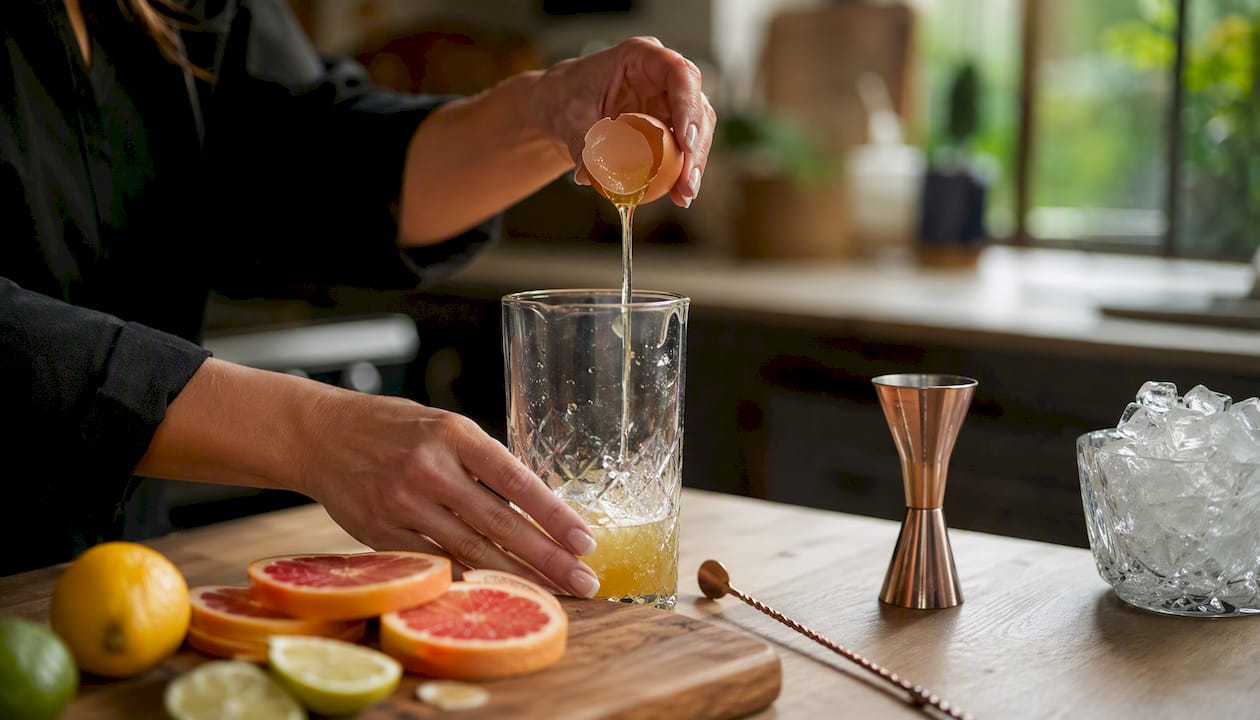
Pro-tip: Fresh citrus is the weakest link in a batch. Cocktails with freshly squeezed lime juice or lemon juice lose their fresh quality after 4–6 hours and can develop bitter notes. Squeeze citrus as close to the party as possible, or correct the acidity when serving with a splash of fresh juice.
How many cocktails do you need for your party?
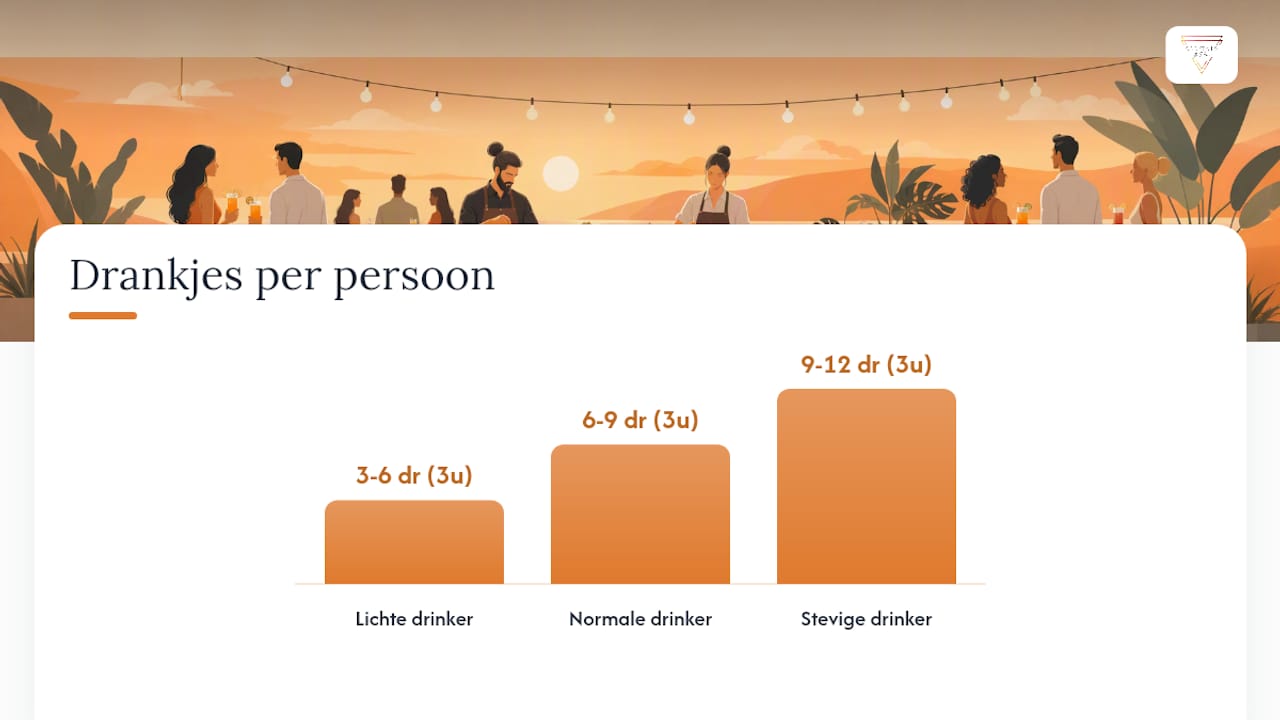
The basic rule is simple. Light drinkers consume 1–2 drinks per hour, normal drinkers 2–3, and heavy drinkers 3–4. For an average 3-hour party, you should therefore expect 6–9 drinks per person.
Also, plan for 0.5–1 liter of water per guest for the entire evening. This is not a minor detail: keeping water available is one of the most concrete ways to prevent excessive drinking.
Simple formula for self-scaling:
- Number of guests × average drinks per hour × party duration = total number of drinks
- Total × 1.15 = purchase target (with margin)
- Per drink, expect 150–200 ml of finished cocktail
Buy spirits at a liquor store or wholesaler in larger bottles (1 L or 1.5 L) for a better price per milliliter.
What equipment do you need for a smooth cocktail evening?
A well-prepared bar starts with the right equipment. If you miss one thing, you'll notice it at the busiest moment.
Essential equipment:
- Punch bowl (minimum 5–10 L) or a glass dispenser with a tap for self-service
- Mixing bowls of 5–10 L for the base
- Measuring cups and jiggers for consistent portions
- Blender (for frozen daiquiris and smoothie-like batches)
- Coolers or a refrigerator with enough space (2–4°C)
- Enough glasses: count on 2–3 glasses per guest (people lose them)
- Stirring spoons, cutting boards, knives, and a citrus juicer
- Small containers for garnishes (mint, lime slices, salt for the rim)
Timing: what to do when?
Two days before the party: buy all ingredients, check your equipment, and ensure you have enough cooling space.
The day before: make sugar syrup, cut fruit for sangria (let steep), and prepare glasses.
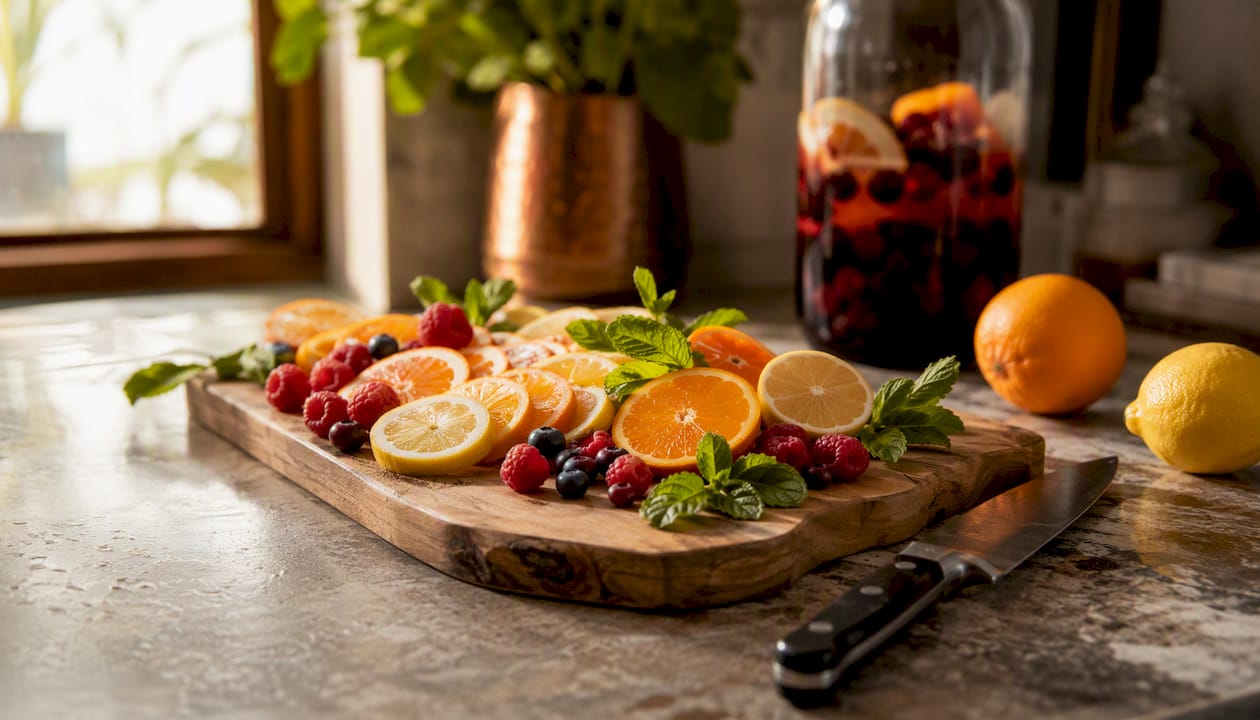
Four to six hours before the party: mix the alcohol bases without ice, cover, and chill. Only squeeze citrus at this time or later.
Just before kickoff: fill the punch bowl or dispenser, add ice, set aside carbonated drinks, and place garnishes in containers.
For more inspiration on how to create a complete drink experience for your party, read the guide on the Cocktailsbynina blog.
How do you set up a self-service cocktail station?
A self-service station only works if the order is logical. Guests who have to think about what to do will block the flow. Set everything up in one direction: base (pitcher or dispenser) → ice → mixers → garnishes → glass. Anyone walking from left to right will have a filled glass within ten seconds.
Practical tips for the station:
- Use carafes or dispensers with a tap. This is faster than scooping and reduces the chance of spills.
- Use simple labels: cocktail name, whether it's alcoholic or non-alcoholic, and major allergens (e.g., "contains sulfites" for sangria, "contains gluten" for certain beers).
- Don't place reserve batches on the table; keep them chilled in the kitchen. This keeps the station looking tidy and prevents guests from refilling themselves.
- Provide small spoons or stirrers so guests can mix themselves if there are multiple layers.
Pro-tip: Use drink styling to keep your station attractive: a chalkboard with cocktail names, a few fresh mint sprigs in a glass of water, and a neat arrangement of garnishes make the difference between a messy table and a real bar.
Standardize portions with jiggers and measuring cups so that every guest receives the same, even with self-service.
Non-alcoholic punch and mocktails that scale well
Make sure the mocktails look just as appealing as the cocktails, otherwise those guests will feel like a second-class choice.
Three mocktail recipes (scaled for 10 and 20 people):
Non-alcoholic fruit punch 10 pers.: 1 L orange juice, 500 ml pineapple juice, 300 ml grenadine, 500 ml sparkling water. 20 pers.: double everything. Serve with ice cubes and orange slices.
Virgin mojito punch 10 pers.: 500 ml lime juice, 300 ml sugar syrup, 1 L sparkling water, fresh mint. 20 pers.: double everything. Only add sparkling water when serving.
Sparkling citrus mocktail 10 pers.: 500 ml grapefruit juice, 300 ml lime juice, 200 ml agave syrup, 1 L sparkling water. 20 pers.: double everything. Garnish with a grapefruit slice and a sprig of rosemary.
Adjustments for dietary needs:
- Sugar-free: replace sugar syrup with agave syrup or use a sugar-free, stevia-based syrup.
- Vegan: all the above recipes are naturally vegan. Do check your grenadine; some brands contain gelatin.
- Allergens: always label which syrups or juices have been used. Nuts, sulfites (in wine and some juices), and gluten (in certain beers or premixes) are the most common points of attention.
Ready-made non-alcoholic cocktails are also a great solution if you want to skip mocktail preparation.
Responsible serving: safety and hydration
A party with large quantities of alcohol requires a few fixed rules. None of these are complicated, but they make a difference.
- Water always visible: place water pitchers or bottles on the same table as the cocktails, not somewhere separate. Guests will drink water if it's available.
- Designated driver reminder: agree in advance who the designated driver is and ensure non-alcoholic options are always available that are just as appealing as the cocktails.
- Signs of excessive drinking: slurred speech, difficulty walking, and aggressive behavior are the most recognizable signs. Approach the person calmly, offer water and food, and ensure someone can safely take them home.
- Keep food available: snacks slow down alcohol absorption. A party without food is a recipe for problems.
- Separate pouring lines for allergens: if you serve both alcoholic and non-alcoholic options, use separate dispensers and spoons to prevent cross-contamination.
- Safety margin for purchases: buy slightly less than you think you need. A shortage of alcohol is rarely a problem; a surplus is.
Taste, adjust, and treat your batch as a living process
The biggest mistake in batching is making the batch once and then not touching it again. Flavors change as a batch sits, citrus oxidizes, and sugar can turn out differently depending on the bottle you use.
Step-by-step testing method:
- First, make one glass as a test portion before mixing the full batch.
- Taste and note: is it too sour, too sweet, too strong, or too flat?
- Adjust the ratio in the batch. Too sour: more sugar syrup. Too sweet: more citrus or a splash of water. Too strong: a little more mixer or juice.
- Taste again after adjusting, then make the full batch.
Storage and shelf life:
Store the batch in an airtight pitcher or bottle in the refrigerator. Most non-citrus bases remain flavorful for 24 hours. Batches with freshly squeezed citrus are best used within 4–6 hours, after which they can develop bitter notes. Always add ice and carbonation only when serving, never to the stored batch.
Pro-tip: Use professional measuring cups and jiggers for every batch. Estimating by feel works for one glass, but for 20 servings, a small deviation quickly adds up to a batch that is structurally too sweet or too strong.
What I've learned from making cocktails for large groups
Making large batches sounds simpler than it is. The technique isn't in the recipes, which are straightforward. It's in the details: the moment you add ice, the quality of your citrus, and whether you've tasted the batch before pouring it into the punch bowl.
At Cocktailsbynina, we work daily with ready-made cocktails and mocktails that were developed precisely for this reason: so that the taste is always right, regardless of who pours or what time it is. For party hosts who prefer to skip the batch logistics, our cocktail boxes and ready-made options offer a direct solution. For those who want to batch themselves: the rules above are the foundation professionals also use.
Cocktailsbynina helps your party run smoothly
Batching yourself for 30 guests will cost you an afternoon of shopping, an evening of preparation, and significant attention during the party itself. That's fine if you enjoy it. But if you prefer to ensure everything is simply ready, Cocktailsbynina offers a faster alternative.
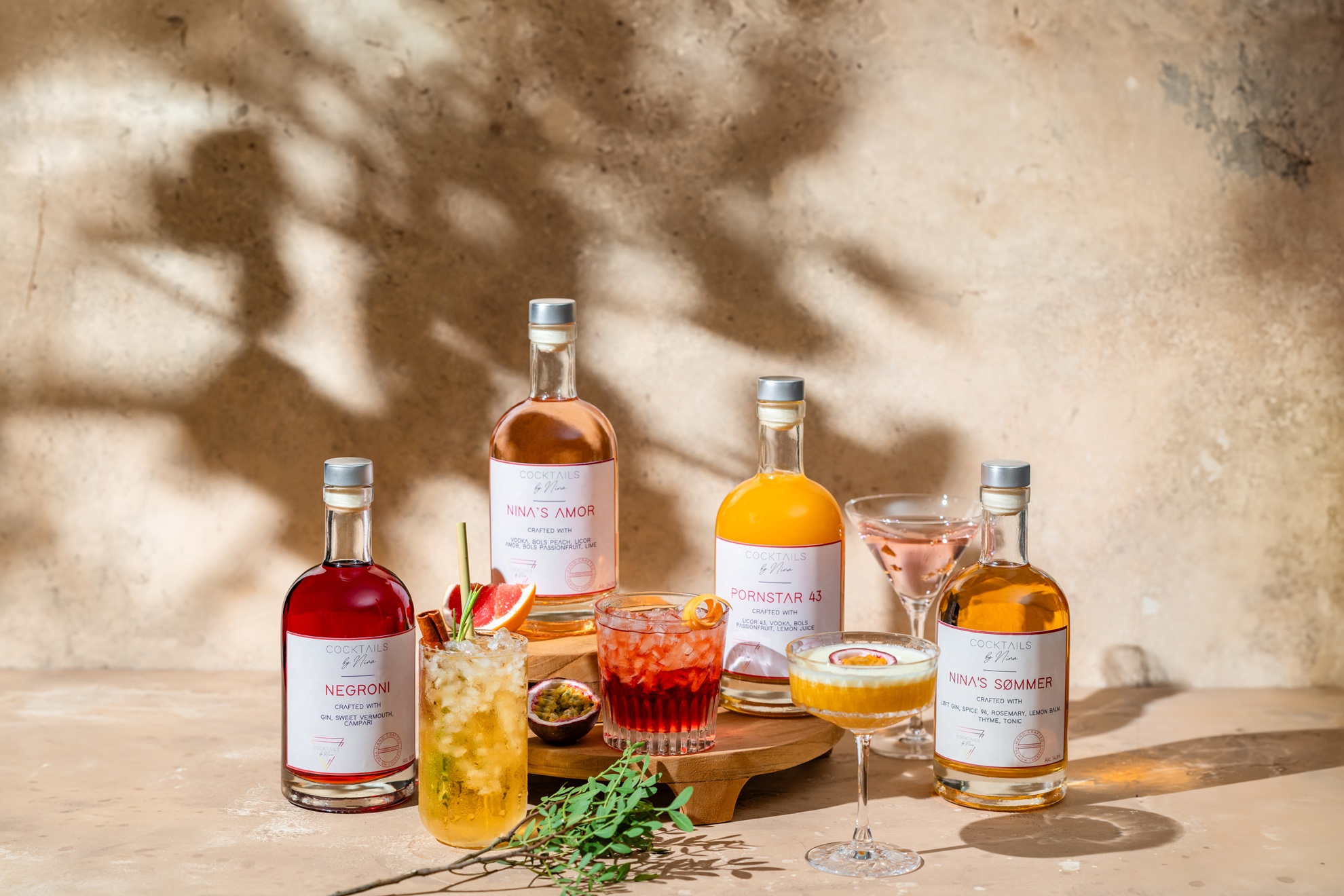
The cocktail boxes of 6 are ready-to-drink, made with premium ingredients and ready to serve, no mixing, no measuring. For non-drinkers, there is a complete collection of ready-to-drink mocktails that look just as festive as their alcoholic counterparts. Glassware, gift packaging, and catering options for larger events are also available through the webshop. Check out the offerings on Cocktailsbynina and order what you need for your party.
Sources
Below are the most relevant sources for those who want to delve deeper into recipes, quantities, and techniques:
- Cocktail batching large batch making tips guide NL | Cocktail Machine & Home Bar Guide
- How Much Drink Do I Need? Free Calculator for Your Party
- Mojito group serve | BACARDÍ NL
- Havana Club — batch frozen daiquiri recipe