A lowball cocktail is a concentrated, spirit-forward drink served in a short, wide glass with a sturdy base. The spirit takes precedence, with little to no mixer added, and it's often built directly over ice in the glass itself. You might also recognize the term as a "rocks drink" or "old fashioned glass drink," named after the glass it's served in.
Here are three concrete examples:
- Old Fashioned: whiskey, sugar, bitters, and an orange peel, served simply over a large ice cube.
- Negroni: equal parts gin, vermouth rosso, and Campari, briefly stirred with ice.
- The Godfather: whiskey and amaretto, nothing else, poured over ice in the glass.
A lowball is all about intensity rather than volume. While a long drink involves a generous splash of soda or tonic, a lowball stays true to the core of the spirit. This makes the glassware just as important as the contents, and that's where the story truly begins.
Key insights
A lowball cocktail is distinguished by a short, wide glass, a spirit-forward ratio, and little to no mixer, in contrast to the diluted, mixer-rich highball.
| Point | Details |
|---|---|
| Lowball definition | A concentrated cocktail served in a short, wide glass. |
| Difference from highball | Highballs dilute with a lot of mixer (around 1:4), lowballs remain spirit-forward (often 2:1 or neat). |
| First three recipes to try | Start with Old Fashioned, Negroni, and The Godfather, all three easy to build. |
| Key technique | Add large ice only at the end to control dilution during mixing. |
| Ready-to-drink alternative | Cocktailsbynina delivers bar-quality lowballs and matching glassware without mixing yourself. |
Table of Contents
- What exactly is a lowball glass?
- What is the difference between a lowball and a highball cocktail?
- Six classic lowball cocktails to make at home
- Which techniques and ice make a difference at home?
- What does Cocktailsbynina teach you about bar-quality lowballs?
- Why a good lowball requires patience
- No time to mix? Order bar-quality lowballs ready to use
- Frequently Asked Questions about lowball cocktails
- Sources
What exactly is a lowball glass?
A lowball glass is short, wide, and has a thick, sturdy base that keeps the glass stable once you add ice. A lowball glass typically has a capacity suitable for a good shot of spirit plus a few large ice cubes. These types of glasses are often specifically used for whiskey and other spirit-forward cocktails like the Old Fashioned and Negroni.
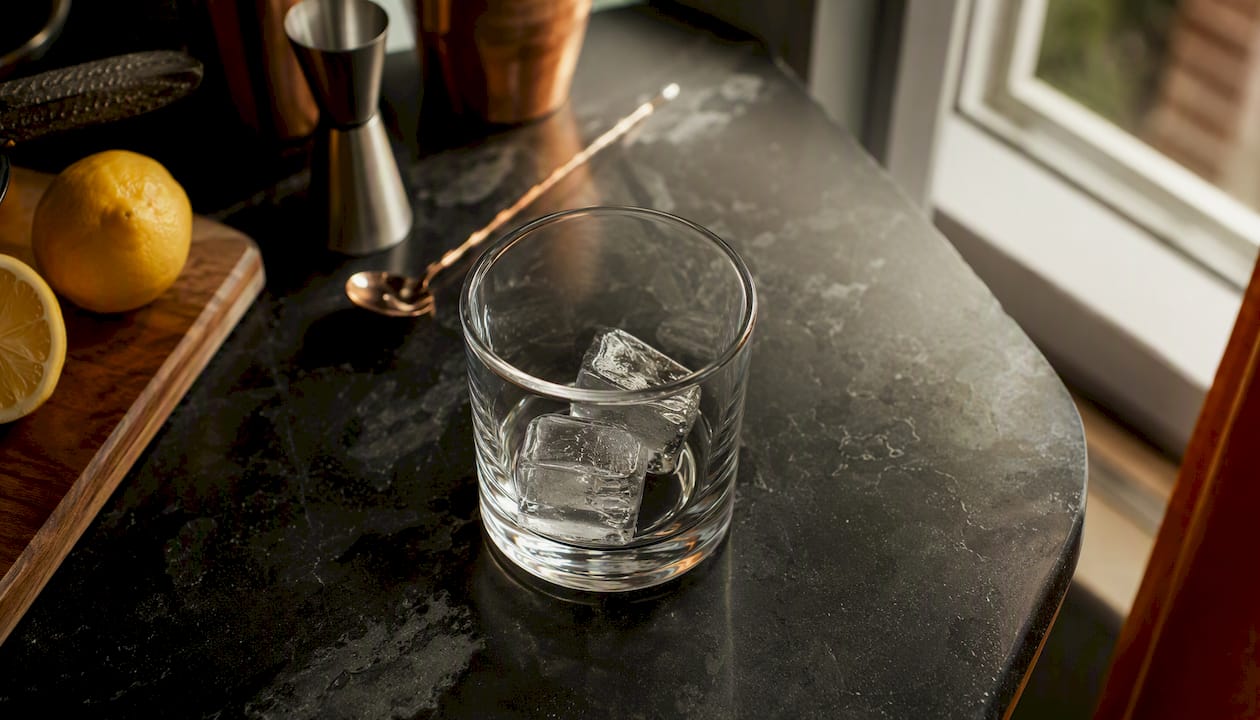
The wide, open shape is no accident. The wider the opening, the more aromatics are released, enhancing the flavor experience before you even take a sip. That same broad surface also makes the glass suitable for slow sipping: you don't warm the drink too quickly with your hands, and the large ice cube melts slower than crushed ice.
Within the category of lowball glasses, there are a few distinct variations:
- Old fashioned glass or rocks glass: the classic model, often with a thick, faceted base, ideal for Old Fashioned and Negroni.
- Tumbler: a slightly simpler shape, universally usable for whiskey, gin, or rum on ice.
- Nick & Nora glass: not strictly a lowball, but a popular alternative when you want to serve a cocktail "up" without ice and still maintain a classic appearance.
The origin of the lowball or Old Fashioned glass lies with whiskey: it was designed for drinks that you build in the glass itself and sip slowly, in contrast to cocktails that you shake first and then pour.
Pro-tip: Choose a glass with a thicker base if you often use large ice cubes. A thin-walled glass feels elegant, but a sturdy base prevents the glass from tipping or cracking due to temperature fluctuations.
Want to purchase a set that immediately works well for most classics? A cocktail glass set with sturdy rocks glasses covers Old Fashioned, Negroni, and Manhattan in one purchase.
What is the difference between a lowball and a highball cocktail?
The core difference lies in the ratio of spirit to mixer, not in the alcohol content of the glass itself. A highball cocktail, such as a Gin & Tonic or Cuba Libre, is served in a tall, slender glass with a lot of mixer, often in a ratio of around 1:4 between spirit and mixer. A lowball reverses that: the spirit is dominant, and the mixer, if any, plays a minor role.
Modern interpretations of lowballs sometimes extend slightly with a small amount of mixer, approximately in a 2:1 ratio, to make the character of a premium whiskey more accessible without drowning it out. This is still far from the dilution seen in a highball.
| Feature | Highball | Lowball |
|---|---|---|
| Typical glass | Tall, slender (highball glass) | Short, wide (rocks/tumbler) |
| Spirit:mixer ratio | Approximately 1:4 | Often 2:1 to neat |
| Volume usage | Large, much mixer | Compact, little to no mixer |
| Drinking pace | Faster, refreshing | Slower, more concentrated |
A common misconception is that lowballs are "lighter" because the glass is smaller. The opposite is more accurate: because there is little dilution, you taste the spirit more intensely and the alcohol comes through more prominently, even though you drink less total liquid.
A few simple rules of thumb to decide what you want to make:
- Do you want something refreshing for a warm afternoon with plenty of volume? Go for a highball.
- Do you really want to taste the flavor of a good whiskey or gin? Choose a lowball.
- Unsure? Start with a lowball at 2:1 and extend later if it's too strong for you.
Six classic lowball cocktails to make at home
These recipes use exact proportions, so you can adopt them directly. All six are served in a rocks glass or Old Fashioned glass, and for four of the six, you build the drink directly in the glass, without a shaker.
1. Old Fashioned Ingredients: 60 ml bourbon or rye whiskey, 1 sugar cube (or 5 ml sugar syrup), 2 dashes Angostura bitters, orange peel. Method: dissolve sugar with a splash of water and bitters, add whiskey, stir for 20 seconds with a large ice cube. Serve with a squeezed orange peel.
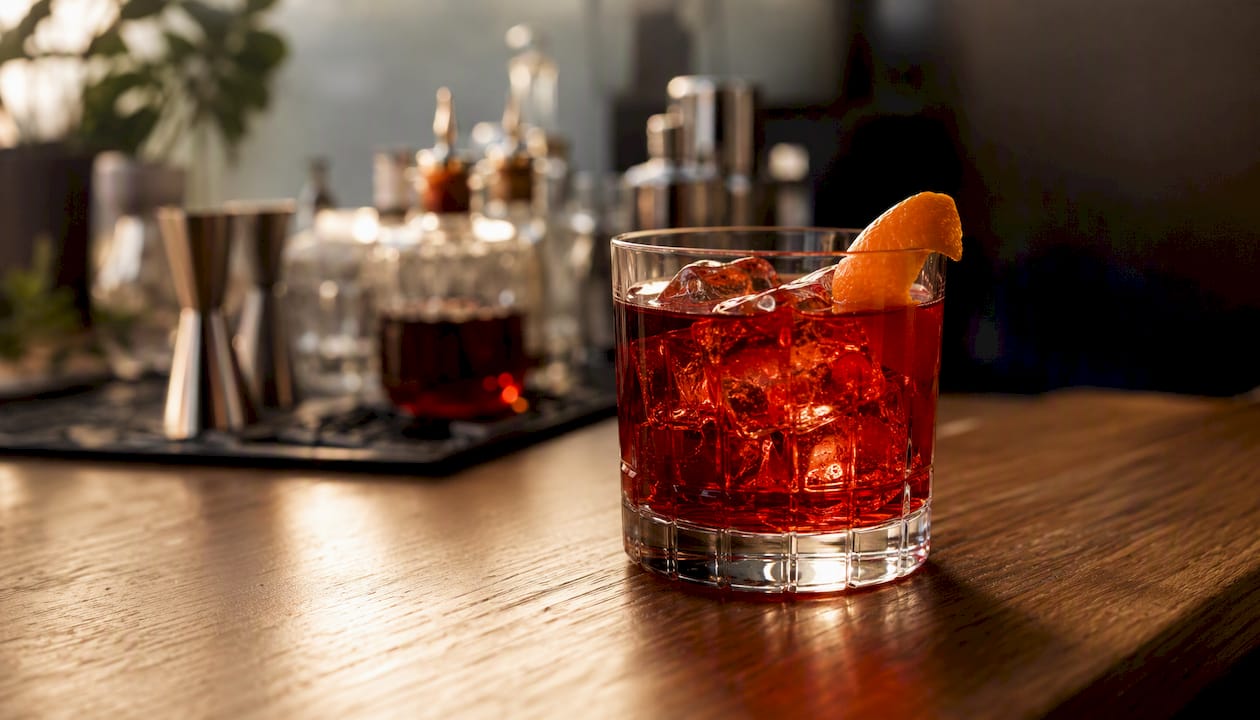
2. Negroni Ingredients: 30 ml gin, 30 ml Campari, 30 ml vermouth rosso. Method: build in the glass with ice, stir for 20 seconds until well chilled. Garnish with an orange slice.
3. Whisky Sour Ingredients: 60 ml whiskey, 30 ml freshly squeezed lemon juice, 15 ml sugar syrup, optional egg white for foam. Method: shake for 10 to 15 seconds without ice (dry shake) if using egg white, then again with ice. Strain into the glass over a fresh ice cube.
4. White Russian Ingredients: 50 ml vodka, 20 ml coffee liqueur, 30 ml full cream or milk. Method: build in the glass with ice, gently pour the cream over last to create a layer. Stir lightly before serving.
5. The Godfather Ingredients: 45 ml whiskey, 15 ml amaretto. Method: pour both directly over a large ice cube in the glass, stir briefly. This is the simplest recipe of the six, without a shaker or extra steps.
6. Manhattan Ingredients: 60 ml rye whiskey, 30 ml vermouth rosso, 2 dashes Angostura bitters. Method: stir for 20 to 30 seconds with ice in a mixing glass, strain into a chilled glass. Garnish with a maraschino cherry.
| Cocktail | Base spirit | Method | Time |
|---|---|---|---|
| Old Fashioned | Whiskey | Build + stir | 20 sec |
| Negroni | Gin | Build + stir | 20 sec |
| Whisky Sour | Whiskey | Shake | 10-15 sec |
| White Russian | Vodka | Build | 10 sec |
| The Godfather | Whiskey | Build | 5-10 sec |
| Manhattan | Whiskey | Stir, strain | 20-30 sec |
Want to vary? Substitute rye whiskey for bourbon in the Old Fashioned for a spicier profile, or use mezcal instead of gin in a Negroni for a smoky twist. More inspiration for classic cocktails can be found in our comprehensive guide.
Which techniques and ice make a difference at home?
You don't need an expensive bar set to make these recipes well, but a few tools make the process a lot more reliable. A jigger for exact measurements, a bar spoon for stirring, a strainer if you need to strain, and ideally an ice cube mold that makes large, slow-melting cubes. A muddler is only necessary if you're working with fresh herbs or fruit, which is not the case for these six classics.
The order in which you work determines how your drink turns out. For most lowballs, you first build the ingredients in the glass and usually add the ice only at the end, so you can control the dilution during mixing. Stirring provides a clear, smooth finish, which is what you want with a Negroni or Manhattan. Shaking introduces air and emulsifies ingredients like egg white or cream, which you need for a Whiskey Sour.
Ice might be the most underestimated factor. A large, dense ice cube melts slowly and keeps your drink cold without quickly diluting it, ideal for an Old Fashioned you want to last twenty minutes. Crushed ice melts faster and dilutes more quickly, which works well for something refreshing but weakens a spirit-forward drink.
A quick checklist for consistent results:
- Measure with a jigger, don't estimate freehand.
- Use large ice for building and stirring, smaller ice only for shaking.
- Stir for at least 20 seconds for good chilling without excessive dilution.
- Always strain if shaking with fruit juice or egg white.
- Taste and adjust the ratio before serving.
Pro-tip: Keep a few large ice cubes separately in a bag in the freezer. This prevents them from freezing together and ensures you always have the right size on hand for an Old Fashioned or Negroni.
You can read more about the ratios between spirits and mixers in our explanation of spirits and mixers as a basis for premium cocktails.
What does Cocktailsbynina teach you about bar-quality lowballs?
Cocktailsbynina makes ready-to-drink cocktails with premium ingredients, precisely matched to the proportions you want to taste in a good lowball. No estimated splash, no doubt about the right amount of amaretto in a Godfather: every bottle is already perfectly balanced.
A good lowball stands or falls on two things: the right ratio of spirit to mixer, and a glass that doesn't get in the way of the drink. Neglect either, and you'll taste it immediately.
Besides the drinks themselves, we also sell the glassware in which you best serve them. A sturdy cocktail glass set covers most of the classics in this article, from Old Fashioned to Manhattan. For those who prefer to serve something refreshing without alcohol, there are also alcohol-free cocktails that are just as concentrated in flavor.
A few practical takeaways from our assortment:
- Rocks glasses for Old Fashioned, Negroni, and Manhattan.
- Ready-to-drink bottles for those who don't have time to mix themselves but still want bar-quality.
- Gift packages if you want to surprise a lowball lover.
Why a good lowball requires patience
A lowball is not the cocktail you quickly drink to quench your thirst. It's the drink you have when you have time to savor it, and that's exactly why I love it so much. A Negroni that you drink in two minutes is simply made or intended incorrectly.
My favorite moment to serve a lowball is at the end of a dinner party, when the conversation slows down and no one is in a hurry anymore. An Old Fashioned with a large ice cube fits better then than a cocktail full of fizz and fruit. It almost forces you to slow down.
Feel free to experiment with the ratios presented in this article. A 2:1 instead of neat whiskey in your Godfather might be exactly what your taste needs, and there's nothing wrong if your Negroni tolerates slightly less Campari. The classic recipes are a starting point, not a law.
No time to mix? Order bar-quality lowballs ready to use
Getting an Old Fashioned or Negroni in the right proportion yourself takes practice, and not everyone feels like doing that when guests are at the door. Cocktailsbynina delivers that consistency immediately: every cocktail is made with premium spirits and is ready to serve as soon as you open it, without you having to measure or stir yourself.
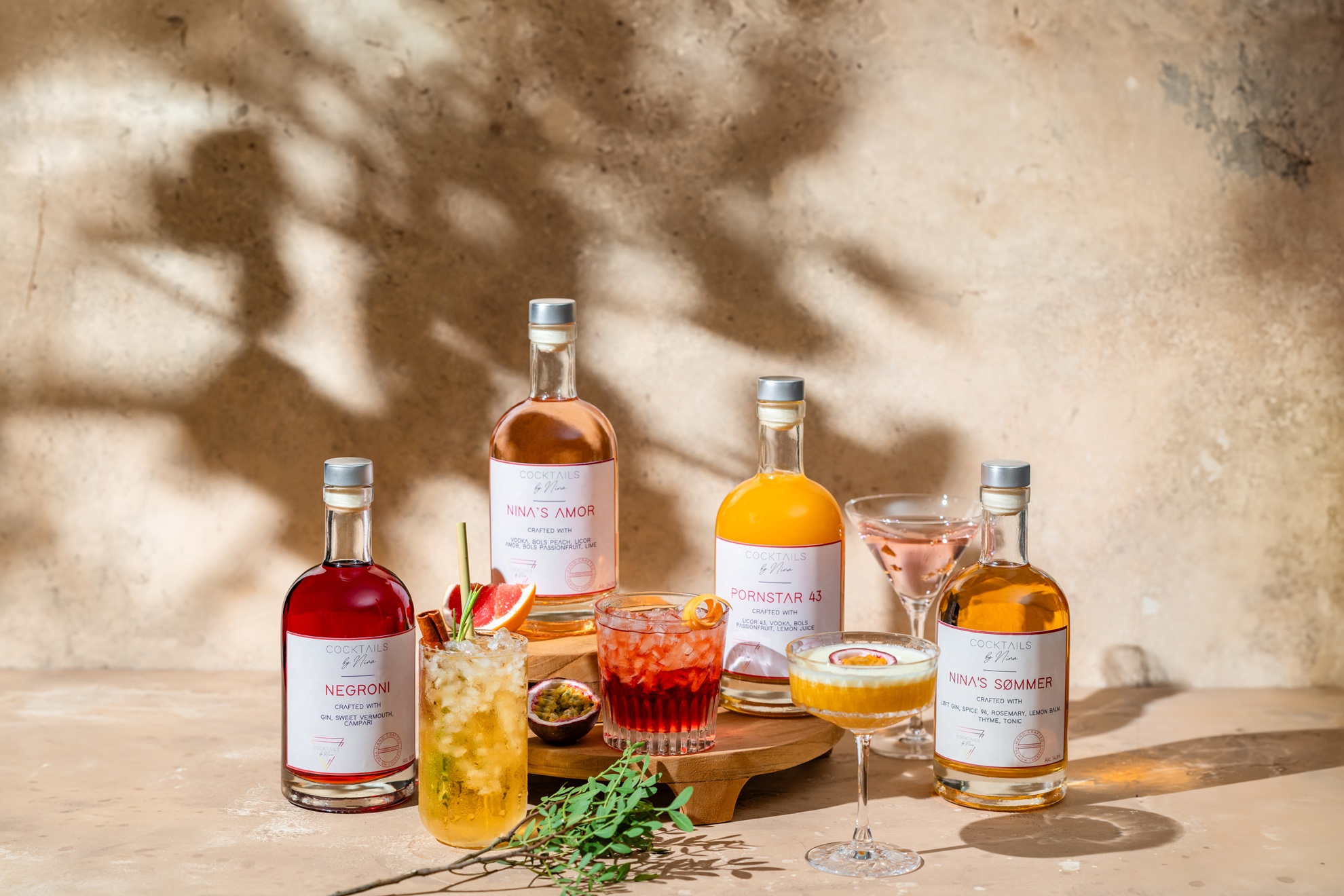
For a party or dinner, a cocktail box with 6 pieces is an easy way to provide multiple guests with a good lowball, without you having to stand behind the bar yourself. Want to try a few flavors before ordering a larger quantity? The cocktail box with 2 pieces is a pleasant, affordable way to do that. Browse the assortment and order the box that suits your occasion.
Frequently Asked Questions about lowball cocktails
What exactly is the difference between a lowball and a tumbler? A tumbler is actually the broader category under which the lowball glass falls. Every lowball glass is a type of tumbler, but not every tumbler is specifically designed for spirit-forward cocktails like a lowball.
Can you serve a highball cocktail in a lowball glass? Technically you can, but the volume of a highball often doesn't fit well in the smaller glass. The glass is designed for compact, concentrated drinks, not for large amounts of mixer.
Are lowball cocktails always stronger in alcohol percentage? Not necessarily stronger in percentage, but more intense in flavor due to less dilution. You taste the alcohol more prominently, even at the same percentage as a highball.
Which cocktail is easiest for a beginner to make? The Godfather is the simplest recipe in this article: two ingredients, over ice, done. An Old Fashioned requires a bit more precision due to the sugar and bitters.
Should I always use large ice for a lowball? For most classics, yes, because large ice melts slower and dilutes the drink less quickly. For a Whiskey Sour, which you strain, this is less relevant because the shaking ice does not end up in the glass.
Sources
If you want to delve deeper into the subject, these sources are a good follow-up to this article:
- The Difference Between Highball And Lowball Drinks
- All types of cocktail glasses in a row (and which ones you really need) - Culy
- Lowball whisky cocktails: what they are and favorite recipes - Malts
- Cocktailspullen