Moisten a thin strip along the rim of your glass with lime, lemon, or a little syrup, dip the glass in fine salt or granulated sugar, and tap off any excess. Done. Choose salt for spicy, citrus-rich cocktails and sugar for sweet or fruity drinks. Then let the rim dry for a few minutes, or up to half an hour in the refrigerator for the best result.
In short:
- Ensure the glass is clean and dry, and only moisten the rim, not the inside, for an even salt or sugar rim.
- Use fine sea salt or cocktail salt and granulated sugar; avoid powdered sugar and coarse table salt, depending on the desired flavor profile.
- Roll the glass through the moist layer with the sugar or salt without twisting or pushing for an even and crisp rim.
- Choose salt for sour and citrus, sugar for fruity and sweet cocktails, and consider double rims for more complex flavor combinations.
- Prepare the rims shortly before serving and place the glasses in the refrigerator to allow the rim to harden optimally.
Table of Contents
- Supplies for Salt and Sugar Rims
- How to Create a Perfect Glass Rim Step-by-Step
- Which Rim Suits Which Cocktail?
- Decoration Techniques for a Festive Presentation
- How Far in Advance Can You Prepare Rims?
- Common Mistakes and How to Fix Them
- Salt and Sugar Rims with Ready-to-Drink Cocktails
- What Most Guides on Rims Overlook
- Rimming Without Fuss: Ready-Made Options
- Sources
Supplies for Salt and Sugar Rims
A good glass already does half the work. Preferably choose cocktail glasses with a straight, wide rim, such as a margarita glass or coupe: the flatter the rim, the more evenly salt or sugar will stick. For the moist layer, you have two routes. Lime or lemon provide a fresh, sour note that works well with salt, while syrup creates a thicker, adhesive layer that adheres more intensely to colored sugars.
For sugar, choose fine granulated sugar or cane sugar, and colored sugar for a festive effect. Powdered sugar is counterproductive, as it clumps and immediately turns into a pulpy layer on a wet rim instead of a crisp edge.
For salt, fine sea salt or special cocktail salt is the best choice. Coarse table salt adheres poorly and overpowers the taste.
- Glass: wide, flat, and clean
- Moisture: lime/lemon for freshness, syrup for color and binding
- Sugar: granulated, cane sugar, or colored sugar, never powdered sugar
- Salt: fine sea salt or cocktail salt, no coarse table salt
How to Create a Perfect Glass Rim Step-by-Step
- Start with a clean, dry glass. Grease or water droplets will cause salt or sugar to stick unevenly.
- Moisten only the outer rim, not the inside. Rub a lime or lemon wedge along a thin strip of about half a centimeter, or use a brush with syrup for more control.
- Spread your sugar or salt flat in a small, shallow dish. Roll the glass in one smooth motion through the layer, without twisting or pushing. Twisting and pushing actually cause the clumps you want to avoid, as practical advice on presenting cocktails also shows.
- Gently tap the glass upside down over the sink or a container, so loose grains fall off and only a thin, even layer remains.
- Fill the glass from the inside, using a measuring cup or shaker, so the rim stays dry until serving.
- Let the rim dry briefly and, before serving, take a test sip to check if the balance between the drink and the rim is right.
This sequence works for almost any glass and every cocktail, from a simple Margarita to an elaborate party creation with colored sugar.
Which Rim Suits Which Cocktail?
The choice between a salt or sugar rim is not just a matter of taste; it truly determines how a cocktail tastes. Salt mutes sweetness and enhances sour and bitter notes, while sugar does the opposite.
- Salt with tequila and citrus: The classic Margarita revolves around the interplay of sour, salt, and agave. Without a salt rim, the cocktail misses that sharp finish.
- Sugar with fruity and sweet drinks: A Cosmopolitan or Daiquiri becomes rounder and more festive with a sugar rim, especially with cane sugar, which is slightly less intensely sweet than white granulated sugar.
- Spiced rims for extra depth: Cinnamon for a warm autumnal cocktail, or chili powder mixed with salt for a spicy twist on a Margarita.
- Double rims: A combination of salt and sugar on one glass sounds odd, but works well with creative Margarita variations where you want both sweet and savory notes.
- Half rim: Useful if not every guest likes a full salt or sugar rim, or if you don't want to overpower the taste of the cocktail itself too much.
Decoration Techniques for a Festive Presentation
A rim is both decoration and flavor enhancer, and with a few extra steps, it becomes an eye-catcher at any party. Colored sugar can be bought ready-made, or you can make it yourself by mixing white granulated sugar with a few drops of food coloring and letting it dry.
- Use syrup or grenadine instead of water for the moist layer: this provides more intense color adhesion than a simple lime wedge.
- Combine the rim with fresh fruit, a slice of lime on the edge, or colored ice for extra effect.
- Choose tableware that contrasts with the color of the rim, so it stands out on a party table.
Burnt sugar creates a crispy layer, but be careful: a kitchen torch can damage the glass if you heat it in one spot for too long.
Pro-tip: First, make one test glass with your chosen color and flavor, and have a guest taste it before preparing a whole series of glasses for the party.
How Far in Advance Can You Prepare Rims?
Salt and sugar rims hold up best if you make them shortly before serving. A few minutes to half an hour beforehand is ideal, and you can bridge that half hour by placing the glasses in the refrigerator, which helps the rim harden optimally.
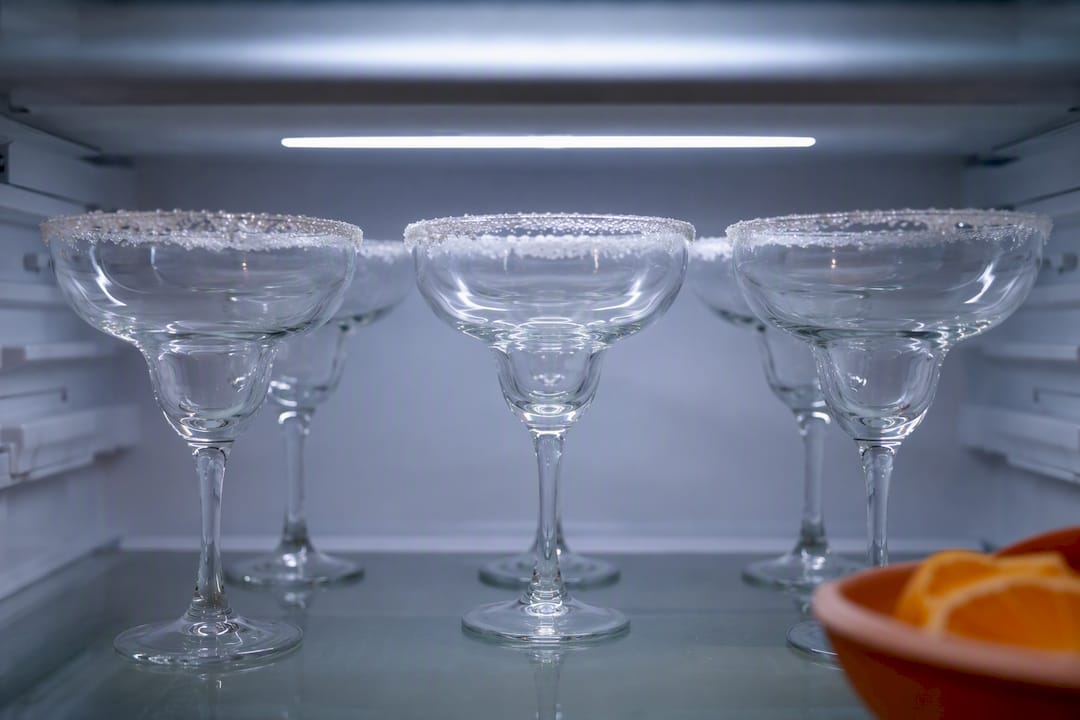
Waiting too long is the biggest risk: moisture from the air or condensation in the refrigerator makes sugar sticky and salt clumpy. Salt remains stable slightly longer than sugar because it absorbs moisture less quickly. If a rim does become soft, letting the glass dry briefly on a paper towel before serving again helps.
Common Mistakes and How to Fix Them
A lumpy or detached rim is usually caused by too much moisture, too thick a layer, or twisting instead of rolling through the sugar or salt. The solution is simple: less moisture, a thinner strip, and one smooth rolling motion instead of sliding.
- Clumping: Use less moisture and always tap off excess material after dipping.
- Uneven rim: Roll the glass in one motion through a flat layer of sugar or salt, do not twist.
- Rim overpowering taste: Choose a finer grain and limit the width of the moist strip.
- Always test one glass first before preparing a whole series for guests.
Professional bartenders treat the rim not as a separate decoration, but as part of the flavor build-up. The thinner and more even the layer, the better it supports the balance of the cocktail instead of overwhelming it.
Pro-tip: Combine your rim with a subtle visual detail, such as a slice of fruit or an ice cube with herbs in it, so that the entire presentation is balanced.
Salt and Sugar Rims with Ready-to-Drink Cocktails
With ready-to-drink cocktails, the flavor and balance are already set, but you create the final impression yourself with the glass. A rim is then not an extra preparation; it's the finishing touch that elevates a simple drink night to a festive experience.
Cocktail boxes and matching accessories make this process easier: you don't have to buy ingredients separately, as glassware and decorative materials are often already part of the package. This way, you only need to apply the rim before serving, and within a few minutes, you'll have a cocktail that looks like a bar-quality drink.
What Most Guides on Rims Overlook
Most instructions on salt and sugar rims treat it as a purely decorative detail, a nice extra for a photo. This underestimates what a rim actually does: it's the first taste your tongue encounters, even before the drink itself. A thick, lumpy layer of salt overpowers a subtle Margarita just as much as an incorrectly dosed ingredient in the shaker itself.

What I find underestimated in most advice is the emphasis on drying time. Everyone focuses on the technique of dipping and rolling, but the quality of the rim depends just as much on what you do, or don't do, afterwards. Waiting too long to serve, especially in a humid kitchen or fresh out of the refrigerator, breaks down a perfect rim faster than a sloppy dipping technique ever would.
My advice: treat the rim as part of the drink, not as a finishing touch afterwards. First, choose salt or sugar based on what the cocktail needs, and only then based on what looks good. This applies even more to ready-to-drink cocktails: the drink is already perfect, so the rim should not disrupt that balance.
— Ruud
Rimming Without Fuss: Ready-Made Options
No time or inclination to weigh sugars and liquids for an entire party? There are also ready-to-drink cocktails available that are already perfectly balanced, supplemented with glassware and decorative materials so you only need to finish the rim.
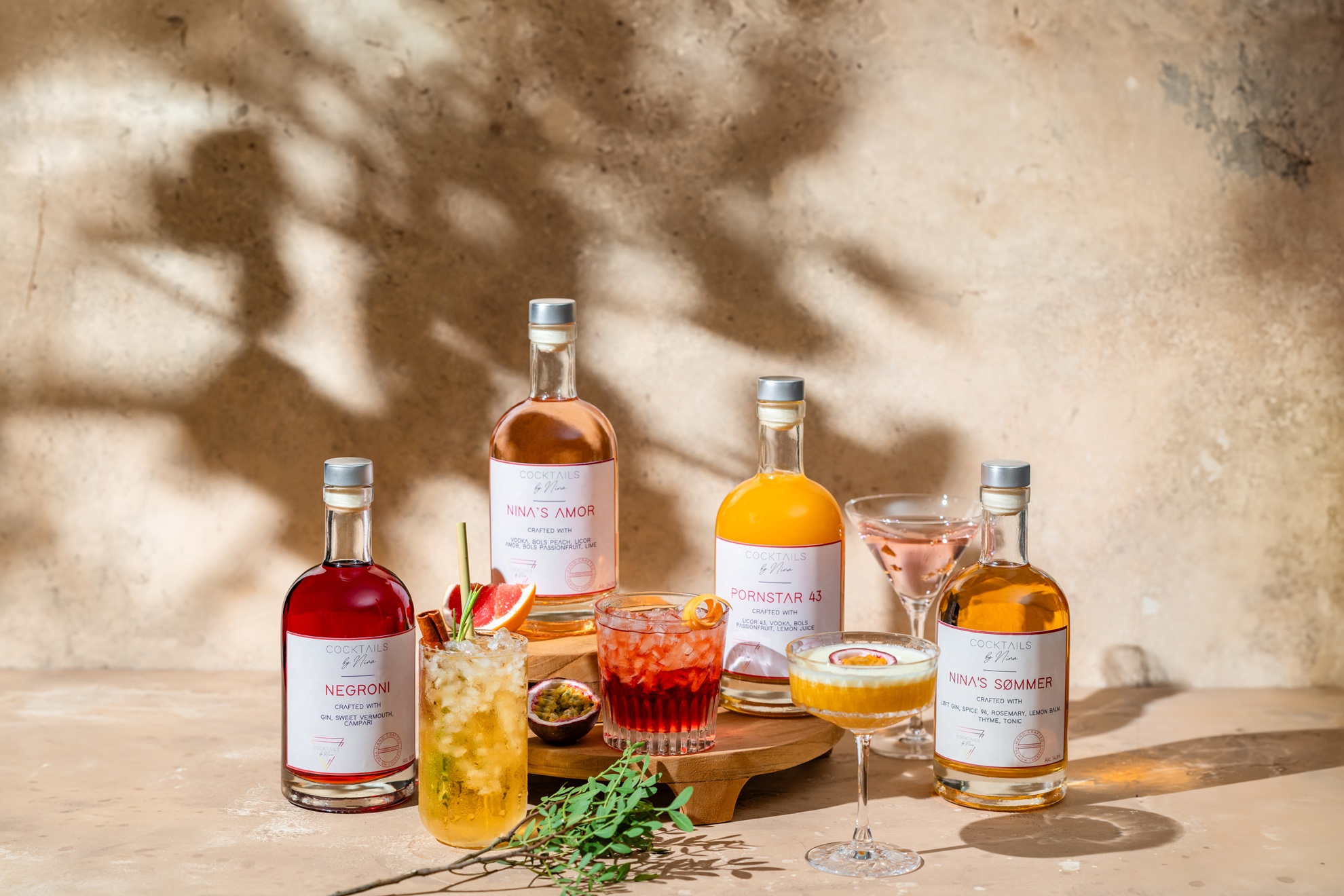
For a birthday or evening drink, a cocktail box with 4 items is enough to get started immediately, without having to combine ingredients yourself. Prefer non-alcoholic? Check out the range of ready-to-drink mocktails for guests who don't drink but want something festive in hand. If you're looking for inspiration for the rest of the evening, you'll find practical additional ideas from Alvida Catering on organizing a successful party. Order your box, prepare the glasses, and finish them with your own salt or sugar rim.
Sources
For those who want to delve deeper into the technique: Axis Cocktailbar clearly explains salt types, Culy gives presentation tips, and Talk Nomz To Me describes the basic method step-by-step.
- Garnishes for cocktails - Boomsma
- Cocktail sea salt rim techniques tips guide NL | Axis Cocktailbar
- Decorate cocktails like a pro - Culy