Yes, cocktails can truly enhance a dish. Food pairing with cocktails revolves around one simple rule: match the intensity and deliberately choose contrast or harmony. For example, a citrus cocktail like a daiquiri next to ceviche works because both share the same fresh, acidic profile. Ignore that rule, and the cocktail will overpower the dish, or vice versa.
In short:
- The intensity of the cocktail must be aligned with that of the dish; otherwise, both flavors will either dominate or disappear.
- For contrast, you choose ingredients that amplify each other’s sharpness, while harmony focuses on shared aromas and flavor notes.
- Common mistakes include cocktails that are too sweet for delicate dishes or spirits that are too strong for mild snacks.
- Good food pairing starts with determining the weight, finding the right contrast or harmony, and systematic tasting.
- Ready-made cocktails offer consistent proportions for home use, minimizing disappointments and errors.
Table of Contents
- What are the basic principles of food pairing with cocktails?
- Which cocktails go with which dishes?
- How do you create a good pairing at home?
- What are the most common mistakes people make in cocktail pairing?
- How do you properly serve a cocktail pairing?
- Which pairing sets can you put together today?
- What does Cocktailsbynina think of ready-made pairings?
- Practical and quick: which products suit your pairing?
- What people underestimate about food pairing with cocktails
- Sources
What are the basic principles of food pairing with cocktails?
Cocktail pairing revolves around four factors: intensity, contrast or harmony, flavor components, and texture. A light cocktail next to a powerful dish simply drowns. A robust, spicy cocktail with a subtle fish dish does exactly the same, but in reverse. Therefore, always match the weight of the drink with the weight of the dish.
Next, you choose a strategy. For contrast, you look for opposites that actually sharpen each other, such as a sour whiskey sour next to a fatty piece of bacon. For harmony, you look for overlapping aromas, such as cloves in an Old Fashioned mirroring the spiciness of a stew. Academic research into drink and food combinations confirms that intensity balance is practically decisive, even more so than a perfect chemical match.
The flavor components themselves also play a role:
- Sweetness softens sharp or spicy dishes but can overpower delicate flavors.
- Acidity cleanses the palate and works well with fatty or creamy foods.
- Bitterness adds depth and pairs well with rich, savory dishes.
- Umami often comes out better through a good sour-bitter balance in the cocktail, not despite it.
Texture and temperature determine the rest. An ice-cold, creamy cocktail feels different next to a warm dish than next to something cool, and you taste that difference immediately.
Which cocktails go with which dishes?
Some combinations are now classics, and for good reason. They work because the intensity is right and the flavor profile either enhances or beautifully breaks up the other.
Tapas and light snacks call for a cocktail that doesn't compete with the many small flavors on the table. A gin and tonic with spicy botanicals or a light spritz allows each bite to have its own moment. Think of bitterballen, olives, or a cheese board—all dishes where you'd rather not add one dominant flavor.
Spicy dishes, on the other hand, need a cocktail that tempers the heat without suppressing it. A Margarita with its sour-sweet citrus line does this well, and a Mai Tai with its tropical sweetness catches the heat of, for example, Thai dishes. The sugar and acid here act as a kind of fire extinguisher for the tongue.
Robust meat dishes, such as a roasted sirloin or a hearty stew, can handle a cocktail with just as much character. A Negroni with its bitter spiciness or an Old Fashioned with smoky whiskey notes matches that weight perfectly. A light cocktail would simply disappear here.
Fish and salads demand freshness, not heaviness. A Daiquiri or Mojito with citrus and mint complements the lightness of, for example, ceviche or a seafood salad. This is also exactly the example with which Foodpairing explains aromatic matching: start with the dominant aroma of the dish, in this case citrus, and find a cocktail that shares that aroma.
Desserts conclude your evening, and that's where a creamy or coffee-driven cocktail works best. An Espresso Martini next to a chocolate cake or a White Russian with something caramel feels logical because both hit the same rich, sweet notes.
More in-depth information about how scent and taste influence each other can be found in the explanation of cocktail scent and taste pairing.
How do you create a good pairing at home?
You don't have to be a sommelier to master this. Follow these steps, and you'll avoid most pitfalls.
- Determine the intensity of the dish. Is it light and subtle, or rich and dominant? This immediately determines how much "weight" the cocktail can have.
- Choose your strategy. Are you going for contrast (sour against fat, bitter against sweet) or harmony (shared spicy or citrus notes)? Both can work, but not at the same time.
- Find the overlapping aroma. Start with the main ingredient of the dish and find a cocktail with a similar or complementary aromatic profile, such as citrus with citrus or cloves with cinnamon.
- Taste systematically. Taste the cocktail on its own, the dish on its own, and then together. Note which element dominates and adjust the sugar, acidity, or dilution with ice as needed.
When in doubt, conduct a small reference tasting: place three small servings of the same cocktail and dish side-by-side, varying one detail each time, such as more lemon or less sugar. This way, you'll quickly hear where the balance shifts.
Pro-tip: Always serve the lightest cocktail first at a reception and build up to the most intense combination. Otherwise, your palate will become fatigued too quickly, and every subsequent pairing will taste less sharp.
If you want to practice this principle further, an overview of combining flavors at home with concrete exercises will help.
What are the most common mistakes people make in cocktail pairing?
Most disappointing combinations come down to a few recognizable blunders.
- A cocktail that's too sweet for a delicate dish. The sweetness completely overpowers subtle flavors like white fish or a light salad.
- A cocktail that's too strong for a mild dish. Alcohol and spiciness then take over the leading role, and the dish becomes secondary.
- Incorrect garnish or temperature. A warm cocktail next to a cold dish, or a mint leaf that doesn't match the flavors on the plate, disrupts the experience more than you might think.
- Portions that are too large with snacks. A full cocktail with a small savory snack satiates too quickly and overwhelms the taste of the snack itself.
How do you properly serve a cocktail pairing?
Presentation affects how a combination tastes, not just how it looks.
- Glassware directs aromas. A tumbler concentrates spicy, strong aromas, while a coupe allows light, fresh cocktails to breathe better.
- Garnish should be functional, not decorative. A slice of lime next to a margarita truly adds acidity if your guest squeezes it, not just a meaningless decoration.
- Smaller portions for a reception. Serve 90 to 120 milliliters per glass if multiple snacks and cocktails are to follow, so no one gets full halfway through.
- Ice regulates flavor. Too much ice dilutes a pairing within minutes, too little leaves the cocktail too strong and too warm.
Which pairing sets can you put together today?
Three ready-made sets you can put on the table without much preparation.
- The snack set. Combine bitterballen, marinated olives, and a cheese board with a light gin and tonic or a fresh spritz. For guests who don't drink, a chilled mocktail with citrus and herbs works just as well.
- The informal three-course dinner. Start with ceviche and a daiquiri, move on to a hearty piece of meat next to a Negroni or Old Fashioned, and finish with a dessert that complements the next set.
- The dessert finisher. Pair an Espresso Martini with something chocolate, or a creamy White Russian with a caramel dessert. Both cocktails share the rich, sweet notes of the dessert itself.
For additional techniques in executing these sets, a guide on cocktail recipes, balance, and tools helps.
What does Cocktailsbynina think of ready-made pairings?
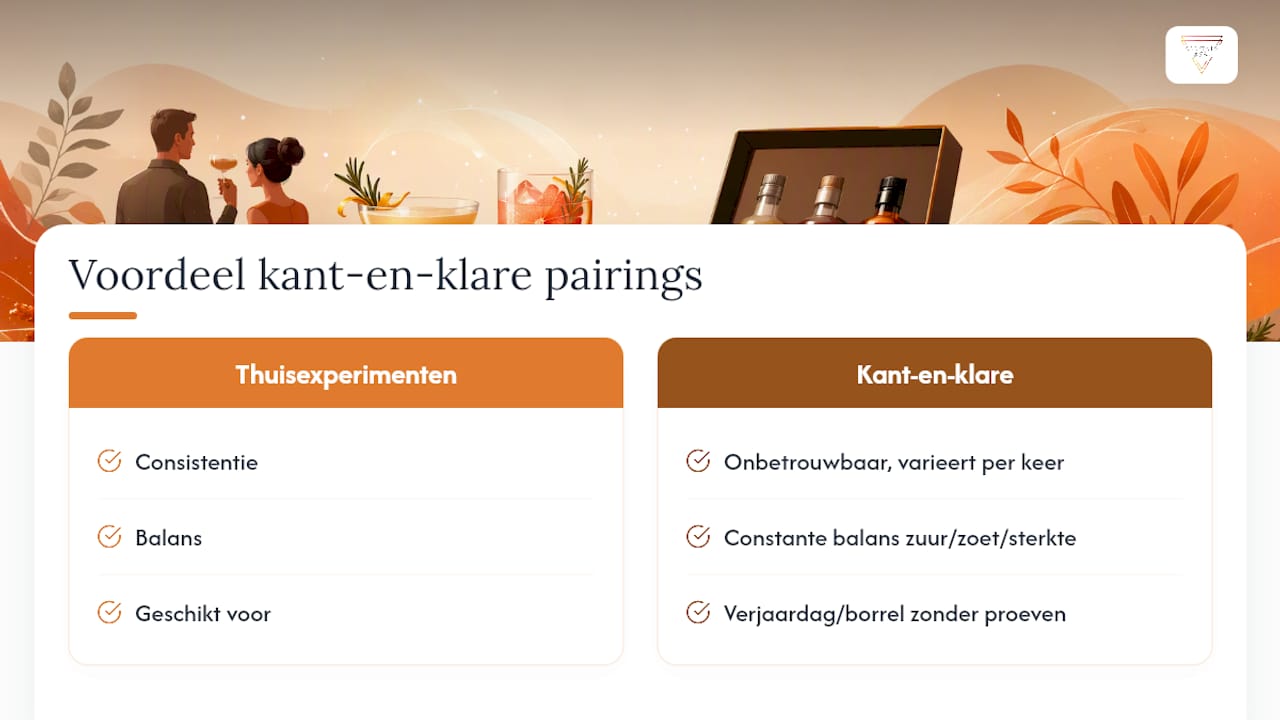
A good pairing stands or falls on consistency, and that's precisely where many home experiments go wrong: one evening the balance is perfect, the next time the cocktail is slightly too sweet or too weak. Ready-made cocktails solve this because the ratio of sour, sweet, and strength is identical every time. For a birthday or a business reception where you don't have time to taste and re-taste, that's precisely when ordering makes more sense than mixing yourself.
Practical and quick: which products suit your pairing?
Do you understand the theory but lack the time to mix yourself? Then Cocktailsbynina is the fastest route to a successful pairing, without having to experiment with ratios or ice melt. For a reception with tapas, a cocktail box of 4 pieces works excellently: enough variety to try a different combination with each snack.
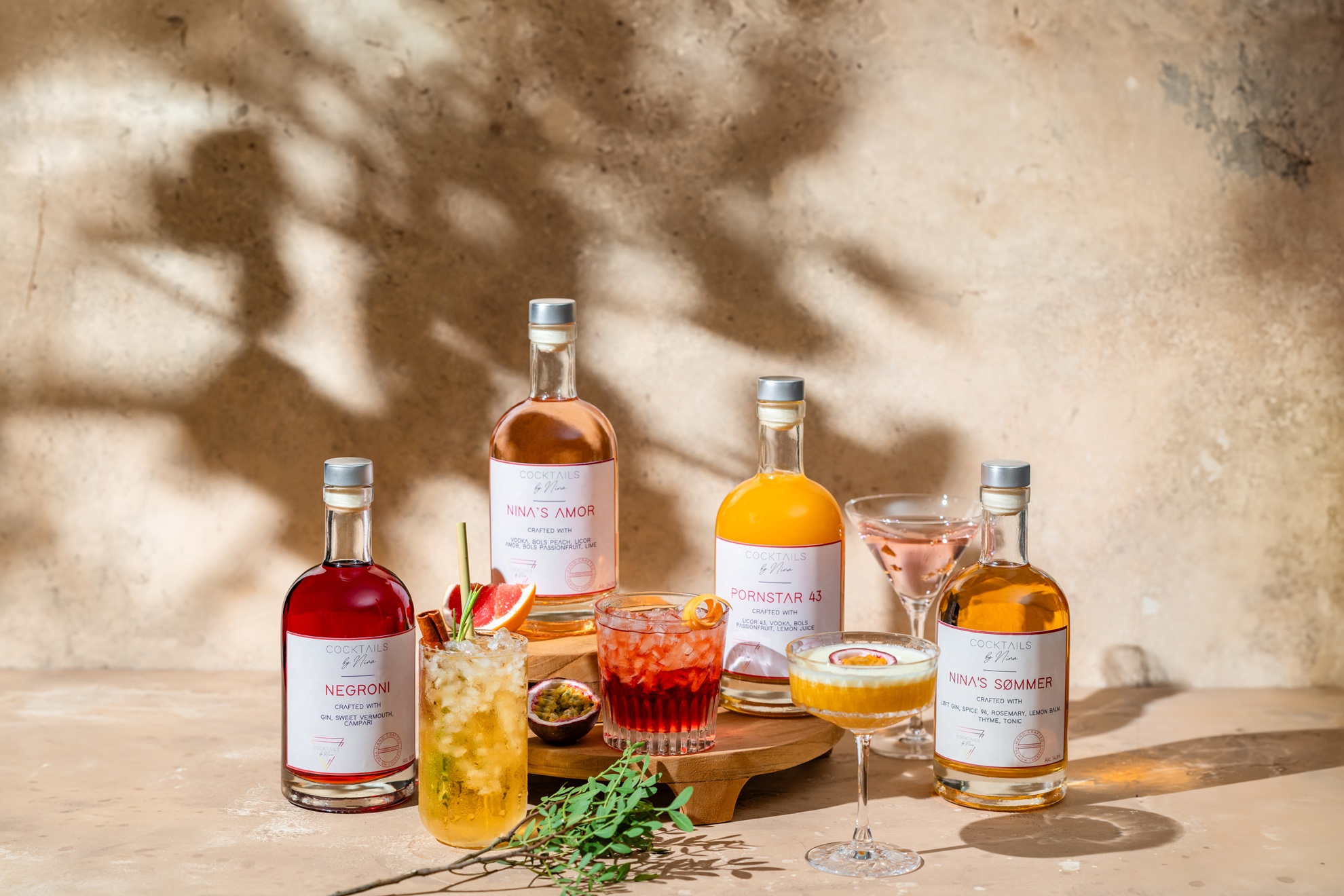
Serving a larger group or looking for a compact set for a dinner for two? Choose the cocktail box with 6 pieces for a party, or the cocktail box with 2 pieces for a quiet evening. If you have guests who don't drink, ready-made mocktails align with the same pairing logic, without alcohol. For larger events where you prefer not to serve yourself, cocktail at home arranges on-site execution. Order today and have the perfect combination on your table within a few days.
What people underestimate about food pairing with cocktails
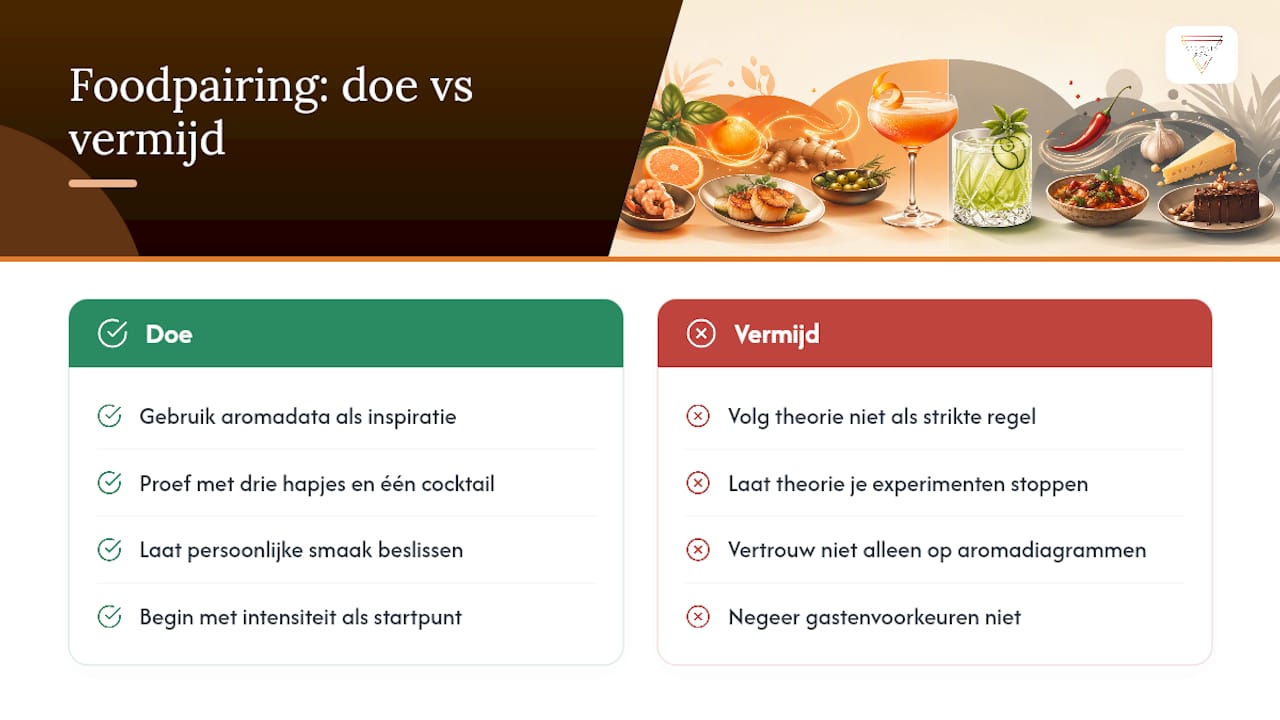
Most people think that food pairing is an exact science, with a right and wrong combination. That's not entirely true. Even Foodpairing itself sees aromatic data primarily as inspiration for discovering unexpected combinations, not as a strict rule to be followed. Chemistry gives you a starting point, not a final judgment.
What I find underestimated about this: people are often intimidated by the theory and therefore dare not experiment. While the best pairings often arise from a simple test with three bites and one cocktail, where you simply taste what works. Research into drink and food combinations confirms that consumer acceptance ultimately remains subjective, which means that your taste, and that of your guests, always weighs more heavily than an aroma diagram. The rule about intensity and contrast is a starting point, not a destination.
— Ruud
Sources
Do you want to read up on the science behind these combinations yourself? Foodpairing explains the aromatic matching method, while the academic review on pairing theory offers nuance on when chemistry trumps culture. For practical inspiration, the article about cocktails with dinner is a good starting point.
- The Science behind great ingredient pairings - Foodpairing
- Food–beverage pairing: theory and practice - ScienceDirect
- Taking flavour into the realms of the unexpected - Cocktails Distilled