For years, bitters have had a mysterious reputation as something only seasoned bartenders use. That's unfair. A few drops of the right bitters can transform an ordinary homemade cocktail into something that feels like you're in a serious cocktail bar. Concentrated flavor enhancers made by steeping botanicals, spices, and citrus in high-proof distilled alcohol, they are designed to be used in small doses, but their impact is enormous. In this guide, you'll discover what bitters are, what types exist, and exactly how to use them.
Table of Contents
- What are bitters and why use them in cocktails?
- Different types of bitters and their role in cocktails
- How to use bitters in your cocktail?
- Experimentation and creativity with bitters
- Our perspective on bitters: what you won't read anywhere else
- Ready to get started with bitters? Discover our recommendation
- Frequently asked questions about bitters in cocktails
Key Insights
| Point | Details |
|---|---|
| Bitters are flavor enhancers | A few drops of bitters instantly add balance, aroma, and complexity to cocktails. |
| Comparing types of bitters | Each bitter has its own character; choose based on the drink and desired taste. |
| Correct dosing is crucial | Always start small and taste to prevent overpowering bitterness. |
| Experimentation pays off | Dare to adjust recipes and discover your unique cocktail style with bitters. |
What are bitters and why use them in cocktails?
Now that you're curious about bitters, let's first delve into what bitters actually are. The name says it all: the product tastes intensely bitter, sometimes spicy, sometimes floral or citrusy. But it goes beyond just taste.
Bitters are concentrates. You don't pour a shot into a glass like you would with lime juice. A "dash" literally means a small splash from a bottle with a special cap, perhaps one to two milliliters at a time. Yet, that small amount changes the entire cocktail's flavor experience.
They are made by steeping botanicals, a collective term for herbs, bark, roots, flowers, seeds, and peels, in high-proof alcohol, sometimes for months. That alcohol extracts the flavor compounds from the botanicals, leaving an extremely concentrated liquid. Many classic recipes use gentian as a bitter base note, complemented by ingredients like cloves, cinnamon, angostura bark, or orange peel.
Compare bitters to essential cocktail terms like simple syrup or lemon juice. Just as salt in a dish doesn't make it a "salty dish" but brings out all other flavors, bitters do the same in a cocktail. They connect the individual flavors of the spirit, the sweet component, and the acid into one harmonious whole.
"Bitters are to cocktails what herbs and spices are to cooking: you don't always taste them directly, but you miss them as soon as they're not there."
The popularity of bitters is growing rapidly worldwide. The aromatic bitters market grew from $1.7 billion in 2026 towards $3 billion in 2033. This growth is all about the revival of classic cocktail culture and a growing interest in artisanal drinking.
| Characteristic | Description |
|---|---|
| Flavor profile | Bitter, spicy, aromatic, sometimes floral |
| Ingredients used | Botanicals, spices, citrus peel, roots |
| Alcohol percentage | Typically 35 to 55 percent |
| Amount used | 1 to 3 dashes per cocktail |
| Purpose in cocktail | Balance, depth, complexity, and aroma |
The term "spice cabinet of the bar" is therefore exactly the right description. Where a chef instinctively reaches for thyme or cumin, a bartender grabs bitters. It is that small, flavor-defining addition that puts everything into perspective.
Different types of bitters and their role in cocktails
Now that you know what bitters are, you can discover how much variety there is and which bitters to use with which cocktails. Because the range is large, and each type has its own character.
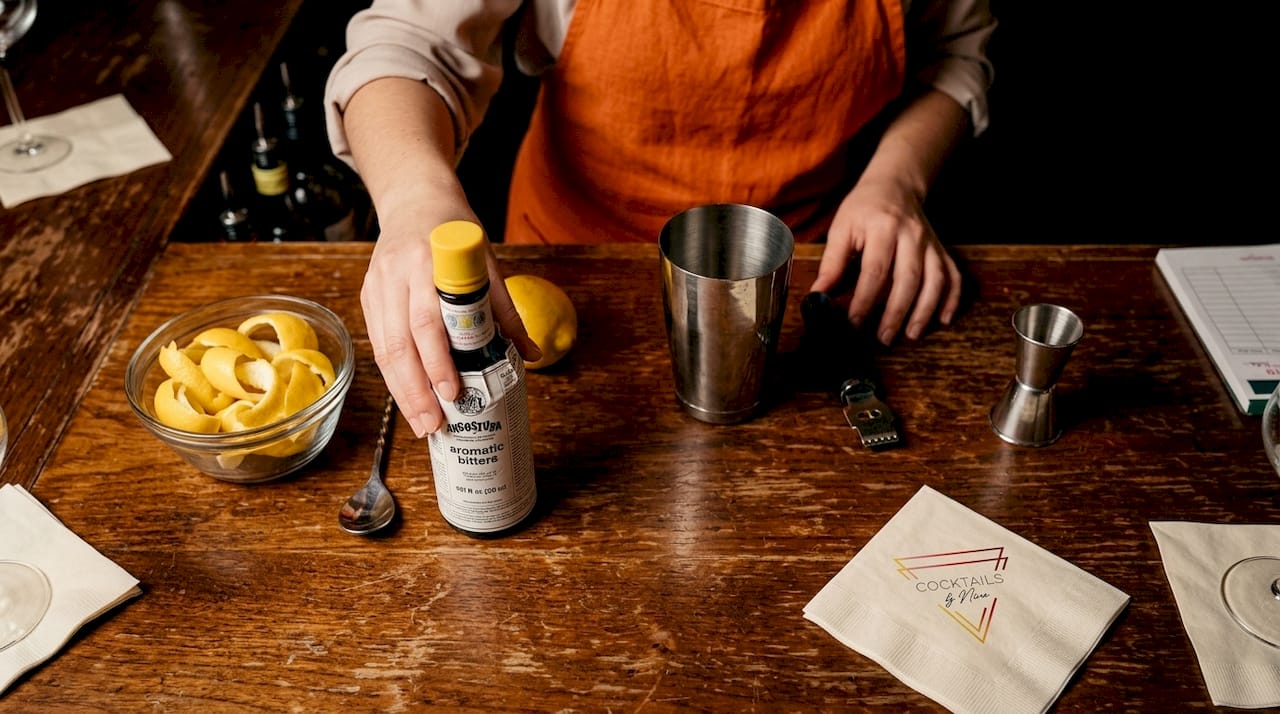
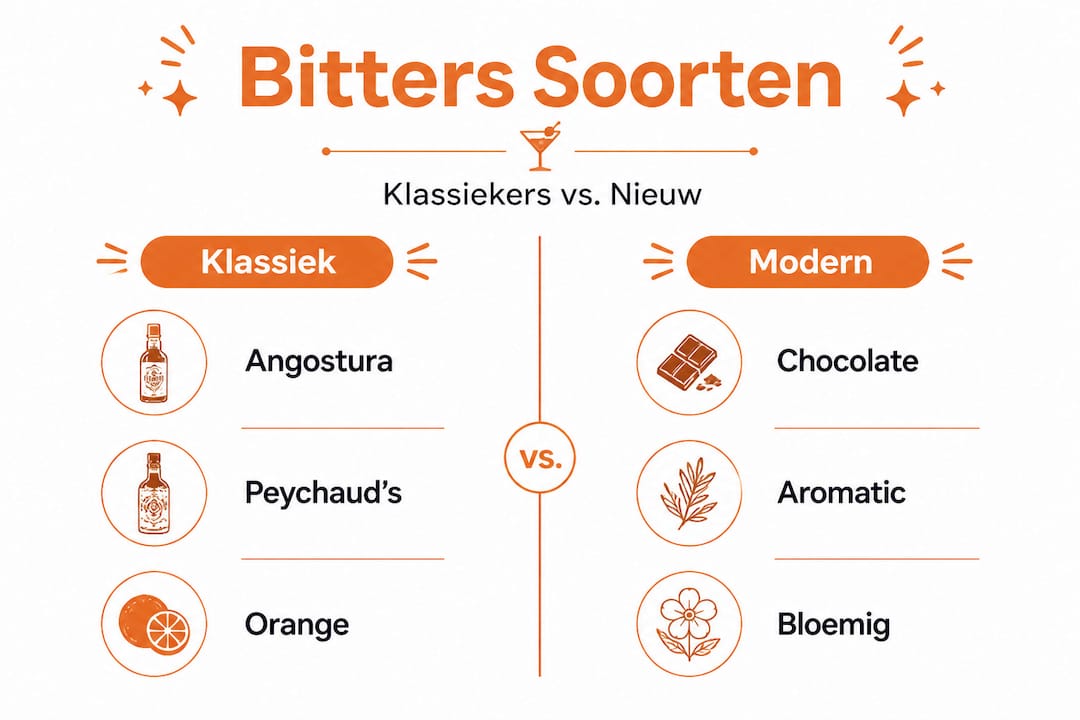
Angostura bitters are by far the best known. The bottle with the oversized paper label is an icon. Angostura is dark, spicy, and has notes of cinnamon, cloves, and gentian. They are used in cocktails such as the Old Fashioned, Manhattan, and Champagne Cocktail. These are the bitters you buy if you only want to acquire one.
Peychaud's bitters come from New Orleans and are the foundation of the Sazerac. They are lighter in color, fruitier, and have a distinct anise note. Those who love herbal and floral flavors will find their match here. They give cocktails an elegant, almost delicate bitterness.
Orange bitters are the bridge to citrus. They enhance the fruity notes in a cocktail without overpowering them. In a Dry Martini, they add just that extra layer that transforms an ordinary Martini into something memorable. Choosing bitters by taste is precisely this: Angostura for spicy depth in strong spirits, Peychaud's for anise and herbs, orange bitters as a citrus bridge in white, delicate cocktails.
In addition to these three classics, there is a world of newer variations. Chocolate bitters work great in an Espresso Martini or alongside whiskey. Celery bitters fit surprisingly well in a Bloody Mary. Mole bitters, with cocoa and chili, give a Mezcal Cocktail a smoky, complex depth.
Pro-tip: Buy your first bitters based on what you drink most often. Whiskey fan? Start with Angostura. Gin lover? Try orange bitters or floral bitters. This way, you'll immediately learn the difference.
| Bitters | Flavor profile | Ideal cocktail |
|---|---|---|
| Angostura | Spicy, cinnamon, gentian | Old Fashioned, Manhattan |
| Peychaud’s | Anise, floral, light fruit | Sazerac, Vieux Carré |
| Orange bitters | Citrus, dry, aromatic | Dry Martini, Negroni |
| Chocolate bitters | Cocoa, dark, full-bodied | Espresso Martini, whiskey sours |
| Celery bitters | Fresh, vegetal, spicy | Bloody Mary, vegetarian cocktails |
Experimenting at home doesn't have to be complicated. If you've ever tried a premium cocktail at home, you know that the quality of the ingredients makes all the difference. Bitters are no different. Choose quality bitters, even if it's your first bottle.
In the Netherlands and Belgium, the trend is clear. Bartenders in classic cocktail bars work standardly with Angostura in an Old Fashioned or Negroni, but also vary: orange bitters in an Old Fashioned gives a fresher, brighter version of that same cocktail. That's exactly the space you can explore yourself. Want to know what classics look like? Then check out examples of classics with bitters for inspiration.
The following points will help you choose bitters:
- Start with one or two types and get to know them before expanding.
- Always taste bitters on a spoon or with a drop of water before adding them.
- Pay attention to your cocktail's flavor profile: sweet and strong calls for spicy bitter, light and fresh calls for citrus or floral bitters.
- Dare to combine: two types of bitters can do something special together.
How to use bitters in your cocktail?
Now that you know different bitters, the next step is to use them correctly for the best flavor result. The technique is just as important as your choice of bitters.
The principle is simple. You add bitters in small quantities, taste in between, and correct where necessary. Precision is crucial here: start with the dashes indicated by the recipe, taste, and add more if you wish. Too many bitters makes the bitterness dominant, overshadowing the rest of the cocktail.
A "dash" is roughly one to two milliliters. Some recipes call for two dashes, some for five. That sounds like little, but don't forget how concentrated bitters are. The alcohol percentage is between 35 and 55 percent, and the flavor concentration is much higher.
When do you add bitters?
The timing of addition depends on the preparation:
- For stirred cocktails (such as an Old Fashioned or Manhattan): add bitters directly to the mixing glass, along with the other ingredients. Stir gently with ice until the drink is sufficiently chilled. The bitters will fully blend in.
- For shaken cocktails (such as a Whiskey Sour): add bitters before shaking. Shaking emulsifies the liquids better and distributes the bitters evenly.
- As a garnish or finishing touch: a few drops of bitters on the foam of a Pisco Sour or on the ice in a glass provide a visual effect and an aromatic first impression.
- In the form of a mist: using an atomizer, you can spray bitters over the outside of a glass. The aroma is then the first thing you perceive.
- In mocktails or non-alcoholic drinks: for cocktail lovers who do not want alcohol, a drop of bitters can add a lot of character. Note: bitters themselves also contain alcohol.
Pro-tip: Use a chilled glass, fresh ingredients, and the correct dosage. These three things together ensure harmony without any single element dominating. A warm glass sabotages the best cocktail.
The most common mistakes when using bitters are:
- Adding too much without tasting in between.
- Adding bitters after shaking or stirring, causing uneven distribution.
- Choosing bitters that don't match the cocktail's flavor profile.
- Not shaking the bottle before use (botanicals can settle).
- Working with old bitters that have lost their aroma.
Also, get to know the basics of cocktail terms and dosing well, as this will make working with bitters much clearer. And if you want to know how to keep your cocktails fresh beyond immediate preparation, then information on keeping cocktails fresh will give you the right tools.
Another practical tip for beginners: place your bitters bottle next to your glass while mixing. This way, you are aware of every dash you add and don't lose control. It sounds simple, but it works.
Experimentation and creativity with bitters
Once you've mastered the basics, the creative side beckons: experimenting with flavors and techniques.
The best thing about bitters is that they can literally give you dozens of new cocktail experiences without having to buy new glassware or barware. You change one ingredient, and the entire taste experience shifts.
In the Netherlands and Belgium, there's room for local influences. Yuzu bitters are a good example: the combination of the Japanese citrus fruit yuzu with traditional bitter herbs gives a cocktail a fresh, almost oriental twist. This pairs excellently with gin or sake-based cocktails. Boker's bitters, a historic recipe that has been reformed, are popular among bartenders who want to refer to classic 19th-century cocktail culture.
Here are some creative applications you can try at home:
- Add chocolate bitters to a Manhattan instead of Angostura for a warmer, darker profile.
- Use lavender bitters in a gin and tonic for an aromatic, floral upgrade.
- Combine orange bitters with grapefruit juice in an Aperol Spritz variant for an extra layer of citrus.
- Try herbal bitters in a mocktail based on kombucha or ginger for a sophisticated flavor profile.
- Add mole bitters to a Mezcal Sour for smoke, chocolate, and spiciness all at once.
The debate about bitters is actually more interesting than you might think. Bartenders are divided: some see bitters as an absolute necessity for balance in every cocktail, while others consider them optional and dependent on the guest's taste preference. Shaken versus stirred is also relevant: shaking distributes bitters differently than stirring and gives a slightly different integration of flavor.
Homemade bitters are also an option. You need dried botanicals, a high-proof alcohol like vodka or grain jenever, a glass jar, and patience. After two to four weeks of steeping and filtering, you'll have your own handmade bitters. The result is always different from commercial varieties, and that's precisely the charm.
The difference between homemade and classic is not that homemade is better. It's just different. Classic bitters like Angostura are standardized and consistent. Homemade bitters are the result of your choice of botanicals, your infusion time, your flavor decisions. They are unique and unrepeatable.
Need more inspiration for creating mixed drinks? See how to combine spirits and mixers, as this lays the perfect foundation for when you add bitters as a finishing touch.
Our perspective on bitters: what you won't read anywhere else
After all the technical and practical explanations, it's time for a broader perspective on the use of bitters. And that perspective might be different from what you expect.
Recipes with bitters are a starting point, not a law. Cocktail books and online guides give you the structure, but they cannot know your taste buds. Someone who enjoys intense, dark flavors will benefit more from three dashes of Angostura than someone who prefers a light, refreshing drink. Your cocktail is ready when you like it, not when the recipe says it's correct.
That sounds logical, but in practice, many people at home blindly follow recipes. They don't trust their own taste. That's a shame. Bitters are precisely the category of ingredients where personal experimentation teaches the most. Bartenders who work with bitters understand this: they regularly swap Angostura in an Old Fashioned for orange bitters, not because it's canonically "the way it should be," but because they know what it does to the flavor and what the guest prefers.
A second point that is rarely mentioned: bitters are not a magic solution for a poorly balanced cocktail. If the ratio between spirit, sweet, and sour is already off, an extra dash of bitters won't save it. They enhance what is already good, but they don't compensate for what's missing.
And then there's the innovation potential specifically for the Netherlands and Belgium. We have a rich tradition of herbal teas, jenever, and local spices here. A dash of homemade juniper berry bitter in a cocktail? Cardamom bitters combined with a Dutch aged gin? There is still much unexplored territory here, and that's precisely what's exciting. The Belgian coffee culture calls for coffee bitters in a Negroni variant. The Dutch canal culture deserves its own bitters recipe.
Don't be afraid to make mistakes. The "mistake" is also information. If you add too many bitters, you'll know the limit next time. If a combination doesn't work, you've learned something new about flavor balance. Curiosity is the best quality you can bring to the home bar.
Ready to get started with bitters? Discover our recommendation
Are you ready to get started at home? Then you want it to go as smoothly as possible. Experimenting with bitters is most fun when you have the right foundation and don't have to spend hours looking for the right products first.
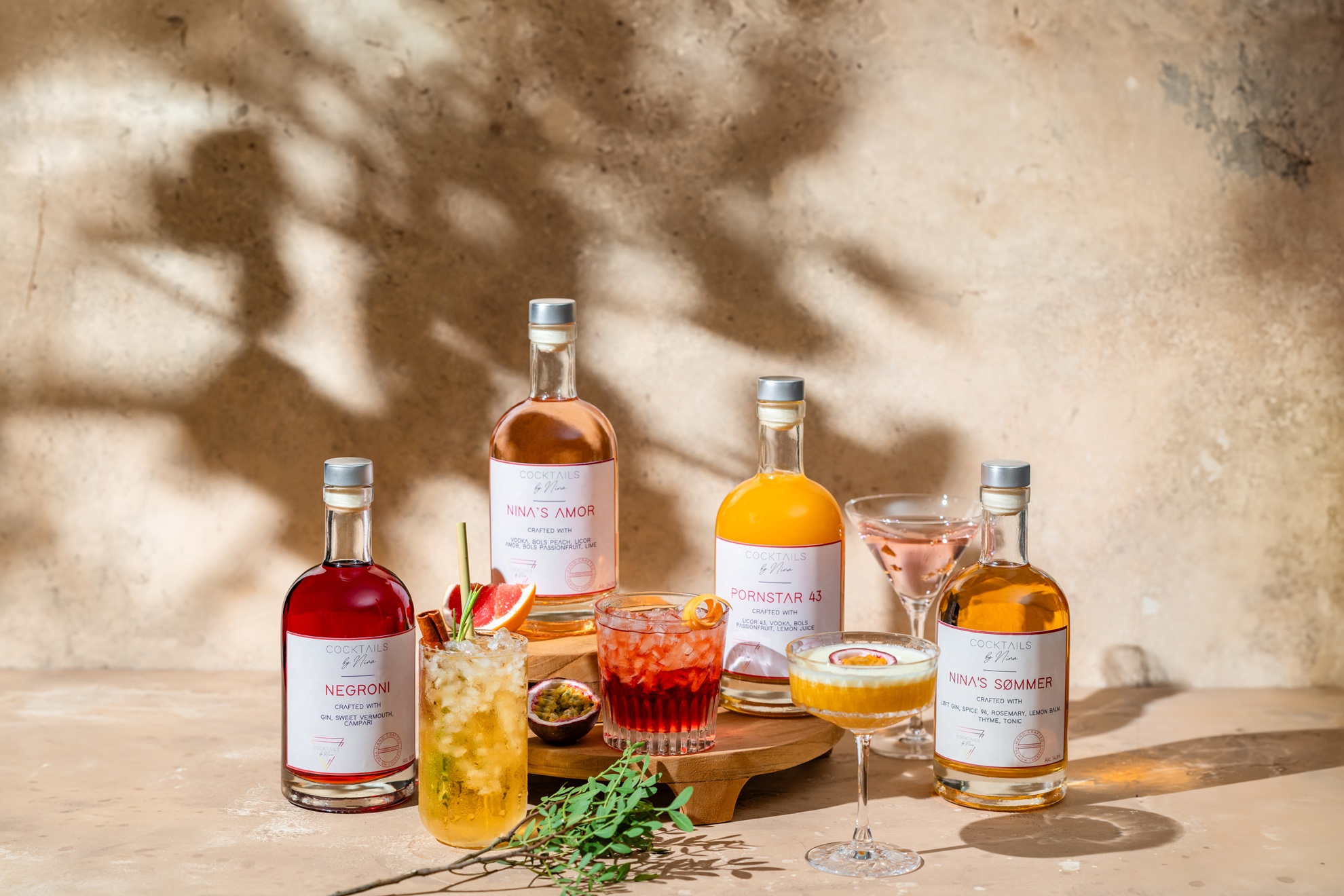
At Cocktails by Nina, we believe that home mixing should be accessible to everyone. The cocktail fusion kit from Drink Botanicals is an excellent starting point: an award-winning cocktail set that immediately lets you experience how botanicals and bitters work together in a professional context. Would you rather enjoy a drink without mixing yourself? Check out our cocktails at home service for ready-made bar classics that already have the right balance. Or browse our selection of ready-made cocktail mixes if you want to take the next step with minimal effort and maximum flavor.
Frequently Asked Questions about Bitters in Cocktails
How many bitters should I add to a cocktail?
Start with 1 to 2 dashes per glass and taste as you go, as bitters are very concentrated and too much can make the bitterness dominant in the cocktail.
What are the most commonly used bitters?
Angostura, Peychaud’s, and Orange bitters are the most popular choices: Angostura for spicy depth, Peychaud’s for anise and herbs, and Orange bitters as a citrus bridge in lighter cocktails such as the Martini.
Can I substitute or make my own bitters?
Yes, you can make your own bitters by soaking botanicals in high-proof alcohol, or you can experiment with homemade variations like yuzu or herbal bitters for a local or personal twist.
Why are bitters in so many cocktails?
Bitters provide balance, aroma, and complexity: as concentrated flavor enhancers, they connect the individual flavors of a cocktail into one harmonious whole, even in small amounts.
Recommendation
- Spirits and Mixers: The Basis for Premium Cocktails at Home – Cocktails by Nina
- Essential Cocktail Terms: Your Guide to Clear Choices – Cocktails by Nina
- The Expert Cocktail Fusion Kit - Drink Botanicals Ireland - Award-winning – Cocktails by Nina
- Cocktail at Home – Cocktails by Nina
- Tap Cocktails: Increase Margins, Improve Efficiency – Tap & Joy