Keep the skipper sober and ensure non-alcoholic alternatives are at least as visible as the alcoholic drinks. This prevents improvisation on the water and lets you start the trip with drinks that already taste great.
In short:
- Count on two to three drinks per person for a half-day and four to five for a full day; order extra for mixed groups.
- Agree in advance on who is steering and do not let that person drink; the legal limit is 0.5 promille, but alcohol-free is the safest choice.
- Store cocktails with fresh juice, dairy, or fruit purée at a maximum of 7 degrees Celsius and bring at least two sets of ice packs for a day trip.
- A drink labeled "non-alcoholic" can contain up to 0.5% alcohol; choose 0.0% for a practically alcohol-free drink and label all bottles clearly.
- Ask for permission to use glassware in advance; otherwise, plastic or polycarbonate cups are the safest choice on a moving deck.
Table of contents
- Which ready-to-serve options fit a boat trip
- Safety and rules for alcohol on the water
- Storing and transporting cocktails during the trip
- Serving on a moving deck: glassware, timing, and hygiene
- Pairing cocktails with snacks and light meals on board
- Atmosphere and presentation of the cocktail experience on the water
- Sustainable choices for cocktails and accessories on the water
- Weather and climate: impact on storing and serving on board
- What we learn from boat trip orders
- Order your boat cocktails from Cocktails by Nina
- Frequently asked questions
- Sources
Which ready-to-serve options fit a boat trip
On a boat, you don't have room for a full bar, and you don't need one. Three formats cover almost every situation.
- Ready-to-serve bottles: ready to pour immediately, ideal for small groups who set their own pace.
- Cocktail boxes: a selection of multiple flavors in one order, useful if the group has varied preferences.
- Mocktail sets: full flavor experience without alcohol, indispensable when considering a skipper or guests who do not drink.
The difference lies mainly in planning. Bottles work best for a fixed group with a clear preference, while boxes are more flexible because everyone can try something different without you being left with three liters of one flavor.
For quantities, you can assume a few cocktails per person for a half-day on the water, and a larger amount for a full day. Always calculate an extra margin for mixed groups, as heat and socializing increase consumption faster than at an indoor party.
Ready-to-serve has a few concrete advantages on a boat:
- You don't need to mix on a moving deck, which prevents spills and accidents with bottles.
- The taste is consistent from the first to the last glass, regardless of who is pouring.
- Service is faster, leaving you more time for sailing itself.
Those in need of inspiration for light, fresh flavors that are well-suited for ready-to-serve options can find starting points in our summer cocktail recipes.
Safety and rules for alcohol on the water
A boat trip is subject to the same traffic rules as driving a car, with its own enforcement officer. The operator of a vessel may not sail under the influence: the legally permitted alcohol content is a maximum of 0.5 promille, checked by the water police. A breathalyzer test can be administered during a check, and violations result in a fine.
There is no safe lower limit for alcohol consumption, according to the Dutch Nutrition Centre's 2026 advisory: the Health Council recommends reducing alcohol consumption and offering non-alcoholic alternatives as a standard, not as an exception.
Translate that into concrete agreements for on board:
- Agree on a skipper policy in advance: whoever is steering does not drink or strictly sticks to the limit.
- Label every drink clearly as alcoholic or 0.0%, so no one grabs the wrong one by mistake.
- Check age upon delivery, especially when ordering via a webshop.
An offering with equal attention to flavor in the non-alcoholic cocktails makes this policy a lot easier to maintain in practice.
Storing and transporting cocktails during the trip
Temperature determines whether a cocktail is still tasty and safe at the end of the day. For perishable components such as fresh juices, dairy, or fruit purée, a maximum of 7 degrees Celsius applies, with a digital probe thermometer as a control tool.
For practice on a boat, there are two viable routes:
- A built-in marine refrigerator at 12 or 24 volts keeps drinks at temperature all day, provided the vessel has sufficient power capacity.
- A large insulated cooler with sufficient ice packs is a great alternative when fixed cooling is missing or the trip is short.
Pro-tip: Count on at least two sets of ice packs for a full-day trip, because a cooler that warms up halfway through the afternoon costs you more than just taste.
Check in advance what ingredients are in the cocktails or mocktails and keep that information handy for guests with allergies. For tips on batching and cooling specifically tailored to a day outdoors, our article on batchable cocktails for a beach day is a useful starting point, even if it is not specifically about sailing.
Serving on a moving deck: glassware, timing, and hygiene
Glass and water don't naturally go together. A few practical choices prevent shards and spilled drinks.
- Choose unbreakable tableware made of plastic or polycarbonate, unless the boat owner or rental company allows real glassware.
- Serve in rounds: don't give everyone a full glass at once, but work with fixed moments so you keep an overview of who is drinking what.
- Work from one fixed spot on board, so you maintain a grip on supply and consumption pace.
The latter point immediately supports the skipper policy: whoever keeps track of how much is being poured also sees more quickly when it's time to switch to water or a 0.0% drink.
Pro-tip: Put non-alcoholic options in the same place and in similar glassware as the alcoholic versions; this prevents guests from feeling left out.
Work on a scale according to the same logic as event catering: fixed drop-off points for used glassware, regular hand hygiene for the server, and separate waste for bottles, cans, and food scraps. This keeps the deck not only cleaner but also safer in choppy water.
Pairing cocktails with snacks and light meals on board
A cocktail on an empty stomach works against you, especially on the water where sun and movement intensify the effect of alcohol. Therefore, plan fixed meal times alongside the drinks, not as an afterthought but as part of the schedule.
Light, savory snacks work best: think smoked salmon on toast, cheese cubes, olives, or small Dutch snacks (bitterballen) that you can eat without cutlery. Fresh, citrus-heavy cocktails like a spritz or a motor-style drink pair well with salty bites, while creamier cocktails go better with something sweet like fruit or chocolate.

Keep portions small and repeatable rather than one large meal, so guests keep eating between drinks without breaking the atmosphere of a boat trip. This also prevents everyone from having to sit at a table at the same time, which is difficult on limited deck space.
Avoid fried or very greasy food in combination with movement on the water: that is not a pleasant combination for those prone to seasickness. Opt instead for something fresh with texture, like a cucumber salad or a platter of grilled vegetables, which also fits visually well with a cocktail moment.
Those looking for more coordination between drinks and portions for smaller groups can find useful starting points in our article on cocktails for small groups.
Atmosphere and presentation of the cocktail experience on the water
The presentation makes the difference between "bringing drinks" and a true cocktail experience. It doesn't have to be complicated: a few targeted choices are enough.
Work with a fixed serving table or board where the bottles, boxes, and garnishes are clearly laid out. Use small cards or labels for each flavor so guests can choose for themselves without constantly having to ask what's in it. Fresh fruit, lemon slices, or a sprig of mint as a garnish give even a ready-to-serve cocktail a refined look without you having to mix it yourself.
Choose a colorful, cohesive set of cups or glasses that fit the theme of the trip: bright and fresh for a summer afternoon, or something darker and more stylish for an evening cruise. A few decorative napkins or a small tablecloth on the serving area enhance the experience without extra work.
Keep the presentation compact and wind-resistant: loose decorations, cocktail umbrellas, or paper straws blow away quickly on the water. Opt for something sturdier, such as reusable stainless steel straws or no straw at all.
For those who notice that a certain format lends itself well to a neat presentation without the hassle of mixing, the pour-over format is worth considering: read more in our article on pour-over cocktails.

Sustainable choices for cocktails and accessories on the water
What you use on the water ends up in nature faster than on land. That makes sustainable choices for cocktails and accessories extra relevant.
Opt for reusable glassware or plastic cups instead of disposable plastic, especially for regular boat trips you organize more often. Reusable metal or silicone straws prevent litter and are sturdier than the paper version that gets soggy quickly. Limit packaging material by choosing bottles and boxes that are delivered without unnecessary plastic wrappers.
Separate waste on board just as structurally as on shore: a separate bin for glass, one for cans, and one for residual waste prevents everything from ending up loose in one bag, requiring sorting later. Always bring empty bottles and cans back to the shore instead of leaving them on the water, even if they seem biodegradable.
When choosing ingredients, it also makes a difference whether cocktails are made fresh with natural flavors rather than artificial concentrates, simply because that results in less chemical waste. A conscious choice for fewer, but higher quality drinking utensils also pays off in the long run with less replacement and therefore less waste.
Weather and climate: impact on storing and serving on board
Heat, wind, and direct sun have more influence on cocktails than on most other drinks, especially because they often contain fresh ingredients. At temperatures above 25 degrees, juices and herbs lose their freshness faster, and a cocktail in full sun warms up noticeably within half an hour.
Therefore, plan a fixed shaded spot on board for the cooler or marine refrigerator, not just for the drinks themselves but also for extra ice and ice packs. On hot days, it is wise to take smaller quantities out of cooling at once rather than setting everything up at once, so the majority of the stock stays cold until it is really needed.
Wind plays another role: on an open deck, loose ice cubes, garnishes, and light cups blow away faster than you would expect. In windy conditions, opt for sturdier cups and add garnish to the drink just before serving rather than beforehand.
In cooler or cloudy weather, the focus shifts to comfort: warmer cocktail variants or slightly spicier flavors work better than ice-cold fresh drinks. Keep an eye on the weather forecast in advance and adjust the ratio between hot and cold drinks, and between alcoholic and non-alcoholic options, accordingly.
What we learn from boat trip orders
That aligns perfectly with what safety and convenience require on a boat.
We practically adjust deliveries for this occasion: drinks are labeled by flavor, packed in compact boxes that are easy to lift on board, and we include clear instructions on cooling and shelf life for that day. For those who organize boat trips more often, this is a small effort that makes the difference between stress and ease on the water.
— Ruud
Order your boat cocktails from Cocktails by Nina
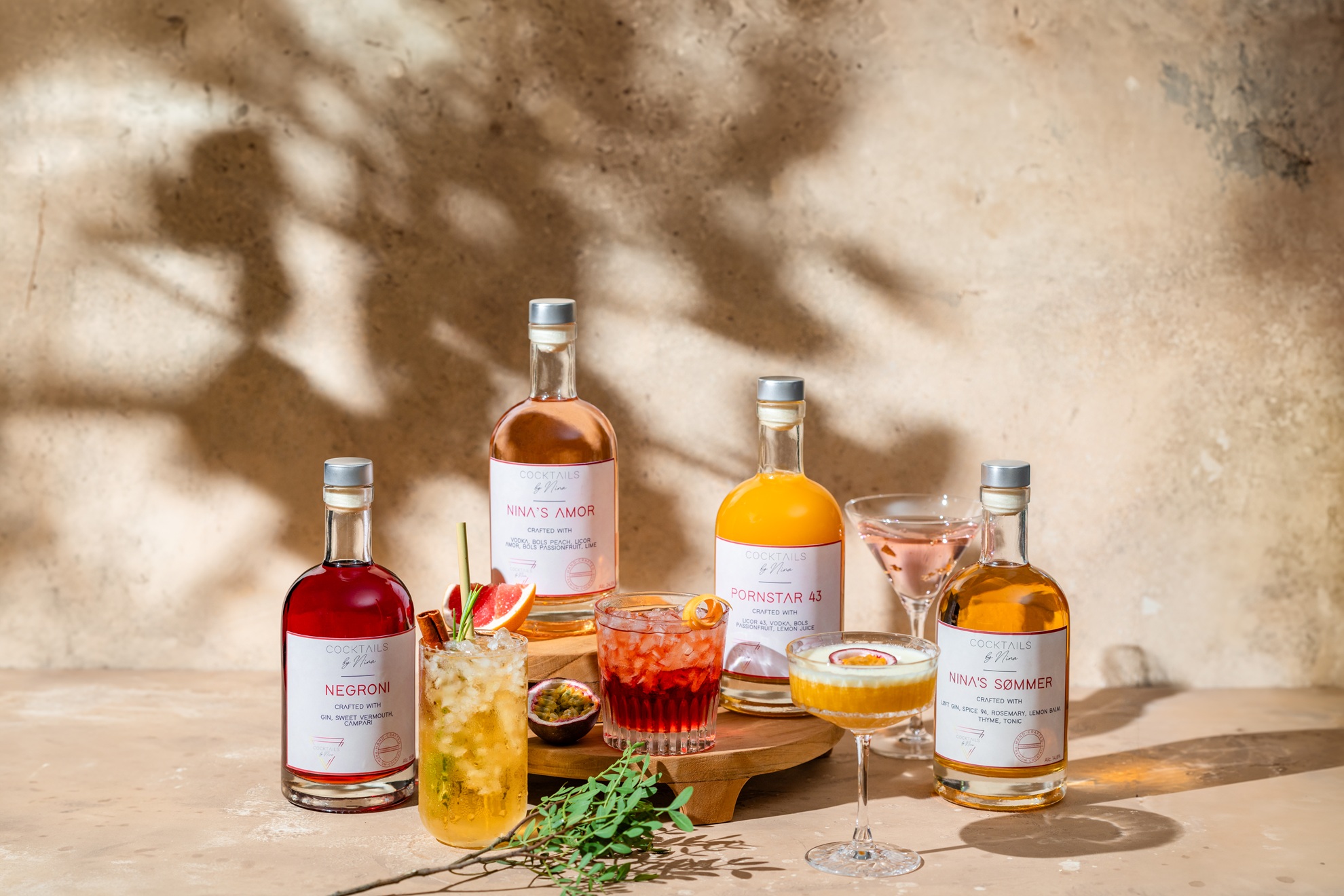
A trip on the water calls for drinks that are easy to bring along, and that is exactly what we provide. Our ready-to-serve cocktails are bar-quality and ready to serve immediately, without the need for a shaker or bartender on board. For a mixed group, combine them with our mocktails, ensuring everyone has a full flavor experience, including the skipper.
Practical tips for your order:
- Count on two to three drinks per person for a half day, and four to five for a full day on the water.
- Combine a cocktail box with individual mocktails for variety without waste.
- Choose unbreakable glassware if the boat does not allow glass.
- Order in time: upon delivery, the recipient's age is verified, as is standard for online alcohol sales.
Organizing a larger gathering or a corporate boat trip? We will fully customize the quantities, flavors, and packaging for your trip through our events service. View the collection of ready-to-serve cocktails and order today for your next day on the water.
Frequently asked questions
How many cocktails should I order per person for a boat trip?
For a half day on the water, you can count on a few cocktails per person, and a larger quantity for a full day.
Is the skipper allowed to drink alcohol while sailing?
No, in the Netherlands, a legal limit of 0.5 promille applies to the skipper, which is monitored by the water police.
How long do ready-to-serve cocktails stay fresh during a trip?
Perishable components such as fresh juice or dairy must be kept at a maximum of 7 degrees Celsius, monitored with a digital probe thermometer. Use a marine refrigerator or a well-insulated cooler with sufficient ice packs for the duration of the trip.
What is the difference between "non-alcoholic" and "0.0%" on the label?
A drink labeled as "non-alcoholic" (alcoholvrij) may still contain up to 0.5% alcohol, while only 0.0% on the label guarantees practically zero alcohol.
What glassware is safe to bring on a boat?
Unbreakable tableware made of plastic or polycarbonate is the safest choice on a moving deck, unless the boat's owner or renter explicitly allows glassware. Additionally, in windy conditions, prepare light cups and garnishes just before serving so nothing blows away.
Sources
- What are the rules for alcohol use on the water? | Dutch Government
- Alcohol | Nutrition Centre
- Checklist for safe food handling at markets and events | NVWA